Apple App Store

Galderma expands Cetaphil’s Nourishing Line with new body care innovations, delivering clinically proven glow through advanced barrier science

  • Developed specifically for sensitive skin, the Nourishing & Hydrating Lotion and Cream combine hyaluronic acid and skin-essential lipids to strengthen the skin barrier while delivering clinically proven glow.

  • Builds on the successful launch of the Cetaphil Nourishing Oil-to-Foam facial Cleanser, extending the Nourishing Line to body care.

  • Supported by clinical and consumer testing of the Nourishing & Hydrating Lotion, 92% of users reported their skin felt softer, smoother, and more radiant after just one use.

MIAMI, Aug. 5, 2026 /PRNewswire/ — Galderma today announced that Cetaphil, the dermatologist-recommended brand trusted by millions with sensitive skin, is expanding its science-backed Nourishing line with the launch of the Nourishing & Hydrating Lotion and Nourishing & Hydrating Cream. Developed specifically for sensitive skin, these new body care innovations are powered by advanced hydration and barrier science to replenish essential skin lipids, help support and restore the skin barrier, and deliver proven glow as a visible sign of healthier-looking skin.

Sensitive skin is more prone to lipid deficiency, which can weaken the skin barrier and lead to moisture loss, dryness, roughness, and increased susceptibility to irritation. Aging and everyday environmental stressors can further deplete these essential lipids, making replenishment critical to maintaining healthy, resilient skin. Consumers are increasingly seeking healthy, glowing skin across face and body, and Cetaphil is meeting that need through clinically developed barrier science that nourishes the skin beyond the surface.

The new Nourishing & Hydrating Lotion and Cream represent the next evolution of Cetaphil’s Nourishing line, bringing the same technology-driven approach to body care formulations. Backed by clinical and consumer testing, the Nourishing & Hydrating Lotion delivers visible results from the very first use.

“The success of our Nourishing Oil-to-Foam facial Cleanser reinforced the consumer demand for body care rooted in skin barrier science. As we developed the next evolution of the Cetaphil’s Nourishing line, we focused on addressing one of the underlying contributors to dry, sensitive skin—surface lipid depletion. By combining ingredients like hyaluronic acid, lipids, flaxseed oil, and vitamin E in targeted formulations, we created products that not only provide long-lasting hydration, but also help replenish essential skin lipids, strengthen the skin barrier and support healthier-looking skin.”

JP YORK, PHD DIRECTOR, U.S. MEDICAL AFFAIRS, DERMATOLOGICAL SKINCARE, GALDERMA

Rather than simply moisturizing the skin’s surface, the Nourishing line delivers targeted nourishment through advanced ingredient technology tailored to different hydration needs. In consumer assessment results, 79% agreed their skin looked more glowy after just one use. Specifically, for the cream, 98% agreed their skin felt and looked less dry and more hydrated with consistent use*.

“Our goal was to formulate body moisturizers that go beyond surface-level hydration. For people with sensitive skin, the ability to nourish while maintaining the skin barrier is critical, making these formulas with carefully selected ingredients is an important advancement over traditional body moisturizers.”

DR. AARON FARBERG DERMATOLOGIST AND MOHS SURGEON, BAYLOR SCOTT & WHITE HEALTH (U.S.)

A new approach to nourishing body care for sensitive skin Cetaphil’s Nourishing & Hydrating Lotion and Nourishing & Hydrating Cream were developed to deliver targeted nourishment for different hydration needs while supporting the skin barrier with science-backed ingredients:

  • Nourishing & Hydrating Lotion instantly replenishes surface skin lipids for clinically proven glow, healthier-looking skin while providing up to 48-hours of hydration. Powered by Hyaluronic Acid, Lipids, and Flaxseed Oil, the lightweight, oil-infused formula helps retain moisture, soothe skin, and support the skin barrier for lasting hydration and visible radiance.

  • Nourishing & Hydrating Cream provides rich, long-lasting nourishment for normal to very dry skin with 72-hour hydration and proven glow. Formulated with Lipids and Vitamin E, the fast-absorbing cream deeply replenishes moisture while helping support and restore the skin barrier, leaving skin healthier-looking, smoother, and deeply hydrated. Both the lotion and the cream are hypoallergenic, fragrance-free, alcohol-free, paraben-free, and developed specifically for sensitive skin.

The Cetaphil Nourishing & Hydrating Lotion and Cetaphil Nourishing & Hydrating Cream are available now at major retailers nationwide and online at Cetaphil.com.

About Cetaphil® Over seventy-five years ago, a leading pharmacist created the first Cetaphil product – a gentle, yet powerful formula that would clean without stripping and moisturize without clogging. Today, Cetaphil is a dermatologist recommended sensitive skincare brand and is recognized around the world. With the help of leading global skincare experts, they continue to develop innovative skincare technologies for sensitive skin that help restore, protect and maintain skin’s health every day. For more information, visit www.cetaphil.com.

About Galderma Galderma (SIX: GALD) is the pure-play dermatology category leader, present in approximately 90 countries. We deliver an innovative, science-based portfolio of premium flagship brands and services that span the full spectrum of the fast-growing dermatology market through Injectable Aesthetics, Dermato-logical Skincare and Therapeutic Dermatology. Since our foundation in 1981, we have dedicated our focus and passion to the human body’s largest organ – the skin – meeting individual consumer and patient needs with superior outcomes in partnership with healthcare professionals. Because we understand that the skin we are in shapes our lives, we are advancing dermatology for every skin story. For more information: www.galderma.com.

View original content to download multimedia: https://www.prnewswire.com/news-releases/galderma-expands-cetaphils-nourishing-line-with-new-body-care-innovations-delivering-clinically-proven-glow-through-advanced-barrier-science-302843434.html

SOURCE Cetaphil

Tags: , , , , , , , , , , , , , ,
Simple skincare and wellness habits to prioritise your health

Simple skincare and wellness habits to prioritise your health

Women’s self-care is about far more than beauty treatments, expensive skincare products or finding time for a spa day. It is about making your health and wellbeing a priority, even when life feels busy.

For many women, caring for everyone else can come before caring for themselves.

But simple daily rituals, from looking after your skin to getting enough rest, moving your body and taking time to switch off, can make a meaningful difference to how you feel.

Skincare is one small part of that bigger picture. Your skin is your body’s largest organ and caring for it can become a simple, intentional act of self-care.

This Women’s Month, it is worth remembering that self-care is not selfish or indulgent. It is about giving yourself the same care and attention you so readily give to others.

Daily rituals for skin and soul

Start and end your day with intention

Take a few mindful moments in the morning and evening when applying your skincare products. Notice how your skin feels as you gently massage in your moisturiser.

Keep your skin hydrated

Dry, tight skin can be a sign that your skin barrier needs support. Applying a nourishing lotion after your shower helps lock in moisture and protect your skin.

Move your body with joy

Exercise isn’t punishment; it can be a celebration of what your body can do. Whether it’s a walk outside, dancing in the kitchen, or a stretch session before bed, find movement that makes you feel good.

Unplug regularly

Stepping away from screens, social media, and constant notifications allows your mind to recharge and helps you reconnect with yourself.

Prioritise consistency over perfection

You don’t need an expensive or elaborate routine. Small, regular acts of care have more impact than occasional, grand gestures.

When we look at self-care as health care, the conversation changes. 

It’s no longer about pampering for the sake of vanity. It’s about creating a foundation for resilience, balance, and well-being. 

By making time for daily habits that nourish, restore, and uplift us, we’re not only caring for our skin; we’re caring for every part of ourselves.

Tags: , , , , ,
Best beginner skincare guide: Top Amazon.ae picks 2026

Best beginner skincare guide: Top Amazon.ae picks 2026

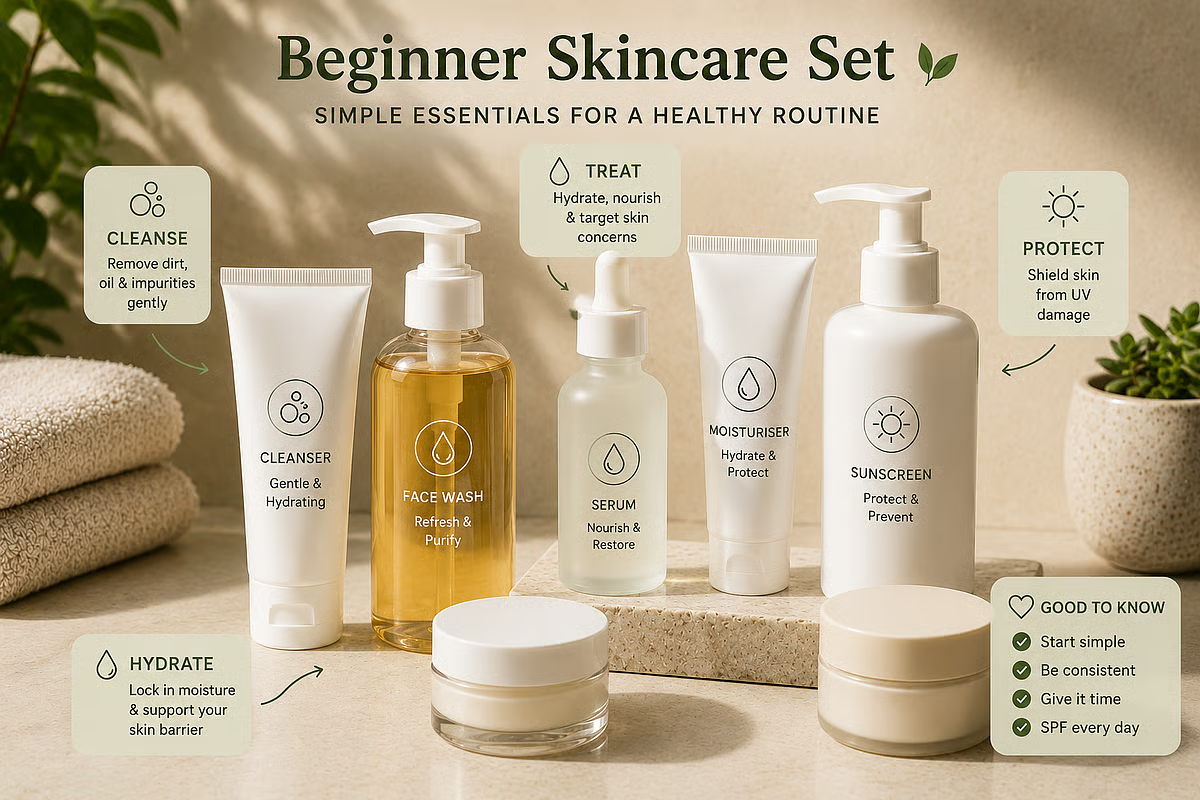
Starting a skincare routine does not have to mean buying a shelf full of products. Most beginners only need three essentials: a gentle cleanser, a moisturiser and a broad spectrum sunscreen for daytime. If your skin feels dehydrated, a simple hydrating serum can also fit easily into that routine. The products below focus on well established ingredients and straightforward formulas rather than complicated routines. Our top recommendation is CeraVe Foaming Cleanser, which offers a gentle cleanse without leaving oily skin feeling stripped, making it an easy foundation for many first skincare routines.

Verdict: A dependable everyday cleanser that suits most people with normal to oily skin who want a simple starting point.

  • Foaming gel cleanser

  • Suitable for normal to oily skin

  • Ceramides, hyaluronic acid and niacinamide

  • Fragrance free

  • Developed with dermatologists

  • Cleanses without removing all of the skin’s natural moisture

  • Supports the skin barrier with ceramides

  • Easy to use morning and evening

Best for: Oily and combination skin, or anyone building a basic skincare routine.

According to CeraVe, this cleanser combines three essential ceramides with hyaluronic acid and niacinamide to help cleanse while supporting the skin barrier. The fragrance free formula is designed for daily use and is non comedogenic. Beginners often make the mistake of choosing an overly harsh cleanser, but a balanced formula like this is easier to use consistently. Those with very dry skin may prefer a cream cleanser instead, although many combination skin types find this foaming version strikes a comfortable balance.

Verdict: A lightweight sunscreen that makes daily sun protection much easier to stick with.

  • SPF50+ broad spectrum protection

  • Lightweight fluid texture

  • Suitable for sensitive skin

  • Dermatologically tested

Best for: Anyone starting a daytime skincare routine.

No beginner routine is complete without sunscreen. Daily sun protection helps protect skin from UV exposure, making it one of the most important skincare habits to build. The Anthelios range is widely recommended by dermatologists because of its light finish and comfortable texture, which encourages consistent daily use. If you prefer richer creams, you may find this fluid texture lighter than expected, but many people appreciate that quality in warm weather.

Verdict: A straightforward hydrating serum that fits neatly into a beginner routine without adding unnecessary complexity.

  • Easy to layer into a routine

  • Helps skin feel more hydrated

  • Fragrance-free formulation

Best for: Dry or dehydrated skin.

A serum is optional for beginners, but hydration is one area where a simple formula can make a noticeable difference to how skin feels. Hyaluronic acid attracts water to the skin, while vitamin B5 supports hydration. Apply it to slightly damp skin before moisturiser. There is no need to combine multiple active ingredients when starting out, and this simple formula keeps the routine manageable. Prevention also highlights straightforward hyaluronic acid products as accessible skincare options for beginners.

Verdict: A practical cleanser for people who prefer a traditional lotion texture over foaming washes.

Best for: Normal to combination skin.

Some people simply prefer a lotion cleanser because it feels less drying than a foam. Neutrogena’s Deep Clean Cleansing Lotion offers a familiar, uncomplicated option for daily cleansing. It works well as the first step in a beginner routine before following with moisturiser. If you regularly wear heavy sunscreen or makeup, you may wish to spend a little longer massaging the cleanser before rinsing.

Verdict: An affordable everyday moisturiser that keeps a beginner routine uncomplicated.

Best for: Sensitive, normal and combination skin.

A moisturiser helps reduce water loss from the skin and supports everyday comfort. Simple’s lightweight formula is designed for daily use and avoids unnecessary fragrance, making it an accessible choice for many beginners. Those with very dry skin may eventually prefer a richer cream, but for most new skincare users this lighter texture feels comfortable throughout the day.

Keep your first routine simple. Start with a gentle cleanser matched to your skin type, followed by a moisturiser that feels comfortable enough to use every day. The final daytime step should always be a broad spectrum sunscreen with SPF50 or SPF50+.

Skin type matters more than long ingredient lists. Oily skin often benefits from lightweight gel or foaming cleansers, while dry skin usually prefers richer, more hydrating formulas. Sensitive skin generally responds well to fragrance free products with straightforward ingredient lists.

For UAE shoppers, sunscreen is particularly important because of strong year round sun exposure. Consistency matters more than owning lots of products, so choose textures you are happy to wear every day.

For most beginners, CeraVe Foaming Cleanser is the best overall choice because it provides a gentle, balanced cleanse that fits easily into a simple daily routine. Pair it with Simple Kind to Skin Hydrating Light Moisturiser and La Roche Posay Anthelios UVMune 400 Invisible Fluid SPF50+, and you have the three products most people need to get started. If your skin feels dry or tight, The Ordinary Hyaluronic Acid 2% + B5 adds hydration without making your routine complicated. Those who prefer a lotion cleanser rather than a foaming wash can look at Neutrogena Deep Clean Cleansing Lotion. The aim is not to own more products, but to build a routine you will actually follow every day.

Gulf News earns a commission on purchases made through links in this article, at no extra cost to you. Our editorial team selects products independently.

Tags: , , , , ,
Emma Willis, 50, reveals the 4 daily habits behind her glowing skin

Emma Willis, 50, reveals the 4 daily habits behind her glowing skin

Emma and Matt Willis are frequently referred to as TV’s ‘hottest couple’ and as a devout Busted fan, my mind normally goes straight to Matt, but after spending a morning with Emma, I found myself texting my friends telling them all that she was the most beautiful person I’ve ever seen.

Incredibly toned and glowing with nary a wrinkle to be seen, Emma also has the most sculpted jawline I have ever seen, so it was baffling when the 50-year-old, who is taking the helm of Strictly this year, admitted that she wants skincare to help sort her “crepey neck” – which I personally could see no signs of whatsoever.

Emma Willis has insecurities, just like the rest of us

Emma Willis’ new approach

At an event celebrating her new role as the face of M&S’ own brand skincare collection, Formula, Emma lamented: “There’s a mirror in my house that has the worst lighting. Every time I go near it, all I can see are the stringy bits in my neck.”

While I couldn’t see one single flaw, Emma continued: “At the end of my thirties I noticed my skin was changing, but I did nothing about it. My skincare routine was non-existent at that age; I coasted through and never even took my mascara off – plus, I was a sun worshipper.

Emma Willis is the new face of M&S’ science-backed skincare range, Formula

“Then, when I hit my forties, everything headed south. Every time I looked in the mirror there was something new that bothered me. I’d forget what I wanted to sort because there was always a new problem,” the Love is Blind host lamented.

Emma said she felt “overwhelmed” with all the different skincare options when she was trying to build her own regimen, which is why, when M&S approached her to be the face of Formula, she was reluctant at first. “I wanted a meeting to make sure I knew and understood the range,” she says.

Once introduced to the collection, Emma was 100% on board, sharing she loves the range because it doesn’t “overcomplicate skincare,” adding: “We’ve all heard the buzzwords, but most people just want to know what something does and whether it works.”

Emma’s skincare and supplements at 50

Emma’s picks from the collection include The Ultra Peptide Eye Cream £20, because it “doesn’t sting”, and of course, The Ultra Peptide Neck & Décolletage Cream, £19.50, for her supposed “crepey neck”.

She also takes Absolute Collagen supplements, to support collagen production, writing on Instagram: “My day does not begin until I’ve added my @absolutecollagen powder in my morning coffee.”

She also takes Bare Biology’s Vitamin D3 with Vitamin K2 Spray, £21.95, Thorne’s Omega 3 with COQ10, £35.59 for 90 capsules, and Zenement’s Red Yeast Rice Capsules, £20.97 for 540 capsules. 

Emma Willis has a supplement routine she tries to follow

A wellness obsession

As well as a skincare routine which is clearly working, Emma is open about being “obsessed” with health and wellness – back in January she shared she was “trying to commit to saunas,” and she’s stepped up her wellness habit since then, with her and Matt jetting to longevity and gut health retreat Mayrlife, to immerse themselves in living well.

© InstagramEmma Willis is committed to wellness, sharing she hopes to dedicate more time to sitting in the sauna

“Wellness clinics are my idea of a perfect ‘holiday’,” Emma wrote on Instagram. On the tests she went through while at the Austrian retreat, Emma continued: ” Blood tests, specialist consultations and health analysis helped build a picture of where I am now and, more importantly, what I can do to support myself in the future. “

She added: “I have always been obsessed with health and the older I get the longer I wanna live.”

Emma and Matt Willis loved their stay at Mayrlife

The former host of The Voice shared that she booked in for functional training, reformer Pilates, lymphatic drainage, abdominal massage and craniosacral therapy while as the resort, sharing: “I’m depuffed and defogged(ish).”

Matt, who has spoken openly about addiction and his quest for health now that he’s sober, agreed with his wife on the special experience. “I’ve spent a lot of years learning to look after my mind. This reminded me that looking after the rest of me deserves just as much attention too.”

The Busted bassist said he booked in for cryotherapy and IV drips, teaching his body to rest after going at “100mph with 50 tabs open” in his brain.

Fit at 50

As mentioned, Emma is impeccably toned, with the mother-of-three wearing a tiny white vest at the Formula event, and just like her super fit husband, she is dedicated to working out.

In June she spent five days hiking the Jurassic Coast with Coppafeel – the fourth time she’s undertaken a walking trial with the charity, while she and Matt have his and hers rowing machines at home.

© InstagramEmma Willis works out hard with her trainer

She also works out with personal trainer Rob Solly, concentrating on weight training. He told Women’s Health: “Our training is predominantly strength-based, with plyometrics and brief periods of high heart rates,’ combining everything from skipping and boxing to rowing and weights .

Emma’s routine certainly works, and will set her in good stead for her increased workload with Strictly… 

Tags: , , , , , ,
How daily

How daily skincare habits can help prevent facial dark spots

Dark spots on the face are a common skincare concern, often caused by acne scars, sun exposure, hormonal changes, skin irritation, or inflammation. While many people turn to home remedies or over-the-counter creams for quick results, experts say consistent skincare and proper treatment are more effective than temporary fixes.

According to dermatology guidance, understanding the underlying cause of skin discoloration is essential before choosing a treatment. In some cases, harsh or unsuitable skincare products can worsen irritation and make pigmentation more noticeable.

Common Causes of Dark Spots

Facial pigmentation may develop after acne heals, following skin injuries or irritation, due to hormonal changes, or from prolonged exposure to ultraviolet (UV) rays. Certain skincare products can also trigger inflammation that leads to discoloration.

Healthy Habits for Clearer Skin

Experts recommend cleansing the face daily to remove dirt, sweat, sunscreen, and makeup, especially before bedtime. Regular use of sunscreen is also considered one of the most effective ways to prevent existing dark spots from becoming darker and to reduce the risk of new pigmentation caused by sun exposure.

Be Cautious With Home Remedies

Traditional ingredients such as rose water, honey, and yogurt are commonly used in home skincare routines, but they may not be suitable for everyone.

Experts advise avoiding the direct application of lemon juice or other highly acidic ingredients to the face, as they can irritate the skin and potentially worsen pigmentation. If any product causes redness, burning, or irritation, it should be discontinued immediately.

When to See a Dermatologist

If dark spots continue to spread, repeatedly return, or fail to improve despite regular skincare, consulting a dermatologist is recommended.

More read, Simple daily habits to reduce sagging skin and maintain youthful glow

A medical evaluation can help identify the underlying cause and determine the most appropriate treatment.

Tags: , , , , , ,
Best skincare products for the monsoon: 7 essentials to keep your skin healthy this rainy season

Best skincare products for the monsoon: 7 essentials to keep your skin healthy this rainy season

Humidity, rain and pollution can take a toll on the skin during the monsoon. From cleansers and serums to lip care and body moisturisers, these seven skincare essentials help cleanse, hydrate and protect the skin barrier throughout the rainy season.

Updated On – 31 July 2026, 11:51 AM


Hyderabad: The monsoon may bring relief from the scorching summer, but it also brings a new set of skincare challenges. Increased humidity, sudden showers, pollution and constant temperature changes can leave skin feeling oily, dehydrated or irritated all at once. The key to healthy skin during this season is choosing products that hydrate without feeling heavy, cleanse effectively and protect the skin barrier. Here are a few skincare essentials that deserve a place in your monsoon routine.

L’Occitane Shea Butter Hand Cream
Frequent hand washing and damp weather can leave hands feeling rough and dry. Enriched with shea butter, this nourishing hand cream restores moisture while absorbing quickly, making it ideal for daily use without any greasy feel.

Estée Lauder Advanced Night Repair Serum
Night-time is when skin naturally repairs itself, making a good serum a worthwhile investment. This lightweight formula helps improve dullness, uneven texture and early signs of ageing caused by daily exposure to pollution and environmental stress. Suitable for most skin types, it blends easily into any skincare routine.

The Derma Co X Dr V Skin Renew Peptide Under Eye Cream
Late nights and endless screen time often show up first around the eyes. Packed with peptides, this under-eye cream targets puffiness, dark circles and fine lines, helping the delicate area appear brighter and more refreshed with regular use.

Skinvest Melts SPF 30 PA++++ Tinted Lip Balm + Gloss
Monsoon weather can still leave lips dry despite the humidity. This tinted lip balm hydrates while offering sun protection and helping strengthen the skin barrier, making it a practical everyday essential.

CeraVe Foaming Cleanser
A gentle cleanser is the foundation of any skincare routine. This foaming cleanser removes dirt, excess oil and makeup without stripping away the skin’s natural moisture, leaving the face feeling clean and balanced after every wash.

The Pink Foundry Melt to Foam Cleansing Balm
Waterproof sunscreen, makeup and pollution can be difficult to remove during the rainy season. This cleansing balm melts away impurities before transforming into a soft foam that rinses off easily, simplifying the evening cleansing routine.

Forest Essentials Ultra Rich Body Milk Lime Saffron and Oudh
Heavy body lotions often feel uncomfortable in humid weather, but this lightweight body milk absorbs quickly while keeping skin hydrated. Infused with lime, saffron and oudh, it leaves behind soft, nourished skin with a subtle, long-lasting fragrance.

Tags: , , , , , , ,
5 Expert Tips To Protect Skin Barrier in Monsoon

5 Expert Tips To Protect Skin Barrier in Monsoon

High humidity and trapped sweat during the rainy months harms your skin in more ways than one. This is why, during monsoon, issues such as fungal infections, acne breakouts, and prickly heat are extremely common. This season is also the perfect breeding ground for skin barrier damage. In simple terms, the outermost layer of your skin gets harmed, which can lead to different skin woes. How can you protect your skin during monsoon season? This article will answer this for you.


To get a better understanding of this, we interacted with our experts, Dr Shitij Goel,  Senior Consultant, Dermatology, Shardacare-HealthCity.

5 Tips To Protect Your Skin Barrier During Monsoon

Dr Goel shares 5 practical tips that can help your protect your skin barrier in the rainy months:

Use a Gentle Cleanser

Gentle skincare is the foundation of maintaining a healthy skin barrier. Cleanse the skin with a mild, soap-free, pH-balanced cleanser that removes sweat, sebum, and pollutants without stripping away essential barrier lipids. 

Avoid Harsh Elements

Avoid overwashing, harsh soaps, exfoliating scrubs, and very hot water, all of which increase transepidermal water loss and impair barrier function. 

Use a Gentle Moisturiser

A lightweight, fragrance-free, non-comedogenic moisturiser containing ceramides, glycerin, hyaluronic acid, or niacinamide helps replenish epidermal lipids, restore hydration, and improve barrier repair.

Avoid Skipping Sunscreen

One common mistake frequently encountered in dermatology clinics is skipping sunscreen during the monsoon. Ultraviolet rays readily penetrate cloud cover and contribute to pigmentation, photoageing, and exacerbation of several dermatoses. Daily use of a broad-spectrum SPF 30 or higher is recommended.

Avoid Damp Clothes

Keep body folds dry, change out of damp clothing promptly, wear breathable fabrics, and avoid self-medicating with steroid-containing combination creams. 

“If redness, itching, scaling, or recurrent rashes persist, consult a dermatologist promptly. Healthy skin begins with a healthy barrier: protect it, and your skin will remain resilient throughout the rainy season,” concludes Dr Goel.

Why Skin Barrier Weakens During Monsoon

Dr Goel says that monsoon brings welcome relief from the summer heat, but it also creates conditions that can weaken the skin barrier. The expert explains, “Persistent humidity, excessive sweating, and increased bacterial and fungal growth compromise this protective outer layer, making the skin more susceptible to irritation, eczema flares, acne, fungal infections, and sensitivity.”

Shedding light on what exactly the skin barrier is, Dr Goel says, “It is the body’s first line of defence, preventing excessive water loss while protecting against irritants, allergens, and microorganisms. Once damaged, it struggles to retain moisture and becomes more vulnerable to environmental insults.”

According to the Journal of Clinical and Aesthetic Dermatology, the term skin barrier is also commonly referred to as the epidermal barrier. The skin barrier, in simple language, acts as the security guard and the brick wall of your body. It is the very top layer of your skin that has two main functions:

  • It locks in your natural moisture and hydration.
  • It blocks out environmental pollution, harmful bacteria, and harsh chemicals.

The report notes that when this wall is strong and intact, your skin appears plump, smooth, and naturally healthy. However, when it gets damaged (which usually happens from over-washing, harsh winter weather, or using too many strong skincare acids) the bricks become loose. This lets the vital water to escape and invisible irritants to sneak in, which is why a damaged barrier leaves your skin feeling tight, dry, visibly red, and highly prone to unexpected breakouts.

How Environment and Weather Impacts Skin Barrier

A 2015 study, published in the Journal of the European Academy of Dermatology and Venereology, examined existing research to understand how different levels of humidity and temperature impacts skin barrier function. The researchers found out that exposure to low environmental humidity and freezing temperatures can weaken the skin’s natural protective abilities. These harsh weather conditions can lead to a significant increase in transepidermal water loss, which means vital moisture escapes from the skin much faster. 

Moreover, cold and dry environments actively minimise the essential fats and ceramides that hold the top layers of the skin together. With these protective oils reduced, the skin becomes visibly dry, less flexible, and much more fragile. The study also disclosed that such environmental stress makes the skin highly vulnerable to external irritants and physical friction. 

When the skin barrier breaks down, the body responds by increasing inflammatory signals. This often leads to redness and discomfort. The study noted that moderate humidity generally retains the skin, maintains its hydration and shed dead cells smoothly. To conclude, these findings prove that seasonal climate changes definitely dictate the physical integrity of our skin, highlighting the need for changes in our skincare routine accordingly. 

ALSO READ- Can Oral Supplements Really Fade Pigmentation? Here’s What a Dermatologist Wants You to Know

Conclusion

The monsoon season provides a refreshing break from the summer heat. However, its high humidity and trapped sweat can severely compromise your skin’s natural protective barrier. By choosing a gentle skincare routine that includes a mild cleanser, a repairing moisturiser, and daily sunscreen, you can successfully defend your skin against these harsh seasonal shifts. Choosing these simple yet powerful skincare habits can help lock in essential moisture and prevent unwanted irritants, ensuring your skin remains healthy during monsoon. 

FAQ

  • How to fix if the skin barrier is damaged? 

    Fixing a damaged skin barrier requires stopping all active treatments, switching to a gentle cleanser, and moisturising frequently. 

  • Can a skin barrier be permanently damaged? 

    No, skin barrier damage is almost never permanent.  

Read Next

Tanning Removal Soaps: Do They Really Work and Who Should Avoid Them?

Disclaimer

All possible measures have been taken to ensure accuracy, reliability, timeliness and authenticity of the information; however Onlymyhealth.com does not take any liability for the same. Using any information provided by the website is solely at the viewers’ discretion. In case of any medical exigencies/ persistent health issues, we advise you to seek a qualified medical practitioner before putting to use any advice/tips given by our team or any third party in form of answers/comments on the above mentioned website.

Shruti is a lifestyle journalist with over seven years of experience, covering everything from diseases to diets. She specialises in human interest stories that combine compelling narratives with expert insights, scientific research, and credible sources. Previously associated with HTCity, Storytailors and Patriot, she is committed to producing accurate, engaging, and trustworthy health content that informs and inspires readers.
Editorial Policy: All articles authored by Shruti are fact-checked by our editorial team and reviewed by relevant subject matter experts when necessary.

Read More..

How we keep this article up to date:

We work with experts and keep a close eye on the latest in health and wellness. Whenever there is a new research or helpful information, we update our articles with accurate and useful advice.


  • Current Version

    Jul 30, 2026 19:01 IST

    Published By : Shruti Das
    Reviewed By : Dr Shitij Goel

Tags: , , , , ,
The rise of skin minimalism: Why less is becoming more in modern skincare |

The rise of skin minimalism: Why less is becoming more in modern skincare |

(Image Credits: Pinterest) For decades, skincare has meant an involved process of using many serums, toners, exfoliators, masks, and strong active ingredients. The concept of social media has only added to the perception that the more products you have, the better your results will be. But consumer trends have started moving toward a conscious method called skin minimalism. The central principle of minimalistic skincare is to rely on a smaller number of more efficacious products that can act together.The primary catalyst for such a trend lies in increasing concern about skin barrier conditions. Although active components have revolutionised the skincare industry, there is still a danger of over-layering, excessive exfoliation, and many strong formulations at once. As a result, skin barrier function gets undermined, and irritation, inflammation, and dryness occur.

(Image Credits: Pinterest)

Skin minimalism advocates a back-to-basics approach centred on consistency rather than complexity.Such a balanced routine would include a mild cleanser, a moisturiser, a broad-spectrum sunscreen, and treatment products based on one’s individual skin issues. The emphasis should be on comprehending one’s skin rather than following all the latest trends and fads. It is important to remember that minimalist skincare is not about forgetting about your skincare at all but about making thoughtful product choices.The importance of making knowledgeable choices cannot be underestimated when it comes to skincare.The future of skincare will be determined by scientifically substantiated products, a personal approach to treatment, and skin barrier integrity preservation. Dermatology slowly progresses from unnecessary complexity to evidence-based practice. In essence, healthy skin does not come from having too many products but from having the correct ones used properly.

(Image Credits: Pinterest)

For better understanding of this topic, we approached Dr Rinky Kapoor, Director & Co-Founder of The Esthetic Clinics, who explained, “As skincare evolves further, the new role of dermatology clinics will involve not just recommending products but creating skin health programmes for each patient. The custom combination of dermatologically formulated skincare products, laser treatments, skin tightening, and injectable treatments is allowing patients to enjoy improved results while still keeping their skincare regimen simple and efficient.”

Tags: , , , ,
Niacinamide vs Vitamin C: What's the Difference and Which Is Better for Your Skin?

Niacinamide vs Vitamin C: What’s the Difference and Which Is Better for Your Skin?

Living in India means your skin has a lot to deal with. One day it’s the sun, the next it’s humidity, dust, pollution or hard water. And if you’ve decided to add your first serum to your skin care routine, you’ve probably come across two names more than any others: niacinamide and vitamin C. They sound similar, but they do very different jobs.

One promises brighter skin. The other claims to reduce oil, calm acne and strengthen your skin barrier. Both have loyal fan clubs, and both are backed by research. So, if you’re only planning to add one serum to your routine, which one deserves a spot on your shelf?

The answer is less about which ingredient is “better” and more about what your skin is trying to tell you.

Also Read: The ultimate beginner’s guide to skincare for men in India

Let’s clear up one of the biggest misconceptions. Niacinamide and vitamin C aren’t rivals. Think of them as two colleagues working on different tasks.

One helps your skin defend itself and stay balanced. The other helps protect it from environmental damage while improving brightness. They can even complement each other when used correctly.

The old belief that the two ingredients cancel each other out came from older laboratory studies conducted under conditions that don’t reflect how modern skincare products are formulated or used. Most dermatologists today agree that they can be used together.

So if you’ve been avoiding one because someone on social media said they “don’t mix”, you can stop worrying.

What exactly is niacinamide?

Niacinamide is a form of vitamin B3, and it’s one of the gentlest skincare ingredients around.

If your skin often feels oily by lunchtime, breaks out during humid weather or gets irritated easily, niacinamide is worth considering.

Research has shown that niacinamide can help strengthen the skin barrier, reduce water loss, regulate oil production and improve the appearance of enlarged pores over time. It also has anti-inflammatory properties, which is why it’s commonly recommended for people with acne-prone or sensitive skin.

Also Read: Sharing skincare with friends? Doctors say think again 

Imagine commuting through traffic in Bengaluru, Delhi or Mumbai every day. Between the heat, dust, pollution and air conditioning, your skin goes through a lot. Niacinamide works like a support system, helping your skin recover from those daily stressors.

Niacinamide may be a good choice if:

  • Your skin gets oily easily.
  • You have mild acne or frequent breakouts.
  • Your skin barrier feels damaged after trying too many products.
  • You want a gentle ingredient that’s suitable for beginners.
  • You have redness or sensitive skin.

What about vitamin C?

Vitamin C has earned its place as one of skincare’s most popular ingredients for good reason.

It’s a powerful antioxidant, which means it helps protect the skin from damage caused by UV rays and pollution. It also supports collagen production and helps improve uneven skin tone and pigmentation.

If you’ve noticed your skin looking dull after weeks of commuting in the sun or you’ve been left with stubborn marks after old pimples, vitamin C may be the ingredient you’re looking for.

It’s especially popular among people who want brighter, more even-looking skin.

Vitamin C may be a better choice if:

  • Your skin looks dull or tired.
  • You have pigmentation or post-acne marks.
  • You’re concerned about early signs of ageing.
  • You spend a lot of time outdoors.
  • You already wear sunscreen every day.

If you live in India, your skin has its own challenges

One thing that skincare conversations often forget is geography.

Indian skin deals with a combination of strong UV exposure, humidity, pollution and, in many cities, hard water. These factors can contribute to tanning, pigmentation, oiliness and a weakened skin barrier.

That’s why there’s no universal “best” ingredient.

Someone in Chennai struggling with oily skin during the summer may benefit more from niacinamide. Someone in Jaipur trying to fade sun-induced pigmentation may notice better results with vitamin C.

Your environment matters just as much as your skin type.

Can you use both?

In fact, many dermatologists recommend using vitamin C in the morning because of its antioxidant benefits, followed by sunscreen. Niacinamide can be used either in the morning or evening and pairs well with many skincare ingredients.

Also Read: Dry or dehydrated skin? How to tell what you really need 

If your skin is sensitive, introduce one ingredient first and use it consistently for a few weeks before adding another. That way, if irritation occurs, you’ll know which product is responsible.

Don’t expect overnight miracles

One reason people give up on skincare is unrealistic expectations.

You start using a serum on Monday and by Friday you’re checking the mirror wondering why your dark spots haven’t disappeared.

That’s not how skin works.

Research on topical skincare ingredients generally measures improvement over weeks rather than days. Consistency matters much more than constantly switching products.

Which one should you buy first?

If you’re still wondering which bottle to pick, here’s a simple way to decide.

Choose niacinamide if your biggest concern is:

  • Oily skin
  • Acne
  • Enlarged-looking pores
  • Redness
  • A weakened skin barrier

Choose vitamin C if your biggest concern is:

  • Dullness
  • Uneven skin tone
  • Pigmentation
  • Post-acne marks
  • Protecting skin from everyday environmental damage

If your skin concerns overlap, you don’t necessarily have to choose one forever. Many people eventually use both.

One ingredient won’t fix everything

It’s tempting to believe one serum will solve every skin concern.

The reality is much less exciting but far more reassuring. Healthy skin usually comes down to a few basics: a gentle cleanser, a moisturiser that suits your skin, daily sunscreen and one active ingredient that addresses your biggest concern.

Also Read: Why drinking pomegranate juice every morning is a game changer 

Whether you choose niacinamide or vitamin C, remember that skincare isn’t about chasing flawless skin or copying someone else’s routine. It’s about understanding your own skin and giving it what it actually needs.

(Disclaimer: This article is intended for informational purposes only and should not be considered medical advice. Always perform a patch test before using a new product and seek advice from a qualified dermatologist if you have sensitive skin or an underlying skin condition)

Tags: , , , ,
Best oLive
Privacy Overview

This website uses cookies so that we can provide you with the best user experience possible. Cookie information is stored in your browser and performs functions such as recognising you when you return to our website and helping our team to understand which sections of the website you find most interesting and useful.