Smart Ways to Save Money on Beauty and Skincare Products - Health Tips in Hindi

Smart Ways to Save Money on Beauty and Skincare Products

1 of 1

Beauty and skincare expenses can add up quickly, especially when every new launch promises better results. The good news is that looking after your skin does not have to mean stretching your budget. A few smart shopping habits, better timing, and a little research can help you save significantly while still buying products that suit your needs. From stacking discounts and shopping during sales to making the most of loyalty rewards, there are plenty of ways to reduce costs without compromising on quality.

Here are some practical ways to spend less on beauty and skincare products.

Start With a Minimalist Routine
A minimalist skincare routine can save money, reduce product waste, and make it easier to stay consistent. One of the biggest traps in beauty spending is buying too much, too fast. A basic routine that works consistently will always beat a shelf full of half-used products. Fewer, well-chosen products are often easier to maintain and can deliver better long-term results than complicated routines packed with unnecessary purchases.
A simple daily skincare routine could look like:
Cleanser
Moisturiser with SPF (morning)
Night cream or light serum (evening)
Start here. Add products only when you have a specific, identified concern, such as hyperpigmentation or acne, not because a trend caught your eye.
Understand the Ingredient, Not the Brand
One of the biggest skincare myths is that expensive products always work better. In reality, many premium and budget-friendly products use the same active ingredients. Ingredients such as niacinamide, hyaluronic acid, retinol, and salicylic acid deliver similar benefits regardless of the brand name on the packaging.
Instead of choosing products based on marketing claims, focus on ingredients that address your specific skin concerns. For example, niacinamide and vitamin C are commonly used to improve dullness and uneven skin tone, while hyaluronic acid and glycerin help boost hydration. Those with acne-prone skin can look for salicylic acid or benzoyl peroxide, whereas retinol and peptides are popular ingredients for addressing signs of ageing. If you have sensitive skin, soothing ingredients such as centella asiatica and ceramides are often a better choice.
Understanding what each ingredient does makes it easier to compare products objectively and find effective options without paying extra for branding or packaging.
Buy During Sale Seasons (and Plan for Them)
One of the easiest ways to save money on skincare and beauty products is to plan purchases around major sale events. Instead of replacing products at full price when they run out, track recurring sale periods and buy essentials when discounts are available. Most Indian beauty retailers follow a predictable sales calendar, making it easier to anticipate price drops throughout the year.
Popular shopping events such as Republic Day sales, Holi sales, Summer sales, Independence Day promotions, Diwali sales, and End-of-Year sales often feature discounts, combo offers, cashback rewards, and bank offers. Depending on the brand and product category, savings can range from 20% to 60%.
A good strategy is to stock up on essentials such as sunscreen, toner, cleanser, and micellar water during these sale periods. Before checking out, explore the latest offers and deals on Nykaa and other beauty platforms to find active cashback promotions, bank offers, and loyalty rewards. Combining these savings opportunities can help you reduce the overall cost of your beauty and skincare purchases even further.
Use Loyalty Points and Reward Programmes
Most beauty platforms offer loyalty programmes and reward systems, but many shoppers overlook them. Programmes such as Nykaa Prive, Purplle Elite Membership, and similar schemes can generate meaningful savings over time, especially when you consolidate your purchases on one or two platforms.
The points, vouchers, and member-exclusive offers add up faster than most people realise. Just remember to redeem your rewards before they expire. Setting a simple calendar reminder can help you make the most of every point earned.
Buy in Value Sizes When It Makes Sense
Larger sizes almost always work out cheaper per unit. For products you finish consistently, such as face wash, body lotion, and shampoo, buying a 200ml bottle over a 100ml one is a straightforward saving.
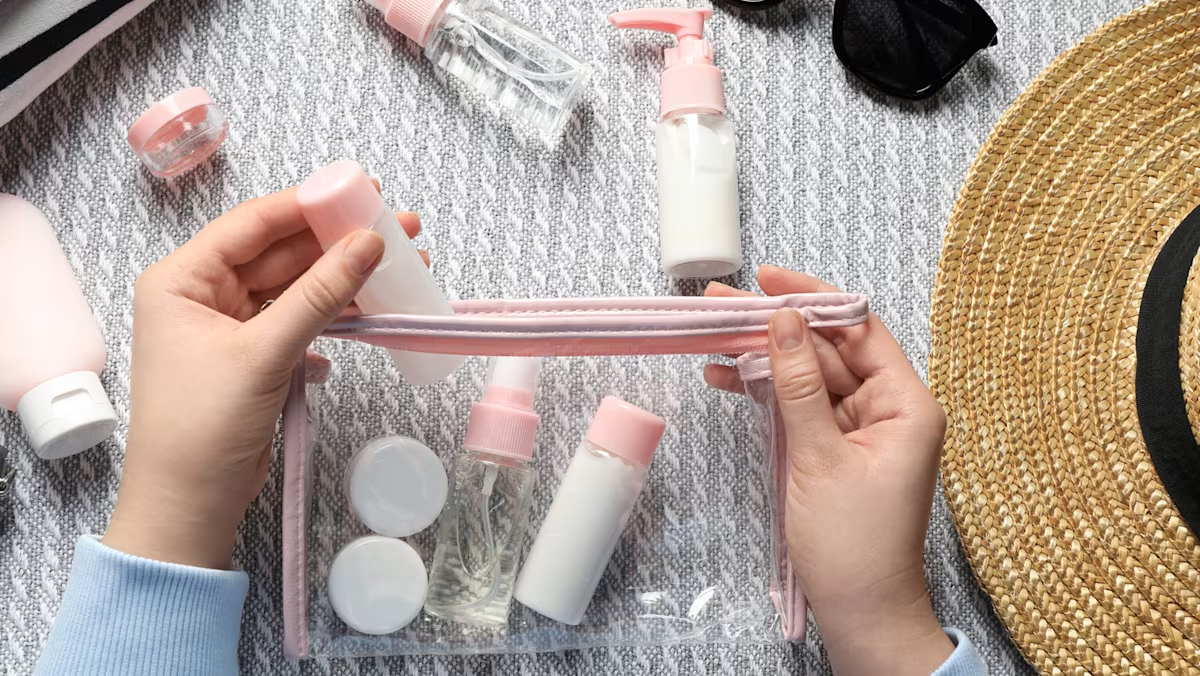
The exception: avoid buying large quantities of anything new that you have not tested on your skin. Sample sizes or travel sizes are worth the extra cost per ml when you are trying something for the first time.
Patch Test and Return Wisely
Returns in the beauty category are complicated, but a good patch test habit protects you from wasting money on products that do not suit your skin.
Apply a small amount of any new product to your inner wrist or behind your ear for 24 to 48 hours before using it on your face. This simple step prevents the very common problem of buying a product you cannot use.
Compare Prices Across Platforms Before Buying
The same product can vary by 10% to 25% across platforms at any given time. Before completing a purchase, spend two minutes checking:
Amazon India
Nykaa
Myntra
Purplle
The brand’s own website
Also, check if the brand offers a new user discount or a subscription discount for monthly orders.
Do Not Overlook Drugstore and Homegrown Brands
Indian consumers are fortunate to have access to strong domestic brands that are formulated for local skin types and climate conditions.
Brands like Minimalist, Plum, Dot and Key, Mamaearth (select products), and MCaffeine offer ingredient-focused formulations at accessible price points. Many of these have gone through dermatological testing and independent reviews that hold up well against international alternatives at two to three times the price.
Resist the FOMO of New Launches
New product launches are marketed aggressively on social media. A serum that gets 200 Instagram reels in one week is not necessarily better than what already works for you.
A useful rule: wait 30 days before buying anything you see trending. If you still want it after 30 days, it is probably considered a purchase rather than an impulse one.
Wrapping Up
Saving money on beauty and skincare is not about choosing the cheapest products. It is about shopping smarter. Build a routine around products you genuinely need, plan purchases around major sale events, make the most of loyalty rewards, and compare offers before checking out. Small habits like these can lead to significant savings over time without compromising on quality. With a little planning and discipline, you can maintain an effective beauty routine while keeping your monthly spending under control.

ये भी पढ़ें – अपने राज्य / शहर की खबर अख़बार से पहले पढ़ने के लिए क्लिक करे

Tags: , , , , , ,
5 Kitchen Ingredients For Naturally Glowing Skin

5 Kitchen Ingredients For Naturally Glowing Skin

Although expensive serums are useful, it’s also important to know that our kitchen is a hidden hub of many potent and science-based ingredients that are beneficial to our skin. In 2026, many skin specialists and Ayurvedic practitioners still recommend skin rituals that are done in our kitchen, especially since they are proven to work with the help of active ingredients such as curcumin and lactic acid. Here are five ingredients that can help us attain naturally glowing skin, together with the expert opinions about them.

5 Kitchen Ingredients For Naturally Glowing Skin

1. Turmeric 

Turmeric remains the evergreen for radiant skin due to curcumin, its active anti-inflammatory and antioxidant compound. It reduces hyperpigmentation, fights acne-causing bacteria, and boosts circulation to provide a lit-from-within glow. In Ayurveda, turmeric is considered a powerful healer for the skin, traditionally used in ‘Ubtans’ to restore natural shine. You can mix honey or milk with turmeric for a brightening face mask.

2. Honey

Raw honey is more than a sweetener; it is a natural moisture-binder and antibacterial agent. It acts as a humectant, drawing moisture from the air into your skin to keep it plump and hydrated. Dermatologists frequently recommend honey for acne-prone skin because its enzymes help clear pores while its soothing properties reduce redness. Apply a thin layer of honey on the skin for 15-20 minutes for a dewy glow.

3. Yoghurt or Curd 

Dairy products are rich in probiotics and lactic acid, a mild Alpha Hydroxy Acid (AHA). Lactic acid in curd gently dissolves dead skin cells on the surface, revealing the smoother, brighter skin underneath without the harshness of physical scrubs. Modern skincare science increasingly focuses on the gut-skin axis, noting that the probiotics in yoghurt help maintain a healthy skin microbiome. You can apply curd as a face mask for 10-12 minutes to get a refreshed glow.

ALSO READ- Top 6 Korean Skincare Beauty Essentials For Spring Season With Natural Ingredients

4. Tomato 

Tomatoes are packed with lycopene, a potent antioxidant that offers a level of natural protection against UV damage. The acidic nature of tomatoes helps tighten enlarged pores and balance excess oil production, making them ideal for oily or combination skin. Clinical research highlights lycopene’s role in defending skin cells from environmental toxins and improving overall skin texture. Rub tomato on the skin for 10 minutes for soft and smooth skin.

5. Papaya 

Papaya contains a unique enzyme called papain, which is a powerhouse for skin rejuvenation. Papain works as a natural exfoliant to fade dark spots, reduce acne scars, and improve overall skin luminosity. Papaya is often cited in Ayurvedic texts for its Varnya (complexion-enhancing) properties and its ability to deeply hydrate while removing impurities. You can massage a slice of papaya for 10-15 mins on the skin for that natural glow.

Tags: , , , ,
Apple App Store

10 budget-friendly skincare brands that deliver results

10 Budget-Friendly Skincare Brands That Deliver Results

Effective skincare doesn’t require luxury price tags. Many affordable brands now offer ingredients backed by research, straightforward formulas, and products that dermatologists regularly recommend.

Whether you’re building your first skincare routine or looking to save money without sacrificing quality, these brands offer reliable options across cleansers, moisturizers, serums, and sunscreens.

Unsplash

1. The Ordinary

The Ordinary helped popularize ingredient-focused skincare by offering products centered around individual actives like niacinamide, hyaluronic acid, azelaic acid, and retinoids.

The brand’s simple packaging and transparent ingredient concentrations have made it a favorite among skincare enthusiasts looking for targeted treatments at accessible prices.

Best known for:

  • Budget-friendly active ingredients

2. CeraVe

Developed with dermatologists, CeraVe has built a reputation around barrier-supporting skincare. Many of its products contain ceramides, cholesterol, and hyaluronic acid to help maintain healthy skin.

Its gentle cleansers and moisturizers are frequently recommended for dry, sensitive, and eczema-prone skin.

Best known for:

Pexels

3. e.l.f. Skin

After finding success in affordable cosmetics, e.l.f. expanded into skincare with products that emphasize accessibility and ingredient-focused formulas.

The line includes cleansers, moisturizers, serums, and sunscreen products at prices that are often significantly lower than prestige brands.

Best known for:

Pexels

4. Neutrogena

Neutrogena remains one of the most recognizable names in drugstore skincare. The brand offers products for hydration, acne care, cleansing, and sun protection.

Its Hydro Boost collection helped popularize hyaluronic acid-based hydration products for mainstream consumers.

Best known for:

Unsplash

5. Simple

Simple focuses on minimal, fragrance-free formulations designed for sensitive skin.

Many of its products avoid added dyes and unnecessary ingredients, making them appealing to consumers who want straightforward skincare routines.

Best known for:

Openverse

6. Cetaphil

Cetaphil has long been a dermatologist favorite for people dealing with sensitivity, dryness, or compromised skin barriers.

Its cleansers and moisturizers are designed to cleanse effectively while minimizing irritation.

Best known for:

  • Barrier-friendly formulas

7. Versed

Versed positions itself between traditional drugstore skincare and prestige beauty, offering modern formulations at relatively affordable prices.

The brand focuses on ingredient transparency and straightforward routines rather than complicated multi-step regimens.

Best known for:

  • Accessible ingredient education

Openverse

8. Burt’s Bees

Burt’s Bees incorporates naturally derived ingredients into many of its skincare products, including botanical oils, beeswax, and plant extracts.

While best known for its lip balms, the brand also offers facial cleansers, creams, and body care products.

Best known for:

  • Natural-inspired skincare

Unsplash

9. La Roche-Posay

While often priced slightly above traditional drugstore brands, La Roche-Posay is still significantly more affordable than many luxury skincare lines.

The brand is frequently recommended by dermatologists, particularly for sensitive skin and sunscreen protection.

Best known for:

  • Moisturizers for compromised skin barriers

Pexels

10. Garnier

Garnier has expanded beyond haircare to become a major player in affordable skincare.

Its micellar waters remain among the most popular makeup-removal products worldwide, and the brand continues to introduce vitamin C and hydration-focused skincare options.

Best known for:

Pexels

What Matters More Than Brand Name

While these brands offer strong value, no single skincare line works perfectly for everyone. Skin type, sensitivity, age, climate, and specific concerns all influence which products will perform best.

When building a routine, focus on the basics first:

  • A moisturizer suited to your skin type

  • One or two targeted treatment products if needed

A consistent routine built around proven ingredients often delivers better results than an expensive cabinet full of products. The good news is that many of today’s most trusted skincare options can be found at surprisingly affordable prices.

Read More:

Ask us! What questions do you have about content, strategy, pop culture, lifestyle, wellness, history or more? We may use your question in an upcoming article!

Ask us a question

Like MediaFeed’s content? Be sure to follow us.

This article originally appeared onResourcebuzzand was syndicated byMediaFeed.co.

Tags: , , , ,
Apple App Store

10 daily habits that may be aging you faster

10 Daily Habits That May Be Aging You Faster

When it comes to maintaining healthy skin and hair, what you do every day matters more than the occasional facial or expensive beauty product. In fact, some common habits can gradually contribute to dryness, irritation, wrinkles, and other visible signs of aging without you even realizing it.

The good news is that many of these habits are easy to change. Here are 10 everyday beauty mistakes that may be working against your long-term skin and hair goals.

Pexels

1. Skipping Sunscreen

If there’s one habit dermatologists consistently recommend, it’s daily sun protection.

Ultraviolet (UV) exposure is one of the leading causes of premature skin aging, contributing to fine lines, dark spots, uneven skin tone, and loss of elasticity. Even on cloudy days, UV rays can reach your skin.

Using a broad-spectrum SPF 30 or higher every day is one of the simplest ways to protect your skin’s future.

Pexels

2. Over-Exfoliating

Exfoliation can help improve texture and brightness, but more isn’t always better.

Excessive exfoliation can damage the skin barrier, leading to redness, irritation, dryness, and increased sensitivity. Many people unknowingly combine multiple exfoliating products, creating more stress for the skin.

For most people, exfoliating a few times per week is plenty.

A young woman in a bathroom applying moisturizing cream with a towel on her head, focusing on self-care.

3. Not Moisturizing Consistently

Hydrated skin generally appears smoother, healthier, and more resilient.

When skin becomes chronically dry, fine lines can become more noticeable and the protective skin barrier may become compromised. A daily moisturizer helps support skin function and maintain hydration.

Look for ingredients such as:

Unsplash

4. Sleeping in Your Makeup

After a long day, skipping your nighttime cleanse can be tempting.

However, sleeping in makeup can leave oil, dirt, environmental pollutants, and cosmetic residue sitting on the skin for hours. This may contribute to clogged pores, irritation, and breakouts.

A gentle cleanse before bed gives your skin the chance to repair and renew overnight.

Pexels

5. Constantly Touching Your Face

Many people touch their face dozens of times each day without realizing it.

Hands can transfer oil, dirt, and bacteria onto the skin, potentially contributing to irritation and blemishes. Picking at imperfections can also increase the risk of inflammation and post-inflammatory discoloration.

Pexels

6. Using Too Much Heat on Your Hair

Frequent use of hot tools can gradually weaken hair over time.

Repeated exposure to high temperatures may contribute to:

When possible, use lower heat settings and apply a heat protectant before styling.

Pexels

7. Neglecting Scalp Health

Healthy hair starts with a healthy scalp.

Product buildup, excessive dryness, or untreated scalp irritation can affect the appearance and condition of your hair. Regular cleansing and gentle scalp care can support stronger, healthier-looking strands.

Think of scalp care as an extension of skincare rather than a separate category.

Pexels

8. Not Getting Enough Sleep

Sleep is one of the body’s most important recovery periods.

During sleep, the body supports tissue repair, hormone regulation, and numerous restorative processes. Chronic sleep deprivation has been associated with increased stress, dull-looking skin, puffiness, and more noticeable under-eye circles.

Most adults benefit from seven to nine hours of quality sleep per night.

Unsplash

9. Smoking and Excessive Alcohol Consumption

Lifestyle habits can significantly affect how skin ages.

Smoking accelerates the breakdown of collagen and elastin, while excessive alcohol consumption can contribute to dehydration and inflammation. Over time, both can impact skin texture, tone, and overall appearance.

Limiting these habits can support healthier skin and overall wellness.

Pexels

10. Ignoring Chronic Stress

Stress doesn’t just affect your mood—it can affect your appearance, too.

Long-term stress may contribute to:

Managing stress through exercise, relaxation techniques, social connection, or mindfulness practices can support both physical and emotional well-being.

Pexels

Small Changes Can Make a Big Difference

Healthy aging isn’t about chasing perfection. It’s about supporting your skin, hair, and overall health through consistent habits over time.

Protecting your skin from the sun, prioritizing sleep, staying hydrated, managing stress, and simplifying your routine can often have a bigger impact than adding another expensive product to your shelf. When it comes to maintaining a healthy, vibrant appearance, the little things you do every day tend to matter most.

Read More:

Ask us! What questions do you have about content, strategy, pop culture, lifestyle, wellness, history or more? We may use your question in an upcoming article!

Ask us a question

Like MediaFeed’s content? Be sure to follow us.

This article originally appeared onResourcebuzzand was syndicated byMediaFeed.co.

Tags: , , ,
Apple App Store

The rise of jojoba oil: Why it’s becoming more popular in skincare formulas

The rise of jojoba oil: Why it’s becoming more popular in skincare formulas

As consumers pay closer attention to what goes on their skin, jojoba oil has become one of the most trusted ingredients in modern skincare, valued for its versatility, compatibility with the skin, and ability to support hydration without heaviness.

Most shoppers today already carry a mental list of what they want on their skin and what they’d rather avoid. They’re checking labels with the same attention they give to food packaging, scanning for ingredients they recognize and skipping past anything they can’t pronounce.

Research shows interest in skincare topics has doubled over the past five years, and a growing part of that is people trimming their routines down to fewer products built around ingredients they understand and benefits they can see.

Dermatologist Dr. Emma Craythorne told Vogue that today’s shopper has gotten a lot more specific about what they expect. “Consumers are no longer satisfied with vague promises of glow and hydration,” she said. “They want to understand mechanisms, data and longevity.”

Jojoba oil has become one of the ingredients consumers keep coming back to, and as Ogee, a Vermont-based certified organic beauty brand, explores below, the reasons behind it go deeper than good marketing.

What Makes Jojoba Oil Unique

Despite being called an oil, jojoba is technically a liquid wax, and that puts it in a class of its own among plant-based ingredients. Most plant-based oils are made up of fats, but jojoba’s makeup closely mirrors the natural oils your skin already produces on its own.

Dermatologist Alok Vij of the Cleveland Clinic describes it as “very close in composition to your skin’s normal sebum, or the normal oil secreted by your skin.” Because of that natural compatibility, jojoba absorbs readily without leaving a heavy or greasy film behind, and that is what separates it from most other plant-based oils people are used to reaching for.

Why It Works Across Skin Types

Part of what makes jojoba oil so relevant to today’s skincare conversation is how consistently it holds up across different skin types. Part of what makes jojoba oil so relevant to today’s skincare conversation is how consistently it performs across different skin types. For people with dry skin, jojoba oil is valued for its ability to help reduce moisture loss and support the skin’s natural barrier without the heavy or greasy feel associated with some other oils.

Oily skin tends to respond well for a different reason entirely. Dr. Vij has noted that jojoba won’t overhydrate the skin or make it feel oilier, and because it doesn’t clog pores, it holds up well even for those who are acne-prone.

Board-certified dermatologist Dr. Rachel Nazarian also points to how well it tends to be tolerated by people with more sensitive or reactive skin, which is part of why it continues to get recommended across so many different skin profiles.

A Multi-Functional Skincare Staple

Skincare enthusiasts and experts tend to agree that jojoba oil rarely gets put to just one use. It shows up in moisturizers and facial oils, where its ability to attract and hold moisture makes it a reliable base. It also works well in cleansing oils and makeup removers, where its mix of fatty acids helps lift away oil-based buildup without leaving the skin feeling stripped.

Beyond the face, it finds its way into lip treatments, body oils, and hair care, which is part of why consumers cutting down their routines keep returning to it.

Dr. Joshua Zeichner, director of cosmetic and clinical research in dermatology at Mount Sinai Hospital, describes it as “an emollient oil commonly used in moisturizers and cleansing oils” with hydrating and skin-soothing benefits that hold up across a wide range of uses.

The Role of Jojoba in Modern Formulations

Beyond what consumers see on the shelf, jojoba oil has become a go-to foundation for formulators building clean, plant-based products.

Its natural stability and long shelf life make it a reliable base, which is part of why brands working within certified organic standards tend to look to it first. It also pairs naturally with other botanical ingredients, helping carry their benefits into the skin rather than leaving them on the surface.

Dermatologist Dr. Tiffany Libby of Brown Dermatology notes that oils like jojoba, because of how closely they mirror the skin’s own natural oils, can help support the skin’s lipid balance, making it a strong fit for formulas built around how skin actually behaves.

Clean Beauty and the Appeal of Simplicity

Keeping a clean, simple skincare routine has become less of a lifestyle choice and more of a standard expectation.

Consumers are pushing back on long, unrecognizable ingredient lists and gravitating toward products built around things they can actually understand. Nearly half of consumers now say they prioritize 100% pure and natural ingredients, and 45% specifically seek out non-toxic or clean formulations when shopping.

Jojoba oil checks both of those boxes in a pretty direct way. It’s a single, plant-based ingredient with a name people recognize, and it does enough on its own that consumers don’t feel the need to stack it with a dozen other products to see results.

Given that the FDA still does not regulate terms like “clean” or “natural” in beauty, a verifiable, recognizable ingredient carries more weight than any marketing label.

What This Means for the Future of Skincare

Nobody reaches for a skincare product thinking about its chemistry, but more people than ever are thinking carefully about what’s actually in it. Beauty has moved closer to wellness, and with that comes a level of personal investment that goes well beyond the bathroom shelf.

The global jojoba oil market is projected to reach $255.5 million by 2033, and the demand powering that growth is coming from people who are paying closer attention to their skin health than any generation before them.

Jojoba oil has earned that place because it delivers on what it promises, and for a consumer who now treats their skincare with the same care they give to everything else that touches their body, that kind of reliability is hard to walk away from.

This story was produced by Ogee and reviewed and distributed by Stacker.

Tags: , , , , ,
How Celebrity Beauty Trends Are Influencing Women’s Self-Care Routines?

How Celebrity Beauty Trends Are Influencing Women’s Self-Care Routines?

Discover how celebrity beauty trends influence everyday self-care routines, skincare habits, and makeup choices and learn which viral beauty tips are actually worth trying.

Celebrity looks are used to stay on red carpets. Now TikTok and Instagram make the newest looks feel like a weekly group project, which is why a self-care routine can start borrowing from the latest makeup trends and skincare products without much warning. 

This piece breaks down how trends spread, why women keep upgrading their routine, and what is actually worth copying.

As MagzineCelebs has highlighted across celebrity and beauty coverage, the most successful beauty trends are usually the ones people can realistically fit into their everyday routines rather than expensive transformations.

Source: Instagram

Celebrity beauty trends are built for screenshots, and that is the trick. One glazed-skin close-up can sell a whole mood, plus a cart full of skincare routine products. Short videos make contour look easy, so the latest makeup trends feel less like a stunt and more like something you can try before work.

Hailey Bieber is a perfect example because she turned the dewy, minimal clean girl look into a brand identity with Rhode. People do not just copy the lip and skin combo, they copy the whole polished self-care routine mindset. Her influence is not just aesthetic, becauseHailey Bieber’s Rhode success story also shows how much power celebrity-led beauty can have.

  • Screenshot-friendly close-ups travel fast
  • Five-second demos make hard steps seem simple
  • Fans trust the face behind the trend
  • Founder and face combos feel more official
  • Rhode made the clean look feel like a full lane

The Celebrity Effect On Daily Habits

The effect is not just about makeup. Morning habits get upgraded with ice rollers, skin tint, and brow gel, and suddenly a self-care routine feels like a tiny reset. Night habits get stickier too, because people stick with skincare routine products longer when they expect to see a real change.

Beauty also gets bundled with sleep, water, movement, and supplements, so it starts feeling like wellness with better lighting. That mix is why celebrity clips can nudge people into habits they keep.

  • Ice rollers make mornings feel less heavy
  • Brow gel and tint save time
  • A visible glow keeps people consistent
  • Wellness and beauty end up sharing the same shelf

Celebrity-Inspired Self-Care Routine Ideas That Do Not Need A Star Budget

The 5-Minute Polished Self-Care Routine

A five-minute self-care routine works because it keeps the bar low and the payoff clear. Tinted SPF, a touch of concealer, cream blush, brow gel, and lip treatment are enough when you want polished, not packed on.

  • Tinted SPF gives light coverage and sun protection
  • Cream blush adds color fast
  • Brow gel makes the face look finished
  • Lip treatment keeps everything easy

The Skin-First Routine That Holds Up

This is the part people skip when they chase trends. Cleanser, moisturizer, and SPF stay in rotation, and one active gets added only when skin actually needs it. That kind of rhythm is calmer than chasing every viral serum.

  • Start with the basics before add-ons
  • Use one active at a time
  • Give products time to show results
  • Keep the routine steady, not crowded

The Going-Out Makeup Version Without The Full Beat

For nights out, keep it to one focus feature, like glossy lips, soft liner, or glowing skin. That keeps the look tied to the latestmakeup trends without turning your face into a paint job.

  • Pick one feature and let it lead
  • Keep the base light so skin still looks like skin
  • Prep first so makeup sits better
  • Comfort matters when you are out for hours

I found one little trick that cut my regret by 90%. There’s no fancy secret, no weird 7 step routine or anything. First, you lock in the 3 core products you use every single day. The ones you would never leave the house without. Then you are allowed to buy exactly one trend item per month. That is the entire rule. There is no fine print, no catch at all.

Start With A Core Kit

  • Cleanser, moisturizer, and SPF come first
  • Add one product only after the basics feel steady
  • Keep the routine short enough to repeat daily
  • Glowy skin often means more hydration and better barrier care
  • Glossy lips usually point to lip balm and SPF
  • Soft liner trends work best when the shade flatters your face

Spend On Staples Before Trend Colors

  • Good skin care gives better results than hype
  • Trend shades are easier to test than full routine swaps
  • A solid base makes every beauty trend look better

If you want a simple place to start, these glow up tips can help you build something repeatable.

Viral Beauty TrendWhat Women Actually ChangeSafer Or Smarter SwapGlowy clean skinMore hydration and SPFFocus on barrier careMinimal makeupFaster morning stepsBuild a 5-minute faceGlossy lipsDaily lip careUse balm with SPFSoft linerBetter shape and balanceStart with brown pencil

Routine Levels That Actually Make Sense

  • Starter: cleanser, moisturizer, SPF
  • Add-on: gentle exfoliant one to two times a week
  • Level-up: one serum for one goal, not five
  • Advanced: retinoid, added slowly and carefully
  • Women usually swap finish, not full routines
  • Lip and cheek products change faster than skin care
  • Hair and brows often follow the same pattern
  • The biggest shift is usually in how fast the routine feels

Smarter Buying Questions To Ask

  • Will I use this in three weeks?
  • Does this fit my skin, not just the trend?
  • Can I match it with what I already own?
  • Is this fixing a real need or just a mood?

A Good Rule To Follow

  • One new product at a time
  • Try it for long enough to see results
  • Keep the things that actually earn shelf space
  • Skip the rest without guilt

Routine LevelMust-Have ProductsAdd-OnsStarterCleanser, moisturizer, SPFGentle exfoliant 1 to 2 times a weekLevel-UpSerum for your goal, SPF you will reapplyRetinoid, slowly

Conclusion

Celebrity beauty trends are never going away, and they do not have to be a bad thing. They can be great fun, and great inspiration for small upgrades to your routine. The win is not copying every single new thing that goes viral.

The win is building a repeatable self care routine, using a small handful of reliable skincare routine products, and treating the latest makeup trends as optional fun upgrades, not mandatory requirements.

Author Bio- 

Tags: , , , , , ,
Apple App Store

10 ways exercise can help you look and feel younger

10 Ways Exercise Can Help You Look and Feel Younger

When people think about anti-aging strategies, skincare products and beauty treatments often come to mind first. But one of the most powerful tools for healthy aging doesn’t come in a bottle—it’s regular physical activity.

Exercise supports nearly every system in the body, from cardiovascular health and muscle strength to mood and sleep quality. Many of the visible benefits associated with looking younger are actually reflections of better overall health. Here are 10 ways exercise can support a more youthful appearance and greater long-term vitality.

Pexels

1. Exercise Improves Circulation

One of the most immediate effects of exercise is increased blood flow.

As your heart pumps more efficiently, oxygen and nutrients are delivered throughout the body, including to the skin. Improved circulation supports normal cell function and can contribute to a healthy, post-workout glow.

Regular movement helps keep this process working efficiently over time.

Unsplash

2. Physical Activity Supports Skin Health

Healthy skin depends on many factors, including circulation, sleep, hydration, nutrition, and sun protection.

Exercise supports several of these factors simultaneously. While it won’t eliminate wrinkles or reverse aging, regular activity can help create the conditions that support healthier-looking skin.

Pexels

3. Strength Training Helps Preserve Muscle Mass

Beginning as early as our 30s, we naturally start losing muscle mass.

Strength training helps slow this process by maintaining and building muscle tissue. Preserving muscle contributes to better posture, balance, mobility, and overall physical function as we age.

It can also help maintain a stronger, more energetic appearance.

Unsplash

4. Movement Helps Manage Stress

Chronic stress can affect everything from sleep quality to skin appearance.

Exercise is one of the most effective ways to help regulate stress. Physical activity encourages the release of endorphins and supports emotional well-being, helping many people feel calmer and more resilient.

Less stress often translates into a healthier appearance and greater overall vitality.

Pexels

5. Exercise Supports Better Sleep

Quality sleep plays a major role in healthy aging.

Research consistently shows that regular physical activity can help improve sleep quality for many people. Better sleep supports recovery, cognitive function, mood, and skin health.

When you sleep better, it often shows.

Unsplash

6. Movement Helps Maintain Healthy Posture

Good posture can dramatically influence how youthful and confident someone appears.

Strengthening the core, back, hips, and shoulders helps support proper alignment. Activities such as strength training, yoga, Pilates, and mobility work can all contribute to better posture over time.

Standing taller often creates an immediate visual difference.

Unsplash

7. Exercise Supports Heart Health

A healthy cardiovascular system helps support healthy aging throughout the body.

Regular exercise can help maintain healthy blood pressure, support circulation, and improve cardiovascular fitness. These benefits contribute to energy, endurance, and overall wellness as the years pass.

Pexels

8. Physical Activity Helps Preserve Mobility

Remaining active helps keep joints, muscles, and connective tissues functioning well.

Walking, stretching, strength training, and balance exercises all support mobility and independence later in life. Being able to move comfortably and confidently is one of the most important aspects of aging well.

Unsplash

9. Exercise Can Boost Confidence

Feeling strong often changes how you carry yourself.

Regular exercise can improve self-confidence, body awareness, and mood. Confidence influences everything from posture to facial expressions, often creating a more vibrant and youthful presence.

It’s one of the most overlooked benefits of staying active.

Pexels

10. Long-Term Exercise Supports Healthy Aging

Perhaps the biggest benefit of exercise is that it supports health from the inside out.

Research consistently links regular physical activity with better health outcomes as people age. The visible benefits—better energy, stronger posture, healthier skin, and greater vitality—are often reflections of these deeper physiological advantages.

Pexels

The Real Secret to Looking Younger

Looking younger isn’t about chasing every new beauty trend. In many cases, it’s about supporting the habits that help your body function at its best.

Regular exercise improves circulation, supports healthy sleep, helps manage stress, preserves muscle mass, and promotes long-term wellness. Combined with good nutrition, sun protection, and adequate rest, movement remains one of the most effective tools for healthy aging.

The goal isn’t to stop aging. It’s to age well—and exercise is one of the best ways to do exactly that.

Read More:

Ask us! What questions do you have about content, strategy, pop culture, lifestyle, wellness, history or more? We may use your question in an upcoming article!

Ask us a question

Like MediaFeed’s content? Be sure to follow us.

This article originally appeared onResourcebuzzand was syndicated byMediaFeed.co.

Tags: , , ,
How to Care for Sensitive Skin From Perimenopause or Irritation

How to Care for Sensitive Skin From Perimenopause or Irritation

Years ago, people with sensitive skin seemed to be a small group who flushed easily and felt a tingle when using certain skincare products. Now, it feels like practically everyone identifies as sensitive. Maybe you now find moisturizer burns upon application or your face gets as red after a few bites of spicy food as it does after a punishing spin class. Even people who once considered themselves firmly on team “normal skin” are newly reactive.

I’ve noticed it myself over the past year. As I’ve entered the early stages of perimenopause, one of the biggest changes in my skin hasn’t been the more expected acne or dryness, but increased sensitivity. Products I’ve used for years suddenly feel irritating. Regardless of what I use (or don’t use), for about five days every month my face is red, textured and itchy. 

As it turns out, my experience is becoming increasingly common. “A recent global survey showed that 70 per cent of people now self-report some degree of sensitive skin,” says Dr. Geeta Yadav, board-certified dermatologist and founder of FACET Dermatology in Toronto. 

Sensitive skin or sensitized skin?

Part of the reason this conversation has become so loud is because many people are dealing with sensitized skin, a temporary state caused by a compromised skin barrier, rather than a truly sensitive skin type.

“Sensitive skin is really a syndrome of unpleasant sensations in response to things that shouldn’t normally provoke them,” says Yadav, adding that dermatologists believe it’s a neuropathic disorder, where nerves in the skin have a lowered threshold for firing back.

People with the sensitive skin type are predisposed to it and are typically reactive around the clock, 365 days a year. “[They] tend to have a naturally weakened skin barrier, higher reactivity to products, weather, fragrance or environmental triggers and have chronic tendencies toward redness, stinging, dryness and itching,” says Dr. Michael Ingrassia, vice president of advanced technologies at Clinique Laboratories.

Sensitized skin, on the other hand, is acquired. According to Ingrassia, it appears when the skin barrier becomes compromised, often by skincare habits, aggressive cosmetic treatments, stress, lack of sleep, pollution and UV exposure.

That distinction matters because while sensitive skin is usually ongoing, sensitized skin is often short-lived and reversible. “If your beloved moisturizer suddenly burns, that’s sensitized skin, not sensitive skin,” says Yadav.

Sensitive skin benefits from a very simple skincare routine, experts say. Photo: Clinique

Why reactive skin is on the rise

There’s no single culprit behind this surge in skin reactivity, say the experts. Instead, it’s the cumulative effect of modern life colliding with increasingly aggressive skincare habits. 

“More than ever, skin is exposed to environmental aggressors, pollutants, allergens and daily lifestyle stressors that can compromise the skin barrier and heighten reactivity,” says Janet Pardo, SVP of global product development at Clinique.

Everyday exposures that may seem relatively minor, like air conditioning, abrupt weather changes and UV, are now understood to have a measurable impact on barrier function. “[All these factors] disrupt the dermis, increase water loss and make the skin more prone to discomfort,” explains Pardo.

Sensitive skin and perimenopause

Hormones are another major, yet often overlooked factor, particularly perimenopause and menopause, which can span anywhere from four to eight years or longer (insert grimacing emoji here).

The estrogen drop during those big hormonal shifts thins the skin, reduces ceramide and hyaluronic acid production and lowers the threshold for irritation, Yadav explains. “Many women in their mid-forties suddenly find their long-standing routine no longer works.”

At the same time, our skincare routines have become far more intense than they were a decade ago. Multi-acid toners, prescription-strength retinoids, daily exfoliation, lasers, peels and in-office treatments all stress the skin barrier, even more so when layered together.

“We’re dramatically worse at protecting our barriers than we were a generation ago, using more ingredients more often and with no rest periods,” says Yadav. “Overuse of actives is, in my opinion, the single most modifiable contributor to skin sensitivity in 2026.”

A barrier-first beauty approach

As more people experience skin reactivity, brands are increasingly coming out with barrier-strengthening formulas designed to calm the skin rather than challenge it. “Consumer awareness and labelling of ‘sensitive skin’ has expanded dramatically over the last five to 10 years,” says Ingrassia.

That rise in demand led to Clinique’s new Daily Calm line, a four-product collection designed for those with both sensitive and sensitized skin, “who are looking for products that feel both effective and reassuring to use,” says Pardo. The goal was to create a streamlined regimen that would support the skin while addressing everyday triggers that cause irritation.

The line includes a cleanser, moisturizer and notably, two makeup products—a lip and cheek colour and a tinted skin balm that can be worn comfortably even during a flare-up. “Including makeup in the line was very intentional,” says Pardo. “For many people with reactive skin, sensitivity doesn’t stop at skincare.”

A simpler routine

The experts emphasize that reactive skin responds best to simplicity. If your skin becomes red, tender or inflamed, hit pause on strong actives like retinoids and exfoliants until your barrier has recovered. “A well-tolerated moisturizer used consistently is the single most evidence-supported intervention for sensitive skin,” says Yadav.

There are supportive and barrier-building ingredients that can help: Scan labels for ceramides, glycerin, centella asiatica, panthenol, squalane and colloidal oatmeal. Clinique built the Daily Calm line around uniflavon, an anti-inflammatory and antioxidant ingredient that combines skin-soothing bamboo and skullcap extracts. “It helps calm the rapid response that can lead to visible signs of sensitivity while also defending against longer-term irritation triggers that may continue to fuel reactivity,” says Pardo.

While skincare trends continue to push stronger ingredients and a more-is-more mentality, Yadav says easily irritated skin often benefits from the opposite: fewer steps and more consistency. “Three or four products will outperform a 10-step routine almost every time.”

Shop skincare for sensitive skin

Packed with two types of vegan PDRN, centella asiatica and panthenol, these nifty pads firm, soothe and hydrate reactive skin.

With a unique oil-like texture, this silky serum is formulated with a calming trio of ceramides, urea and squalane to help strengthen and brighten skin.

Available in eight shades, this sheer, creamy, buildable foundation works to soothe skin on application and over time thanks to uniflavon and a trio of strengthening lipids.

Ectoin, the hero ingredient in this barrier-boosting serum, helps to reduce water loss and minimize redness in easily irritated skin.

With 20 per cent hyaluronic acid and antioxidant-rich blue tea, this gel mask gently boosts skin elasticity and moisture levels.

With a texture like butter and nourishing ingredients including colloidal oatmeal, this rich night cream provides intense hydration.

A sister to K-Beauty brand Aestura’s best-selling barrier cream, this water-based lotion contains the same award-winning ceramide blend as the original, but in a more lightweight texture.

Tags: , , , ,
Beyond the Spa: Naturopathica’s Guide to Healthy Skin and Everyday Balance

Beyond the Spa: Naturopathica’s Guide to Healthy Skin and Everyday Balance

Naturopathica in East Hampton

Summer in the Hamptons often means long days in the sun, packed schedules, and a constant balance between activity and relaxation. At Naturopathica, with spa locations in East Hampton and Bridgehampton, wellness is approached as an ongoing practice—one that extends beyond time spent in the treatment room, and into everyday routines.


Known for its line of botanical skincare and results-driven treatments, Naturopathica has become a trusted destination for those looking to restore, reset, and maintain healthy skin throughout the season. How you care for your skin, body, and mind after a facial or massage is just as important as the treatment itself, especially when it comes to protecting and prolonging results.


Spa Director Cassie Pahel shared her go-to tips for post-treatment care, daily skincare rituals, and simple wellness habits that help support balance all summer long, whether you’re visiting the spa regularly or looking to bring those benefits into your everyday routine.


What are your top post-treatment tips to help maintain results after a facial or massage?


CP: The most important thing is to protect and support the skin or body while it’s in a receptive state. After a facial, I always recommend avoiding heavy makeup, excessive sun exposure, and heat (like saunas or hot yoga) for at least 24 hours. Hydration is key, both internally and topically, as the skin is primed to absorb nutrients.


After a massage, it’s about keeping the body in a relaxed, parasympathetic state. Gentle movement, hydration, and allowing yourself time to rest can help extend the therapeutic effects.


Are there any common mistakes people make after spa treatments that they should avoid?


CP: One of the most common mistakes is overstimulating the skin too soon. Using exfoliants, retinoids, or active ingredients immediately after a facial can disrupt the results and lead to sensitivity.


Another is jumping right back into a high-stress routine after a treatment. The body and nervous system have just been reset, and giving yourself even a few hours to stay grounded can make a meaningful difference.


What are a few simple daily rituals you recommend for maintaining healthy skin and overall wellness?


CP: Consistency is everything. I always come back to a few core rituals:


– Mindful cleansing morning and evening to support the skin barrier

– Daily SPF, which is non-negotiable for long-term skin health

– A moment of intentional breathing or stillness, even just a few minutes, to regulate the nervous system


How can clients extend the benefits of a spa treatment at home between visits?


CP: Think of your home routine as a continuation of what we do in the treatment room. Using targeted, high-quality products that support your specific skin concerns is essential, but so is how you apply them.


Simple techniques like facial massage, lymphatic drainage, or dry brushing can help stimulate circulation and maintain that post-treatment glow. Creating a calming ritual—rather than rushing through your routine—also reinforces the benefits on a deeper level.


Are there specific ingredients, products, or practices you find especially effective for long-term skin and body care?


CP: I tend to focus on ingredients that strengthen and support the skin over time, rather than just delivering quick results. Botanical actives, antioxidants, and barrier-repair ingredients are foundational.


Equally important are practices like regular exfoliation (done gently and appropriately), consistent hydration, and supporting lymphatic flow. Long-term skin health is really about balance and resilience.


Beyond skincare, what are your go-to wellness habits for feeling balanced and restored day to day?


CP: For me, it always comes back to nervous system regulation. Whether that’s breathwork, time outdoors, or simply stepping away from screens, those moments of reset are essential.


I also prioritize movement that feels restorative rather than depleting, and staying connected to the rhythms of sleep and hydration that support overall balance and nourishment.


True wellness isn’t about intensity; it’s about consistency, intention, and listening to what your body needs.


To learn more about Naturopathica, click here.

Tags: , , , , , ,
Are Teenagers Using Anti-Aging Products Too Soon?

Are Teenagers Using Anti-Aging Products Too Soon?

Dermatologists are increasingly concerned that teenagers are using anti-aging products designed for mature skin, often influenced by social media beauty trends. Experts say many of these products may be unnecessary and could even irritate young skin when used incorrectly.

Highlights:

  • Many teenagers are using anti-aging products despite having no signs of skin aging
  • Experts warn that ingredients such as retinol and strong exfoliants may irritate young skin
  • A simple skincare routine is often sufficient for most teenagers

Anti-aging skincare was once marketed primarily to adults concerned about wrinkles, fine lines, and age-related skin changes. Today, however, dermatologists are seeing a surprising new trend. Teenagers are increasingly purchasing and using anti-aging products promoted by influencers and beauty content creators on social media. While skincare awareness can be positive, experts warn that some young people may be exposing their skin to unnecessary ingredients long before they are needed. The growing popularity of anti-aging products among teenagers is raising concerns among skin specialists worldwide.

Advertisement

Why are Teenagers Using Anti-Aging Products?

Social media platforms have transformed the beauty industry by making skincare trends accessible to younger audiences than ever before. Many teenagers regularly watch skincare routines, product reviews, and beauty recommendations shared by influencers. As a result, products originally designed for adults are increasingly finding their way into teenage skincare routines.

Experts believe that fear of future aging, pressure to achieve flawless skin, and aggressive marketing may contribute to this trend (1). Many teenagers are using products to prevent wrinkles that are unlikely to appear for decades. Social media is changing how young people think about skincare and aging.

Advertisement

Do Teenagers Need Anti-Aging Products?

Dermatologists generally agree that most teenagers do not need anti-ageing products designed for mature skin. Teenage skin naturally produces high levels of collagen and has strong regenerative abilities. In most cases, the focus should be on maintaining healthy skin rather than preventing wrinkles.

Experts recommend prioritizing cleansing, moisturizing, and sun protection rather than complex anti-aging routines. Healthy skincare habits are often more important than anti-aging treatments during adolescence.

Advertisement

Can Retinol be Harmful for Teenage Skin?

Retinol has become one of the most talked-about skincare ingredients because of its ability to improve signs of aging and acne. While dermatologists may prescribe retinoids for certain skin conditions, over-the-counter anti-aging retinol products are often unnecessary for teenagers without specific concerns.

Improper use of retinoids may cause redness, irritation, dryness, peeling, and increased sensitivity (2). Young skin can be particularly vulnerable when multiple active ingredients are used together. Using powerful anti-ageing ingredients without medical guidance may do more harm than good.

What Skincare Ingredients should Teenagers be Careful about?

Besides retinol, dermatologists caution against excessive use of strong exfoliating acids, chemical peels, and multiple active ingredients layered together (3). Products marketed for wrinkle reduction may contain ingredients that are not appropriate for younger skin.

Experts encourage teenagers to avoid copying complex skincare routines seen online without understanding their purpose. Skin needs vary considerably between individuals, and what works for an adult influencer may not be suitable for a teenager.

What does Healthy Teenage Skincare Look like?

For most teenagers, a simple skincare routine is sufficient. Dermatologists commonly recommend a gentle cleanser, a moisturizer suitable for the individual’s skin type, and broad-spectrum sunscreen used daily. These basic steps help protect the skin while supporting its natural barrier function.

Sun protection is particularly important because ultraviolet radiation is one of the major contributors to premature skin aging (1). Daily sunscreen use may provide more long-term anti-aging benefits than many expensive skincare products.

How does Social Media Influence Skincare Decisions?

Social media can be a valuable source of information, but experts warn that not all skincare advice online is evidence-based. Influencers may recommend products without considering individual skin types, medical history, or potential side effects.

Dermatologists encourage young people and parents to evaluate skincare claims critically and seek professional guidance when needed. Skincare trends should not replace expert medical advice.

What this Means for Teenagerw

The rise of anti-aging skincare among teenagers reflects growing interest in beauty and self-care, but experts say younger consumers should approach trends cautiously. Most teenagers do not need products designed to treat wrinkles or age-related skin changes.

Instead, developing healthy skincare habits early in life may offer greater long-term benefits. A simple routine focused on cleansing, moisturizing, and sun protection can help support healthy skin for years to come. Good skincare is not about using more products but about using the right products at the right age.

Frequently Asked Question

Which doctor should teenagers consult for skincare concerns?
Teenagers with skincare concerns should consult a dermatologist for personalized advice and treatment recommendations.

Do teenagers need anti-ageing skincare products?

Most teenagers do not need anti-ageing products because their skin naturally has high collagen levels and strong repair mechanisms.

Is retinol safe for teenagers?

Retinol may be appropriate for certain skin conditions under professional guidance, but many anti-ageing retinol products are unnecessary for teenagers.

What is the best skincare routine for teenagers?

A gentle cleanser, moisturizer, and daily sunscreen are often sufficient for most teenagers.

Can social media skincare trends be misleading?

Yes, some online skincare advice may not be evidence-based or suitable for every skin type.

References:

  1. Four Things Teenagers Should Know About Anti-Aging Skin Products
    (https://healthcare.utah.edu/healthfeed/2024/11/four-things-teenagers-should-know-about-anti-aging-skin-products)

  2. A Comprehensive Review of the Strategies to Reduce Retinoid-Induced Skin Irritation in Topical Formulation
    (Narsa AC, Suhandi C, Afidika J, Ghaliya S, Elamin KM, Wathoni N. A Comprehensive Review of the Strategies to Reduce Retinoid-Induced Skin Irritation in Topical Formulation. Dermatol Res Pract. 2024 Aug 17;2024:5551774. doi: 10.1155/2024/5551774. PMID: 39184919; PMCID: PMC11344648.)

  3. Practical Approach to Chemical Peels: A Review of Fundamentals and Step-by-step Algorithmic Protocol for Treatment
    (Soleymani T, Lanoue J, Rahman Z. A Practical Approach to Chemical Peels: A Review of Fundamentals and Step-by-step Algorithmic Protocol for Treatment. J Clin Aesthet Dermatol. 2018 Aug;11(8):21-28. Epub 2018 Aug 1. PMID: 30214663; PMCID: PMC6122508.)

Source-Medindia

Tags: , ,
Best oLive
Privacy Overview

This website uses cookies so that we can provide you with the best user experience possible. Cookie information is stored in your browser and performs functions such as recognising you when you return to our website and helping our team to understand which sections of the website you find most interesting and useful.