Winter Skincare Simplified: Experts Share How To Keep Your Skin Healthy, Hydrated And Radiant | Health and Fitness News

Winter Skincare Myths You Need to Stop Believing | Beauty News

Last Updated:November 26, 2025, 11:22 IST

Winter skincare is not about heavier products or seasonal fads, it’s about understanding your skin’s changing needs and strengthening its natural barrier

Discover the truth behind common winter skincare myths as experts debunk misconceptions about moisturisers, SPF, hot showers, lip care, hair care, and barrier health.

As temperatures drop and humidity levels dip, winter brings a familiar challenge: dry, irritated skin and the urge to overhaul one’s skincare routine. But alongside these seasonal changes comes a flurry of misinformation, myths passed down through habits, assumptions, and half-truths. To help decode what’s true and what’s not, we spoke to two industry experts, Nitin Jain, founder, La Pink, and Aromatherapist Divita Kanoria, founder, TATHA.

Together, they debunk some of the most common winter skincare myths and explain what your skin really needs during the colder months.

Myth 1: “My summer routine works in winter too.”

Many believe that if a routine works in summer, it should work in winter as well. But as Nitin Jain explains, the skin’s needs change significantly with the weather. He notes that colder air pulls moisture from the skin, weakening the barrier and accelerating dryness. While gentle cleansers and basic hydrators may work year-round, winter typically requires richer, barrier-repairing ingredients like ceramides, shea butter, hyaluronic acid, and nourishing oils.

He also emphasises lip care, one of the most neglected aspects of winter routines. La Pink’s balms enriched with shea butter and plant oils were designed specifically to combat seasonal lip dehydration.

Myth 2: “I don’t need moisturiser if my skin doesn’t feel dry.”

Dryness often begins at the cellular level, long before you can feel or see it. Jain explains that preventative moisturisation is essential to reduce micro-damage caused by low humidity.

He highlights ingredients like kokum butter, sunflower oil, avocado extracts, and other nutrient-rich plant oils used in La Pink formulations. These not only lock in moisture but also strengthen the skin’s natural lipid barrier to prevent future dryness. Using a nourishing face wash and a hydrating body lotion consistently helps keep the skin smooth, resilient, and protected throughout winter.

Myth 3: “You don’t need sunscreen in winter.”

According to Divita Kanoria, this is one of the most harmful winter myths. UV rays remain constant year-round and can even intensify when reflected off cold surfaces. Skipping sunscreen accelerates pigmentation, wrinkles, and premature ageing, even on cloudy days.

Kanoria stresses that SPF should be a non-negotiable step, regardless of season.

Myth 4: “Thicker creams are always better in winter”

A heavy texture does not automatically mean better hydration. Kanoria explains that what the skin truly needs is barrier-strengthening ingredients, not greasy formulas. Ceramides, plant stem cells, and peptides support repair and hydration without clogging pores.

Often, a lightweight but well-designed cream performs far better than a thick, occlusive one.

Myth 5: “Hot showers hydrate the skin”

Long, steaming showers may feel comforting, but they strip the skin of natural oils, leaving it dry and irritated. Kanoria advises opting for lukewarm water and moisturising immediately after bathing while the skin is still damp to lock in hydration effectively.

Myth 6: “Lips don’t need separate care”

Lips lose moisture faster than any other area of the face. Jain recommends using a lip balm enriched with Vitamin E, shea butter, licorice oil, and nourishing plant extracts to keep them soft and protected throughout winter.

Myth 7: “Hair doesn’t need extra nourishment in winter”

Cold winds disrupt hair cuticles, causing frizz and breakage. Jain suggests incorporating a methi-dana–infused hair oil to strengthen roots and restore smoothness.

Myth 8: “Only dry skin needs winter care”

Winter impacts all skin types including oily and combination skin. Jain explains that cold weather weakens the lipid barrier universally, increasing moisture loss even in oily skin. This can lead to flakiness, whiteheads, and purging.

La Pink’s winter formulations, he notes, are based not only on science but also on customer feedback. Ingredients like white haldi, kukum butter, cactus flower extracts, and cold-pressed plant oils help balance oil production while maintaining hydration meeting European quality standards for clean beauty.

Myth 9: “Winter dryness is only seasonal”

Kanoria clarifies that winter simply magnifies underlying concerns like dehydration, barrier weakness, or inflammation. Treating the root cause not just the weather is key to maintaining healthy skin.

Winter skincare is not about heavier products or seasonal fads, it’s about understanding your skin’s changing needs and strengthening its natural barrier. As both experts conclude, a targeted, ingredient-driven routine offers far better results than relying on outdated myths.

This season, ditch the misconceptions and embrace skincare that genuinely supports your skin and hair through colder months.

About the Author

Swati Chaturvedi

Swati Chaturvedi is a seasoned media professional with over 13 years of experience in journalism, digital content strategy, and editorial leadership across top national media houses. An alumna of Lady Shri Ram …Read More

Swati Chaturvedi is a seasoned media professional with over 13 years of experience in journalism, digital content strategy, and editorial leadership across top national media houses. An alumna of Lady Shri Ram … Read More

First Published:

November 26, 2025, 11:22 IST

Disclaimer: Comments reflect users’ views, not News18’s. Please keep discussions respectful and constructive. Abusive, defamatory, or illegal comments will be removed. News18 may disable any comment at its discretion. By posting, you agree to our Terms of Use and Privacy Policy.

Tags: , , , , , ,
from hi-tech facial gadgets to failsafe ingredients

from hi-tech facial gadgets to failsafe ingredients

Winter is officially here, and with it comes a host of unwanted beauty woes. The return of bitterly cold, dry winds can increase your skin’s flakiness and sensitivity, particularly for dry complexions, and a compromised skin barrier can lead to dullness, redness and increased visibility of fine lines and poor texture. Luckily, there are a number of skincare swaps you can introduce to prepare your skin for colder temperatures and harsh environmental aggressors.

From introducing an innovative, multi-tasking skincare gadget to boost circulation and relieve puffiness, to adding cocooning ingredients like peptides and ceramides to your routine, these are the best winter skincare switch-ups to make now for glowing skin all year long.

Introduce a gadget to upgrade your skincare

Shark Beauty

Shifting seasons and shorter days can have a harsh impact on your sleep routine, leading to unwanted puffiness and eye bags. An innovative sculpting gadget can be the ultimate antidote.

Shark’s FacialPro Glow, above, is a prime example. It comes with two attachments, including the DePuffi, which delivers instant contrast therapy. The cool setting de-puffs under eyes and helps contour the face, while the warm setting can help boost circulation and soothe facial stress. The second attachment uses water and suction to extract impurities, dirt and oil, and delivers up to +128% hydration in a single use*, helping you to feel as if you’ve just stepped out of a high-end treatment room. Quick and easy to use (a full treatment takes 10 minutes), it’s an incredible multi-tasking tool that’s easy to incorporate into your routine.

Don’t neglect hydration

After using the exfoliating attachment on your FacialPro Glow, fill the device’s tank with Shark Beauty’s Hydro Infuse formulation, which contains peptides and nano-hyaluronic acid. Deeply hydrating, it will leave your skin feeling nourished and bouncy.

As for your other products, avoiding drying, stripping cleansers is essential for protecting your skin barrier, while introducing hydrating, reparative ingredients into your routine is a must. Of all the viral buzzwords, these are the fail-safe ingredients that we’re reaching for the most.

Hyaluronic acid

One of the most popular hydrating ingredients, thanks to its lightweight texture and plumping, moisturising benefits.

Peptides

Another barrier-protecting favourite. They support collagen production, smooth the appearance of fine lines, and visibly firm sagging skin. Each formula has a slightly different purpose, so research before introducing one into your routine. Rhode’s Peptide Glazing Fluid adds a lightweight glow as it plumps your complexion, while Naturium Multi-Peptide Advanced Serum promotes elasticity and improves fine lines.

Ceramides

These are clever lipids that support and repair your skin’s barrier, prevent water loss and shield against pollution and bacteria.

Remember: hydration, barrier repair and sun protection are the perfect formula for a glowing and resilient skin barrier. If you’re feeling overwhelmed, consult a dermatologist before making dramatic changes, especially if your skin is sensitive or reactive.

Update your sun-protection formula

As sunny days become sparser, it can be tempting to skip the SPF step you remained true to all summer long. Don’t. Dermatologists widely agree that sun protection should be evergreen in your routine, come rain or shine. This doesn’t mean you can’t adjust your SPF to suit autumn’s conditions, though.

Where lightweight serum sunscreens and water-based SPF creams all serve a purpose in summer, you may want to opt for richer formulas that will lock in moisture as the climate becomes drier. For example, CeraVe AM Facial Moisturising Lotion SPF50, which contains three essential ceramides to protect your skin barrier, or Medik8 Advanced Day Total Protect SPF30, which also includes hydrating moringa seed extract and soothing carnosine.

While SPF make-up is great for topping up your protection, using a base sunscreen is essential. It’s highly unlikely that you would apply enough SPF foundation or blusher to provide adequate protection against harsh UV rays on its own.

Discover Shark’s FacialPro Glow and more

*Results from clinical study with 60 subjects. Immediate use of treatment. Individual results may vary.

Tags: , , , ,
Skincare for kids? The beauty trend stirring debate among parents and experts

Skincare for kids? The beauty trend stirring debate among parents and experts

Brittany Ouyang does not do much to perfect her three-year-old daughter’s skin, because it happens to be flawless already.

Her routine, if you can call it that, includes water, sunscreen and the occasional moisturiser.

So Ouyang was baffled when her sister sent her an Instagram post recently about a new skincare line that was advertised for children ages three years old and up.

She visited the website for the brand, which is called Rini and was cofounded by actress Shay Mitchell, and saw pictures of poreless children who looked to be 10 years old and younger beaming from behind jellylike face masks enriched with vitamin B12.

“That is ludicrous,” Ouyang, 36, who works in tech and lives near San Francisco, texted her sister.

She joined a chorus of people criticising the company with a post on TikTok: “What kind of capitalist hellscape are we living in?”

Nearly two years after a flurry of press about tweens swarming the aisles of beauty stores like Sephora, skincare lines for preteens and even younger children have become a robust product category – and a battlefield for parents and critics.

Households with children ages seven to 12 spent close to US$2.5bil (approximately RM10.4bil) on skincare last year, up from US$1.8bil (RM7.5bil) in 2022, according to data from NielsenIQ, a consumer research firm.

A growing list of companies offer skin products for preteens that are packaged in containers that look like candy dispensers and advertised with soothing assurances about gentle, dermatologist-approved ingredients.

Read more: In Malaysia and around the world, tweens are fast shaping the beauty industry

Most of these brands are targeting a demographic slightly older than the children who appear in Rini’s marketing materials.

Some, like Bubble Skin Care, which has been selling modestly priced moisturiser to tweens since 2020, and Evereden, a purveyor of melon-scented face wash and sunscreen sets, predated the “Sephora kids” craze.

Newer arrivals are thriving in a social media universe in which preteens demonstrate multistep skin routines for the camera.

In September, the debut of a 15-year-old influencer’s skincare line drew thousands of fans to a mall in New Jersey.

A new brand called Pipa, aimed at customers ages 7 to 12 years old, mails influencers its products in periwinkle boxes that say “Start young” on their lids.

These companies argue that young people who are already curious about skincare need safer alternatives to adult products that can damage sensitive, prepubescent skin.

Other observers see something more pernicious: a way to hook children on unnecessary products, laying the groundwork for ever-earlier anxieties about their appearances.

“Maybe in 20 years, every one-year-old will have a beauty routine,” said Ally Nelson, the host of a psychology and wellness podcast.

She was joking, mostly. The next day, she came across a Fisher-Price teething set that included a toy version of a sheet mask and a rattle shaped like a jade roller.

‘Very dystopian’

Nelson, 33, who lives in Toronto and has a toddler, said she could understand where these companies were coming from.

Young girls have long imitated their mothers by painting their nails or trying on lipstick – activities that tend to be treated as playful flirtations with adulthood.

There’s nothing wrong with a little experimentation, she said, but she worries that preteen skincare routines are allowing the beauty industry to gain a foothold in children’s lives.

A report released by Ulta Beauty last year found that members of Gen Alpha (those born after 2010) started experimenting with beauty products at an average age of eight years old – five years earlier than the generation above them.

“It does feel a little bit predatory,” Nelson said, describing Rini’s marketing imagery as “very dystopian”.

The company does not see it that way.

Mitchell, an actress who appeared in the teen drama Pretty Little Liars and founded the luggage company Beis, devised Rini with Esther Song, a fashion industry alumna and former chief marketing officer for the Parent Co.

In an interview with Elle, the two friends said they had decided to create the company after struggling to wipe face paint from their daughters’ faces after dance camp.

The brand’s introductory offering, sheet masks that retail for US$6 or US$7 (RM25 or RM29) each, come in puppy, panda and unicorn styles.

Through a representative, Mitchell declined an interview that would include questions about criticism of the brand.

In interviews, the founders of other skincare lines that cater to children and preteens said that they took seriously questions about age and appropriateness when developing their products.

Kimberley Ho, the CEO of Evereden, worked with three dermatologists to create the company in 2018, with the goal of providing gentle products for infants.

In 2021, after requests from parents, it introduced a limited number of items formulated for tweens, she said: sunscreen, a cleanser to wash it off and a simple moisturiser.

“With some newer brands, I think that what we’re seeing is, they’re developing products that kids may not necessarily need,” Ho said when asked about Rini.

Evereden, which reported US$100mil (RM414mil) in sales last year, now offers skincare packages for ages three years old and up, including a pale pink “Barbie” moisturiser and cleanser set that retails for US$63 (RM261).

“My eight-year-old calls this her ‘Barbie spa time’ and won’t go to bed without it now,” reads a testimonial the company highlights on its website.

Brooke Jeffy, a dermatologist in Scottsdale, Arizona, who introduced the skincare brand BTWN in 2023, worries that other companies have made compromises as the category has gotten more competitive in recent years, like adding fragrances that can irritate children’s sensitive skin.

She has resisted her marketing team’s suggestions to sell her products in more colorful packaging.

Read more: What do Gen Zs want in beauty? Cool brands, personal expression and inclusivity

Some dermatologists are not buying it.

Dedicated skin products for tweens may be safer than adult serums, but that does not mean children need them, said Molly Hales, a dermatologist and researcher at the University of Chicago.

“A young person who doesn’t have any known, diagnosable skin conditions doesn’t really need to be using products” beyond sunscreen, Hales said.

In an analysis published in June, she and other researchers found that girls on TikTok from the ages of seven to 18 years old were demonstrating skincare routines with an average of six different products, many of them risky for young skin.

Brands are most likely trying to capitalise on the popularity of such videos, she said, and insulating themselves from criticism using the fuzzy, unimpeachable-sounding language of “self-care”.

A beauty industry that specialises in monetising customers’ insecurities might just view children as the next untapped market, said Charlotte Markey, a professor of psychology at Rutgers University and the author of books about adolescent body image. 

No matter how carefully they are formulated, skincare sets for kids send a message that “it’s really important to be on top of all these appearance trends, before you have even hit puberty”.

In her dream world, she added, children would hardly think about their skin at all.

“I’d so much rather they be colouring or something,” she said. – ©2025 The New York Times Company

This article originally appeared in The New York Times.

Tags: , , , , , , , ,
Onshindo Osaka enters the Romanian market, strengthening the J-Beauty trend in the premium skincare segment

Onshindo Osaka enters the Romanian market, strengthening the J-Beauty trend in the premium skincare segment

The Japanese premium skincare brand Onshindo Osaka officially enters the Romanian market through its exclusive distributor, Pharma Brands, marking a new milestone in its European expansion strategy. Following its successful launch in Spain, the company aims to capitalize on the growing interest of Romanian consumers in premium skincare products with clinically proven efficacy and authentic origins.

J-Beauty – the Japanese alternative to complex K-Beauty routines

Onshindo Osaka’s entry into the local market comes at a time when the J-Beauty segment — Japan’s minimalist skincare philosophy — is gaining global attention as a balanced alternative to the multi-step routines popularized by K-Beauty.

Japanese skincare emphasizes simplicity, concentrated formulas, and measurable results, combining multifunctional ingredients with biotechnological research.
In this context, Onshindo Osaka positions itself as an authentic premium skincare brand that merges Japanese tradition with scientific innovation.

Crafted in Japan Onshindo products combine rare natural ingredients derived from Japanese flora such as Yuzu extract and Tsubaki oil with patented innovations including Hydraskin, Sharohyal, and Glycolift — recognized for their deep hydration and instant lifting effect.

Clinical tests conducted by J.S. Hamilton Laboratories confirmed improvements in skin firmness, density, and elasticity after 28 days of use. All formulas are dermatologically and ophthalmologically tested.

Romanian consumers, increasingly sophisticated in skincare choices

The launch of Onshindo Osaka in Romania is part of Pharma Brands’ strategy to expand its portfolio of international premium brands within the beauty & health segment.
Starting this autumn, the products will be available in major pharmacies and online platforms including Farmacia Tei, Bebe Tei, Dr.Max, Help Net, eMAG, and SpringFarma.

“With this launch, Romania becomes the second European market where the brand is present. The entry of Onshindo Osaka comes at a time when the premium skincare segment is steadily growing. Local consumers are becoming increasingly discerning — we see a clear shift from brand awareness-based purchases to informed decisions, where product origin, research, and clinically proven efficacy truly matter,” said Rubina Celea, Dermato-Cosmetics Manager at Pharma Brands.

According to global trends, premium consumers are seeking products with transparent compositions and scientifically validated performance, moving beyond decisions driven solely by brand fame.

The launch of Onshindo Osaka reinforces Romania’s position as a key market for premium skincare brands in Central and Eastern Europe.

About Onshindo Osaka

Onshindo Osaka is a Japanese premium skincare brand built on a deep commitment to cosmetics, innovation, and cultural heritage. The brand was created with the vision of combining Japan’s rich botanical resources with advanced biotechnology, delivering effective, high-quality products for a wide range of skin types around the world.

Every formula results from years of research dedicated to achieving the ideal balance of ingredients and textures, thoroughly tested to ensure visible, measurable outcomes. All products are crafted exclusively in Japan, preserving the essence and traditions of Japanese beauty rituals while integrating modern scientific expertise.

Onshindo Osaka’s mission is to share the depth of Japanese cosmetic culture through products that unite nature, science, and refinement, offering consumers a complete and authentic J-beauty experience.

*This is a press release.

Tags: , , , , , , , , , ,
Menstrual facial TikTok trend decoded: CDC and WHO raise red flags and explain what period blood skincare gets wrong

Menstrual facial TikTok trend decoded: CDC and WHO raise red flags and explain what period blood skincare gets wrong

Menstrual facial skincare trend on TikTok: What is really going on

The beauty ecosystem is no stranger to bizarre experiments that go viral overnight, but the menstrual facial trend has pushed the boundary of shock content yet again. TikTok creators are applying their own period blood on their faces as a perceived glow-inducing mask. Influencers are positioning it as natural, potent, and regenerative. The truth is far more complicated. As the hype escalates, consumers need grounded information to cut through the noise and protect their skin health.

Why the menstrual facial trend gained traction

TikTok thrives on novelty-driven virality, and the menstrual facial checks every box. It is raw, visually arresting, and positioned as a secret wellness ritual. For young viewers navigating a crowded skincare landscape, anything marketed as natural often carries instant appeal.
There is also a cultural shift where more creators are dismantling stigma around periods. While this conversation is important, blending it with unverified skincare experiments is a slippery slope. Many users adopt the trend without understanding the biological composition of menstrual blood or the risks of applying it to the skin. The result is a perfect storm where empowerment messaging merges with misinformation.

What menstrual blood contains

Contrary to viral claims, menstrual blood is not simply blood. It is a mixture of blood, vaginal secretions, uterine tissue, bacteria, and cellular debris. It is not sterile. Dermatologists emphasise that anything containing bacteria or pathogens should never be introduced to the skin barrier.

Supporters argue that menstrual blood contains stem cells and growth factors. However, the presence of these elements does not translate into topical skincare benefits. There is no evidence that applying menstrual fluid externally supports collagen regeneration, reduces acne, or accelerates healing. These claims are speculative, not clinically validated.

Live Events

Why dermatologists are sounding the alarm

The US Centers for Disease Control and Prevention (CDC), in its Bloodborne Infectious Diseases-Occupational Safety and Health Topics (NOISH) page, states that” Blood and certain body fluids can contain bloodborne pathogens, including hepatitis B virus (HBV), hepatitis C virus (HCV), and human immunodeficiency virus (HIV). Exposure to these fluids can pose a transmission risk”.In other words, human blood is not a beauty ingredient; it is a biohazard unless handled with medical-grade precautions. The World Health Organisation (WHO), in its Blood Safety guidance, reinforces the same standard: ‘Safe handling of blood and body fluids is central to infection prevention and control. Policies and practices are required to reduce the risk of transmission of bloodborne pathogensThere is also a strong biohazard element. Bodily fluids can transmit harmful microbes. Even one’s own menstrual fluid can become contaminated once outside the body. This is why dermatology protocols use sterile environments for any procedure involving biological materials. Using menstrual blood at home does not meet any safety standards and introduces unnecessary risk.

The psychology behind shock value skincare

The rise of shock skincare reflects how the digital attention economy is evolving. Outlandish rituals outperform traditional beauty content because they provoke reactions. This pushes creators to escalate extremes to stay relevant. Consumers, especially younger ones, often confuse virality with legitimacy. A trend that garners millions of views appears credible by volume alone, even when it is scientifically unsound.

This behaviour mirrors previous online fads such as toothpaste acne masks, sunscreen contouring, and lemon juice brightening. All these trended for their visual impact rather than efficacy. The menstrual facial is simply the latest entrant in this cycle of spectacle over science.

What the trend reveals about misinformation in beauty

The menstrual facial wave highlights a broader industry issue. Skincare consumers are drowning in DIY advice, home remedies, and pseudo-science disguised as empowerment. Social media accelerates this misinformation at scale. Users rarely cross-check claims with qualified experts. When creators use charged language like natural, organic, or holistic, they easily bypass scrutiny.

Platforms are now facing pressure to regulate unverified health and beauty content. Dermatologists, meanwhile, are calling for stronger public literacy around ingredients, hygiene, and safety protocols.

Science-backed alternatives to achieve real skin benefits

Instead of chasing shock trends, consumers can invest in proven and safe methods to support skin health. These include:

  • Professional-grade exfoliation through AHAs or BHAs for glowing skin
  • Clinically validated ingredients like retinol, niacinamide, and vitamin C for rejuvenation
  • Hyaluronic acid serums for hydration
  • Peptide based formulations for anti-ageing support
  • Regular SPF use for protection

These methods are evidence-driven and aligned with dermatology standards. They deliver real results without compromising safety.

The menstrual facial trend may be visually sensational, but it does not translate into real beauty benefits. Skincare should be built on scientific credibility, not shock factor. As consumers become more discerning, they must adopt a critical mindset when engaging with wellness trends online. Viral does not equal valid.

What the beauty community needs today is transparency, accuracy, and responsible experimentation. The menstrual facial offers none of these. Instead of glorifying unverified hacks, the future of skincare lies in informed choices backed by research and guided by experts.

Add as a Reliable and Trusted News Source

Tags: , , , , , , , , , , , , ,
Avoid these skincare mistakes: Tips for a balanced routine

Winter skincare routine: 5 tips to keep your skin healthy

Prepare skin for winter with skincare tips: learn how to adjust your daily routine to stay hydrated and avoid dryness and irritation.

Does your skin feel more dry and sensitive when the season changes from summer to winter? Just like we change our clothes for warmer ones and enjoy heavier meals, we also need to adjust our winter skincare routine for the season. Our skin needs special care, and this change is important for keeping it healthy and preventing the dryness and irritation winter can bring.

Many of us hold on to our favourite summer skincare products even when we no longer need them in our winter skincare routine. “Foaming cleansers and lightweight moisturisers that worked well in warm weather can harm your skin as the weather gets colder,” Dr Harkanwal Sekhu, Dermatologist, tells Health Shots. These products can strip the skin of its natural oils, leading to dryness, tightness, and irritation.

Why does skin change in winter?

In summer, heat and humidity increase oil production. So, lighter, oil-free products work well. But in winter, cold air and indoor heating can cause problems. These conditions deplete your skin’s moisture and weaken its natural barrier, which helps protect against dryness and irritation. “When the barrier is compromised, your skin becomes more susceptible to problems like redness, sensitivity, and roughness”, warns Dr Sekhu. You might even notice fine lines and breakouts, due to increased dryness and inflammation.

How to change your skincare routine for winter?

Switching your skincare products with the seasons is important for maintaining healthy skin.

  1. Face wash

To get your skin ready for winter, start with your face wash. Those foaming cleansers that felt great in summer can dry out your skin in winter. “Instead, choose hydrating, sulfate-free cleansers with ingredients like glycerin, ceramides, and aloe vera. These options clean your skin well without removing its natural moisture,” says the dermatologist. It’s important to avoid products that have alcohol or strong scents. These ingredients can worsen dryness and irritation, which you want to avoid during the cold winter months.

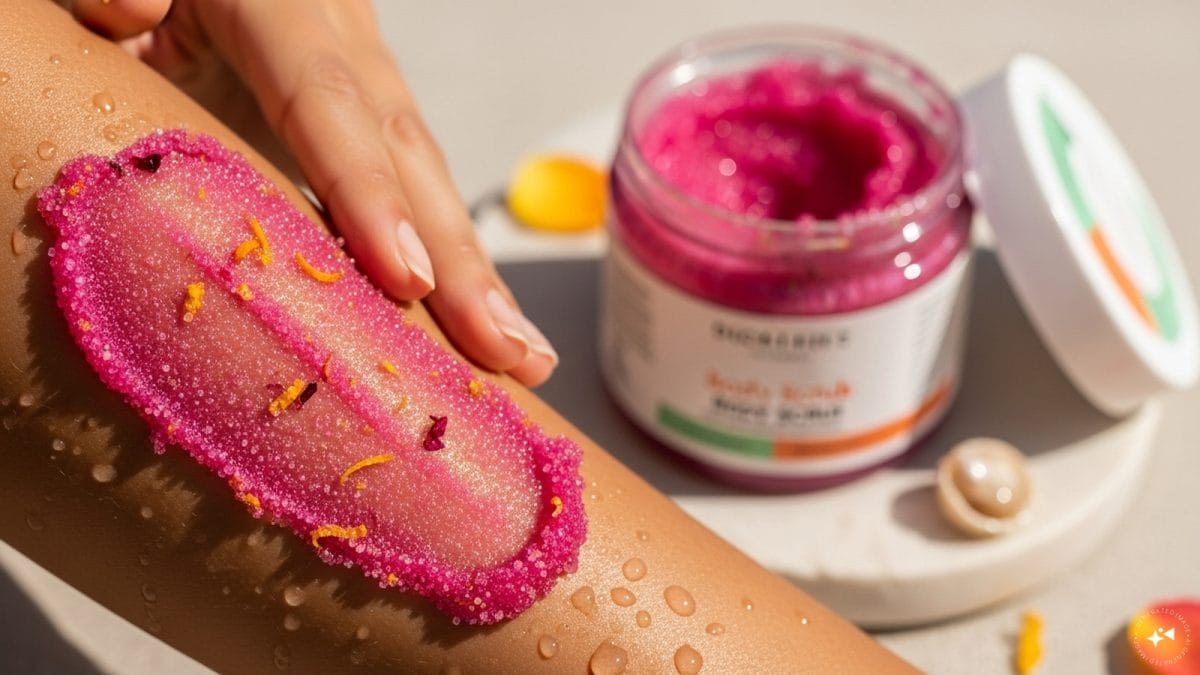
Moisturise after applying the face scrub. Image courtesy: Adobe Stock

2. Moisturiser

When winter comes, your skin needs more hydration. It’s a good time to change your moisturiser. Dr Sekhu recommends “moving from light gel moisturisers to thicker cream-based ones. Look for ingredients like shea butter, squalane, and hyaluronic acid.” These ingredients provide deep hydration, retain moisture, and help soothe inflammation.

Dr Sekhu says, “Your skin needs more support and nourishment in winter.” Cream-based moisturisers help by adding hydration and forming a protective layer against cold weather and dry indoor air. If you have very dry or sensitive skin, try adding a hydrating serum under your moisturiser for extra moisture.

3. Sunscreen

Many people think they don’t need sunscreen when the sun isn’t shining brightly. However, ultraviolet rays can harm us year-round, making it essential to include sunscreen in your winter skincare routine. In fact, UV exposure can increase in winter because the rays bounce off snow and clouds. Dr Sekhu advises, “Always use a broad-spectrum sunscreen with SPF 30 or higher, even in winter.” Choose a sunscreen that also provides moisture to protect your skin from the sun and dry winds.

4. Exfoliate

Exfoliation is important for keeping your skin smooth by removing dead skin cells, especially in your winter skincare routine. However, during winter, be careful about overexfoliation. “Over-exfoliating can damage your skin barrier, so limit your exfoliating treatments to once or twice a week. Use gentle exfoliants, such as lactic acid or enzyme-based scrubs,” says the doctor. These will help you achieve glowing skin without the risks posed by harsher scrubs.

5. Don’t forget your lips and hands

Lips and hands often get neglected in a winter skincare routine. Their delicate skin can dry out easily, causing chapping and cracking. “Keep a hydrating lip balm handy to keep lips moisturised. Apply a nourishing hand cream often, especially after washing your hands,” shares the expert. These simple steps can help protect your skin from winter dryness.

You may also like

Dr Sekhu offers a helpful comparison: “Think of skincare like seasonal eating. Just as our diets change with the seasons, choosing warm soups and healthy nuts in winter, our skincare routines should also change.”

Tags: , , , , ,

Bengaluru dermatologist reacts to women smearing period blood on face for glow: Is this bizarre beauty trend safe?

Menstrual masking is a DIY skincare trend that has been seen on social media, where in women apply their menstrual blood to their face as a face mask, claiming it gives them glowing, healthy-looking skin. Also read | Beauty influencers are using lube as primer for glowing skin: Here’s what experts say about this bizarre skincare trend

Have you heard of the DIY skincare trend that involves applying menstrual blood to your face? What is ‘menstrual masking’ and is it safe? Find out. (Representative picture: Freepik)

The idea behind this trend is that menstrual blood contains stem cells, proteins, and cytokines that can help repair skin, reduce inflammation, and boost collagen production. However, dermatologists and experts are warning against this trend, citing several risks.

Menstrual masking trend: what’s the hype?

In an interview with HT Lifestyle, Dr Shireen Furtado, senior consultant in medical and cosmetic dermatology at Aster CMI Hospital, Bengaluru, strongly advised against blindly following this beauty trend.

She said, “Menstrual masking is a trend where people use their own period blood as a face mask, but as doctors we strongly warn against this practice because it is not safe, not clean, and not backed by scientific proof, since menstrual blood is not sterile and can contain bacteria, fungi, and other germs that may cause skin infections, breakouts, irritation, or even more serious complications when applied on the face, especially on pimples, open pores, small cuts, or sensitive areas.”

Dr Furtado explained: “In reality, raw menstrual blood also contains dead tissue, inflammatory cells, and waste products that can actually cause more irritation and worsen skin problems instead of improving them, and unlike medically approved treatments like PRP, where a person’s blood is drawn, processed, and applied safely using sterile tools, menstrual masking has no clear method, no clinical research, and no safety guidelines for how much blood to apply, how long to leave it on, or how often to use it, which makes the trend unpredictable and potentially harmful.”

Why it’s not worth the risk

According to Dr Furtado, it’s essential to prioritise skin safety and hygiene over viral trends. Instead, consider using science-backed skincare products and consulting with a dermatologist for personalised advice, she added.

“The risks are much higher than any expected benefit, and there is no strong evidence to show that this practice can brighten the skin, reduce acne, or slow aging in any meaningful way, so from a medical point of view, menstrual masking is simply not worth trying because the chances of infection, irritation, and long-term skin damage are too high, and people who want healthy, glowing skin should rely on proven skincare treatments, good hygiene, and guidance from qualified dermatologists instead of unsafe DIY trends that can put their skin and overall health at risk,” she shared.

Note to readers: This article is for informational purposes only and not a substitute for professional medical advice. Always seek the advice of your doctor with any questions about a medical condition.

Tags: , , , , , , , , , , , ,
Best oLive
Privacy Overview

This website uses cookies so that we can provide you with the best user experience possible. Cookie information is stored in your browser and performs functions such as recognising you when you return to our website and helping our team to understand which sections of the website you find most interesting and useful.