Kiwano cucumber: A hydrating fruit for skin health

A hydrating fruit for skin health

Follow this guide

What’s the story

African cucumber, popularly known as kiwano, is taking the skincare world by storm. Its hydrating properties are a boon for those looking to revitalize their skin naturally.
Packed with vitamins and antioxidants, African cucumber provides a refreshing alternative to conventional skincare products.
Here’s how this exotic fruit can be incorporated into your daily routine for healthier, more radiant skin.

Nutrient-rich composition

African cucumber is loaded with essential nutrients, such as vitamin C, vitamin A, and potassium.
These nutrients help in promoting collagen production and protecting the skin from free radicals.
The high water content of the fruit also keeps the skin hydrated, making it an ideal choice for dry or dehydrated skin types.

Antioxidant benefits

The antioxidants in African cucumber are essential for fighting oxidative stress on the skin.
These antioxidants minimize the appearance of fine lines and wrinkles by neutralizing free radicals that damage cells.
Regular use of products containing this fruit can improve skin elasticity and give you a youthful appearance.

Versatile skincare uses

African cucumber can be used in various forms in your skincare routine. From face masks to serums, its gel-like texture makes it an ideal ingredient for DIY recipes.
You can blend it with other natural ingredients, like honey or aloe vera, for added benefits.
Its versatility makes it easy to incorporate into different skincare regimens without any hassle.

Easy incorporation tips

To reap the benefits of African cucumber, try adding it to your morning smoothie or juice for an internal hydration boost.
For external application, use it as a facial mask by blending the flesh with honey and applying it on your face for about 15 minutes before rinsing off with warm water.
This simple routine can help refresh tired-looking skin effectively.

Tags: , , ,
Global Cosmetics News

Street Talk 2026: Skin Care – Episode Two: Skin Type – Normal

Featuring: Mia

Summary

Mia describes her skin as normal, but her routine is shaped by past dermatitis and a cautious approach to skincare. After experiencing irritation, she now keeps things simple: water cleansing and a fragrance-free moisturiser recommended by a doctor. Her ideal product is light, natural-feeling and completely fragrance-free.

Meet Mia: Normal Skin, Sensitive History

Mia says her skin is “probably normal”, but she doesn’t follow a traditional skincare routine.

Because she has experienced dermatitis, she avoids unnecessary products and usually washes her face with water only.

Pull quote: “I don’t really have a skincare routine.”

A Doctor-Recommended Minimal Routine

Mia’s current routine is intentionally simple.

She uses:

  • Water to cleanse
  • A natural, fragrance-free moisturiser from the chemist
  • A product she thinks is called Doublebase

This reflects a shift away from complex skincare and towards barrier-friendly basics.

Shopping Habits: In-Store and Practical

Mia usually buys skincare in-store, mentioning retailers such as Space NK and pharmacies.

Her shopping behaviour is practical, cautious and guided by skin tolerance rather than trends.

Treatments: Interested, But Reluctant

Mia says she would consider facials, but remains hesitant because of her dermatitis history.

For her, professional treatments may be appealing, but the risk of irritation creates a clear barrier.

Pull quote: “I’d consider getting facials… but I’m definitely reluctant.”

What She Wants From Skincare

Mia’s ideal product would be:

  • A light moisturiser
  • Completely fragrance-free
  • Natural-feeling
  • Gentle and non-intimidating

She says she is now “quite scared” to put products on her skin after previously being influenced by skincare trends and using a long, heavy routine that she feels damaged her skin.

Pull quote: “I’m quite scared and reluctant to put things on my skin.”

Key Takeaways for Brands

  • “Normal” skin consumers may still have strong sensitivity concerns.
  • Past irritation can push consumers towards minimalist routines.
  • Fragrance-free claims remain highly important for cautious users.
  • Overcomplicated routines can create distrust and category fatigue.
  • Barrier-friendly, light moisturisers offer a clear opportunity.

Tags: , , , , , ,
1 (1)

7 Korean Lifestyle Habits For Youthful Skin And Healthy Living

Korean beauty goes far beyond skincare products. It reflects a holistic lifestyle rooted in consistency, balance, and self-care. Additionally, the global fascination with Korean lifestyle habits thrives as they include a holistic, preventative approach to wellness and prioritise long-term health over temporary fixes. From famous skin care routines and dietary staples such as probiotic-rich kimchi to disciplined daily rituals, these habits support radiant skin and long-term health. If you want a natural glow that lasts, these Korean lifestyle practices offer a practical and effective approach.

1. Follow A Consistent Skincare Routine

Koreans prioritise daily skincare with gentle, layered routines, with the foundational two-step process. They cleanse with an oil-based cleanser followed by a water-based cleanser. Further, they follow a layered hydration with the ‘7-Skin Method’ by applying toner twice, allowing each layer to fully absorb and seal it with a lightweight moisturiser, which hydrates and protects their skin without fail. Consistency helps maintain hydration, prevent premature ageing, and improve skin texture over time.

ALSO READ- Potato Juice Mask vs Tomato Mask: Which Is Best To Remove Tanning?

2. Eat Skin-Friendly Foods

A Korean diet includes fermented foods like kimchi, doenjang (soybean paste), cheonggukjang (fermented soybeans), fresh vegetables, and nutrient-rich soups. These foods improve gut health, which directly affects skin clarity and overall wellness.

3. Stay Hydrated Throughout The Day

Korean culture encourages frequent water intake and hydrating teas, including barley tea (boricha) and corn tea (oksusu-cha), and avoiding caffeine-rich beverages. Filled with antioxidants, these teas ensure proper hydration, which keeps the skin plump, flushes out toxins, and supports bodily functions.

4. Practise Sun Protection Daily

People in Korea use sunscreen every day, regardless of the weather. Treated as a daily necessity, this habit protects the skin from harmful UV rays, preventing pigmentation, premature wrinkles, and sun damage. Usage of parasols or hats is also common for physical protection.

ALSO READ- Top 5 Korean Sunscreens You Need For Glass Skin This Summer

5. Focus On Gentle Skincare Over Harsh Treatments

Instead of aggressive treatments, Koreans prefer soothing and nourishing products. This approach protects the skin barrier and reduces long-term damage.

6. Prioritise Sleep And Rest

Adequate sleep allows the skin to repair itself. Korean beauty culture values rest as a key factor in achieving a naturally glowing complexion, along with traditional steamy showers with gentle facial and neck massages.

7. Embrace Facial Massage And Circulation

Facial massages improve blood circulation and promote lymphatic drainage. This habit helps reduce puffiness and enhances natural radiance.

For more such stories, follow HerZindagi!

Image Credit: Freepik

Tags: , , , , , ,
Hindustan Times News

30s vs 40s skin: Doctor’s simple 3-step minimalist routine that actually works

In your 20s, skincare is often experimental, trying trends, layering actives, and chasing quick results. But as you move into your 30s and 40s, your skin and your approach to it start to change. There’s a visible shift today towards simpler, more consistent routines. Not because it’s trending, but because skin at this stage doesn’t respond well to excess. Overuse of actives, constant product switching, and aggressive treatments can end up doing more harm than good. At this stage, the focus moves from “doing more” to “doing what actually works.”

What should a 30-year-old’s skincare routine be? (Adobe Stock)

Tavishi Dogra is a health and wellness journalist with over eight years of experience in the field of health and wellness journalism. She knows how to explain complex health topics in a way that is easy to understand for many readers. Tavishi has written for respected publications like RSTV, Financial Express, Jagran, and Zee. She has a strong understanding of current health trends and social issues. Tavishi is dedicated to promoting holistic health and wellness solutions, which she shares in her articles about fitness, nutrition, and mental well-being. For more insights and updates on health, you can follow her work in the Hindustan Times.

Read moreRead less

What changes in your 30s and 40s?

Collagen production begins to slow down, hydration levels dip, and the skin barrier becomes more fragile. “Add to that daily exposure to the sun, pollution, stress, and lifestyle habits, and these changes become more evident”, Dr Tanya Mishra Dixit, Maxillofacial Surgeon, tells Health Shots. This is why skincare in your 30s and 40s needs to be less reactive and more restorative, focused on maintaining skin health rather than constantly correcting it.

Why simpler skincare routines are working better?

We’re seeing more people move away from 10-step routines to something far more edited. “A good cleanser, a targeted treatment, a moisturiser, and sunscreen, used consistently and often, deliver better results than complicated routines that are hard to sustain”, says the doctor. Skin minimalism isn’t about doing less for the sake of it. It’s about removing what’s unnecessary and sticking to what your skin actually needs.

How do I repair my skin barrier quickly?

One of the biggest shifts in skincare today is the focus on the skin barrier. When the barrier is compromised, everything else follows acne, dullness, and sensitivity. “Ingredients like ceramides, peptides, and fatty acids help strengthen the skin barrier and keep it healthy”, says the expert. Even small changes like switching to a gentler cleanser or a more nourishing moisturiser can make a visible difference over time.

Prevention over correction

Instead of trying to fix things once they show up, the idea now is to stay ahead of them. You don’t need an elaborate routine, just a few basics done consistently:

  • Sunscreen every day
  • Retinol to support skin renewal
  • Antioxidants like Vitamin C protect against environmental damage

What matters more than anything else is consistency, not constantly trying something new or changing products.

Does skin lose elasticity when dehydrated?

Dehydration is one of the most common concerns in this phase, often manifesting as dullness or loss of elasticity. A routine that prioritises hydration, with ingredients like hyaluronic acid and ceramides, helps the skin look healthier and feel better.

Sleep, stress, diet, and hydration play a much bigger role than most people realise. You can’t make up for poor lifestyle habits with good skincare. Skincare in your 30s and 40s doesn’t need to be complicated. “In fact, it works better when it isn’t. The real shift is this from chasing trends to building habits, from quick fixes to long-term skin health,” says the expert. Because good skin, at this stage, isn’t about doing more and more but about getting the basics right, consistently.

(Disclaimer: This article is for informational purposes only and not a substitute for professional medical advice. Always seek your doctor’s advice for any questions about a medical condition. At Hindustan Times, we help you stay up-to-date with the latest trends and products. Hindustan Times has an affiliate partnership, so we may get a part of the revenue when you make a purchase. We shall not be liable for any claim under applicable laws, including but not limited to the Consumer Protection Act, 2019, concerning the products. The products listed in this article are in no particular order of priority.)

Tags: , , , , , , , ,
Is the vitamin C skin trend really worth the hype? 

Is the vitamin C skin trend really worth the hype? 

Image Credit: Pexels

Vitamin C has become a superstar ingredient in the world of skincare. It has been praised for its brightening properties with antioxidant benefits.  

Also see: The rise of the bathroom selfie: How skincare became a signal of personal identity

But with so many products offering glowing properties, it’s natural to wonder if the hype truly matches the results. 

What vitamin C can actually do for your skin and whether it deserves a place in your routine

EWN spoke to wellness coach Liezel van der Westhuizen, and she says “the challenge for most people is not whether Vitamin C works but rather choosing the right formula and using it efficiently to achieve results.”

Explaining “Vitamin C has become so popular because it’s such a well-studied antioxidant. This means it helps fight free radicals, pollution, UV exposure and everyday environmental stress. It also improves dull skin and even skin tone, and early signs of ageing.” 

Also see: Morning vs Night Skincare Routine: What Matters Most for Healthy, Glowing Skin

When the vitamin C products are applied in the right concentration and formulation, vitamin C can penetrate the skin and deliver these benefits effectively.

It is important to note that vitamin C is sensitive to light and air, so ensuring stability in vitamin C products is essential. Many individuals who use these products are seeking brighter, more radiant skin with improved texture. This can often be achieved by using vitamin C serums or creams, and by pairing them with antioxidants and sunscreen to enhance overall appearance.

So, the popularity is justified, but the success of it depends on choosing stable, well-formulated vitamin C products. 

Image Credit: Pexels

Also see: Why AI-powered personalised beauty is the next era of skincare and make-up

Feature Image: Pexels

Be the first to know – Join our WhatsApp channel for content worth tapping into. Click here to join!

Tags: , , , ,
Herzindagi

7 Popular Skin Treatments You Should Know To Achieve Glass Skin

According to Dr Rickson Pereira, Head, Dr Rickson’s Dermatherapie Clinic, Consultant Dermatologist – Holy Family Hospital, Mumbai and Medical Director at Zennara Clinics, Hyderabad, “Skincare today consists of more than just creams and home routines. Due to a busy lifestyle, external pollutants, and stress, people are turning to advanced cosmetic treatments, which not only give visible results but also save time and energy. However, since every skin is unique and reacts differently to beauty treatments, it is important to understand what you are aiming for. Whether you desire to fix those fine lines, clear up stubborn acne scars, or just want a glass skin-like glow, the option can feel confusing.” Here is a compiled list of seven popular skin treatments that one must definitely try.

7 Popular Skin Treatments You Should Know To Achieve Glass Skin

1.  Hydradermabrasion

It is a gentle yet effective treatment that deeply cleanses and hydrates your skin. This cosmetic procedure uses a specialised hydropeel tip to exfoliate, peel, and vacuum away impurities while providing the skin with intense moisture and serums. It not only cleans the surface but also prepares the base for better product absorption by removing the layer of dead cells. This treatment is a preferred choice for many individuals as it offers visible results in minimal downtime, making you look refreshed and dewy, perfect during big events or a monthly skin maintenance routine.

2.  Alma Hybrid

If you are someone who has avoided lasers in the past because you were worried about pain or long recovery times, the Alma Hybrid is here to change your mind. It is a dual-wavelength laser platform that combines three powerful energies: a CO2 laser for surface smoothing, a non-ablative laser for deep collagen boosting, and Impact ultrasound technology to deliver skin-nourishing ingredients into the inner layers of the skin. This treatment targets the wrinkles from depth and improves pigmentation at the same time. It is different from standard laser therapies because the healing process is significantly faster and more comfortable for the patient.

3.  Microneedling

Microneedling, often referred to as collagen induction therapy, is among the most recognised and popular skincare treatments that works by using a device equipped with fine, sterile needles to create controlled micro-injuries on the skin’s surface. The punctures made on the skin trigger the rapid production of new collagen and elastin. This treatment is particularly effective for refining skin texture, reducing the appearance of enlarged pores, and fading acne scars or stretch marks.

4.  Chemical Peels

Chemical peels are one of the oldest and most trusted skin treatments that almost every individual has used, but now the product has evolved significantly from the shedding skin versions to a variety of acids. Professionals today are using chemical peels consisting of glycolic, lactic, or salicylic acids that gently exfoliate the top layer of the skin, which helps remove dull and damaged cells. By boosting cell turnover, you notice a clearer and even tone without taking multiple sessions. Depending on the strength of the peel, it can address concerns like pigmentation, mild acne, or uneven texture.

ALSO READ- Top 6 Blushes For A Natural Glow You Need To Invest In

5.  IPL (Intense Pulsed Light) Therapy

If sun damage and redness around the face are your primary concerns, IPL can be the best option for you. People often think of it as a laser treatment, but it is a non-surgical procedure that only uses broad-spectrum light pulses to improve skin texture and tone. It works by targeting melanin, specifically the brown of a sunspot and the red of a broken capillary. During the process, the light energy is absorbed by these pigments and converted into heat, which breaks down the damaged cells without affecting the surrounding skin. The treatment treats multiple concerns like sun damage, freckles, and removes facial hair.

6.  Skin Boosters and Biostimulators

In contrast to traditional dermal fillers that add volume to change the shape of your face, skin boosters focus entirely on skin quality. These are injectable treatments, consisting of hyaluronic acid, specifically the runny formulation, which allows the ingredient to spread properly under the skin. Instead of sitting in one spot, they provide deep-tissue hydration and restore elastin production. It works like an internal moisturiser that revives the bounce of your skin. If you want to achieve a natural, healthy glow while improving the texture, this treatment can be an ideal option.

7.  LED Light Therapy

LED (Light Emitting Diode) therapy has become a common treatment in modern skincare because it works below the surface of the skin. The therapy uses different wavelengths of light that go deeper into the layers to trigger specific biological responses. For example, blue light is beneficial for acne-prone skin since it kills the bacteria that cause breakouts, whereas red light helps with anti-ageing and healing, as it boosts ATP (cell energy) and reduces inflammation. It is non-invasive and painless, making it suitable for maintenance treatment, keeping your skin calm.

Summing Up

Choosing the right skincare treatment does not have to be a difficult task. Whether you are looking for high-tech laser technologies or gentle treatment options, the key is to understand your skin goals and requirements. When done right, combined with a good skincare routine, these treatments provide long-term skin health. Always consult a certified dermatologist who can assess your type and recommend a personalised plan.

Image credits: Freepik

ALSO READ- Top 5 Korean Sunscreens You Need For Glass Skin This Summer

For more such stories, stay tuned to HerZindagi.

Herzindagi video

Tags: , , , ,
Skincare Mistakes to Avoid for Healthy, Clear Skin

Skincare Mistakes to Avoid for Healthy, Clear Skin

Lifestyle

-Oneindia Staff


Updated: Sunday, April 19, 2026, 8:54 [IST]

Many skincare problems come from daily habits, not bad luck. Common skincare mistakes can cause dull skin, acne, dark spots, or dryness. Small fixes can support healthy, clear skin. Focus on gentle cleansing, steady moisturising, and daily sun protection. Also watch how you use active products like retinol and acids.

Washing your face too often is a common skincare mistake. It can strip natural oils and weaken your skin barrier. This may lead to tightness, more oil, and breakouts. Cleanse twice a day, and after heavy sweat. Use lukewarm water, not hot water.

Many skincare problems like dullness and acne arise from daily habits such as overwashing, harsh products, skipping moisturizer or sunscreen, and improper makeup removal, which can be corrected with gentle cleansing, consistent moisturizing, and daily SPF.

Strong soaps and rough scrubs can irritate skin. They can also make redness and acne worse. Choose a mild cleanser that suits your skin type. For oily skin, avoid “squeaky clean” feels. For dry skin, pick a creamy, non-drying face wash.

Many people skip moisturiser to avoid oily skin. This can backfire and trigger more oil. Moisturiser helps reduce water loss and supports the barrier. For healthy, clear skin, use a light, non-comedogenic moisturiser if you get acne.

Using a heavy cream on very oily skin may clog pores. Using a very light gel on very dry skin may not be enough. Match texture to your needs. If skin feels tight after cleansing, moisturise within a few minutes to lock in moisture.

Not using sunscreen every day

Skipping sunscreen is one of the biggest skincare mistakes. UV rays can cause tanning, dark spots, and early lines. They can also worsen acne marks. Use a broad-spectrum SPF 30 or higher each day. Apply it even on cloudy days and indoors near windows.

Using too little sunscreen reduces protection. Apply enough to cover face and neck. Reapply when you are outdoors for long hours. If you sweat a lot, reapply more often. Sunscreen should be the last step of morning skincare, before makeup.

Over-exfoliating and using too many actives

Exfoliation can help with clogged pores and dullness. Too much can harm the barrier and cause burning. This may lead to more pimples and peeling. Avoid using scrubs daily. If you use acids, start slow and watch for irritation.

Mixing many strong actives is another common mistake. Using retinol, AHA, BHA, and benzoyl peroxide together can be harsh. Keep routines simple. Add one active at a time. Use it a few nights a week, then increase only if skin stays calm.

Picking, popping, and touching the face

Popping acne can push germs deeper into skin. It can cause swelling and dark marks. It may also leave scars that take long to fade. If you get painful pimples, use spot treatment. For frequent acne, consider a dermatology visit.

Touching your face often can spread oil and dirt. This can block pores and trigger breakouts. Keep hands away from the face during the day. Clean your phone screen often. Change pillowcases on a regular schedule, since they collect oil and sweat.

Using products without patch testing

Trying new skincare without a patch test can lead to rashes. Fragrance, essential oils, and strong actives may irritate. Patch test on a small area first. Wait at least 24 hours to check for redness, itching, or bumps before full use.

Do not change many products at once. If you react, it becomes hard to know the cause. Keep a simple routine for two weeks. Then add one new item. This helps you build a routine for healthy, clear skin with fewer surprises.

Not removing makeup properly

Sleeping with makeup is a major skincare mistake. It can trap oil and dirt in pores. This may lead to blackheads and dull skin. Remove makeup before bed. Use a gentle remover or cleansing balm, then follow with a mild face wash.

Rubbing hard to remove makeup can irritate skin. Be gentle around the eyes. Use soft cotton or clean hands. If you use waterproof products, choose a remover made for them. Clean makeup brushes often to reduce bacteria and acne flare-ups.

Ignoring skin type, climate, and consistency

Copying a friend’s routine may not suit your skin. Oily, dry, and sensitive skin need different care. Weather also matters in India, since heat and humidity can increase sweat and oil. Choose products based on your skin type and how it feels.

Changing products too quickly is another common issue. Skincare takes time, especially for acne marks. Use a routine for several weeks unless you have irritation. Keep steps basic: cleanse, moisturise, and sunscreen. Add treatment steps only when needed and tolerated.

Tags: , , , , ,
5

5 Vitamin C Serums That Protect Your Skin From Summer Damage

Vitamin C Serums For Summer Season: Summer can be harsh on your skin, causing tanning, dullness, and damage due to constant sun exposure. Adding a vitamin C serum to your skincare routine can help protect your skin while boosting its natural glow. Known for its brightening and antioxidant properties, vitamin C works effectively to keep your skin fresh and healthy even in the heat.

Why Vitamin C Serum Is A Must In Summer

Vitamin C serum is an antioxidant which prevents the damage done to your skin by ultraviolet rays and pollution. It helps in minimising tanning and improves the tone of your skin, thus giving it a glow. In the summer season, your skin is more likely to develop dark spots and become dull; hence, a vitamin C serum is needed for your skin.

5 Vitamin C Serums That Protect Your Skin From Summer Damage

1. Mamaearth 10% Vitamin C Face Serum

This serum is enriched with vitamin C and turmeric, helping brighten the skin and reduce pigmentation. It is lightweight and suitable for daily use.

  • Key Ingredients: Gotu Kola, Niacinamide, Vitamin C
  • Best for: Normal to dry skin
  • Price of the product: ₹608

2. Minimalist 10% Vitamin C Serum

Known for its simple formulation, this serum helps improve skin texture and boost radiance. It works well for those looking for a gentle yet effective option.

  • Key Ingredients: Vitamin C, Acetyl Glucosamine, Gluconolactone (PHA)
  • Best for: All skin types
  • Price of the product: ₹284

3. Lakmé Vitamin C+ Serum

Lakmé’s vitamin C serum is designed to give a quick glow while protecting the skin from daily damage. It is ideal for beginners in skincare.

  • Key Ingredients: Vitamin C, Vitamin E
  • Best for: All skin types
  • Price of the product: ₹205

4. Plum 15% Vitamin C Serum

This serum is rich in antioxidants and helps reduce dark spots and dullness. It’s suitable for all skin types and has a refreshing, non-greasy formula.

  • Key Ingredients: Ethyl Ascorbic acid, Kakadu Plum, Japanese Mandarin
  • Best for: Oily to acne-prone skin
  • Price of the product: ₹599

ALSO READ- Top 5 Glycolic Acid Serums To Include In Your Skincare Routine

5. WOW Skin Science Vitamin C Serum

Packed with natural ingredients, this serum helps improve skin tone and provides hydration. It’s a good option for those who prefer plant-based skincare.

  • Key Ingredients: Ascorbyl Methylsilanol Pectinate,  Vitamin C, Witch Hazel Extract
  • Best for: All skin types
  • Price of the product: ₹699

How To Use Vitamin C Serum In Summer

Begin by washing your face and drying it. Then, take some drops of the vitamin C serum and apply it to your face and neck. After that, apply a moisturiser to your skin, and make sure that you use a sunscreen while going out during the daytime. It is recommended that you use this product only once a day.

Benefits Of Vitamin C Serum

Vitamin C serum lightens your skin, fades blemishes, and combats ageing. It shields your skin from external stressors and increases collagen formation. Its consistent application can result in clearer, smoother, and more glowing skin.

Image credits: Nykaa/Amazon

ALSO READ- 5 Best Hair Growth Serums You Need To Try For Longer Tresses

If you liked this story, then please share it. To read more such stories, stay connected to HerZindagi.

Tags: , , , , ,
For these reasons, skin appears dull.. and Vitamin C enhances its brightness

For these reasons, skin appears dull.. and Vitamin C enhances its brightness

Khaberni – Using Vitamin C to enhance skin brightness cannot be considered just a gimmick in the skincare world, but it is an effective and scientifically supported solution. Learn about its properties, benefits, and usage methods below.


Skin loses its radiance for several reasons, most of which are completely treatable. Environmental damage is at the forefront of these reasons, caused by pollution, ultraviolet rays, and free radicals that rob the skin of its brightness. The accumulation of dead skin cells is another reason, as it creates a barrier that makes the skin appear dull and tired. Uneven melanin production also plays a role, causing dark spots that make the skin tone appear uneven. With age, collagen production naturally slows down, affecting the texture of the skin and its youthful and radiant brightness that we all want to maintain.


– Using Vitamin C:

Vitamin C serum works on multiple levels to enhance the skin’s natural radiance, and as a powerful antioxidant, it neutralizes free radicals before they can damage skin cells. The process of inhibiting melanin is equally effective, as Vitamin C interferes with the enzyme tyrosinase, responsible for melanin production, helping to lighten existing dark spots and prevent new ones. Additionally, it stimulates collagen production, improving skin texture and creating a smooth, reflective surface that beautifully captures light. Research in this field has shown that topical use of Vitamin C improves skin radiance within a period ranging from 4 to 12 weeks of regular use. Studies indicate that concentrations ranging from 10 to 20 percent are most effective for lightening the skin without causing excessive irritation.


– A routine that enhances skin radiance:

Creating an effective routine to enhance skin radiance is not limited to applying Vitamin C serum and waiting for results. Timing, technique, and the gradual application of products are all important factors in achieving long-lasting real results.


• Best time to use Vitamin C serum:

Dermatologists recommend using skincare products containing Vitamin C in the morning, as it provides antioxidant protection throughout the day. However, for sensitive skin or when using high concentrations of this vitamin, evening use is also appropriate. The important thing is to choose a specific time for application and stick to it consistently.

When using other active ingredients, it is advisable to apply a few drops of Vitamin C serum first on clean skin, then apply niacinamide or hyaluronic acid. Also, be sure to use sunscreen during the day, as Vitamin C increases the skin’s light sensitivity in the initial stages of use.


• Ingredients that support Vitamin C:

Combining Vitamin C with suitable ingredients enhances its effect in the area of lightening the skin. Niacinamide interacts wonderfully with Vitamin C to reduce inflammation and improve skin texture. Vitamin E enhances the stability of Vitamin C, providing additional antioxidant protection. Hyaluronic acid is ideal for moisturizing the skin without affecting the effectiveness of Vitamin C. For better absorption, it is recommended to use gentle exfoliants like lactic acid two or three times a week, avoiding their use at the same time with Vitamin C.


– Choosing the right Vitamin C:

Not all types of Vitamin C serum are equal, and choosing the right type can make a significant difference in results. Ascorbic acid is the most effective form of Vitamin C, but it may cause irritation for sensitive skin. It is excellent for treating dull skin if it can be tolerated.

Magnesium ascorbyl phosphate is gentler and more stable, making it ideal for beginners or those with sensitive skin. Sodium ascorbyl phosphate offers good stability and is less prone to oxidation, while ascorbyl glucoside has a gentle lightening effect that does not cause any irritation. Each type has its specific uses depending on skin needs and tolerance levels. Start with a concentration ranging from 10 to 15 percent when beginning to use skincare products containing Vitamin C. This ensures getting the benefits of this vitamin without overburdening the skin. If you have previously used this vitamin at concentrations ranging from 15 to 20 percent for more prominent results.

It is advised to store Vitamin C serum in a cool, dark place to avoid oxidation and loss of effectiveness. Most types of this vitamin last from 6 to 12 months when stored properly. Always make sure to close the bottle tightly after use and avoid exposing it to direct sunlight or heat. It is also necessary to avoid using Vitamin C with retinol, benzoyl peroxide, or alpha-hydroxy and beta-hydroxy acids in the same skincare routine. Moreover, excessive exfoliation while using Vitamin C may weaken the skin barrier, leading to increased sensitivity and delayed results.


Tags: , , , , , ,
The best vitamin C serums in the UK for every skin type and budget, tested | Skincare

The best vitamin C serums in the UK for every skin type and budget, tested | Skincare

Vitamin C is having a moment in skincare because of its ability to gently brighten, reduce pigmentation and support collagen production. It also helps to neutralise free radicals – those unstable molecules generated by UV light and pollution that can lead to premature ageing – making it an essential part of your morning skincare routine (alongside an SPF).

The Guardian’s journalism is independent. We will earn a commission if you buy something through an affiliate link. Learn more.

But is a vitamin C serum suitable for everyone? And if so, how do you know which one is right for you? “Individuals with sensitive, reactive or rosacea-prone skin should approach L-ascorbic acid – the most commonly used active form of vitamin C in skincare – carefully, as it can trigger inflammation in compromised skin barriers,” says pharmacist and skincare expert Dr Sonal Chavda-Sitaram.

“For these individuals, lipid-soluble derivatives, such as tetrahexyldecyl ascorbate (THD ascorbate), can be transformative. They’re formulated at neutral pH while penetrating deeply and converting to active vitamin C at a cellular level without irritation.”

In short, the acidic nature of L-ascorbic acid may actually render some formulas too potent for certain people. With that in mind, I have scoured and tested a range of products for all skin types to help you pick the best vitamin C serum for your needs.

At a glance

£22.49 at Superdrug£16 at Amazon£169 at Lookfantastic£36 at Indē wild£12.95 at Face the Future

Why you should trust me

I’ve been testing and writing about beauty products for years. As someone who still experiences acne breakouts at the age of 39, the quest for a clear, healthy and radiant complexion has become something of an obsession. That said, my skincare routine is strictly made up of tried-and-trusted products, so it takes something special to dislodge current repeat buys.

For years, I was told vitamin C wasn’t right for my skin type – until a dermatologist explained it was all about the way the formulation is delivered. And while skincare is never one-size-fits-all, the fact I saw improvements with my somewhat reactive skin suggests there’s a good chance it’ll work for you, too.

How I tested

Now C here: writer Danielle tested the serums over four months. Photograph: Danielle Wilkins/The Guardian

Living and working in London means my skin is busy deflecting pollution, as well as UV rays, on a daily basis. To boost the efficacy of my SPF, which I use religiously, I introduced 15 different vitamin C serums into my morning routine over the course of four months, applying after cleansing and before my usual moisturiser and SPF, to see how each one held up.

As well as noting the texture and scent of each serum, I logged how it felt on the skin, how well it sat beneath makeup, how noticeable the results were over time, and whether the formula offered value for money. Bonus points were awarded for additional ingredients such as vitamin E and ferulic acid, which doubles UV protection when used in combination with vitamin C.

I also considered the levels of vitamin C in the formula and the packaging. L-ascorbic acid in particular is notoriously unstable and oxidises rapidly when exposed to light, air and water – you’ll see the product change in colour from clear to yellow or brown as this happens. The result is that, rather than neutralising free radicals, your product will be generating them. As advised by Chavda-Sitaram, I picked products that demonstrated evidence of thoughtful stabilisation with appropriate packaging and pH-optimised formulations (“Think airless pump bottles and complementary antioxidants, such as vitamin E and ferulic acid, that chemically stabilise the molecule.”).

The best vitamin C serums in 2026

Photograph: Danielle Wilkins/The Guardian

Best vitamin C serum overall:
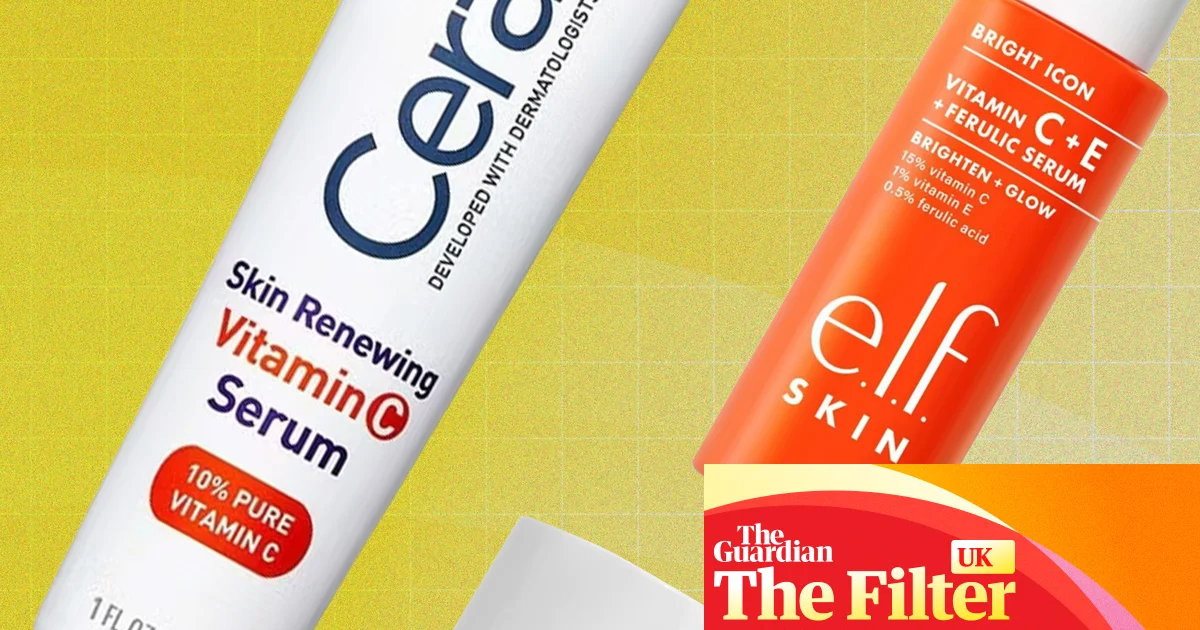
CeraVe skin renewing vitamin C serum

CeraVe

Skin renewing vitamin C serum

from £22.49

What we love
Lightweight and hydrating with great brightening benefits

What we don’t love
Not vegan or certified cruelty-free

Photograph: Danielle Wilkins/The Guardian£22.49 at Superdrug£22.49 at Amazon

With hyaluronic acid, vitamin B5 and ceramides sitting alongside 10% L-ascorbic acid, this serum goes above and beyond your typical vit-C product. The serum promises – and delivers – up to 24 hours of hydration, while vitamin B5 helps soften and smooth the skin’s texture. It also comes in protective package to maintain efficacy.

Why we love it
This clear and lightweight gel formula felt extremely hydrating and not at all sticky upon application – a rarity when it comes to gel-textured serums – and sat well beneath layers of SPF and makeup. Most noticeable was just how much brighter and smoother my skin looked without makeup after just a couple of weeks of use. Add to this the reasonable price of about £30, and in CeraVe we have a winner.

It’s a shame that … CeraVe’s products aren’t strictly vegan or certified cruelty-free, which may rule out this serum for some.

Size: 30ml
Price per ml: from about 75p
Key ingredients: 10% vitamin C, hyaluronic acid, vitamin B5 and ceramides
Vegan: no
Certified cruelty-free: no

CeraVe

Skin renewing vitamin C serum

from £22.49

What we love
Lightweight and hydrating with great brightening benefits

What we don’t love
Not vegan or certified cruelty-free

Best budget vitamin C serum:
Elf Skin Brighten + Glow vitamin C + E + ferulic serum

Elf

Skin Brighten + Glow vitamin C + E + ferulic serum

from £16

What we love
Affordable, lightweight and gives great glow

What we don’t love
Slightly off-putting scent

Photograph: Danielle Wilkins/The Guardian£17 at Elf£16 at Amazon

Elf has long been known for its affordable dupes of cult favourites, and this serum – designed to work with all skin types – is no exception. In fact, it contains the same exact percentages of vitamin C, E and ferulic acid as SkinCeutical’s gold standard vitamin C product (below), which comes in at an eye-watering £169 a bottle.

Why we love it
The texture feels close to a lightweight oil, but it absorbed quickly without leaving an oil slick on my face. It’s also extremely hydrating (likely because of the 1% vitamin E) and left my skin feeling softer with continued use. It layers well under makeup despite some initial tackiness, and I’d score the brightening benefits a 10/10. It does what it says on the tin, for sure.

It’s a shame that … the scent may take some getting used to.

Size: 30ml
Price per ml: from about 53p
Key ingredients: 15% vitamin C, vitamin E and ferulic acid
Vegan: yes
Certified cruelty-free: yes

Elf

Skin Brighten + Glow vitamin C + E + ferulic serum

from £16

What we love
Affordable, lightweight and gives great glow

What we don’t love
Slightly off-putting scent

Best vitamin C for protection:
SkinCeuticals C E ferulic antioxidant treatment

SkinCeuticals

C E ferulic antioxidant treatment

from £169

What we love
Potent; effective; gentle; lightweight formula

What we don’t love
Expensive

Photograph: Danielle Wilkins/The Guardian£169 at Lookfantastic£169 at Noli

A skincare superhero that’s long been hailed for its potent antioxidant benefits, the SkinCeuticals C E ferulic is substantial but not heavy or sticky, and offers instant and long-term benefits. The high-strength vitamin C uses 15% pure L-ascorbic acid at a proven pH (making it more potent than the Elf dupe, which uses a more stable derivative). That sits alongside other skin-health boosting heroes (vitamin E, ferulic acid and additional antioxidants) for a brighter complexion and protection against environmental damage.

Why we love it
SkinCeuticals’ water-soluble formula is runny but sinks into the skin beautifully – and sits well under SPF and makeup, too. It’s difficult to judge the protection it offers against free radicals, but it felt like a treat for my city-dweller skin. My complexion looked noticeably brighter and more even-toned after just a few uses – and I’m confident that with further use you’d see anti-ageing benefits, too. The formulation is also backed by decades of research.

It’s a shame that … it’s pricey – the most expensive in our roundup – but a little goes a long way.

Size: 30ml
Price per ml: £5.63
Key ingredients: 15% vitamin C, vitamin E and ferulic acid
Vegan: no
Certified cruelty free: no

SkinCeuticals

C E ferulic antioxidant treatment

from £169

What we love
Potent; effective; gentle; lightweight formula

What we don’t love
Expensive

Best vitamin C for hyperpigmentation:
Indē Wild vitamin C Sunrise Glow serum

Indē wild

Vitamin C Sunrise Glow serum

£36

What we love
Boosts radiance; reduces dark spots; absorbs quickly

What we don’t love
Fragranced; weighty packaging

Photograph: Danielle Wilkins/The Guardian£36 at Indē wild

Blending 15% stabilised vitamin C, glutathione, hyaluronic acid and niacinamide, this serum bolsters skin barrier function and enhances collagen production while tackling stubborn acne marks, hyperpigmentation and uneven tone. It’s infused with turmeric root and ashwagandha, too, which are shown to reduce inflammation. I was intrigued to try this one.

Why we love it
As someone who experiences acne – and acne scarring, as a result – I noticed a change in my skin tone and texture on using this serum daily. The formula is lightweight, grease-free and absorbed quickly into skin, with the initial tackiness disappearing once I’d applied my moisturiser and SPF. It sat well under my makeup, too, and left my complexion looking radiant.

It’s a shame that … there’s a strong – although not unnatural – scent that won’t be for everyone. While recyclable, the glass packaging is weighty, so it’s better suited to home use than for travel.

Size: 30ml
Price per ml: £1.20
Key ingredients: 15% vitamin C, ferulic acid, niacinamide, vitamin E and hyaluronic acid
Vegan: yes
Certified cruelty-free: yes

Indē wild

Vitamin C Sunrise Glow serum

£36

What we love
Boosts radiance; reduces dark spots; absorbs quickly

What we don’t love
Fragranced; weighty packaging

Best Korean vitamin C serum:
Haruharu Wonder Centella 4% TXA gel serum

Haruharu Wonder

Centella 4% TXA gel serum

from £12.95

What we love
Smooths and refines the skin; lightweight

What we don’t love
Tingling on application; may not suit sensitive skin types

Photograph: Danielle Wilkins/The Guardian£12.95 at Face the Future£15.10 at Amazon

K-beauty is more than a viral phenomenon; with innovative ingredients and science-backed formulas, it’s never been easier to address our skincare needs thanks to brands such as Haruharu Wonder. Vitamin C, niacinamide, antioxidant-rich n.Pearin (derived from baby pears), calming centella complex and 4% tranexamic acid combine to provide a powerful dark-spot-fighting blend. Apply daily under your moisturiser and SPF for even skin tone and that lit-from-within glow.

Why we love it
You’ll find that a little of this lightweight gel-serum goes a long way, with just a pea-sized amount needed. It has a light scent, but I didn’t find it overbearing, with the formula sinking well into my skin and sitting nicely beneath my other skincare products, too. There’s no denying this formula is a slam-dunk when it comes to providing a great glow.

It’s a shame that … there was a slight tingling sensation upon first application, but this dissipated within a week.

Size: 30ml
Price per ml: from 43p
Key ingredients: 4% tranexamic acid, vitamin C, niacinamide
Vegan: yes
Certified cruelty-free: yes

Haruharu Wonder

Centella 4% TXA gel serum

from £12.95

What we love
Smooths and refines the skin; lightweight

What we don’t love
Tingling on application; may not suit sensitive skin types

The best of the rest

Photograph: Danielle Wilkins/The Guardian

The Ordinary multi-antioxidant radiance serum

The Ordinary

Multi-antioxidant radiance serum

from £14.20

What we love
Affordable; hydrating; great for boosting SPF efficacy

What we don’t love
Low concentration of vitamin C

Photograph: Danielle Wilkins/The Guardian£14.20 at Lookfantastic£14.20 at Space NK

Best for: beginners

Infused with vitamin C, ginseng and turmeric peptides, this reasonably priced serum is designed to protect skin from daily environmental stressors, while smoothing texture, reducing dark spots and boosting skin hydration.

What I loved most about it was how it felt on my skin. The serum feels similar to a lightweight oil, but absorbs quickly and leaves skin feeling hydrated without any tackiness or greasiness. It’s a great option for those who want a hydrating and protective serum without the hefty price.

It didn’t make the final cut because … I didn’t notice a huge difference in my dark spots or skin tone, but with just 1% ascorbyl glucoside (another stable vitamin C derivative), it may take longer to see results.

Size: 30ml; price per ml: from 47p; key ingredients: vitamin C, ginseng, and turmeric peptides; vegan: yes; certified cruelty-free: yes

The Ordinary

Multi-antioxidant radiance serum

from £14.20

What we love
Affordable; hydrating; great for boosting SPF efficacy

What we don’t love
Low concentration of vitamin C

La Roche-Posay Pure Vitamin C12 serum

La Roche-Posay

Pure Vitamin C12 serum

from £36

What we love
Applies like a dream; hydrating; real results

What we don’t love
Pricey and some may not like the fragrance

Photograph: Danielle Wilkins/The Guardian£36 at La Roche-Posay£45 at Cult Beauty

Best for: mature skin

The gel texture of this serum from La Roche-Posay is formulated with 12% vitamin C, exfoliating salicylic acid and soothing neurosensine – a key ingredient in the brand’s Toleriane range for sensitive skin. The result? A complexion that looks brighter and more even-toned. A nice one to apply in the summer when you want a product that feels hydrating but light.

It didn’t make the final cut because … although the brand is a favourite with dermatologists, and I did see a brilliantly glowy boost, it’s pricier than others here that work just as well. It also has a light powdery scent that may not appeal to some.

Size: 30ml; price per ml: from about £1.20; key ingredients: 12% vitamin C and salicylic acid; vegan: no; certified cruelty-free: no

La Roche-Posay

Pure Vitamin C12 serum

from £36

What we love
Applies like a dream; hydrating; real results

What we don’t love
Pricey and some may not like the fragrance

Dr Somji vitamin C daily defence moisturiser SPF30

Dr Somji

Vitamin C daily defence moisturiser SPF30

£75

What we love
Great for when you don’t have time for full skincare routine

What we don’t love
Expensive and not widely stocked

Photograph: Danielle Wilkins/The Guardian£75 at Dr Somji Skincare

Best for: a vitamin C moisturiser/multitasker

Although this article specifically focuses on serums, I couldn’t pass up the opportunity to mention this lightweight moisturiser from skincare expert Dr Somji. Formulated with THD ascorbate (making it a great choice for sensitive skin), ceramides, hyaluronic acid, peptides and SPF, it provides the ultimate antioxidant cocktail. I loved how this formula felt on my skin – with or without the addition of serum. It didn’t take long before it became a staple in my routine, especially on those mornings when I barely get time to brush my hair, let alone apply five products to my face (let’s work smarter, friends).

It didn’t make the final cut because … it feels expensive for a moisturiser, despite offering a multitude of benefits.

Size: 50ml; price per ml: £1.50; key ingredients: vitamin C, ceramides, hyaluronic acid, exosomes and matrixyl synthe peptides; vegan: no; certified cruelty-free: yes

Dr Somji

Vitamin C daily defence moisturiser SPF30

£75

What we love
Great for when you don’t have time for full skincare routine

What we don’t love
Expensive and not widely stocked

Simple 10% vitamins C + E + F Glow+ serum

Simple

10% vitamins C + E + F Glow+ serum

from £5.84

What we love
Lightweight and nourishing; great price

What we don’t love
Low vit C potency, so it may take a while to see results

Photograph: Danielle Wilkins/The Guardian£6.65 at Superdrug£5.84 at Amazon

Best for: sensitive skin

With a lightweight, milky consistency and combination of barrier-loving ingredients, this affordable serum from Simple feels nourishing on the skin and sinks in beautifully. The low-dose vitamin C combined with vitamins E and F make this a great option for beginners or those with sensitive skin.

It didn’t make the final cut because … the 10% on the bottle actually refers to the sum of all the active ingredients (2% vitamin C, 1% vitamin E and 7% vitamin F). With just 2% vitamin C, I didn’t notice significant brightening or anti-ageing benefits, but the formula did keep my skin hydrated.

Size: 30ml; price per ml: from 19p; key ingredients: 2% vitamin C, vitamin E and vitamin F; vegan: yes; certified cruelty-free: yes

Simple

10% vitamins C + E + F Glow+ serum

from £5.84

What we love
Lightweight and nourishing; great price

What we don’t love
Low vit C potency, so it may take a while to see results

L’Oréal Paris Revitalift 12% pure vitamin C brightening serum

L’Oréal Paris

Revitalift 12% pure vitamin C brightening serum

from £15.95

What we love
Affordable; hydrating; good amount of vitamin C

What we don’t love
Not strictly vegan or certified cruelty-free; strong scent

Photograph: Danielle Wilkins/The Guardian£15.99 at Noli£15.95 at Amazon

Best for: oily skin and texture

This formula from L’Oréal contains 12% pure vitamin C alongside vitamin E and salicylic acid. These will help break down the appearance of dark patches and pores, as well as smooth texture – making it a great choice for those with oily or acne-prone skin. The silky gel-serum feels luxurious to apply, absorbs quickly, and I didn’t mind the subtle, almost citrusy scent.

It didn’t make the final cut because … there were times I had to give the bottle a good shake since it looked like the formula may have separated.

Size: 30ml; price per ml: from 53p; key ingredients: 12% vitamin C, vitamin E and salicylic acid; vegan: no; certified cruelty-free: no

L’Oréal Paris

Revitalift 12% pure vitamin C brightening serum

from £15.95

What we love
Affordable; hydrating; good amount of vitamin C

What we don’t love
Not strictly vegan or certified cruelty-free; strong scent

What you need to know

Photograph: Danielle Wilkins/The Guardian

What are the benefits of a vitamin C serum?

“For skin specifically, vitamin C works through three interconnected mechanisms,” says skincare expert Chavda-Sitaram. “Antioxidant protection against UV and environmental damage; collagen synthesis at the cellular level (essential for maintaining firmness and elasticity); and brightening through tyrosinase inhibition, which fades hyperpigmentation and prevents new pigmentation.

“It benefits everyone because oxidative stress affects all skin types – although the form, concentration and supporting ingredients must match individual tolerance. The most dramatic results will be seen by those who have photo-aged skin with fine lines and firmness loss, hyperpigmentation or uneven tone, and dull complexions.”

How to apply a vitamin C serum

Apply your vitamin C serum in the morning, after cleansing and toning, but before your moisturiser and SPF. SPF really is a non-negotiable here, particularly if your serum contains other active ingredients, such as salicylic acid.

What to know about vitamin C concentration

Since different forms of vitamin C work at different concentrations, it can be difficult to compare them directly. However, research indicates that for L-ascorbic acid (the most commonly used form of vitamin C in skincare), 10-20% is optimal.

“Anything below 8% and you’re not delivering enough to drive meaningful change, but above 20% you hit an efficacy plateau with substantially increased irritation,” says Chavda-Sitaram. “However, the derivatives work differently. Tetrahexyldecyl ascorbate (THD) is exceptionally potent because it’s lipid-soluble, penetrating more efficiently than water-soluble L-ascorbic acid. So, the question shouldn’t necessarily be, ‘what percentage?’ but, ‘in what form, in what delivery system, with what supporting ingredients, and is it stable?’”

How to store vitamin C serums

All good vitamin C serums will come in protective, airtight packaging to avoid oxidation – but where you choose to store it can help maintain the formula, too. A cool, dark place is best – avoid spots that are in direct sunlight or heat (the humidity and temperature of bathrooms should be avoided where possible), while others even recommend storing vitamin C serums in the fridge.

For more:
The best eye creams for banishing bags, puffiness and fine lines
The best LED face masks, tested
The best anti-ageing creams, serums and treatments

Danielle Wilkins is a lifestyle journalist and former magazine editor with almost two decades of experience writing about beauty, parenting and all things weddings for some of the biggest names in publishing. When she’s not reviewing the latest products in skincare, running in the gym or sitting front row at Bridal Week, she’s acting as a human climbing frame for her two young boys and dreaming about hot coffee

Tags: , , , , , ,
Best oLive
Privacy Overview

This website uses cookies so that we can provide you with the best user experience possible. Cookie information is stored in your browser and performs functions such as recognising you when you return to our website and helping our team to understand which sections of the website you find most interesting and useful.