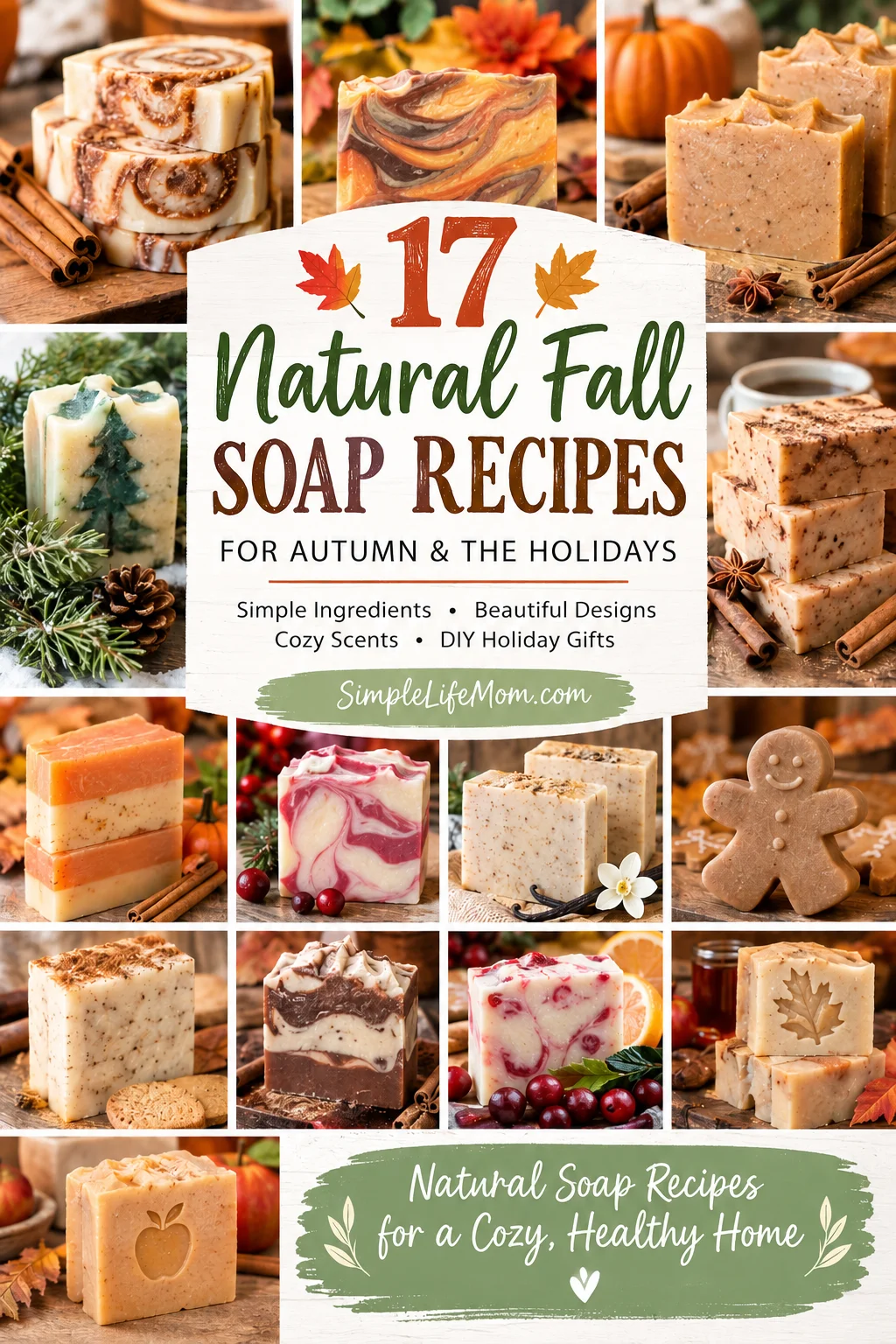
17 Natural Fall Soap Recipes

17 Fall Soap Recipes for Any Time of the Year

I’ve made a lot of homemade soap recipes over the years, and every time I go back through them, I’m reminded of how many fun seasonal soaps I’ve made! So, I decided to gather my 17 favorite fall soap recipes all in one place.

Even I had forgotten about some of these. Looking through the recipes was such a fun reminder and gave me plenty of inspiration to make a few that I haven’t made in a while.

These natural fall soap recipes are perfect for Autumn, Thanksgiving, Christmas, and the entire winter season. They also make beautiful handmade gifts for friends, family, teachers, neighbors, and anyone who enjoys natural homemade products.

And, of course, you don’t have to wait for fall to make them. If you love warm, spicy, woodsy, citrusy, and cozy scents, you can enjoy these homemade soap recipes any time of year. I do! And they’re scents that my family often ask for year around as well.

Natural Ingredients for Fall Soap

If I’m going to take the time to make my own soap, I want to be careful with what is going into it. After all, why go to all that trouble just to add something toxic and ruin it all?

You can certainly make soap simply because it’s a fun craft—and it is! But one of my favorite things about making homemade soap is being able to choose simple, natural ingredients and leave out the artificial colors, synthetic fragrances, and unnecessary additives found in many commercial soaps.

You’ll find ingredients such as:

  • Shea butter
  • Cocoa butter
  • Coconut oil
  • Mango butter
  • Tallow
  • Lard
  • Beeswax
  • Essential oils
  • Natural clays
  • Root powders
  • Herbs and other botanicals

I use essential oils for scent and natural ingredients such as clays, herbs, and root powders for color whenever possible. You can learn more about naturally coloring homemade soap in my natural soap coloring chart.

Vegan, Tallow, or Lard Soap

Some of the recipes below are vegan, while others use tallow, lard, or beeswax. All of them make wonderful soap bars.

If you prefer a vegan soap recipe but love the colors, scent, or design of a recipe that contains tallow, don’t be afraid to use the design and essential oil blend from one recipe with the base oils from another.

For example, maybe you love the tree design and cedarwood scent of the Evergreen Tree Soap but would rather make a vegan bar. You can use your favorite vegan soap recipe and recreate is with the design and scent suggestions below.

Just be sure that you are working from a properly calculated soap recipe. Do not substitute oils or fats by weight without recalculating the lye amount, because different oils require different amounts of lye to saponify.

If beeswax is the only ingredient you want to avoid, you can also look for a suitable vegan wax alternative—but remember that waxes can change the properties of your finished soap, so substitutions should be made carefully. You can learn more about how to make substitutions here.

No Artificial Fragrances or Dyes

I don’t use artificial fragrance oils or synthetic dyes in my homemade soap recipes.

There are also other ingredients commonly added to soap that I personally choose to leave out, including titanium dioxide and artificially dyed micas.

Why add unnecessary questionable or outright toxic ingredients, when you can make something beautiful with natural ingredients? Instead, you’ll see natural colorants in my recipes, such as clays, herbs, and root powders, along with essential oils for those wonderful Autumn scents.

That’s one of the reasons I love making soap so much. You can create beautiful bars that look and smell amazing while knowing exactly what you used to make them.

How to Make Homemade Soap

If you’re brand new to soap making, don’t worry. I have a beginner-friendly guide that walks you through the process.

Start here: 7 Easy Steps to Homemade Lye Soap for Beginners.

I’ve also written several books about natural soap making, along with ebooks and other resources available through my shop.

Browse my natural soap-making books and resources

Cold Process vs. Hot Process Soap

Most of these recipes can be made using either the cold process or hot process method.

When made using the cold process method, the soap generally needs several weeks to cure before it is ready to use. I recommend following the individual recipe for its specific curing time, but many of these recipes are ready for use at around 3–4 weeks, while a longer cure can make an even harder, longer-lasting bar.

If you don’t want to wait as long, you can make all of these recipes using the hot process method. Hot process soap is cooked, which speeds up saponification, and the soap can be used once as soon as it has cooled and hardened. The main difference is in texture. Hot process tends to be chunkier looking, whereas cold process has that smooth soap bar look. Both have beautiful merits.

Keep in mind that “ready to use” and “fully cured” aren’t necessarily the same thing. Even hot process soap will continue to lose water and become harder over time.

Now for the fun part!

These 17 fall soap recipes are filled with cozy Autumn scents, natural ingredients, pretty designs, and plenty of inspiration for homemade holiday gifts. These are great as stocking stuffers, or in gift baskets.

Most recipes make either 2 or 3 pounds of soap, but be sure to check the individual recipe before getting started.

1. Cinnamon Roll Soap

Get the Cinnamon Roll Soap Recipe

This one looks almost good enough to eat!

The cinnamon swirl running through the middle of these soap bars makes them look like little cinnamon rolls. They’re especially fun to make for holiday gifts, and the warm cinnamon scent is perfect for Autumn.

Just remember to remind everyone that they’re soap—not breakfast!

2. Fall Sunset Soap

Get the Fall Sunset Soap Recipe

This has become one of my favorite fall soap recipes.

The colors remind me of an Autumn sunset, with beautiful shades of orange, purple, yellow, and pink swirled together. The essential oil blend adds those warm, comforting scents that make you think of crisp evenings and changing leaves.

I’ve even sold these in my shop during the holiday season.

3. Pumpkin Spice Soap

Get the Pumpkin Spice Soap Recipe

Of course pumpkin spice had to make the list!

Pumpkin spice is one of those scents that immediately makes a home feel like Fall. This recipe uses real pumpkin puree along with nutmeg, cinnamon, and clove for a warm, spicy seasonal soap.

It’s a favorite year after year and is a staple holiday soap in my shop.

4. Evergreen Tree Soap

Get the Evergreen Tree Soap Recipe

If you love woodsy scents, this is the soap for you.

Cedarwood gives this soap a wonderful earthy scent, and the tree design running through the center of each bar makes it especially fun for the winter and Christmas season (I add a green swirl, but you can also use an insert).

There’s something about cedarwood in the shower that feels like a little pick-me-up in the morning. It’s energizing and uplifting. A must have for anyone who suffers from those winter blues.

This is another one I like to keep in my shop year around.

5. Chai Soap

Get the Chai Soap Recipe

I love the smell of chai tea, especially when the weather starts to cool down. This soap combines the warm scents of cardamom, clove, and cinnamon and is simple to make because it uses a real chai tea bag in the recipe.

It’s a cozy soap bar that feels right at home during the Fall and winter months.

6. Orange and Clove Soap

Get the Orange and Clove Soap Recipe

Orange and clove are two of my favorite essential oils for creating that classic Fall feeling.

If I’m diffusing essential oils around the house in the Autumn, orange and clove are often my first choice. Together, they make a bright but warm scent that’s perfect for homemade soap.

This is a great one to make for holiday gifts, too.

7. Spiced Cider Soap

Get the Spiced Cider Soap Recipe

Apple cider is one of those things my kids love about Fall. They spot it in the store before anyone else!

This soap captures those sweet, warm cider scents in a homemade bar. It’s a wonderful choice if you want something that immediately brings back memories of cool weather, warm drinks, and Autumn afternoons.

8. Walk in the Woods Soap

Get the Walk in the Woods Soap Recipe

There is nothing quite like taking a walk through the woods when the air turns cool and crisp. This soap was really inspired by that feeling.

It’s earthy, woodsy, and calming—a wonderful choice if you prefer natural soap scents that aren’t overly sweet or spicy.

9. Autumn Leaves Soap

Get the Autumn Leaves Soap Recipe

This soap has a unique combination of orange, patchouli, and ginger essential oils. The result is a warm, woodsy scent that feels just like Autumn leaves and cool evenings.

If you like earthy essential oil blends, this is definitely one to try.

10. Gingerbread Soap

Get the Gingerbread Soap Recipe

These gingerbread soap bars are especially fun when made in molds. You can make little gingerbread people, gingerbread shapes, or whatever seasonal molds you have on hand.

They make adorable Christmas and holiday gifts, and they’re a fun project to make with the family.

11. Pumpkin Cinnamon Layered Soap

Get the Pumpkin Cinnamon Layered Soap Recipe

Pumpkin and cinnamon are two of the scents I immediately associate with Fall.

This soap combines the two in beautiful layers for a simple but eye-catching bar. It’s been a very popular Fall soap over the years.

12. Cranberry Vanilla Swirl Soap

Get the Cranberry Vanilla Swirl Soap Recipe

Pretty pink cranberry swirls are combined with a creamy vanilla-colored soap base.

The finished bars are beautiful enough to give as gifts, and the cranberry and vanilla combination makes them especially appropriate for the Thanksgiving and Christmas seasons.

13. Sugar Cookie Soap

Get the Sugar Cookie Soap Recipe

These sugar cookie soap bars are speckled with cinnamon and scented with vanilla. They’re another one that can fool your guests for just a second. They smell so good that you’ll probably need to remind everyone that they’re soap!

I love making soaps like this for the holidays because they look like little treats without actually being edible.

14. Hot Chocolate Soap

Get the Hot Chocolate Soap Recipe

Who doesn’t love hot chocolate?

Hot cocoa is appropriate for all kinds of cozy weather, but there’s something especially wonderful about it on a cold Fall or winter day. This recipe uses cocoa powder and cocoa butter, which add their own naturally chocolatey qualities to the finished soap.

It’s a fun winter soap and makes a great homemade gift.

15. Cranberry Orange Soap

Get the Cranberry Orange Soap Recipe

Cranberry and orange are such a pretty combination for the holiday season.

One fun thing about this recipe is that using cranberry juice doesn’t make the soap turn pink. You’ll have to use clays for that. But the cranberry juice is still a beautiful addition because it helps create a creamy texture and contributes to a bubbly finished bar.

The bright citrus combined with cranberry makes this one feel especially festive.

16. Vanilla Maple Soap

Get the Vanilla Maple Soap Recipe

Vanilla is always a favorite and adding maple gives it that rich bubbly lather. This soap also has a naturally darker cream color, making it look just as cozy as it smells.

If you like sweet soap scents but don’t want something overwhelmingly fruity, this is a great choice.

17. Apple Cider Soap

Get the Apple Cider Soap Recipe

This is a little different from the Spiced Cider Soap above. Instead of simply creating a spiced cider scent, this recipe actually uses apple cider in the soap. The sugar also helps contribute to extra bubbles, making this a wonderful Fall bar for everyday use.

Which Fall Soap Recipe Will You Make?

I hope you find a few recipes here that inspire you to get out your soap-making supplies and start creating!

These homemade fall soaps are wonderful for keeping around your own home, but they’re also perfect for DIY Christmas gifts, Thanksgiving hostess gifts, teacher gifts, stocking stuffers, and handmade gift baskets.

One of my favorite things about making soap is that you can take a basic skill and make it completely your own. Change the essential oil blend, try a different natural color, experiment with a new mold, or combine a design you love with your favorite soap base.

And if you make one of these, I’d love to know which one is your favorite!

Happy soap making and enjoy all those wonderful Fall scents.
Tags: , , , ,
DELERE Unveils Caviar PDRN Routine for Morning Anti-Aging

DELERE Unveils Caviar PDRN Routine for Morning Anti-Aging

While retinol dominates nighttime skincare, dermatological experts highlight a critical gap in modern anti-aging: morning defense. Retinol aids nocturnal renewal, but photodegrades under sunlight. Meanwhile, daytime exposure to UV rays, blue light, fine dust, and stress generates free radicals that trigger “Inflammaging”—a state of chronic micro-inflammation that degrades collagen before nightfall. Because sunscreen alone cannot stop oxidative damage, complete skin longevity requires a dedicated morning antioxidant shield.

Addressing this gap, high-performance K-beauty brand DELERE introduced an anti-aging system centered on Caviar Omega-3. Containing up to 20 times more omega-3 fatty acids compared with conventional fish oil, caviar creates a proactive barrier against micro-inflammation before visible signs of aging emerge.

To guarantee purity, DELERE operates a 15-year “Farm to Face” model, managing its own sturgeon farm from cultivation to formulation. The brand was founded after a premier Korean cosmetic manufacturer specifically requested DELERE’s harvest over all external sources. Driven to explore its unique potency, founder Su-han Lee conducted years of clinical research. While sturgeons require a full decade for omega-3 and mineral levels to peak—a wait most commercial brands skip—DELERE honors this 10-year maturation, achieving a 168% improvement in skin absorption compared with a conventional serum.

To ensure deep delivery, DELERE overcomes skin barrier limitations with a patented three-tiered system.

Bioavailable Caviar Omega prepares the skin, 100% pure Salmon PDRN stimulates cellular repair, and a patented 3D Hyaluronic Acid matrix (H-Active Booster, Patent No. 10-2609651) encapsulates the active core for loss-free penetration.

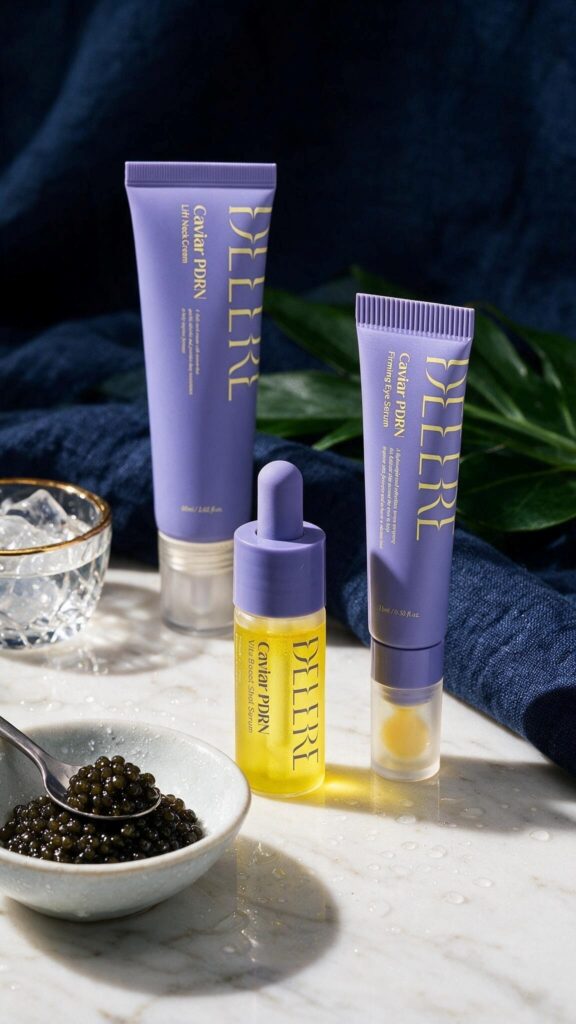
This architecture powers DELERE’s new Caviar PDRN collection, headlined by the Vita Boost Shot Serum. Built for the morning routine, its dual-formula activates a freeze-dried capsule formulated with 100% pure Vitamin C directly into the Caviar PDRN serum upon first use to prevent oxidation. Combining Caviar Omega, 4,000ppm Salmon PDRN, 100% Vitamin C, and 5% Glutathione, this two-week program simultaneously targets six key indicators: regeneration, elasticity, tone, texture, hyperpigmentation, and barrier health.

In clinical trials, a single application recorded a 96% barrier recovery rate and an 82% soothing recovery rate. Over two weeks, subjects demonstrated a 123% elasticity increase and a 2.8-fold improvement in blemish reduction compared to standard serums. Certified by Germany’s Dermatest with a 100% user satisfaction rate on sensitive skin, it is ideal for ages 30 to 50 addressing dullness and fatigue. Offered in a 15ml single bottle or a two-bottle set, it is paired with the Firming Eye Serum (Caviar Omega, 300ppm Salmon PDRN, Acetyl Hexapeptide-8) for eye lines and dark circles, and the Lift Neck Cream (Caviar Omega, 500ppm Salmon PDRN, Ceramides) for neck wrinkles, smile lines, and double-chin lifting care.

DELERE’s full Caviar PDRN lineup is now officially available on US Amazon. The collection has already earned high praise from top beauty authorities, with leading creators Skincare with Yuri and Dani Cole highlighting the Vita Boost Shot Serum as an indispensable morning upgrade for radiant skin. To celebrate its North American debut, DELERE is hosting an exclusive Labor Day promotion on Amazon from August 28 through September 7, offering a 20% discount across all four new SKUs.


Post navigation

Tags: , , , , , ,
The Canadian Beauty Shopping Habits Turning Skincare Into a Self-Care Ritual

The Canadian Beauty Shopping Habits Turning Skincare Into a Self-Care Ritual

Beauty shopping is becoming less about filling a bathroom shelf and more about deciding what genuinely earns a place in an everyday routine. In Canada, where consumers can move between drugstores, department stores, specialist retailers and increasingly sophisticated online beauty shops, the choice is no longer simply about finding the newest product. It is about finding products that fit how people actually want to live.

That shift changes the meaning of skincare shopping. A purchase can be functional, but it can also become part of a slower evening ritual, a few minutes spent looking after yourself rather than simply addressing a perceived flaw. The result is a more considered relationship with beauty, where formulation, purpose and personal routine all matter.

The Beauty Shelf Is Becoming More Intentional

The most revealing change may be what consumers leave off the shelf. Instead of automatically building elaborate routines, shoppers are increasingly able to compare ingredients, understand what individual products are intended to do, and decide whether another step is genuinely necessary.

For someone building a quieter evening ritual, something as simple as applying a caffeine eye cream can become one small part of that process. OKOA’s formula combines caffeine and squalane with botanical extracts and other actives, and is designed for use around the eye contour. The broader lesson is less about one product than the way a specific step can have a defined purpose within a personal routine.

This kind of selectivity can make skincare feel less like maintenance and more like a moment of pause. The product matters, but so does the habit of stopping for a few minutes at the end of the day.

Canadian beauty retail is operating in a market where ingredient awareness has become increasingly visible. Shoppers do not necessarily need to understand every molecule in a formula, but they can now investigate why an ingredient is there and what role it is intended to play.

That is partly what makes modern skincare shopping different from simply choosing a product based on packaging. Consumers can compare formulas, read about active ingredients and decide whether a product aligns with their existing routine.

Retail Insider’s coverage of Indeed Labs’ 15th anniversary provides one example of how the Canadian market has developed around targeted, science-led skincare. The company’s history includes products designed around particular concerns rather than a one-size-fits-all approach, reflecting a wider emphasis on formulation and purpose.

For the consumer, that creates a more informed shopping experience. The question becomes less “What is everyone buying?” and more “What does my skin actually need?”

Self-Care Does Not Have to Mean More

There is a temptation to equate self-care with indulgence, but skincare can work differently. A routine can be calming precisely because it is familiar and limited.

A cleanser, moisturizer, treatment, and daytime SPF may be enough for one person. Someone else may enjoy adding an eye product or a more targeted treatment at night. Neither approach needs to be treated as superior.

That is where the idea of ritual becomes useful. Applying skincare slowly, rather than rushing through it, creates a small boundary between the demands of the day and the time that follows. The product becomes part of the ritual without becoming the whole point.

Canadian Retail Is Bringing More Choice to the Shelf

Choice is also becoming a larger part of the Canadian beauty landscape. Retail Insider’s recent coverage of IOPE’s arrival through Sephora Canada illustrates how international skincare brands rooted in research and ingredient development are continuing to enter the market. The launch gives Canadian shoppers another example of how global skincare concepts are increasingly available through familiar retail channels.

For consumers, more choice can be valuable, but it also makes discernment more important. When shelves become crowded with actives, technologies and claims, a routine built around a few clearly understood priorities may be easier to maintain.

The growth of research-led skincare also reflects the wider movement toward products that explain what they are designed to do, rather than relying entirely on the promise of transformation.

There is another side to this trend that has less to do with ingredients and more to do with experience. Choosing a skincare product can become a form of self-care when the decision is deliberate.

Perhaps that means spending time reading the label instead of buying impulsively. Perhaps it means replacing a product that no longer suits your routine rather than accumulating three more alternatives. Or it can mean choosing a texture that makes an evening ritual enjoyable enough to repeat.

That relationship between precision and daily use is explored in the changing language of skincare, where longevity and thoughtful routines have become part of the broader conversation.

The Minimalist Beauty Cabinet Has an Advantage

A smaller routine does not necessarily mean a less sophisticated one. A carefully developed formula can combine several functions, allowing one product to serve a clear role without adding unnecessary complexity.

That is particularly relevant as shoppers become more attentive to the idea of a minimalist beauty wardrobe. The emphasis is not on owning the fewest products possible, but on knowing why each product is there. This approach is also reflected in the idea of minimalist beauty, where skincare staples are considered alongside personal style and everyday practicality.

The New Luxury Is a Routine You Actually Enjoy

Beauty shopping can still be exciting. New launches, unfamiliar ingredients and international brands all have their place. But the most sustainable purchase may be the one that becomes part of a routine you genuinely enjoy using.

That is perhaps the most interesting shift in Canadian beauty shopping. Skincare is moving beyond the idea of correction and toward something more personal: a few intentional minutes of care, supported by products chosen for a reason.

The mirror may still be part of the experience, but it is no longer the only measure of whether a routine feels worthwhile. As a recent Forbes discussion of the mirror and lens suggests, the way we look at something can change what we notice about it. In skincare, that may mean seeing the ritual itself as part of the benefit, not simply the appearance that follows.

Tags: , , , , , , ,
Why Topical Treatments Are Becoming a Bigger Part of Modern Skincare Routines

Why Topical Treatments Are Becoming a Bigger Part of Modern Skincare

Have you ever wondered why creams, gels, or any other topical treatments have grown in popularity in skincare discussions? This comes from people understanding that simply using a cleanser-moisturizer approach doesn’t treat all skin issues. Actually, it turns out that acne affects around 85% of teenagers and young adults, which means that targeted treatments are important to many people’s skincare routines.

However, this does not mean that it’s necessary to have a cabinet full of skincare products. Skincare has now shifted towards targeting specific skin issues. People stopped trying out one product after another and learned how to use treatments that their skin actually needs. This article explains why topical treatments have become part of modern skincare routines.

Skincare Is Becoming More Personal

There was a time when skincare advice seemed pretty straightforward: wash your face, apply moisturizer, and call it a day. These basic steps are still essential. However, every skin is different, and a method that suits one person can lead to dryness, irritation, or acne in another.

Someone with acne will have to choose a different treatment approach from someone suffering from eczema, psoriasis, excessive drying of skin, or other kinds of inflammation. This is where topical treatments might be of help.

Unlike universal treatments, topical medications will target a specific concern. They may help with inflammation, acne, itching, infections, or skin barrier protection.

They Are About More Than Acne

The term ‘topical treatment’ is usually associated with acne. However, topical treatments can be used for more than just acne. They treat conditions like eczema, plaque psoriasis, skin diseases, and different types of dermatitis.

With atopic dermatitis, there are topical medications like moisturizers, corticosteroids, calcineurin inhibitors, and PDE-4 inhibitors that can be used as part of the treatment plan. This is important because not all topical products should be considered beauty products. Some of them are medications for skin conditions that already have a diagnosis.

They Put Treatment Where It Is Needed

One of the most important advantages of topical applications is very straightforward. You apply the product to the area that requires treatment.

Topical treatments may feature different active substances depending on the formulation. For instance, products that are recommended for the treatment of acne can include benzoyl peroxide, retinoids, azelaic acid, and salicylic acid.

These ingredients do different jobs. Some can alleviate clogged pores, others can deal with the inflammation, while others can target acne-causing bacteria.

Topical Treatments Can Be Incorporated Into a Simple Routine

You might assume that adding a treatment means your skincare routine has to become more complicated. It does not. In most cases, you would just need to add a topical treatment to your existing skincare routine.

For example, you could clean the skin thoroughly, apply the required treatment, moisturize, and use sunblock. That’s all there is. Instead of applying several serums and hoping for the best outcome, you can use a treatment with a clear purpose.

New Techniques Offer More Alternatives

Skincare has evolved tremendously throughout the years, and topical treatments have followed suit. Active ingredients and products for various skin issues have increased over the years. For instance, acne treatment can be applied independently or in combination with other treatments, depending on the type of acne and the intensity of the problem.

Topical treatments for inflammatory skin disorders like atopic dermatitis have also improved. The increased number of options is great, as not every person’s skin works the same.

The dermatologist weighs factors like the following before determining the appropriate course of therapy,

  • The nature of the problem
  • Its intensity
  • The sensitivity of the problem

Modern skincare is gradually changing from the search for a miracle product to finding what works for you.

A Targeted Routine Could Mean Fewer Products

Sometimes, better skincare involves buying less instead of more. It’s tempting to get stuck in the cycle of seeing a new product, buying it, trying it for a while, and then moving on if you don’t get immediate results.

This may leave you with a cabinet full of products and no clue about what actually worked on your skin. In contrast, a focused treatment gives purpose to your regimen. Instead of experimenting endlessly, you can concentrate on solving specific problems.

Smarter Skincare Starts With Knowing What Your Skin Needs

Smart skincare begins with understanding what your skin needs. The rise of topical treatments shows a more significant trend in skincare. Skincare today proves to be much more than just having many products and following the newest trend. It’s about being more intentional.

A good skincare routine doesn’t require ten steps. Sometimes what’s needed is simply identifying the problem, using the right treatment, letting it take effect, and implementing some simple daily habits that support the skin.

Topical treatments can be very useful because they provide a targeted approach or solution for specific problems. If used wisely, they can easily find their way into a routine, making it efficient and simple. The point is not to collect a lot of products, but to be able to understand your skin well enough to provide what it needs.

Tags: , , , , ,
The wait is over — meet the winners of the Vogue Beauty & Wellness Honours 2026

The wait is over — meet the winners of the Vogue Beauty & Wellness Honours 2026

The Vogue Beauty & Wellness Honours 2026 celebrates the names that made us stop, test twice and take notice. Getting to this list, however, took more than a few enthusiastic swipes of lipstick. Vogue India’s editors spent weeks testing, researching and shortlisting the year’s most compelling launches across over 25 categories spanning skincare, haircare, makeup, fragrance and wellness. The finalists were then put before an expert jury comprising Vogue India’s Head of Editorial Content Rochelle Pinto, entrepreneur and philanthropist Sara Tendulkar, actor Jacqueline Fernandez, makeup artist and educator Puneet B Saini, hair expert Hiral Bhatia, Pilates educator and founder of Radhika’s Balanced Body, Radhika Karle, and dermatologist and medical director of The Bombay Skin Clinic, Dr Batul Patel. At an in-person jury meet, they tested, debated and weighed up the nominees before settling on their favourites.

But beauty is as personal as it is expert-led, so we wanted to know what our readers thought, too. For a month, the same shortlist was opened to voting on our website, giving our audience the chance to champion the products and places that had earned a place in their own routines. The results bring both perspectives together: across all our categories, you’ll find a Jury Winner alongside a Reader’s Choice with select Editor’s Picks also spotlighted. After weeks of thorough testing, a roomful of expert deliberation and a month of readers’ voting, these are the products, innovations and spaces that rose above a very crowded field.

Skincare

Cleanser

Jury Winner – Sulwhasoo Concentrated Ginseng Rejuvenating Cleansing Foam

A cleanser may be the quickest step in a routine, but this one made the jury pay attention. Ginseng peptides and amino acids give the formula its skincare credentials, while its ability to cleanse without leaving skin stripped is what pushed it ahead.

Reader’s Choice – Clarins Hydrating Gentle Foaming Cleanser

Tags: , , , , , ,
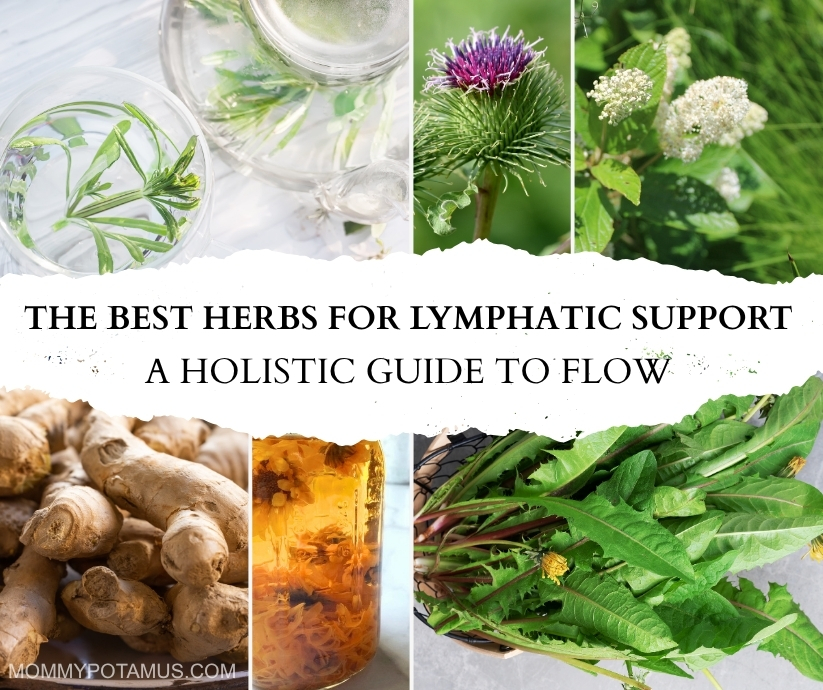
A Beginner’s Guide to Flow

A Beginner’s Guide to Flow

You know that friend who starts clearing plates while everyone else is still talking? They keep chatting and laughing with everyone else – but they’re also taking care of what needs to be done to keep things moving.

Whether you’re nodding yes or wondering where you can get one of those friends, you already have one: your lymphatic system.

If body systems had personality types, the lymphatic system would be the attentive, warm, capable friend working behind the scenes. It manages overflow, keeps watch for trouble, helps with cleanup, and rarely gets much attention unless something feels off.

When it doesn’t seem to be moving as efficiently as it could, you’ll sometimes hear herbalists use phrases like “sluggish lymph.” I’ll use that shorthand here, too, as we look at herbs traditionally used to encourage healthy lymphatic flow. Along the way, I’ll also highlight where modern research supports those traditional uses.

Of course, to understand why certain herbs have traditionally been used for lymphatic support, it helps to first look at what this system does for us.

Before we get to that, a quick reminder: None of these statements have been evaluated by the FDA, this article is not medical advice, and it’s not meant to diagnose or treat any condition. These herbs are used to support normal lymphatic health and aren’t a substitute for proper evaluation when needed. If you’re experiencing any symptoms that concern you, check in with your healthcare provider. And if you’re pregnant, breastfeeding, taking medication, or managing a health condition, talk with your provider before adding therapeutic herbs.

Now let’s dive in.

So, What Does the Lymphatic System Actually Do?

One of the lymphatic system’s biggest jobs is tending to the fluid environment around your cells.

To do that, it collects excess fluid from tissues and carries proteins, cellular debris, immune cells, and inflammatory signaling molecules away.

But “drainage” is only part of the story. In addition to tending the spaces around our cells, it routes lymph through nodes where the immune system can respond to potential threats, and it also helps nourish us.

Using specialized lymphatic vessels in the small intestine called lacteals , it absorbs much of the dietary fat and fat-soluble nutrients we eat.

Like many systems in the body, lymphatic function can become less efficient with age, and research suggests some aspects of lymphatic pumping may decline more in women during midlife. I take a much deeper look at that research in this article on relationship between hormones, lymph, and fluid balance during perimenopause.

The good news is that lymphatic flow is also responsive to things we do every day. Movement, muscle contractions, breathing, and other mechanical forces all help keep lymph moving.

For generations, herbalists have also used certain plants to support this system – including a group traditionally known as “lymphatics.”

What Does It Mean When an Herb Is “Lymphatic”?

In traditional herbalism, a lymphatic is an herb used to support healthy lymph function and flow. You’ll often see these herbs discussed in connection with things like tissue puffiness, swollen glands, or what herbalists describe as lymphatic congestion.

Some lymphatic herbs also fall into a broader category called alteratives. That term is a little hard to pin down because it doesn’t describe one specific action. Instead, what different alteratives have in common is that they’re traditionally used to gradually support healthy elimination, tissue function, and overall balance.

David Hoffman, a Fellow of the National Institute of Medical Herbalists in the UK and author of Medical Herbalism, describes them this way:

Alteratives are herbs that gradually restore proper function to the body and increase overall health and vitality. That sounds very unclear, and, indeed, their mode of action on the body is not understood. However, their value in holistic health care cannot be denied.” (2)

There is some evidence that botanicals can influence processes related to lymphatic circulation, but very few herbs have been studied in ways that directly measure lymph flow. (1) So, at least for now, the strongest support for many of the best-known “lymph herbs” comes from traditional herbal practice.

In the next section, we’ll cover some of the most popular ones – including why they’re loved and what modern research tells us.

Traditional Lymphatic Herbs

The three herbs in this group are the ones herbalists have traditionally reached for most directly when supporting lymphatic flow and tissue fluid balance.

Also, since the lymphatic system requires water to flow, drinking these herbs in tea form provides a dual benefit: it combines the therapeutic properties of the plant with the hydration needed to keep lymph moving. I’ve included brewing instructions with each herb.

Cleavers (Galium aparine): The Ultimate Lymph Tonic

If you’ve ever walked through a field and found small, sticky green plants clinging to your socks, you’ve probably met Cleavers. In the herbal world, this “stickiness” is considered a metaphor for how it works – it “grabs” onto lymphatic congestion and pulls it out.

Cleavers is probably one of the best-known lymphatic herbs in Western herbalism. It’s traditionally considered both a lymphatic tonic and an alterative, which as I mentioned earlier is a category of herbs used to gradually restore tissue function and overall balance. It has mild diuretic activity and a reputation for being gentle, making it an excellent starting point for beginners.

David Hoffmann describes it this way in Medical Herbalism:

Cleavers is a very valuable plant, being perhaps the best tonic available for the lymphatic system.” (2)

Herbalist JJ Pursell also mentions cleavers for skin support, writing that it’s “another one to consider if you’re suffering from acne.”

I thought that was noteworthy because hormonal shifts can sometimes bring acne back into the picture during perimenopause – just when many of us thought we had left that particular rite of passage behind. In households where where perimenopause and teenage breakouts happen to be unfolding at the same time, cleavers is one to keep in mind.

Although its reputation is still based largely on traditional herbal use, modern research does give us some additional context: cleavers extracts have demonstrated immunomodulatory activity in vitro, which is interesting given the lymphatic system’s close relationship with immune function. (3)

Cleavers is also one of the easiest herbs in this guide to use as tea. Hoffmann recommends pouring 1 cup of boiling water over 2–3 teaspoons of dried herb and steeping for 10–15 minutes. In his notes, he says that this preparation can be taken three times daily. (2)

Safety: Botanical Safety Handbook – Safety Class 1; Interaction Class A. (7) I’ll explain more about the Botanical Safety Handbook classifications later in this article.

Calendula (Calendula officinalis): The Gentle Mover

For a lot of us, calendula first shows up in a salve jar. Its sunny petals have a long history of use for soothing and supporting the skin, but herbalists also use calendula internally as a traditional lymphatic.

In The Woman’s Herbal Apothecary, herbalist JJ Pursell calls calendula a “safe and effective lymphatic system agent,” giving it a strong place in traditional lymphatic formulas. (4)

Modern research has uncovered some properties that make calendula especially interesting from a lymphatic-support perspective. Its flowers contain flavonoids and triterpenoids with antioxidant and anti-inflammatory activity, and lab research has found that calendula preparations can influence several inflammatory signaling pathways. (5) (6)

That matters because the lymphatic system is closely involved in immune activity and the movement of inflammatory signals through tissues.

It makes an easy infusion, too. Hoffmann recommends pouring 1 cup of boiling water over 1-2 teaspoons of dried calendula petals and steeping for 10–15 minutes. In his notes, he says that this preparation can be taken three times daily. (2)

Safety: Botanical Safety Handbook – Safety Class 1; Interaction Class A. (7) Calendula is in the Asteraceae family, so people with known sensitivity to other members of that family (for example, chamomile, echinacea and ragweed) may want to use extra caution. The Modern Herbal Dispensatory recommends avoiding internal use during pregnancy, although not all herbal references make the same recommendation. (8)

Red Root (Ceanothus americanus): The Old-School Lymphatic

Red root is one of the more old-school lymphatic herbs in this guide. Native to North America, it was especially valued by Eclectic herbalists and physicians, who developed a reputation for using it for lymphatic system support.

In The Modern Herbal Dispensatory, Thomas Easley and Steven Horne describe red root as “a powerful lymphatic cleanser” and highlight its traditional use for spleen support. (8)

The spleen is the largest lymphoid organ in the body, and instead of filtering lymph like lymph nodes do, it filters the blood – removing aging blood cells and helping immune cells recognize and respond to potential threats.

Modern research on red root is limited, so this is one herb whose place in the guide rests mostly on its long history of traditional use.

Also, sometimes you’ll hear Ceanothus americanus called New Jersey tea. During the Revolutionary War, the leaves were used as a tea substitute. For lymphatic support, though, herbal preparations are made from the root.

Because roots are tougher than leaves and flowers, red root is prepared as a decoction (long simmered tea) rather than an infusion. The Modern Herbal Dispensatory recommends simmering 1 ounce (by weight) of dried root in 1 quart of water for 10–20 minutes, then removing it from the heat and allowing it to steep for another hour. Their suggested serving is 2–4 ounces. (8)

Beyond Traditional Lymphatics

Not every herb that supports lymphatic health is a traditional “lymphatic.” Some earn a place in this guide because they support other processes the lymphatic system works alongside – including fluid balance, immune activity, and a healthy inflammatory response.

Dandelion leaf is a good example.

Dandelion (Taraxacum officinale): Fluid Balance Support

“Dandelion is a generous plant in that every part of it can be used as food or medicine,” writes Rosalee de la Forêt in Alchemy of Herbs. (17) And it’s true – dandelion flowers, roots and leaves can be made into nourishing salads, teas, decoctions, tinctures, syrups, skin healing salves and more.

The root is traditionally preferred for digestion and liver support, while the leaf has a long history of use for supporting digestion and urinary output. I explain the differences between the roots, leaves, and flowers in my complete guide here.

While it’s true that supporting urinary output isn’t the same thing as directly increasing lymph flow, fluid regulation and lymphatic function are closely intertwined.

In a pilot study of 17 adults, a fresh dandelion leaf extract increased urination frequency after the first dose and increased the ratio of urine output to fluid intake after the second. It was a small, one-day study using an extract rather than tea, but the findings support dandelion leaf’s long-standing reputation as a mild diuretic. (9)

Dandelion leaf also contains something many diuretic herbs don’t: potassium. It’s naturally rich in this electrolyte, which can be lost when urinary output increases. (2)

The European Medicines Agency also recognizes dandelion leaf’s traditional role in supporting urinary output, based on its long history of therapeutic use. (10)

For tea, Hoffmann recommends pouring 1 cup of boiling water over 1–2 teaspoons of dried dandelion leaf and steeping for 10–15 minutes. In his notes, he says that this preparation can be taken three times daily. (2)

Safety: Botanical Safety Handbook – Safety Class 1; Interaction Class A. (7)

Burdock Root (Arctium lappa): Long-term Systemic Support

Burdock root a traditional alterative with a slow-and-steady reputation. Herbalists have traditionally used the root when they’re looking for broad, gradual support for the lymphatic system, skin, liver, and healthy elimination.

That liver connection is also one reason burdock shows up in traditional formulas for hormonal support. In The Woman’s Herbal Apothecary, JJ Pursell writes, “As with any liver supporting herbs, you’ll get hormonal support.” (4)

David Hoffmann describes burdock’s role more broadly in Medical Herbalism, writing that it helps move the body toward “a state of integration and health, improving indicators of systemic imbalance, such as skin problems and dandruff.” (2, emphasis mine)

Modern research gives us another reason to consider burdock root for overall lymphatic support: it’s influence on inflammation.

In a randomized controlled trial, 36 adults with knee osteoarthritis drank either plain water or 3 cups of burdock root tea daily for 6 weeks. The burdock group experienced significant reductions in the inflammatory markers IL-6 and hs-CRP, along with improvements in several markers of oxidative stress. That doesn’t tell us whether burdock changes lymph flow, but it does give us modern evidence for one of its broader actions: supporting a healthy inflammatory response. (11)

If burdock is new to you, I have a full guide here with more on its history and traditional uses.

Because it’s a dense root, it does better with a little simmering. Hoffmann recommends adding 1 teaspoon of dried root to 1 cup of water, bringing it to a boil, and simmering for 10–15 minutes. In his notes, he says that this preparation can be taken three times daily. (2)

Safety: Botanical Safety Handbook – Safety Class 1; Interaction Class A.

Astragalus (Astragalus membranaceus): Immune Support

Astragalus isn’t a traditional lymphatic in the same way cleavers, calendula, and red root are, but it earns a place here because the lymphatic system is deeply connected with immune function.

Used for centuries in Traditional Chinese Medicine (TCM), astragalus is best known as an immune-supporting tonic. Its Chinese name, huáng qí, means “yellow leader” – a nod to the golden color of the root and its important place in traditional herbal practice.

Modern research gives us some pretty interesting support for that reputation. A 2023 systematic review and meta-analysis of 19 human studies involving 1,094 participants found that astragalus influenced both cellular immune markers and inflammatory cytokines. (12) The studies varied quite a bit in quality and design, so there’s still more to learn, but the findings help explain why astragalus has been so closely associated with immune support for centuries.

Here’s why I included it in this guide: Lymph carries immune cells throughout the body, and lymph nodes provide gathering places where those cells can recognize and respond to potential threats. Astragalus may not directly “move lymph,” but its traditional role in immune support overlaps with one of the lymphatic system’s most important jobs.

I take a much deeper look at this root in this guide to its benefits and uses.

Astragalus contains immune-supporting polysaccharides that respond very well to hot water extraction, but the root is dense and requires a bit of simmering. Hoffmann recommends adding 2–4 teaspoons of dried root to 1 cup of water, bringing it to a boil, and simmering for 10–15 minutes. In his notes, he says that this preparation can be taken three times daily. (2)

Safety: Botanical Safety Handbook – Safety Class 1; Interaction Class B. (7) The Interaction Class B rating means a clinically relevant medication interaction is considered biologically plausible.

One particular concern is immunosuppressant medication. Because astragalus can influence immune activity, NCCIH notes that it may interact with medications that suppress the immune system and recommends talking with a healthcare provider before using it alongside medications. (13)

Safety data during pregnancy and breastfeeding is limited, and NCCIH notes that some animal research has raised concerns during pregnancy. I’d check with a healthcare provider before using therapeutic amounts while pregnant or breastfeeding. (13)

Ginger (Zingiber officinale): The Warming Herb

Ginger brings something a little different from the other herbs in this guide: warmth. Herbal traditions have long described ginger as a warming herb, which probably won’t surprise anyone who has felt its gentle heat spread through their body after a strong cup of ginger tea.

Modern research gives that experience an interesting physiological counterpart. In one small human study, a hot ginger drink increased thermogenesis – the amount of energy the body produces as heat after eating. Another placebo-controlled study found that ginger extract increased deep peripheral blood flow in some women. (14)

Neither study looked at lymph flow directly, but they help explain why ginger can still be useful here: it supports circulation and brings movement and heat to a blend.

Ginger is also well-known for its anti-inflammatory effects, which are well-supported by research. In a meta-analysis of 16 randomized controlled trials involving 1,010 people, ginger significantly reduced several inflammatory markers, including CRP, hs-CRP, and TNF-α. That adds another useful dimension to ginger’s warming, circulation-supporting role. (15)

Safety: Botanical Safety Handbook — Safety Class 1; Interaction Class B. Ginger is generally considered safe when used appropriately, but clinically relevant medication interactions are considered biologically plausible. The handbook specifically notes that ginger may increase the antiplatelet effects of nifedipine, and recommends that people with active gallstone disease use it under the supervision of a qualified healthcare practitioner. (7)

What About Red Clover?

Red clover (Trifolium pratense) deserves a mention here because it has a long history of use as an alterative and lymphatic herb. Herbalists have traditionally reached for it to support healthy elimination and for chronic skin concerns like eczema. In The Woman’s Herbal Apothecary, JJ Pursell describes it as an herb that “aids in reducing metabolic waste,” while David Hoffmann also highlights its traditional use for skin conditions. (4) (2)

So why didn’t I include it among my go-to herbs above?

Red clover brings an additional consideration to the table: phytoestrogens. It contains isoflavones such as formononetin and biochanin A, which can interact with estrogen receptors. That’s actually one reason red clover has attracted so much attention for menopausal symptoms, although research on those benefits has been mixed and continues to unfold. (16)

In my opinion, phytoestrogens aren’t inherently good or bad, but they do add another variable to consider – especially during perimenopause, when the hormonal environment can vary a lot from one woman to another. For general lymphatic support, I think there are simpler options that don’t require us to try to factor phyoestrogens in.

That doesn’t mean red clover never has a place. It just means I’d choose it more intentionally, based on the person and the reason for using it, instead than making it a default choice for everyday lymphatic support.

Safety: Botanical Safety Handbook – Safety Class 1; Interaction Class A. (7) Because red clover contains phytoestrogens, pregnancy and breastfeeding deserve additional caution; NCCIH states that red clover supplements may be unsafe during pregnancy or breastfeeding. (16) Hoffmann also advises caution with anticoagulant medications because red clover may potentiate their effects. (2)

Brewing Basics

You probably noticed that some of these herbs are steeped while others are simmered. That mostly comes down to the part of the plant you’re working with.

Leaves and flowers like cleavers, calendula, and dandelion leaf are generally best prepared as infusions – essentially a stronger, longer-steeped tea. Roots like burdock, astragalus, and red root usually need a decoction, which means gently simmering them to extract their constituents.

Ginger is a little more flexible. Fresh or dried ginger can be infused or simmered for warmth and flavor.

I’ve included preparation amounts with each herb above so you can follow the guidance that applies to the one you’re using.

A Quick Note About Safety

Throughout this guide, I’ve mentioned the Botanical Safety Handbook, which evaluates herbs using two separate classifications.

Safety Class 1 means an herb can be safely consumed when used appropriately. The Interaction Class describes the likelihood of clinically relevant interactions with medications. Class A means no clinically relevant interactions are expected, while Class B means an interaction is considered biologically plausible. (7)

Those ratings are helpful starting points, but they don’t account for every individual circumstance. Pregnancy, breastfeeding, medications, allergies, and certain health conditions may all change what’s appropriate, which is why I’ve noted specific cautions where they apply.

I personally think of these herbs as options, not a checklist. Some are better suited to particular goals, and a few work especially well together.

In the next article, I’m taking several of my favorites from this guide and turning them into a simple Lymph Love Tea – with a couple of nourishing additions for flavor and overall support.

Also, herbs are only one piece of the equation. Movement, breathing, muscle contractions, and other everyday habits also help support healthy lymph flow, so we’ll be getting into those soon, too.

Sources

  1. Wheat, J., Currie, G., Kiat, H., & Bone, K. (2009). Improving Lymphatic Drainage With Herbal Preparations: A Potentially Novel Approach to Management of Lymphedema. Australian Journal of Medical Herbalism
  2. Hoffmann, D. (2003). Medical Herbalism: The Science and Practice of Herbal Medicine. Healing Arts Press.
  3. Ilina, T., Skowrońska, W., Kashpur, N., Granica, S., Bazylko, A., Kovalyova, A., Goryacha, O., & Koshovyi, O. (2020). Immunomodulatory Activity and Phytochemical Profile of Infusions from Cleavers Herb. Molecules.
  4. Pursell, J. J. (2018). The Woman’s Herbal Apothecary: 200 Natural Remedies for Healing, Hormone Balance, Beauty and Longevity, and Creating Calm. Fair Winds Press.
  5. Preethi, K. C., Kuttan, G., & Kuttan, R. (2009). Anti-inflammatory Activity of Flower Extract of Calendula officinalis Linn. and Its Possible Mechanism of Action. Indian Journal of Experimental Biology.
  6. Prabhu Venkatesh, D., Gheena, S., Ramani, P., Rajeshkumar, S., & Ramalingam, K. (2023). In Vitro Evaluation of Antioxidant and Anti-inflammatory Potentials of Herbal Formulation Containing Marigold Flower (Calendula officinalis L.) Tea. Cureus.
  7. Gardner, Z., & McGuffin, M. (Eds.). (2013). American Herbal Products Association’s Botanical Safety Handbook (2nd ed.). CRC Press.
  8. Easley, T., & Horne, S. (2016). The Modern Herbal Dispensatory: A Medicine-Making Guide. North Atlantic Books.
  9. Clare, B. A., Conroy, R. S., & Spelman, K. (2009). The Diuretic Effect in Human Subjects of an Extract of Taraxacum officinale Folium Over a Single Day. The Journal of Alternative and Complementary Medicine.
  10. European Medicines Agency. (2011). Taraxaci folium (Dandelion Leaf).
  11. Maghsoumi-Norouzabad, L., Alipoor, B., Abed, R., Eftekhar Sadat, B., & Mesgari-Abbasi, M. (2016). Effects of Arctium lappa L. (Burdock) Root Tea on Inflammatory Status and Oxidative Stress in Patients with Knee Osteoarthritis. International Journal of Rheumatic Diseases.
  12. Zhang, X., Qu, X., & Zou, Y. (2023). The Effect of Astragalus on Humoral and Cellular Immune Response: A Systematic Review and Meta-Analysis of Human Studies. Complementary Medicine Research.
  13. National Center for Complementary and Integrative Health. (2025). Astragalus: Usefulness and Safety. National Institutes of Health.
  14. Mansour, M. S., Ni, Y.-M., Roberts, A. L., Kelleman, M., RoyChoudhury, A., & St-Onge, M.-P. (2012). Ginger Consumption Enhances the Thermic Effect of Food and Promotes Feelings of Satiety Without Affecting Metabolic and Hormonal Parameters in Overweight Men: A Pilot Study. Metabolism.
  15. Morvaridzadeh, M., Fazelian, S., Agah, S., Khazdouz, M., Rahimlou, M., Agh, F., Potter, E., Heshmati, J., & Heshmati, S. (2020). Effect of Ginger (Zingiber officinale) on Inflammatory Markers: A Systematic Review and Meta-Analysis of Randomized Controlled Trials. Cytokine.
  16. National Center for Complementary and Integrative Health. (2025). Red Clover: Usefulness and Safety. National Institutes of Health.
  17. de la Forêt, R. (2017). Alchemy of Herbs: Transform Everyday Ingredients into Foods & Remedies That Heal. Hay House.

Share with a friend! 👇

Tags: , ,
Easy ways to stop stinging, itching and pigmentation

Easy ways to stop stinging, itching and pigmentation

We’re constantly told to protect our skin barrier but sometimes, even with the greatest of care, things get compromised. Maybe you’re back from your holidays with stinging sunburn or had an adverse reaction to a new product in your skincare routine. It happens and when it does, quite frankly, it hurts! Luckily, getting your skin barrier back to normal isn’t difficult, but it will take a slight shakeup to your usual routine to get things back on track. So much of the skin barrier advice out there is based in lighter skin tones, from signs that it is in fact damaged to how to treat it, and it varies between skin tones and types.

Signs of a damaged skin barrier in darker skin

The first step is understanding whether your skin barrier is damaged, and getting to grips with what that looks or feels like for you.

For darker skin tones, the often spoken about signs of a damaged skin barrier, for example red, inflamed skin, can look slightly different. Dermatica dermatologist Dr Shendy Engelina says “inflammation from a damaged skin barrier doesn’t always look red on darker skin tones, and instead it often appears as a subtle purplish or hyperpigmented shadow.”

The best and most reliable way to check for a damaged skin barrier is to touch and feel your skin (with clean hands of course). “If your skin feels unusually warm, tight, or irritated, your barrier is likely compromised,” Dr Shendy says. “Other key signs to watch out for include persistent itchiness, rough or flaky patches, and a sudden sensitivity to products that you previously tolerated well.”

If symptoms persist, it might be time to consult your GP, as they could be signs that personalised medical advice and treatment is needed.

Sunburn vs irritation vs post-inflammatory hyperpigmentation

Sunburn, irritation and post-inflammatory hyperpigmentation are all interconnected terms and refer to different types or stages of skin barrier trauma. They all damage the skin barrier in different ways, making it tricky to actually understand what’s going on and how best to treat it.

So, let’s break it all down. Dr Shendy explains that sunburn is “acute damage” caused by UV radiation from the sun. “This compromises the skin barrier and triggers an inflammatory response.”

A damaged skin barrier – which could be caused by lifestyle habits, harsh skincare routines, and environmental factors like UV radiation – means the skin’s protective outer layer has been weakened and made vulnerable. Irritation is the physical symptom of this damage, characterised by stinging, itching, or warmth.

Post-inflammatory hyperpigmentation refers to the light or dark brown marks left behind after the initial inflammation has subsided. This happens because the inflammation triggers excess melanin production in the affected areas.

What to ingredients to start and what to stop

STOP: Active ingredients and exfoliants

When dealing with a compromised skin barrier, you’ll want to strip your routine back to the absolute basics. Dr Shendy recommends pausing all active ingredients – yes, that includes the vitamin C too – to allow your skin time to recover. Don’t worry, this is just temporary but it does mean stepping away from exfoliating acids (like AHAs and BHAs), retinoids, and harsh physical scrubs for a while, “as these will only exacerbate the inflammation and delay the healing process.”

START: Replenishing moisturisers and anti-inflammatory ingredients

“In the meantime, your routine should focus on replenishing products, choosing moisturisers formulated with ceramides, cholesterol and free fatty acids,” Dr Malvina Cunningham, Renew + Me’s consultant dermatologist, says.

“Pairing these lipid-dense creams with hydrating humectants like glycerin and soothing anti-inflammatory ingredients like niacinamide, panthenol or centella asiatica helps further repair and prevents water loss and post inflammatory hyperpigmentation.”

Dermatica Caring Squalane Cream Cleanser
Skin 1004 Madagascar Centella Ampoule Foam 125ml
The Ordinary Niacinamide 10% + Zinc 1%
Renew+Me Nightly-Active-Treatment
Dr Jart+ Cicapair Intensive Soothing Tiger Grass Repair Cream 50ml

Now 20% Off

How to use sunscreen during skin barrier recovery

SPF shouldn’t solely be a staple in your summertime skincare routine – this is a year-round must have to protect your skin barrier from UV exposure, yes even in the colder months.

“Using sunscreen during barrier recovery is important especially for skin of colour, where UV exposure on compromised skin rapidly worsens post-inflammatory hyperpigmentation,” Dr Malvina advises. Opt for a 100% mineral (physical) sunscreen containing zinc oxide or titanium dioxide as these will be more gentle on your skin as it heals. Mineral sunscreens don’t often have the best rep as they tend to leave a white cast on deep skin tones, but you can go for a new-gen tinted formula (see below) during this step if you have medium deep skin.

Alternatively, look for products formulated for sensitive or eczema prone skin which are fragrance-free and alcohol-free formulas and incorporate soothing base ingredients like squalane or glycerin.

Tatcha The Silk Sunscreen SPF50
Caudalie Vinosun Very High Protection Cream Spf50
Naked Sundays BeautyScreen Peptide Foundation Tint 30ml

Now 20% Off

Beauty of Joseon Daily Tinted Fluid Sunscreen Broad Spectrum SPF30

“Focus your daily routine on a non-stripping, fragrance-free cleanser, a barrier-repairing cream and a broad-spectrum sunscreen for sensitive skin or a mineral sunscreen with an SPF to protect vulnerable skin from darkening while it heals,” Dr Malvina says.

Apply an ultra-gentle, non-foaming cleanser with lukewarm water. Then follow with a rich ceramide-based moisturiser. Use this on slightly damp skin directly after cleansing to seal the hydration in and finish with a broad-spectrum, mineral sunscreen.

Lauren Gordon is a contributor for Cosmopolitan’s Black Beauty Hub and the Emerging Audiences Editor at The Mirror, where she leads the Under-35s team and serves as the creator-curator of The Gulp, a weekly lifestyle and culture newsletter.

With nearly a decade of experience across leading newsrooms and digital platforms, Lauren’s career in lifestyle and beauty journalism flourished after earning her journalism degree from the University of the Arts London.

Tags: , , , , ,
A modern skincare brand’s guide to sensitive skin

A modern skincare brand’s guide to sensitive skin

If you’re a beauty enthusiast with sensitive skin, then you are probably familiar with the struggle of trying new products. One wrong ingredient can cause breakouts, dryness, rashes, bumps, or a combination of all. For sensitive skin, creating a healthy skin barrier with products that combine high-performance actives with gentle formulations is essential. Built on this philosophy, British-made skincare brand Plenaire launched in India with a forward-thinking approach that blends science, transparency and emotional wellbeing. Inspired by the French philosophy of “en plein air”, which translates to “in the open air,” Plenaire’s selection of products is designed for a new generation of beauty lovers who value self-care as much as self-expression. Think barrier-first beauty, modular routines, and science-backed formulations that work with the skin barrier rather than overstimulating it. Because when it comes to sensitive skin, less is more.
Read along to unveil your new AM and PM skincare routine.

Images courtesy: Plenaire

A modern solution

At Plenaire, the secret to unlocking a healthier skin barrier begins with Éclat Botanique™, a unique product philosophy. Here, “éclat” translates to radiance, while “botanique” puts an emphasis on plant-derived and naturally sourced ingredients. Bringing together actives, bio-plant and marine components, these ingredients seamlessly combine to protect the skin barrier and maintain a natural glow. Rooted in modern science, actives such as BHA’s, Glycolic acid, Ceramides, and Hyaluronic acid help support the skin’s natural repair cycle. They work gently to calm irritation, reinforce the skin barrier, and provide long-term nourishment for a balanced, healthy-looking complexion.

For AM

Start your day with a two-step skincare ritual that promises clean and balanced skin. The ritual begins with Plenaire’s Duelle 2-in-1 Brightening Cleanser, a gentle daily cleanser with a pH of 5.5 that removes impurities and excess oil. With the goodness of Niacinamide, it helps brighten the skin without stripping it of moisture. Enriched with upcycled Jojoba micro-grains, it exfoliates to help smooth skin and restore its natural glow.

Tags: , , , , ,
Does your routine need a longevity skincare upgrade?

Does your routine need a longevity skincare upgrade?

Skin longevity is 2026’s big trend – does it deliver anything genuinely new? Or is it simply anti-ageing reinvented?

Any products in this article have been selected editorially however if you buy something we mention, we may earn commission.

Jump To

You might have been hearing a lot of talk about ‘skin longevity’ in recent months. Because ‘longevity’, for a while a buzzword bandied about by biohacking bros, has entered the beauty lexicon, with longevity skincare taking over the shelves in Boots and SpaceNK.

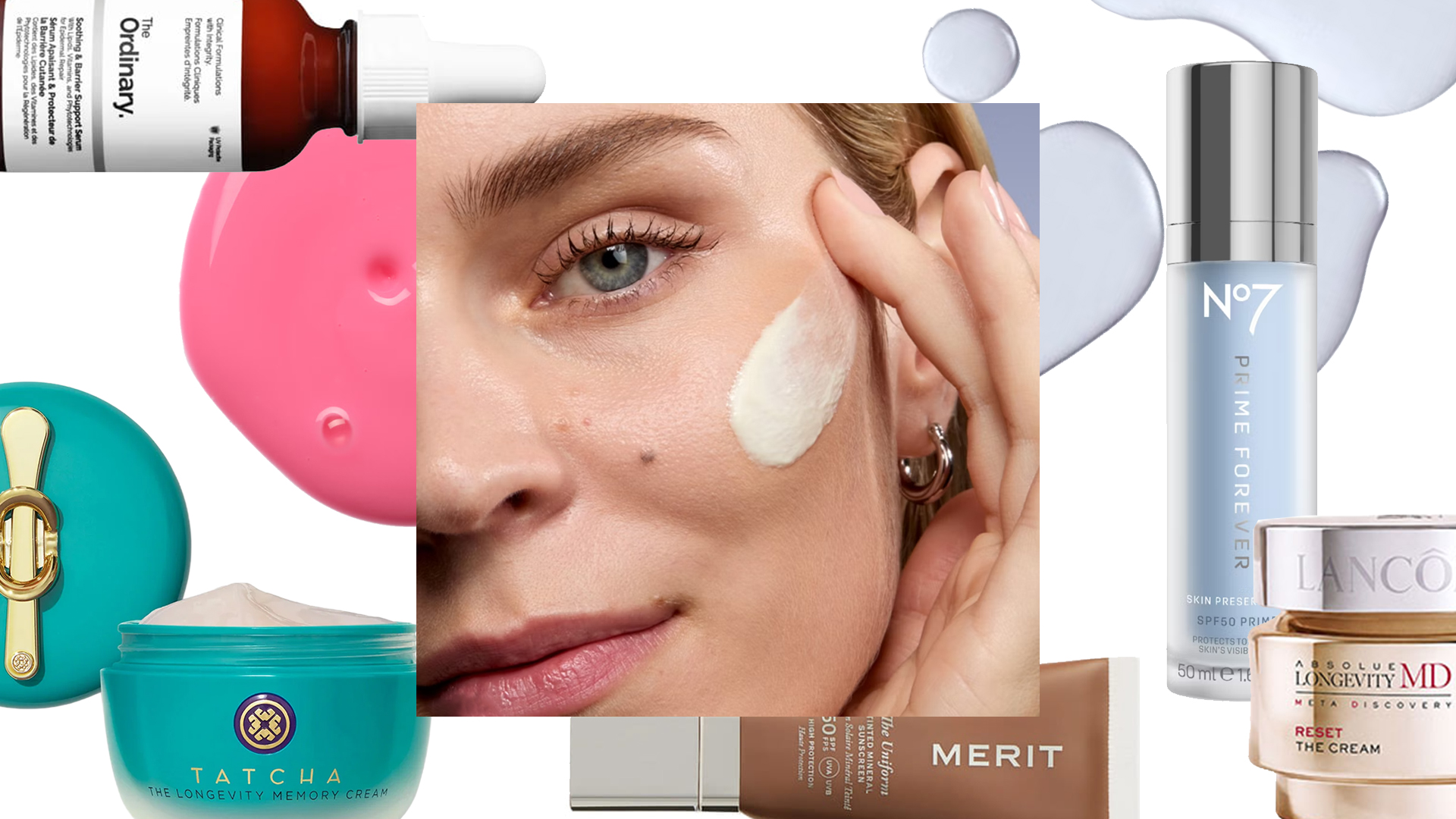
Major brands have brought out ranges that name-drop the L word: Lancome Absolue Longevity MD, fronted by 63-year-old actress Demi Moore, promises to target ‘cellular senescence’ (when old cells stop dividing), while Tatcha’s The Longevity Serum suggests that its Blue Zone-inspired ‘Okinawa Cellescence Complex’ of botanicals will do likewise. Meanwhile, on social media, influencers are sharing ‘skin longevity’ guides. But what exactly does it all mean? 

Actress Demi Moore is the face of LancomevLongevity MD skincare

From a wellness point of view, longevity science is all about not just extending our lifespan (the number of years we live) but extending our healthspan, the number of healthy years we live. The idea is that we can be proactive, focusing on prevention and preservation, rather than correcting or curing. Translate that into skin, and it’s ostensibly about keeping our skin healthy for longer. Yes, ‘skinspan’ is now a thing.

But is longevity skincare simply ‘anti-ageing’ by another name? Does it really demand specific longevity serums with new ingredients? To find out, I consulted some of the UK’s top dermatologists.

What is skin longevity?

I’ll be honest, my first instinct was to dismiss ‘skin longevity’ as a politically correct reinvention of the term ‘anti-ageing’, which has been demonised in the last decade, with many asking why we should be ‘anti’ a natural process, criticising the negative connotations associated with it, and the fact that it’s mainly aimed at women. However, many of the dermatologists I spoke to pointed out that it actually represents a shift in our thinking about skin.

“While there is certainly marketing attached to it, skin longevity reflects a genuine change in dermatology and skin science in the last five years,” says Dr Caitriona Ryan, clinical professor at University College Dublin, consultant dermatologist and co-founder of ID Formulas longevity supplements.

“It’s about a deeper scientific understanding of why skin ages and how we may be able to preserve its function over time.”

She points out that while traditionally, anti-ageing has focused on treating the visible consequences of ageing, such as wrinkles, pigmentation, laxity and uneven texture, skin longevity isn’t about how we make skin look younger, but about how we keep skin functioning like younger skin for as long as possible, in the same way that we want all our other organs to support us for the long haul.

“Healthy skin is remarkably resilient,” she adds. ”It repairs DNA damage efficiently, maintains a strong barrier, produces collagen effectively, controls inflammation and protects itself against oxidative stress. With age, those systems gradually become less efficient.

“Skin longevity is about supporting those biological processes before significant decline occurs,” she says. She and other dermatologists now look at skin through the lens of the hallmarks of ageing, the 12 biological processes that drive ageing throughout the whole body.

Applied to skin, these are concepts such as ‘inflammageing’ (the idea that ageing is actually a disease of inflammation),  mitochondrial health (the skin cells’ energy banks), cellular senescence (what happens when cells get old), preserving the extracellular matrix (keeping the structure of the skin intact) and DNA repair.

It’s all very different to the ‘anti-ageing’ tropes of blasting our wrinkles and lifting our jowls; these ideas were “simply not part of mainstream skincare conversations a decade ago,” she says.

All this does make perfect sense — after all, skin is the body’s largest organ and its first line of defence. The science is credible, but why is it that most of the new longevity skincare products target just the face – which makes up less than five per cent of skin  – not the whole body? There are only a handful of body longevity creams, such as Joonbyrd, Longevity Body Glaze, £62, which is aimed at improving skin resilience and Neova Body Repair, which has DNA repair enzymes, more on which below. 

This is where marketing muddies the waters. While ostensibly the focus of skin longevity is improving skin function, it’s also true that if you stop skin from declining, chances are you’re also preserving a more youthful face.

Who is skin longevity for?

When we’re talking about prevention rather than cure, it makes sense that you’d start a skin longevity regime earlier in your 20s or 30s, before you start to see an age-related decline in levels of collagen (wrinkles, sagging) and measurable decline in cellular energy (your mitochondria, your cell ‘batteries’.)

But you don’t necessarily need a longevity cream at this stage, as simple skin preservation habits can have the biggest effect, says consultant dermatologist, Dr Sidra Khan. “For most people in their 20s, ‘skin longevity’ is overwhelmingly delivered by daily broad-spectrum sunscreen, not smoking, [sufficient] sleep, and a sane barrier-supportive routine – not a shelf of endless serums!”

And, in fact, that’s exactly the demographic that No7 is targeting with the Prime Forever launch earlier this year. The range, targeted squarely at 30-somethings, leverages the concept of ‘prejuvenation’ — or keeping skin at its optimum for as long as possible — using a combination of peptides, antioxidants and sun protection.

But while a skin longevity approach can benefit everyone, there are some for whom it can be particularly helpful.

”We know that chronic inflammation drives ageing — ‘inflammageing’ is a real and well-described concept,” says Dr Khan. “So a regime built around calming inflammation, supporting the barrier and avoiding the irritation-repair-irritation cycle is both a longevity strategy and exactly what reactive skin, such as rosacea-prone or sensitised skin, needs.”

She adds that if you’re someone who doesn’t do well with “a traditional ‘anti-ageing’ routine stacked with strong actives that the skin can’t tolerate, a longevity-led, anti-inflammatory approach is often more appropriate.”

What to look for: key skin longevity skincare ingredients

There’s a lot of chat about exciting new longevity ingredients. But according to Prof Ryan, “many of our best evidence-based anti-ageing ingredients also happen to be our best longevity ingredients. The difference lies less in the ingredient itself and more in the biological pathways we are trying to support.”

  • Daily broad spectrum sunscreen

“Ultraviolet exposure remains the single biggest external driver of DNA damage, collagen breakdown and premature skin ageing, so daily broad spectrum sun protection does more to preserve long term skin function than anything else you can apply,” says Prof Ryan. “Any serious longevity conversation that does not begin there is incomplete.”

Like many dermatologists, she’s a fan of physical sun filters (such as zinc) because she believes they are less likely to cause irritation, and favours a tint, which shows the product contains iron oxide, which has been shown to offer extra protection to skin prone to pigmentation.

NAD+ is touted as a longevity ingredient, especially in the supplements landscape and is a coenzyme essential for cellular energy production, DNA repair, and metabolic signalling. But the consensus is that simply putting NAD+ into a cream or serum probably isn’t the answer, as it’s a large, unstable molecule and has limited skin penetration. However, topical ingredients, such as niacinamide, or sunflower sprout extract (see below) can help boost NAD+ levels within the body, might help, as might some oral NAD+ booster supplements. But, says Prof Ryan, “applying NAD+ directly is far more persuasive on a label than it is in the biology.”

UV from the sun damages our DNA, but there are some enzymes — found in bacteria, algae, other plants and many animals — that can help repair this damage. While humans may have evolved to no longer produce these enzymes ourselves, there is a way that we can benefit from them.

“Enzymes like this can be delivered in liposomes [fatty bubbles] so they penetrate skin and help to reverse any DNA damage caused by UV,” explains Dr Khan. “They boost our own repair machinery, clearing UV-induced lesions before they drive pre-cancers or mutations.” Still not widely used, they can be found in The Skin Diary Age Defence Moisturising Day Cream, SPF 50 and Neova’s Correction range and SPF.

The hottest new skin longevity ingredient is sunflower sprout extract. There’s a trademarked version of it called RejuveNAD, found in Swissline 360 Collagen Night Concentrate, and now also in Beauty Pie Youth Bomb Intense, £59 for members, which has been shown to boost NAD+ in vitro. However, it gets a lukewarm reception from the derms I spoke to. “Laboratory studies suggest it may activate antioxidant defence pathways and support mitochondrial resilience, but robust human data isn’t there yet,” says Prof Ryan. She’s similarly hesitant about other antioxidant ingredients such as CoenzymeQ10, which some claim can improve mitochondrial energy — “the topical evidence remains modest.”

“Certain botanical extracts [such as astragalus, centella asiatica, and rhodiola rosea] have been shown to slow telomere shortening,” says

But, explains consultant dermatologist Dr Malvina Cunningham of Skin & Me skincare.

Telomeres are protective caps on chromosome ends that shorten with each cell division. These extracts also modulate telomerase, the enzyme that maintains telomeres in vitro, she adds. “When telomeres become critically short, cells enter a state of ‘growth arrest’ that contributes to tissue ageing. “Human clinical data are still limited, though,” she adds.

Longevity skincare: the verdict

While the promise of longevity skincare is seductive, it feels like the marketing is still outpacing the science. If you want to preserve your ‘skinspan’, start with the basics. They might not be as flashy, but a consistent routine that helps to keep your skin barrier healthy and intact, includes broad-spectrum SPF to protect your skin from DNA damage, and adds in antioxidants and enzymes to help mop up free radicals and repair any damage is essential. Once those basics are in place, then — and only then — you might want to look at products that can preserve your telomeres or boost NAD+ levels as well.

7 skin longevity skincare buys I rate

The prejuvenation powerhouse

No7 Prime Forever SPF50 Primer, £24.95

There’s no arguing with the combination of antioxidants and broad-spectrum UVA/UVB protection both found in this lightweight primer as our most powerful weapon against the destruction (and therefore accelerated ageing) of skin cells of any colour and of any age. To complete the triple threat, they’ve added No7’s potent peptide that’s the hero ingredient of the blockbuster No7 Future Renew damage repair range. It uses chemical rather than the mineral sun filters recommended by the derms I spoke to, but is nevertheless am affordable all-rounder if you aren’t prone to redness.

SHOP  

The mineral SPF in 20 shades

Merit The Uniform, £34

As Prof Ryan says, broad spectrum sun protection, ideally tinted zinc oxide, is the starting point for any longevity regime. And this is particularly important for anyone who suffers from melasma, or any other form of hyperpigmentation, which can be considered a form of inflammation. I’ve tried many tinted SPFs and this, available in 20 shades, is one of the best.

SHOP  

The soothing must-have 

The Ordinary Soothing & Barrier Support Serum, £17.30

Maintaining the skin barrier and dampening down any irritation is at the heart of longevity skincare so this serum, packed with soothing ingredients, such as bisabolol and centella asiatica, barrier repair heroes, such as ceramides, and that all-rounder, niacinamide, which might just help boots NAD+, is a winner.

SHOP  

The dry skin saviour

Dr Sam’s Flawless Moisturiser Intense, £36

While the jury might be out on whether the sunflower seed extract that this contains can really boost NAD+ levels, this moisturiser is packed with skin-soothing and barrier-boosting ingredients, including panthenol, ectoin, squalane, ceramides, and centella asiatica. It’s perfect for dry, thirsty skin, as well as for any flares after you’ve been heavy-handed with an active. The new lighter version Dr Sam’s Flawless Moisturiser Balance, is a great everyday moisturiser for all skin types.

SHOP  

The SPF that repairs sun damage

The Skin Diary Age Defence, £92

Yes it’s pricey, but not only is it packed with those DNA repair enzymes that target the damage form UV, but it’s been through some seriously rigorous tests to prove that it can reduce damage and inflammation and has been formulated by the UK’s top-tier derms, led by professor Chis Griffith, OBE. While any skin would benefit from this complex powerhouse, if you find yours normally reacts to UV filters, these are encapsulated, so you should have fewer issues.

SHOP  

The doctor’s choice

Revision Skincare D.E.J. Daily Boosting Serum, £265

Oft-cited by aesthetic doctors such as Dr Sophie Shotter as their skin longevity serum of choice, this lightweight product, containing sunflower sprout extract and powerful peptides scooped Gold in the ‘Ageing Well’ category at the Get The Gloss Beauty Awards 2025. Judge Dr Ash Soni, a plastic surgeon says: ‘The science and the research behind Revision as a brand are excellent. The ingredients in this serum are innovative, with sunflower sprout extract to negate the visible effects of glycation and boost the energy of the cells. The clinicals are good – you can’t beat it.

SHOP  

For body skin longevity

Neova Body Repair, £69

Bucking the trend of longevity skincare focusing only on the face, this body lotion combines those all-important DNA repair enzymes with a copper peptide complex to boost collagen and elastin production, allantoin which soothes skin as well as moisturising ingredients to help hydrate the skin.

SHOP  

Tags: , , ,
Il Sole 24 Ore

Beauty combines skincare, aesthetics and longevity

The beauty market is expanding and moving beyond traditional practices. More and more consumers are complementing their skincare and make-up routines with beauty treatments and solutions focused on performance and longevity (tools and treatments related to health, bodily function and the prevention of ageing), in a process that is redefining the boundaries of the sector.

Driving this change is what the second edition of the Boston Consulting Group (BCG) study, in collaboration with WWD, “Consumers Are Shaping a New Age of Optimisation in Beauty”, defines as the “optimizer” consumer: a profile that integrates aesthetic procedures and treatments aimed at performance and longevity into their traditional beauty routine, and which today accounts for 6 per cent of American adults – approximately 15 million people. Over the past twelve months, this segment has spent an average of $3,000 across the three categories.

According to the survey, carried out in April in the US amongst 5,000 consumers of beauty products, around 70 per cent of respondents said they were open to non-traditional solutions, whilst 80 per cent considered beauty to be a matter of physical and mental wellbeing, not just outward appearance. Should the ‘optimisers’ segment double in size, the report estimates a potential of over 30 billion dollars in added value for the entire beauty ecosystem, of which over 10 billion is linked to aesthetic procedures and more than 20 billion to the performance and longevity categories.

“Traditional beauty – understood as skincare, make-up and hair care – remains the cornerstone of the category, as it is upon this that consumers build their routines, but its definition is broadening,” comments Guia Ricci, managing director and partner at BCG. “Rather than relying solely on a few flagship products, today’s consumers combine solutions that address aesthetics, physical performance and longevity to achieve their desired results. This is a shift that brands must take note of: these consumers are pointing the way forward for the sector.”

70 per cent of beauty enthusiasts now regard cosmetic procedures as a regular part of their routine, a habit that is also reflected in their purchasing behaviour within the traditional beauty sector: 70 per cent have increased their spending on premium or medical-grade skincare products, whilst 50 per cent have introduced new steps or ingredients into their routine. A similar trend is evident with GLP-1 drugs, which are creating new beauty needs: they have been used by 30 per cent of optimisers in the last twelve months and, amongst those who have noticed physical changes or changes in skin quality, around half have turned to luxury or medical-grade skincare products, whilst amongst those who have experienced a loss of skin firmness, almost 80 per cent have increased their use of fillers, injectables, skin-tightening treatments or laser treatments. ‘Optimisers’ are also four times more likely than the average consumer to take supplements for longevity and to combat ageing, and twice as likely to use beauty supplements.

Tags: , , , ,
Best oLive
Privacy Overview

This website uses cookies so that we can provide you with the best user experience possible. Cookie information is stored in your browser and performs functions such as recognising you when you return to our website and helping our team to understand which sections of the website you find most interesting and useful.