This Is the Nighttime Skincare Order Dermatologists Recommend

This Is the Nighttime Skincare Order Dermatologists Recommend

I’m not exaggerating when I say I spend all day counting down the minutes until it’s time to shower, get into a matching pajama set, and complete my nighttime skincare routine. There’s no better feeling than being freshly glazed and lying in bed with my Kindle. But it turns out there can be a downside to using too many products in my treasured ritual.

I chatted with dermatologist Hallie McDonald, MD, cofounder of barrier-focused skincare brand ERLY, who broke down everything you need to know about creating a proper nighttime routine. Let’s just say her advice most definitely has me rethinking some of my steps. And Cosmo’s beauty team shared our very own regimens. Keep scrolling for everything we rely on to wash, treat, and hydrate nightly. Spoiler alert: It might be time for us to pare back…a lot.

How many steps should your nighttime skincare routine be?

For most people, three steps is plenty: cleanse, moisturize, and, if you need it, a targeted treatment. You don’t need a 10-step routine to have healthy skin. In fact, I’m a big believer that a simple routine you actually stick with is much better than a complicated one that leaves your skin irritated or overwhelmed.

Is there a downside to using too many skincare products?

Absolutely. More products means more opportunities for irritation, dryness, clogged pores, and disrupting your skin barrier. Layering a lot of products can also change how they interact with one another and how well they absorb, so more isn’t necessarily more effective. It can also make it difficult to figure out what’s actually working or what’s causing a reaction.

What’s the ideal nighttime skincare routine order?

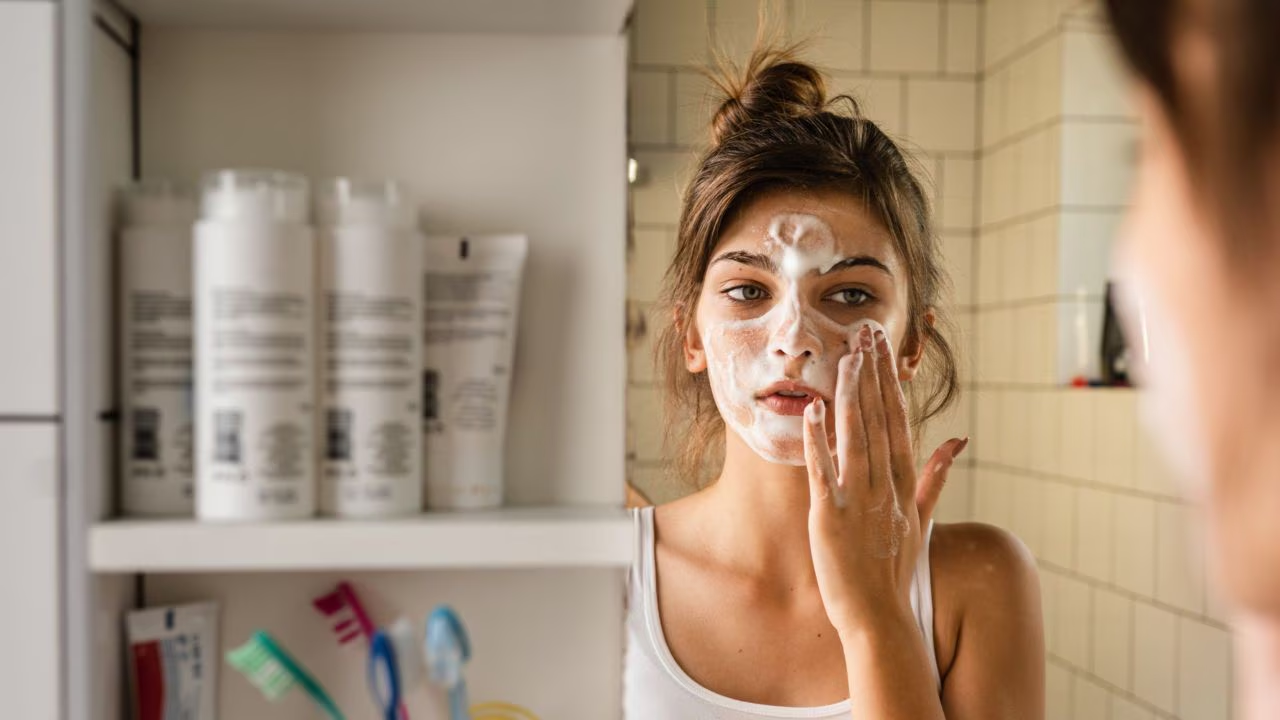
Think of it like getting your skin ready for bed: Clean it, treat it, then tuck it in. Start with a cleanser to remove makeup, sunscreen, oil, and dirt. If you use a treatment, that comes next, followed by moisturizer to support your skin barrier and keep hydration locked in. My favorite rule of thumb is to apply products from thinnest to thickest. Generally, your lighter serums go before your creams. And you don’t need to wait between every step; once one product has been absorbed, you can move on.

Are there any product types you think most people are missing in their night routines?

I think most people are missing a really good moisturizer. There’s so much emphasis on serums and active ingredients that people forget that supporting the skin barrier is foundational. Hydration and oil are also not the same thing—acne-prone or oily skin still needs hydration.

Team Cosmo’s Nightly Routine:

Jasmine Hyman, assistant beauty editor

Age: 26

Skin concerns: Acne and hyperpigmentation

Jasmine Hyman for Cosmopolitan

My focus these days is all things acne. My chin is a hotbed for closed comedones and painful pimples, so I’ve been relying on acne-centric ingredients and keeping my routine as simple as possible. Second to acne comes hydration. Because I’m super dry and eczema-prone, I need to keep my skin barrier in check, especially overnight.

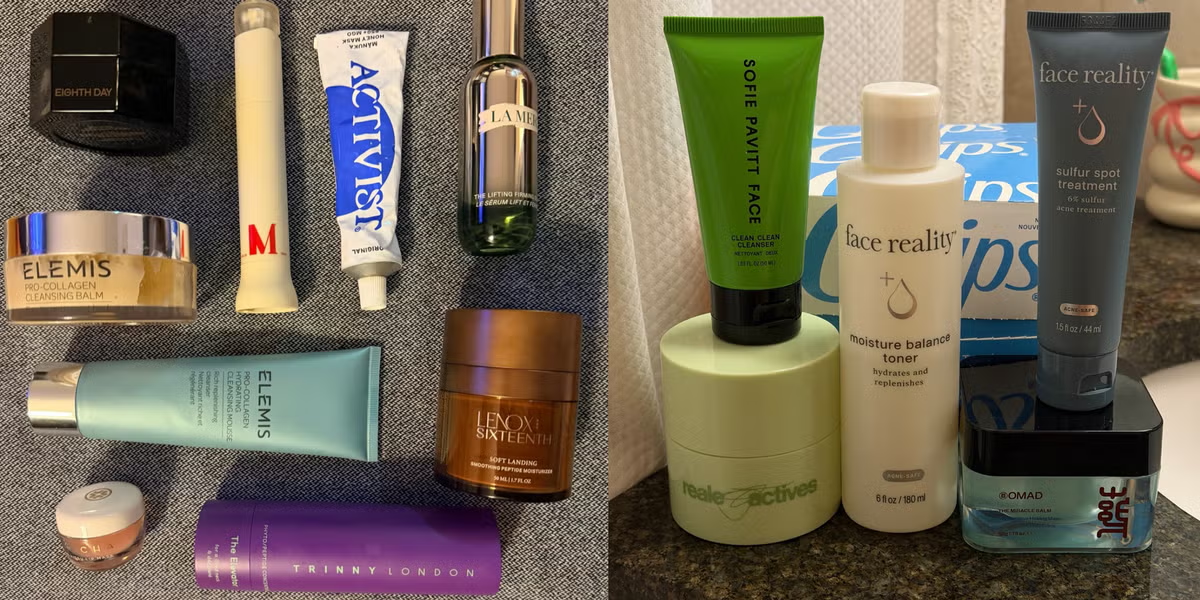
I start off with Reale Actives’ Cleansing Balm to remove all the makeup and sweat and gunk that accumulated on my skin throughout the day. Then I dab my face dry with Q-tips’ new towels (I have sworn off ever wiping my face on a shower towel again). Then I follow with Sofie Pavitt’s Clean Clean Cleanser—it has the best lather of any face wash while still being very gentle and non-stripping, because my skin can’t afford to lose any of its precious moisture. Then I go in with the Moisture Balance Toner from Face Reality (I know toner can be a superfluous step at night, but this one is super gentle and my pores need all the help they can get!).

I then layer on Face Reality’s Sulfur Spot Treatment over my CPOTD (chin pimples of the week), and let that dry for a few minutes. I finish off with OMAD’s Miracle Balm, which is a heaven-sent nourishing moisturizer for sensitive, dry, and acne-prone skin. Once my acne is sorted out, I hope to add more targeted serums into my routine, but for now, simplicity is key.

Julee Wilson, beauty editor-at-large

Age: 44

Skin concerns: everything (but if I had to choose: firmness and hyperpigmentation)

Julee Wilson for Cosmopolitan

Julee Wilson for Cosmopolitan

Listen, my nighttime skincare routine is extensive—and somewhat bougie. But every step has a purpose! At this stage in my life, I’m all about correction and prevention. Plus, I consider this routine dedicated self-care time.

When it comes to my topicals, I start by double cleansing with my beloved ELEMIS Pro-Collagen Cleansing Balm (morning and night, I don’t play about this product) followed by ELEMIS Pro-Collagen Hydrating Cleansing Mousse to remove anything left behind. Next comes all my devices, usually while watching TV with my husband after the kids are asleep. My CurrentBody LED Neck and Décolletage device gets used four to seven nights a week, while my Shark Beauty CryoGlow LED Face Mask makes an appearance five to seven nights. The CryoGlow’s cooling technology helps depuff my under-eyes, but because that area isn’t getting LED treatment, I also use my Dr. Rajani PlasmaGlo LED Duo Under Eye Corrector, too. Consistency is key, folks!

After that, I apply the Activist Mānuka Honey Mask for 15 minutes. It’s incredibly nourishing and preps my skin for my serum and creams. Once I rinse it off, I put on Dr. Diamond’s Metacine EyeLift Bioremodeling Peptide Multiplex eye serum, followed by Trinny London The Elevator Neck Concentrate on my neck and chest and La Mer The Lifting Firming Serum on my face for extra attention to firmness and elasticity.

After everything absorbs, I reach for Eighth Day’s night cream, which is a luxe RetinalXR complex to support skin renewal. It’s pricey, babes, but works! I finish with Lenox and Sixteenth Soft Landing Smoothing Peptide Moisturizer to seal in hydration and protect my skin barrier. I love to finish my routine off with Tatcha The Kissu Lip Mask right before my head hits the pillow. I know it’s a lot, but it works for me, my skin, and my soul!

Beth Gillette, beauty editor

Age: 29

Skin concerns: acne and hyperpigmentation

Beth Gillette for Cosmopolitan

My skincare routine has drastically changed over the past few months. What used to consist of the simplest formulas to heal my hormonal acne is now filled with hydrating serums, barrier-repair oils, and even a dark spot corrector. Is this 30?

I take off all my makeup with Reale Actives Get Bare Cleansing Balm (the only formula I’ve found that removes everything but doesn’t cause acne; I’m on my third jar), then I thoroughly cleanse with Hypothesis’s Daily Acne Cleanser. One or two nights a week or just before my period, I use a benzoyl peroxide cleanser to reduce the likelihood of breakouts.

Once I’ve got a clean canvas, it’s serum time. Layering on all my serums is what I imagine Picasso felt like staring down a blank easel. Endless possibilities! I always start with Prequel Multi Quench Plumping Face Serum to hydrate. Then it’s my treatment step. I switch between Sofie Pavitt’s Mandelic Clearing Serum and use this most nights, and I just started testing Biologique Recherche’s Serum Vivant, which regulates sebum production and supports your skin microbiome to gently reduce acne. A few nights per week, I’ll incorporate Lancer’s Gravity Dark Spot Correcting Serum with exosomes to help even out my skin tone. On the chance I do have a breakout, I’ll dab on a little bit of Face Reality’s Sulfur Spot Treatment.

I used to be very “whatever” about moisturizer because my skin was very oily. But that troll that steals your youth a little bit every year recently paid me a visit, and now I care a lot about hydration. La Roche-Posay’s Hyalu B5 Suractivated Face Cream is my favorite moisturizer of this year. It is thick and feels way more expensive than a $40 drugstore cream. And as it gets colder, I’ve been layering the Sweet Chemistry Barrier Repair Oil-Serum on top, giving me the same comforting feeling of massaging in an oil without clogging my pores.

Meet the expert

Hallie McDonald, MD is a board-certified dermatologist and the cofounder of barrier-focused skincare brand ERLY.

Why trust Cosmopolitan?

Jasmine Hyman is the assistant beauty editor at Cosmo who covers all things skincare. She, along with team Cosmo, have spent years testing products and perfecting their nighttime skincare routines to find the best formulas to address acne, fine lines, dryness, and more.

Jasmine Hyman is the Assistant Beauty Editor at Cosmopolitan, where she writes about the latest beauty trends and must-have products. Her most prized beauty possessions are a meticulous skincare routine and salon blowouts. You’ll also likely find her in bed reading a good book or endlessly scrolling TikTok (spoiler: it’s usually the latter) while listening to Harry Styles’ entire discography on repeat. Follow her on Insta to be inundated with pictures of her meals. 

Tags: , , , ,
For those who work hard on beauty but don't look polished

For those who work hard on beauty but don’t look polished

For those who work hard on beauty but don’t look polished | 5 habits to review first

Don’t you ever feel like, even though you’re trying your best, nothing really changes?

You research skincare, try new cosmetics, and check out what’s trending on social media.

And yet, when you look in the mirror, you think, ‘Hmm, I just don’t look polished…’

What’s more, because you’re working so hard, you feel down, thinking, ‘Maybe I’m doing it wrong.’ I really understand that feeling.

Before adding more, let’s take a step back

When looking for the cause of not looking polished, it’s easy to think, ‘Maybe I’m missing a new item.’

However, one thing I want you to review is daily habits.

No matter how good an item seems, if your foundational habits aren’t in order, it can be hard to make the most of its benefits.

So, before adding, review first. Today, I’ve summarized five of them.

Habit 1: Simple skincare that suits your skin

Using this and that isn’t necessarily better.

For example, narrow it down to a three-step routine of cleansing, toner, and moisturizer, and try it for one to two weeks first. Then, while watching your skin’s condition, add more if necessary.

If you change too many new items at once, you won’t know what works for you. I recommend changing ‘one by one’.

Habit 2: Taming bedhead and keeping hair neat

Surprisingly, hair neatness has a big impact on your impression.

No matter how hard you work on your makeup, if your hair in the back is sticking out or the ends look dry, it’s hard for your overall look to seem put together.

In the morning, don’t just dampen the ends of your bedhead, but dampen from the roots and dry it. Even just doing this might change how you look.

Habit 3: Reviewing sleep and lifestyle rhythm

‘I know, but that’s hard!’ I can almost hear you saying that (laughs).

So, you don’t need to aim for perfection.

For example,

Try starting with things like these. Even small adjustments can make some people feel a difference in their morning skin condition and mood.

Habit 4: Be conscious of your posture and grooming

This is easy to overlook, but it’s actually quite important.

If your back is hunched, you tend to look tired no matter what. Even when sitting, try to relax your shoulders occasionally and straighten your back.

Also, before you go out, quickly check for dust on your collar and shoulders, and lint or wrinkles on your clothes. This little extra step significantly boosts your sense of cleanliness.

Habit 5: Choose beauty habits you can continue without strain

If you try to do every part of a “perfect routine” you saw on social media, you’ll usually run out of steam in three days (I’ve experienced this too… ).

The secret to continuing is to choose only things that fit into your current life without strain.

  • If you don’t have time in the morning, just be thorough at night

  • On busy days, just moisturizing is fine

  • Do a little extra careful care only on weekends

I believe that “being able to continue” is the strongest thing.

For saving | A checklist to start today

☐ Thought about whether my current skincare items are enough
☐ Limited to changing only one item at a time
☐ Styled my hair from the roots
☐ Reduced smartphone time before bed a little
☐ Was conscious of my posture while sitting
☐ Checked the condition of my collar, shoulders, and clothes before going out
☐ Narrowed it down to a plan I can continue without strain

It’s easy to look back on if you take a screenshot and keep it on your phone.

Summary

I feel that becoming polished isn’t just about adding new things, but also about refining your daily habits.

You don’t have to do everything at once. First, try starting with just one thing that seems doable.

Finally

Thank you so much for reading until the end!

On Instagram, I share daily beauty habits and tips for looking more polished. If anything catches your eye in my Reels, please feel free to take a look.

And for those who want to know more specifically about “how to choose habits that suit you” or “systems for keeping them up,” I have also prepared a paid note.

▶︎ Paid note: https://note.com/kireithefuter/n/n08aa8acaada5?sub_rt=share_pb
Instagram: @mimi_beatifullife

Tags: , , , ,
Homestead Blog Hop - Homestead tips, ideas, animal care, and recipes every Wednesday

Homestead Blog Hop 623 Make Pumpkin Streusel

Welcome to the Homestead Blog Hop. A weekly gathering for homesteaders and simple living enthusiasts. We all share DIY projects, from-scratch recipes, and creative inspiration from our homes to yours.

This week’s hop features yummy foods. It also offers practical ideas that celebrate handmade living and self-sufficiency. Explore ideas that fit a thoughtful, sustainable lifestyle.

Whether you’re looking for seasonal crafts, homemade treats, or encouragement on your homesteading journey, you’ll find plenty of inspiration to carry into the upcoming seasons.

Grab a cup of tea, explore the featured posts, and join us in sharing your own homestead creations.

Meet Your Homesteading Hosts

We’re Kelly from Simple Life Mom, Liz from The Cape Coop, Natasha from Houseful of Nicholes, and Laurie from Ridgehaven Homestead. We’re about from-scratch living, simple ingredients, frugal habits, and intentional, sustainable living. We share recipes, tips, and ideas to support home cooks and makers.

We’re delighted to host the Homestead Blog Hop. You can find fresh inspiration each week for DIY projects, homemade recipes, and practical living ideas. Join us for new ideas and a growing community. Together, we celebrate everyday craftsmanship and thoughtful living.

Follow Us for More Homestead Inspiration

Natasha – Houseful of Nicholes
Facebook | Pinterest | X | Instagram

Laurie – Ridge Haven Homestead
Facebook | Pinterest | Instagram

Liz – The Cape Coop
Facebook | Pinterest | X | Instagram

Kelly – Simple Life Mom
Facebook | Pinterest | X | Instagram

FEATURED POSTS from the Last Homestead Blog Hop

Each week, we take turns selecting three featured posts from the Homestead Blog Hop. These features are shared across all of our social media platforms. They spotlight the creativity and hard work of our fellow homesteaders.

Here are the featured posts from last week’s hop:

1. Free printable fall art from Our Tiny Nest

2. Simple DIY Autumn Tree from Crazy Little Love Birds

3. Delicious Pumpkin Streusel Muffins Recipe – from Press Print Party

Congrats! Feel free to grab the featured on button for your post.

Just right click and ‘save image as…‘

Guidelines for the Homestead Blog Hop

  1. Click the “Add Your Link” button below and upload a clear, eye-catching image from your project or recipe. Please link directly to the family-friendly post itself, not your blog’s homepage.
  2. You may link up up to three posts each week.
  3. Take time to visit a few other blogs in the hop and leave a thoughtful comment to let them know you stopped by. Community support makes this hop special!
  4. Please include a link back to the Homestead Blog Hop in your post. Posts without a back link are not eligible to be featured. All featured posts are shared across all hosts’ social media channels.
  5. Share posts that haven’t been linked to the hop before. Older posts are welcome as long as they are new to the hop.
  6. By joining the Homestead Blog Hop, you grant the hosts permission to use one image from your post, with a link back to your site, if your post is selected as a feature next week.
  7. This is a family-friendly link-up designed to encourage, inspire, and support the homesteader in all of us.

Let the Party Begin!

Which project are you excited to try this week? Leave a comment below.

Join Our Homestead Blog Hop Pinterest Board

Follow all of your hosts on Pinterest and send a message if you’d like to be added to our Homestead Blog Hop group board. This board is a great place to share your DIY projects, crafts, and from-scratch recipes with the homesteading community.

Guideline: Only pin posts that you’ve linked up to the Homestead Blog Hop.

Tags: , , , ,
Our toothbrushes, straighteners and LED masks have got screens – it's no wonder we've got tech fatigue

Our toothbrushes, straighteners and LED masks have got screens – it’s no wonder we’ve got tech fatigue

Our toothbrushes have a live stream camera built in, our straighteners ask us a survey-load of questions before heating up, and our LED masks have so many settings we’re pressing buttons for longer than we’re actually wearing the mask – I can’t be the only one who has beauty tech fatigue?

Beauty is supposed to be a moment of luxury, a brief spell for ourselves amid the chaos of everyday life, but when I’m faced with a barrage of options from my face mask, and I need to open an app on my phone to use my toothbrush, the feelings of relaxation and self-care go out the window and my beauty routine feels like another chore on my to-do list.

Anna Persaud, wellness expert and CEO of This Works, explains the theory behind how I’m feeling. “Technology has given us incredible tools, from devices that track our sleep to beauty tech that helps us care for our skin, but it can also make wellbeing and beauty feel like another set of goals to achieve.

© Getty ImagesOur beauty routine is no longer a moment of calm

“We can find ourselves measuring results, comparing our progress with others and feeling that, simply because a new device or treatment is available, we should be using it to keep up. What starts as self-care can begin to feel like pressure.”

Holistic healer Estelle Bingham reiterates the issues with tech-heavy routines: “We remove the opportunity for a beauty routine to force us to take a moment out, to step away from screens, work or technology, rather than simply wearing an LED mask while we continue to absorb information from a screen, or carry on working at our laptops.”

Perfectly simple toothbrush brand Suri’s co-founder Gyve Safavi adds: “Somewhere along the way, we’ve confused more technology with better products. Apps to download, endless settings, AI features and complicated instructions. Suddenly, something that should be a moment for yourself becomes another task on an already long to-do list.

“I believe the best technology is the kind you barely notice. It should make your life better, not demand more of your attention. If you need a tutorial to get through your morning routine, something has probably gone wrong with the design.”

Too many options

Decision fatigue plays into this issue too; it’s something that impacts many of us in the modern world, and I really don’t need my beauty devices playing into that, which is why I’ve started eschewing tools that require multiple settings in favour of devices that take us back to basics.

I’d had a Suri toothbrush, £105, squirreled away in my drawer, waiting for its moment to shine, and that moment came when I also received the Dyson Camerajet toothbrush, £419.99, which shows you a live stream of your mouth as you brush, shooting mouthwash into gaps identified by the camera.

All of that tech turned me right off, and I turned to my Suri instead. Simple and easy to use. I’ve had an Oral-B toothbrush with a screen and multiple settings for the last few years, and while I loved it (and my dentist said it was doing a brilliant job of keeping my teeth clean), the battery died daily. The tech was too much for it. Suri on the other hand, lasts for a month on one charge. I’m smitten with it – and Safavi understands why: “Consumers are becoming much more discerning about this. They’re not rejecting technology; they’re rejecting unnecessary complexity. Sometimes the most innovative thing you can do is make something simpler.”

The same goes for my new LED patch, £100 for two, from This Works. I’ve tried many, many LED masks and have become tired of the constant evolution of them. I don’t want to have to pick between red, green and blue light. I just want to sit down and feel the self-care the red light promises.

This Works LED patches

Don’t get me started on hair tools. I had a straightener from Cloud 9 which basically required a job interview to use it, asking me my hair type before it would heat up. Granted, you could save your setting once you had it nailed, but I just want to do my hair.

Ghd’s AI-powered Sculpt, £369, is good, because it tailors the heat to your hair without you having to do any admin. Dyson’s Airsmooth is better, as you simply turn it on and go.

Skincare overwhelm

Skincare has a lot to answer to as well. Skin cycling sees us switching up our routines nightly, but I just want one that caters to what my skin needs rather than swapping in retinols and whatnot.

I appreciate that I am privileged to have overall unproblematic skin, so I don’t need to use all sorts of ingredients, but I think Japan has got it right when it comes to keeping a skincare routine feeling like self-care rather than a chore

J-beauty acknowledges that beauty is a moment just for us, and at a recent event with Japanese skincare brand Tatcha, it was pointed out that if you watch J-beauty skincare routines on social media, it’s rarely being performed by a Japanese person. This is because if you’re filming your routine, it’s not for you anymore.

Re-establishing beauty as a calming moment

With the J-beauty approach in mind, I asked Anna how she’d move away from the chore-feeling of beauty, and she said the key is to pay attention to the experience itself and recognising the connection between the brain, body and mind.

Put down the hair styler with a screen, and close the app asking you to track your toothbrushing and hone back into how your routine feels.

© Getty ImagesBeauty has become another chore to tick off

“Our senses are powerful,” she begins. “The feeling of warm water, slow, mindful touch as we apply a body oil, a familiar functional fragrance or a softer, low-lit environment can all provide cues that help us shift away from the demands of the day.

“Through repetition, the brain can learn to associate a particular sensory stimulus -such as a familiar fragrance or the feeling of a warm bath – with a moment of rest. Over time, these associations can support patterns of thought and responses that help the autonomic nervous system shift towards a more parasympathetic, or ‘rest and digest’, state. We may then feel calmer, more relaxed, and more able to rest.

“The goal is to create an experience that feels restorative for you: a moment of calm, relaxation and connection with yourself.”

Tags: , , , , , , ,
The rise of skincare-based makeup. When beauty meets skincare

The rise of skincare-based makeup. When beauty meets skincare

From skin-loving foundations to hydrating concealers, the line between skincare and makeup is becoming increasingly blurred. Here’s why hybrid beauty products are changing the way we get ready.

There was a time when skincare and makeup had two very different jobs. Skincare was responsible for cleansing, hydrating and treating the skin, while makeup stepped in to conceal imperfections, even out the complexion and create a polished finish. Today, those boundaries are becoming less defined, with a new generation of beauty products promising to do a little of both.

Welcome to the era of skincare-based makeup, where your foundation might contain hydrating ingredients, your concealer could offer soothing benefits, and your tinted moisturiser might be the product you reach for instead of a full face of foundation.

As beauty consumers become more ingredient-conscious and increasingly interested in healthy-looking skin, the appeal of makeup that does more than simply cover up is undeniable. The goal is no longer necessarily to hide the skin beneath layers of product, but to enhance what is already there.

The shift from coverage to complexion

One of the biggest changes in modern beauty is the move towards complexion products that allow natural skin to remain visible. Heavy, full-coverage formulas still have their place, but sheer foundations, skin tints, tinted serums and lightweight concealers are gaining attention from those who prefer a more effortless finish.

Rather than creating a completely uniform complexion, these products aim to even out skin tone while allowing freckles, natural texture and other individual characteristics to show through.

The result is makeup that feels less like a mask and more like an extension of your skincare routine. Think radiant skin, a fresh finish and a complexion that looks like skin, only a little more polished.

This shift also reflects a broader change in beauty ideals. The pursuit of flawless, poreless skin is making room for a more realistic approach, where healthy-looking skin matters more than achieving an impossibly perfect finish.

When your foundation works harder

The appeal of skincare-based makeup lies in its ingredients. Today’s hybrid formulas may include familiar skincare favourites such as hyaluronic acid, glycerin, niacinamide, ceramides and antioxidants.

Hyaluronic acid and glycerin are humectants that help attract and retain moisture, making them useful ingredients in complexion products designed to leave skin feeling hydrated. Ceramides help support the skin barrier, while niacinamide can offer benefits for uneven skin tone and barrier function, depending on the formulation and concentration.

Antioxidants, meanwhile, may help protect against oxidative stress, although their effectiveness depends on the specific ingredient, formulation and how the product is used.

These additions can make makeup more comfortable to wear, particularly for people who experience dryness or prefer a dewy, supple finish. A foundation that does not cling to dry patches or leave the skin feeling tight can make a noticeable difference to the overall makeup experience.

However, it is worth remembering that a skincare ingredient appearing on a foundation label does not automatically make that product an effective treatment. Concentration, formulation, stability and regular use all influence the results. Your complexion products can complement your skincare routine, but they should not necessarily replace it.

The appeal of doing more with less

In a beauty landscape filled with elaborate routines and endless product launches, multitasking makeup offers a welcome sense of simplicity.

A tinted moisturiser can combine light coverage with hydration. A concealer with a comfortable, nourishing formula can help disguise dark circles without emphasising fine lines. A skin tint can provide a little evening-out without the feel of traditional foundation.

For those who prefer a streamlined routine, these products offer an opportunity to simplify the makeup bag without sacrificing the finished look.

There is also a practical appeal. Many people want products that can transition from the office to dinner, survive a busy day and still feel comfortable on the skin. Lightweight, flexible formulas can be particularly useful for everyday wear, when a full-glam finish is not always necessary.

The trend also aligns with a more considered approach to beauty shopping. Rather than buying a separate product for every possible concern, consumers may be drawn to versatile formulas that fit more naturally into their existing routines.

Of course, multitasking does not always mean better value. A product should still perform its primary job well, whether that is providing coverage, hydration or a particular finish.

Is skincare-based makeup suitable for every skin type?

The short answer is yes, provided you choose formulas that suit your individual skin needs. The term skincare-based makeup is broad, and not every product will work for every complexion.

For dry skin: Look for creamy foundations, hydrating skin tints and formulas containing glycerin or other moisturising ingredients. A well-prepared skin barrier can also help makeup apply more evenly and prevent it from clinging to dry areas.

For oily skin: Lightweight, breathable formulas may feel more comfortable than richer, emollient products. If shine is a concern, consider a natural or soft-matte finish rather than assuming every skincare-infused formula will suit your skin.

For sensitive skin: Keep an eye on fragrance, essential oils and other ingredients that may trigger irritation. The word ‘clean’ or ‘skin-loving’ does not automatically mean a product is suitable for sensitive skin. Patch testing new products can help identify potential reactions.

For mature skin: Flexible, hydrating formulas can be a useful option if traditional foundations tend to settle into fine lines or emphasise texture. Applying thin layers and using concealer only where needed can also create a softer, more natural result.

For acne-prone skin: Look for products labelled non-comedogenic where appropriate, but remember that this does not guarantee a product will never cause breakouts. Remove makeup thoroughly at the end of the day and pay attention to how your skin responds to new formulas.

Ultimately, the best makeup is not determined by the number of skincare ingredients on the label. It is the product that suits your skin, feels comfortable and delivers the finish you want.

The SPF question: Can your makeup replace sunscreen?

With tinted moisturisers, foundations and complexion products increasingly featuring sun protection, it is tempting to view them as an all-in-one solution. However, this is one area where it pays to be cautious.

A foundation or tinted moisturiser with an SPF rating can contribute to your sun protection routine, but most people do not apply enough makeup to achieve the level of protection stated on the packaging. Coverage also tends to be uneven, leaving areas of skin less protected.

For reliable everyday protection, apply a broad-spectrum sunscreen with at least SPF 30 as the final step in your morning skincare routine, following the product’s instructions. Allow it to settle before applying makeup, and reapply sunscreen as directed, particularly after sweating, swimming or prolonged outdoor exposure.

Your foundation may offer an additional layer of protection, but it should not be your only defence against UV damage.

The future of beauty is skin first

The rise of skincare-based makeup signals a more thoughtful approach to beauty, one that places comfort, versatility and individual skin needs alongside colour, coverage and finish.

It also challenges the idea that makeup must conceal every perceived imperfection. Instead, the emphasis is shifting towards enhancing the complexion, allowing natural skin to show through and choosing formulas that feel as good as they look.

That does not mean full-coverage foundation, bold lipstick or a dramatic evening look is going anywhere. Makeup remains a form of creativity and self-expression, and there is room for every finish, from barely-there radiance to full glamour.

What is changing is the expectation that our products should work harder for us. We want makeup that fits into our lives, feels comfortable throughout the day and complements the effort we already put into caring for our skin.

Perhaps that is the real appeal of this beauty movement: not the promise of perfect skin in a bottle, but the freedom to choose makeup that enhances rather than disguises.

Because the best beauty routine is not necessarily the one with the most steps. It is the one that makes you feel confident in your own skin.

ALSO SEE:

What is Korean skincare, and why is it so popular?

Featured Image: DupePhoto

Tags: , , , , ,
Rosalyn Fannin

What is Skin Layering? A Master Guide to Applying Your Skincare

Most people have a skincare routine set in stone, but it may not be exactly what their skin needs.

While many of us know that an effective skincare routine should feature cleansing, hydrating and skin-protecting products, what a lot of us may not realise is just how important it is to apply these products in the right order and give them enough time to properly absorb. If you know you’re one to skim over a product’s instructions (guilty!), the truth is that not following the appropriate steps or recommended application method could significantly reduce a product’s efficacy and impact. The bottom line: skipping the technicalities means you might not be fully getting your money’s worth.

In a bid to target all key areas effectively, skin layering has been propelled into the spotlight on social media. It’s the practice of applying all your products in a set order from thinnest to thickest, rather than all at once. This includes a morning routine of cleansing, followed by applying an antioxidant serum, moisturiser and sunscreen. 

Before we delve into the details on incorporating skin layering into your own regimen, it’s important to note there is no one-size-fits-all routine, according to specialist dermatologist Dr Cara McDonald.

“The ideal routine depends on your skin type, individual concerns, goals and any underlying skin conditions.”

So, keep reading to find out how to tailor a routine to your skin type, needs and concerns, with a step-by-step skincare guide that will help you curate exactly what you need in your morning and evening routines, and how to order every product to effectively practice skin layering.

Need to know

  • A daytime skincare routine should clean and hydrate the skin and offer skin protection. This should follow the order of cleansing, applying a serum and moisturiser, and ending with a broad spectrum sunscreen.
  • An evening skincare routine prioritises cleaning the skin, hydration and skin barrier protection. A simple regimen should include cleansing, using active treatments (toners, exfoliants, or serums) and applying moisturising creams or oils.
  • Skincare products should always be applied from thinnest to thickest consistency as part of practicing skin layering. Liquids and water-based serums should be applied first, followed by heavier creams and oils. This is to ensure proper absorption and prevent product pilling.
  • Most serums and moisturisers require just 30 to 60 seconds to absorb before applying the next layer. If it is taking longer, you likely have applied too much.
  • Specialist dermatologist Dr Cara McDonald says an effective skincare routine does not need dozens of products. The essential foundation for any skin type is a gentle cleanser, a barrier-supporting moisturiser, and daily SPF 50+ sunscreen.

What is skin layering?

Skin layering is the process of applying skincare products in a set order so that each product can work effectively. Rather than applying all your products at once, certain layers are put on sequentially to absorb, keep the skin hydrated and target any specific skin concerns.

When skin layering as part of a morning routine, Australian specialist dermatologist Dr Cara McDonald says the best order consists of:

  1. Cleansing the skin with a gentle cleanser
  2. Applying an antioxidant serum containing Vitamin C or niacinamide
  3. Applying a moisturiser with barrier-protecting ingredients
  4. Applying a broad spectrum sunscreen of SPF 50 or 50+

Similarly when skin layering at night, she suggests the following application order:

  1. Cleansing the skin to remove dirt, oil and makeup
  2. Toning and exfoliating (the latter up to three times a week)
  3. Applying eye cream or serum
  4. Applying moisturiser or face oil to support the skin barrier overnight

Each of these products need to be applied in the correct order and from thinnest to thickest consistency. This will help the active ingredients absorb as well as reduce pilling and uneven application. If not used or applied correctly, it can reduce the overall effectiveness of your skincare routine.

Ensure you follow the application instructions of each product carefully to prevent skin irritation, as well as introduce new products to your routine one at a time to minimise the risk.

Also consider the time needed between applying each ingredient. Dr McDonald says: “If products are taking a long time to absorb, feel sticky or are rolling off the skin, you may simply be applying too much or layering too many formulations.”

How do I build a skincare routine?

To build a skincare routine, you need a good understanding of your skin type and what your skin needs by adding new products in gradually:

  • Start with the basics: Begin with just cleanser, moisturiser and SPF sun protection.
  • Create a routine and checklist for morning and night: Keep a consistent routine with suitable products to start and end your day.
  • Understand what your skin needs: Look for suitable textures to suit your skin type – whether you have oily skin, dry skin, sensitive skin or combination skin.
  • Add new products one at a time, and only when you need them: Don’t use products with different actives at the same time. Patch test anything you haven’t tried before.
  • Apply your products from lightweight to heavy: The thinnest texture should go first, with the thickest applied last.

What is the best morning skincare routine?

A quality morning skincare routine should tick off the following steps:

  1. Cleanse the skin
  2. Apply a serum
  3. Apply a moisturiser
  4. Apply a broad spectrum sunscreen

Dr McDonald recommends a morning skincare routine that focuses on “protection and prevention, particularly protecting the skin against UV exposure, environmental damage and oxidative stress.”

Step 1: Cleanse the skin

Making sure your skin is clean is the essential first step to a skincare routine. Dr McDonald advises: “start with a gentle cleanser,” rather than something harsh on the skin.

While many people opt to begin their routine by double cleansing — involving cleansing with two different types of cleansers: an oil-based cleanser and a water-based cleanser — the dermatologist suggests you may not need to double cleanse as part of a morning routine.

“The purpose of cleansing is to remove makeup, sunscreen, dirt and excess oil without disrupting the skin’s natural protective barrier. If one gentle cleanse achieves that, there’s absolutely no reason to do it twice,” says Dr McDonald.

Step 2: Apply a serum

“Incorporating an antioxidant serum helps neutralise free radicals generated by UV exposure and pollution,” Dr McDonald reveals.

There are two types of core ingredients Dr McDonald recommends for a morning skincare serum:

  • Vitamin C: Vitamin C is an antioxidant serum that also supports the appearance of skin firmness, elasticity, and visible renewal over time.
  • Niacinamide (Vitamin B3): “It’s particularly versatile because it helps strengthen the skin barrier, reduce inflammation, regulate oil production and improve uneven pigmentation. It’s also generally well tolerated by most skin types.”

“You don’t necessarily need separate Vitamin C and niacinamide serums, particularly if you’re using a well-formulated product containing multiple beneficial ingredients,” says Dr McDonald. “It’s more important to choose the right ingredients than to accumulate lots of products.”

It’s also important to avoid applying Vitamin C serums with interactive ingredients such as exfoliating acids (AHAs and BHAs), retinol and benzoyl peroxide. And remember, your serums should always come before applying your moisturiser. If using multiple serums, they should be applied in order of thinnest to thickest in consistency.

Step 3: Apply a moisturiser

Using a moisturiser in the morning is an essential element to a morning skincare routine and should be used daily to maintain your skin’s hydration.

Look for a moisturiser that contains lightweight, barrier-protecting ingredients like hyaluronic acid, glycerin, Vitamin E and ceramides — though exactly what you’re after may vary depending on your skin type.

Step 4: Apply a broad spectrum sunscreen

“Sunscreen is unquestionably the most important step in any morning skincare routine,” Dr McDonald says. Every morning skincare routine needs to end with applying a broad spectrum sunscreen of SPF 50 or 50+ and should be applied every day no matter the weather — not just on sunny days.

These should be reapplied every two hours, and immediately after swimming, sweating, or towel drying. The Australian standard sunscreen dosage is at least one teaspoon (approximately 5mL) spread across the face, neck and ears, but always read the specific application and reapplication instructions on the bottle.

Disclaimer: Always read the label and follow the directions for use.

What is the best night skincare routine?

Dr McDonald says: “While mornings are primarily about protection, evenings are an opportunity to support skin repair, renewal and regeneration.” When finishing the day, you should follow this routine order:

  1. Cleanse the skin and remove any makeup
  2. Apply toners, chemical exfoliants, and active treatments
  3. Apply eye serums or creams
  4. Apply moisturiser and face oil

Step 1: Cleanse the skin and remove any makeup

Cleansing your skin is the first step in your evening routine. “A gentle cleanser is a good starting point to remove sunscreen, makeup, excess oil and environmental debris accumulated throughout the day,” says Dr McDonald.

While not necessary, if you are going to double cleanse your skin, the evening is the better time to do so. You should start with a makeup remover or oil-based cleanser first, followed by a water-based cleanser.

Step 2: Apply toners, chemical exfoliants, and active treatments

Toning is the next step in your routine. It serves as a way to remove any excess oil and impurities on the skin following a skin cleanse.

Dr McDonald says “evening is a great time to incorporate targeted active ingredients, particularly retinoids, exfoliating acids or peptides.”

She recommends using toners, exfoliators and treatments that contain the following active ingredients:

  • Retinoids (Vitamin A derivatives): Over-the-counter ingredients such as retinol, retinal, or retinyl esters “can improve the appearance of fine lines, pigmentation, skin texture and acne. However, they need to be introduced gradually to avoid irritation.” It should be applied on dry skin approximately five to 10 minutes after cleansing.
  • Peptides: “This particular product targets hydration, skin firmness and ageing. Some peptides may support skin repair and collagen-related processes, although the evidence is generally less robust than it is for retinoids.”
  • Glycolic, lactic or salicylic exfoliating acids: “These can be useful for improving roughness, congestion, dullness and uneven skin tone. They’re not necessary for everyone, though, and excessive exfoliation is a common cause of skin irritation.” If applying, AHA and BHA exfoliants should be used after cleansing.

You don’t need to use all three of these ingredients every night. In fact, Dr McDonald suggests “alternating products and giving skin time to adapt is often a much better approach.”

Step 3: Apply eye serums or creams

After toning, applying an eye cream or serum offers more targeted hydration while minimising the appearance of fine lines. This needs to be applied before you add your heavier and thicker moisturisers to avoid issues like poor absorption and product pilling.

Step 4: Apply moisturiser and face oil

Aside from it just being a luxurious way to finish a skincare routine, Dr McDonald says ending the day with a good moisturiser “can help replenish skin lipids, reduce water loss and support overnight barrier recovery.” Similarly, applying a face oil can also maintain and lock in the hydration the moisturiser provides.

Frequently Asked Questions

What is a basic skincare routine anyone can follow?

A basic skincare routine consists of using a gentle skin cleanser, a moisturiser and a broad-spectrum SPF 50 or 50+ sunscreen.

Dermatologist Dr Cara McDonald reveals that she loves “a simple skincare routine because consistency is far more important than complexity. Those three products alone provide a great foundation for maintaining healthy skin.”

Cleansing should be done twice a day to remove impurities from the skin. A lightweight moisturiser helps start the day with a hydration boost and applying sunscreen should always be your final step in your morning skincare routine.

However, Dr McDonald adds, “I always recommend starting with a simple routine and only adding extra steps when there’s a clear benefit.”

Some people may benefit from adding other products and ingredients. Dr McDonald suggests following the ‘skincare ABCs’:

  • A – Vitamin A: Retinoids for skin renewal, collagen stimulation, fine lines, pigmentation and acne.
  • B – Vitamin B3: Niacinamide for barrier support, inflammation, oil regulation and uneven skin tone.
  • C – Vitamin C: Antioxidant protection, collagen support and brighter, more even skin tone.

All three of these ingredients certainly do not need to be included in a basic routine, and will be more suitable to some skin types more than others.

“A simple morning routine might be a Vitamin C or niacinamide product followed by sunscreen, with moisturiser if required. In the evening, cleanse, apply a retinoid if appropriate, and moisturise. That’s a very effective routine without needing ten different products or spending half an hour in the bathroom,” says Dr McDonald.

How do I tailor a skincare routine for my skin type?

“Skincare should always be individualised,” says Dr McDonald. “Two people of the same age can have completely different requirements based on their skin type, underlying conditions, lifestyle, environment and personal goals.”

Dr McDonald also says it is important to distinguish between your skin type and your skin condition. “Your skin type may be naturally oily or dry, but certain conditions require additional consideration.”

“The goal isn’t to follow the latest skincare routine. It’s to develop one that suits your skin and that you’re happy to maintain consistently.”

What is the skin barrier?

The skin barrier is “our skin’s built-in protective shield,” according to the specialist dermatologist.

“The outermost layer of skin, called the stratum corneum, consists of skin cells surrounded by a complex mixture of lipids, including ceramides, cholesterol and fatty acids. I often describe it as a brick wall, where the skin cells are the bricks and the surrounding lipids are the mortar.”

But, not everyone needs to use a skin barrier protective product, explains Dr McDonald. If your skin barrier is already in a healthy condition, “the best approach is simply to avoid damaging it in the first place.”

Do I need to double cleanse?

“Double cleansing certainly isn’t essential for everyone, despite what social media might suggest,” says Dr McDonald. Double cleansing involves cleansing your skin with two different cleansers in a row: An oil-based cleanser followed by a water-based cleanser. While people should cleanse their skin twice a day as part of an effective skincare routine, it does not necessarily involve double cleansing.

“The purpose of cleansing is to remove makeup, sunscreen, dirt and excess oil without disrupting the skin’s natural protective barrier. If one gentle cleanse achieves that, there’s absolutely no reason to do it twice,” adds Dr McDonald.

However, it can be helpful for people who wear a lot of makeup or water-resistant sun protection, or have naturally oily skin.

“Cleanse as much as you need to, but as little as you can get away with. Skin shouldn’t feel tight, dry or squeaky clean after washing. That’s often a sign you’ve overdone it.”

How long should I wait after applying each skincare product?

You can start skin layering different skincare products immediately, as long as you’re following product application recommendations. Dermatologist Dr Cara McDonald says: “There’s no need to stand around waiting several minutes between applications.

“Generally, once a product has spread evenly and absorbed sufficiently that the next layer won’t simply rub it off or cause pilling, you can move on.”

Most serums and moisturisers should only require around 30 to 60 seconds waiting before moving onto the next product. But keep in mind, you should not use chemical exfoliants (AHAs or BHAs) and a retinoid in the same routine. Instead, practice ‘skin cycling’ by alternating nights. An example of this is exfoliating on Monday, applying a retinoid on Tuesday, and focusing on barrier recovery on Wednesday and Thursday.

“Ultimately, the formulation and compatibility of your products matter much more than precise timing between applications,” Dr McDonald explains.

What do I do if my skincare products start pilling during skin layering?

If your products begin pilling while skin layering, you should:

  • Pat dry the products rather than rubbing
  • Wait an additional 30 to 60 seconds before applying the next layer
  • Apply products in routine order from thinnest to thickest product
  • Wipe off any pills with a tissue or rinse your face with warm water

What ingredients should I look out for in my skincare routine?

To support a healthy skin barrier, Dr Cara McDonald recommends looking for ingredients including:

  • Ceramides: Fatty lipids designed to prevent water loss from the skin
  • Cholesterol: Reduces water loss and promotes softer feeling skin
  • Fatty acids: Includes linoleic acid and stearic acid to support the skin barrier
  • Glycerin: A humectant to attract moisture and hydrate the skin
  • Hyaluronic acid: A humectant that binds water to improve the feeling of dry skin
  • Niacinamide: Supports the skin barrier and reduces the appearance of oily skin
  • Vitamin C: An antioxidant to support the skin from environmental stressors and factors
  • Retinol: A Vitamin A derivative designed to improve the appearance of fine lines

“Some replenish the skin’s natural lipids, while others improve hydration or support the skin’s ability to maintain its own protective structure,” she explains.

Importantly, some of these ingredients may have interactions or be more suitable to some skin types over others. For example, using Vitamin C and retinol simultaneously isn’t always recommended, due to the risk of skin irritation or barrier disruption. Always read the ingredient lists on all your products to prevent interactions between ingredients and ensure suitability to your skincare needs.

What issues can I have when starting a new skincare routine?

Specialist dermatologist Dr Cara McDonald reveals the common mistakes people can make when changing or starting a new skincare routine include:

  • Using too many products at once: “If you start using five new products and your skin suddenly becomes irritated, you have no idea which one is responsible. Equally, if your skin improves, you don’t know which product is actually delivering the benefit.”
  • Constantly swapping products: “People often expect dramatic results within a couple of weeks, and when they don’t see them, they move on to the next trending ingredient.”
  • Trying trending products rather than products suitable to their skin: “Just because a product is fantastic for someone else on social media doesn’t mean it’s appropriate for you.”
  • Overusing active ingredients: “More isn’t always better, and combining multiple exfoliants, retinoids and other potentially irritating products can leave skin inflamed rather than improved.”

How do I start a new skincare routine?

To prevent breakouts, irritation and spending too much money, Dr McDonald says, “my biggest piece of advice is to play the long game with skincare.”

Here are some tips to begin a new skincare regimen:

  • Introduce one skincare product at a time, and if any irritation occurs, remove it from your routine
  • Give your skin time to adjust to determine if you’re skin purging (temporarily breaking out by a change in skincare products) or reacting to a product
  • Use chemical exfoliants like AHAs and BHAs a maximum of three times a week
  • Follow an appropriate morning and evening skincare routine
  • Apply products from thinnest to thickest texture to prevent pilling

How do I care for my acne-prone skin?

To care for blemish-prone skin, you need to maintain the skin barrier without causing breakouts.

Specialist dermatologist Dr Cara McDonald suggests using retinoids and Vitamin A skincare products, as those prone to oily skin and breakouts: “may benefit from lightweight, non-comedogenic formulations and ingredients such as salicylic acid, niacinamide or a retinoid.”

Spot treatments (such as benzoyl peroxide formulations) or salicylic acid (BHAs) may also be an option, but caution is advised to prevent over-application or over-exfoliation. If concerned, always consult a dermatologist before using a new ingredient or product on acne.

What type of moisturiser should I use to hydrate my skin?

There are three types of moisturising ingredients you can use to maintain skin hydration:

  • Humectants: These are water-attracting ingredients designed to increase skin hydration, and help skin look plumper and feel softer. Ingredients include hyaluronic acid, glycerin, panthenol and lactic acid.
  • Emollients: These are skincare ingredients designed to improve the skin’s smoothness, softness and flexibility. Ingredients include ceramides, fatty acids (like linoleic and stearic acid), and cholesterol.
  • Occlusives: These are ingredients that form a layer over the skin barrier to prevent moisture from evaporating from the skin (transepidermal water loss). Ingredients include: dimethicone, lanolin, and plant oils (like coconut oil).

What small adjustments can I make to my skincare routine?

To refine your skincare routine for your skin type or specific skin concerns, these small changes are a great starting point:

  • Follow a step-by-step skin layering checklist for both morning and evening skincare routines
  • Apply all your products from thinnest to thickest consistency to prevent pilling and aid absorption
  • Cleanse your skin twice a day – once in the morning and once at night
  • Use a moisturiser daily for added skin hydration
  • If using a spot treatment, apply before using your moisturiser
  • Wait around 30 to 60 seconds after applying each product – if it’s taking longer to absorb, you may have applied too much
  • If introducing a new product or active ingredient to your routine, patch test first
  • If introducing multiple products to your routine, add one in at a time rather than all at once
  • Never skip the sunscreen in your morning routine – this should be applied no matter the weather if heading outside

Meet our expert

Dr Cara McDonald: Specialist dermatologist and cosmetic injector

After completing her medical degree with First Class Honours, Tasmanian-born specialist dermatologist Dr Cara McDonald undertook specialist dermatology training at St Vincent’s Hospital and The Alfred Hospital in Melbourne, and trained at Oxford in the UK. She is now a Fellow of the Australasian College of Dermatologists, a consultant at St Vincent’s Hospital Melbourne, and has been the co-director and principal dermatologist at Complete Skin Specialists since 2010.

Rosalyn FanninSEO, AI and Generative Search Producer

Rosalyn has been working as a shopping writer and producer since 2022, and joined the team in November 2024. She earned her Bachelor of Communications & Media from The University of Notre Dame in 2020. She is an expert in helping shoppers get the best bang for their buck and make quality investments, covering a wide range of products – from appliances and tech to fashion and beauty. Her previous media experience includes over three years working at Nine Entertainment and writing for 9Product Reviews as well as interning at 2GB and Seven Network. In her downtime, Rosalyn plays The Sims, watches netball and spends time with her nephews, niece and cats.

Read related topics:Skincare

Tags: , , , , ,
The skincare products dermatologists suggest you to cut from your overloaded daily routine

The skincare products dermatologists suggest you to cut from your overloaded daily routine

Fewer products. Calmer skin. Less chronic irritation. That is the practical health promise behind a “less is more” shift reshaping how dermatologists talk about skincare, with top specialists now naming common products they say most people can safely drop. The timing matters.

As social media pushes routines to new levels of complexity and expense, clinicians are warning that overloaded regimens may be damaging the skin barrier and fueling the kind of chronic inflammation that drives conditions like acne, rosacea and eczema. Here is where the movement stands, why it is gaining ground and what to watch next.

What’s happening

Dermatologists across major clinics and medical schools are publicly identifying skincare products they say are unnecessary, ineffective or actively harmful. The list spans eight common items, including sheet masks containing active ingredients, collagen creams, harsh exfoliators, pore strips, alcohol-based products, cleansing wipes, astringent toners and expensive sunscreens, with dedicated makeup removers added to the chopping block as well.

Advertisement

Advertisement

Dr. Shereene Idriss, a board-certified cosmetic dermatologist and founder of Idriss Dermatology in Manhattan, laid out the case against several of these on “The Mel Robbins Podcast.” She singled out sheet masks that carry retinol or other actives as a “red flag,” arguing that locking a strong ingredient onto the skin under occlusion can trigger irritation in delicate areas.

Collagen-labeled moisturizers drew similar criticism. “The word ‘collagen’ on this moisturizer makes people think that it’s going to help them replenish their collagen,” Idriss said. “But it’s a hydrating moisturizer. It’s not going to replenish your collagen.”

Why it’s happening

Three forces are driving the shift. The first is clinical. Dermatologists are now openly linking rising complexion issues to overuse of products. “I don’t think it’s a coincidence that we use more skin care products than ever before and yet, collectively, complexion issues seem to be at an all-time high,” Dr. Rachel Westbay, a board-certified dermatologist at Marmur Medical, told HuffPost. She warned that layering cosmetic chemicals can damage the skin barrier and microbiome, fueling a cycle of irritation that pushes consumers toward even more products.

The second force is economic. Shoppers are being told plainly that premium pricing does not equal better results. “Expensive packaging doesn’t mean more protection,” Mona Gohara, MD, associate clinical professor of dermatology at Yale School of Medicine, told The Healthy, referring specifically to sunscreen.

Advertisement

Advertisement

The third is a direct backlash against social media’s influence over routines. “There has been a surge in ‘more is more’ fuelled by social media, such as Instagram and TikTok, which sees individuals applying multiple products and often adding unnecessary steps into their skincare routine,” consultant dermatologist Dr. Anjali Mahto told Refinery 29. “I’ve seen some videos where people will use up to 5-6 different actives in one evening skincare routine — and it’s not necessary.”

The practical takeaway is simple. The cheapest and most effective health move you can make this quarter is to subtract from your bathroom shelf rather than add to it.

“Skincare regimens have become way overcomplicated.” Dr. Kathleen Suozzi, professor of dermatology, Yale School of Medicine

What could be next

Expect the “skin fasting” and barrier-repair conversation to move from dermatologist offices into mainstream retail aisles over the next 12 to 18 months, with three distinct consequences for shoppers.

Advertisement

Advertisement

First, routines will shrink. Dr. Marisa Garshick, a board-certified dermatologist and clinical assistant professor of dermatology at Weill Cornell Medicine, has been explicit. “Less is often more when it comes to skin care. For many people, a simple routine that can be used consistently will often yield greater results than a complicated routine that may lead to dryness or irritation of the skin.” A practical first step is to audit your current shelf and flag any product that overlaps in function with another. If two products do the same job, keep the gentler and cheaper one.

Second, specific product categories will face sustained pressure. Astringent toners, pore strips, cleansing wipes and sheet masks loaded with actives are the most exposed. Westbay called astringents a holdover from the lye-soap era and warned they can strip the lipid barrier and paradoxically trigger more oil and acne. She was similarly blunt on wipes. “Even the most gentle face wipes can irritate and strip the skin barrier, leaving your skin red and wrinkled. And, to be honest, they really aren’t effective as cleansers.” Before your next restock, read the ingredient label and ask whether a basic cleanser could do the same job more gently. On collagen creams specifically, Omar Ibrahimi, a Connecticut-based dermatologist, told Business Insider the molecules are too large to reach the dermis, meaning the premium you pay for that claim is wasted.

Third, consumer suspicion of viral skincare advice will keep rising, and dermatologists will keep pushing back harder. “People get all of these recommendations from social media, and they come into the office and there’s 20 things they’re using in the morning or evening,” Dr. Mara Weinstein Velez, a board-certified dermatologist and assistant professor at the University of Rochester Medical Center, told SELF. “Stop overcomplicating your routine.” A sensible move before trying any trend is to check the credentials of the person recommending it. Aesthetician Ashlyn Yanke told the Cleveland Clinic that consulting a dermatologist is especially important for anyone with sensitive skin or a history of skin conditions.

THREE SIGNALS TO WATCH

  1. Retailer shelf changes. Watch whether major drugstores and beauty chains begin reducing shelf space for pore strips, astringent toners and cleansing wipes in 2025 restocks.

  2. Ingredient labeling pushback. Look for industry or regulatory scrutiny of topical “collagen” claims, which dermatologists including Idriss and Ibrahimi say cannot penetrate the skin.

  3. The next viral routine. Track whether the dominant TikTok skincare trend of the next six months leans toward minimalism and barrier repair, or snaps back toward multi-step layering with stacked actives.

This article was created by content specialists using various tools, including AI.

Tags: , , , , , , ,
Don't Forget Your Neck and Behind Your Ears! The Blind Spots of Men's Skincare|Kingly【メンズ美容】

Don’t Forget Your Neck and Behind Your Ears! The Blind Spots of Men’s Skincare|Kingly【メンズ美容】

Kingly Skincare Column: Don’t Forget Your Neck and Behind Your Ears! The Blind Spots of Men’s Skincare

In your daily life, are there moments when you suddenly notice dryness, stickiness, or roughness on your skin? Consistent daily care is the key to cultivating a healthy skin impression for the future.

1. Main Causes and Mechanisms of Skin Problems

The stratum corneum on the skin’s surface acts as a “barrier function” that prevents external irritation and keeps internal moisture from evaporating. However, when affected by friction, UV rays, seasonal temperature changes, or irregular lifestyle habits, this barrier function can easily weaken.

See product details on the official Kingly website

Bring out your skin’s natural beauty with careful daily moisturizing care

2. Concrete Approaches to Maintaining Healthy Skin

When washing your face, the basic rule is to wash gently with lukewarm water instead of scrubbing. After washing, it is important to moisturize thoroughly without delay to maintain the balance of moisture and oil.

3. Future Skin Impressions That Change with Daily Habits

Rather than expecting rapid changes in a short period, it is more important than anything to continue your daily skincare routine without strain. Let’s make comfortable care a habit with simple steps that suit you.

Kingly care aimed at achieving clean, high-quality skin

See the product page on the official Kingly Amazon store

Reviewing Your Routine Starting with Daily Observation

Skin condition changes due to multiple factors such as the season, indoor environment, sleep, and how you wash your face. It is important to look back on times when you felt tightness or stickiness and to organize the basics without adding too many steps. Wash gently with lukewarm water, spread the necessary amount with clean hands, and blend it in without rubbing.

Linking it to fixed morning and evening actions makes it easier to continue without strain. Do not change too much at once, and choose a method that fits your life while checking how it feels to use. If redness or strong itching persists, do not rely on your own judgment and consult a dermatologist.

Reviewing Your Routine Starting with Daily Observation

Skin condition changes due to multiple factors such as the season, indoor environment, sleep, and how you wash your face. It is important to reflect on times when you felt tightness or stickiness, and to focus on the basics without adding too many steps. Wash gently with lukewarm water, spread the necessary amount with clean hands, and apply it without rubbing.

Linking it to fixed morning and evening routines makes it easier to continue without strain. Do not change too much at once, and choose a method that fits your lifestyle while checking how it feels to use. If redness or strong itching persists, do not rely on your own judgment and consult a dermatologist.

Reviewing by starting with daily observation

Skin condition changes due to multiple factors such as the season, indoor environment, sleep, and how you wash your face. It is important to reflect on times when you felt tightness or stickiness, and to focus on the basics without adding too many steps. Wash gently with lukewarm water, spread the necessary amount with clean hands, and apply it without rubbing.

Linking it to fixed morning and evening routines makes it easier to continue without strain. Do not change too much at once, and choose a method that fits your lifestyle while checking how it feels to use. If redness or strong itching persists, do not rely on your own judgment and consult a dermatologist.

In daily care, avoid strong friction or excessive washing, and review your moisturizing and UV protection according to your skin condition. Choose a simple routine you can stick to, and observe changes calmly over a period of several weeks.

In daily care, avoid strong friction or excessive washing, and review your moisturizing and UV protection according to your skin condition. Choose a simple routine you can stick to, and observe changes calmly over a period of several weeks.

In daily care, avoid strong friction or excessive washing, and review your moisturizing and UV protection according to your skin condition. Choose a simple routine you can stick to, and observe changes calmly over a period of several weeks.

Skin condition changes daily. Continue face washing, moisturizing, and UV protection within a range that fits your life, and review your steps if you feel irritation. Do not push yourself, and consult a professional if any concerning symptoms persist.

Skin condition changes daily. Continue face washing, moisturizing, and UV protection within a range that fits your life, and review your steps if you feel irritation. Do not push yourself, and consult a professional if any concerning symptoms persist.

Skin condition changes daily. Continue face washing, moisturizing, and UV protection within a range that fits your life, and review your steps if you feel irritation. Do not push yourself, and consult a professional if any concerning symptoms persist.

#Kingly #MensSkincare #MoisturizingCare #SkincareHabits #DrySkinCare

Tags: , , , , , , ,
LinkedIN Icon

Dot & Key Launches Evolved Barrier Repair Moisturizer Formulation

VMPL

New Delhi [India], October 26: Dot & Key, India’s fastest-growing D2C skincare brand, continues to evolve its formulations in response to changing consumer needs, with the upgrade of its Barrier Repair Moisturizer (Hyaluronic + Ceramides). The refreshed formulation reflects the brand’s commitment to continuously enhancing its products to address the evolving skincare needs of consumers and the everyday challenges of urban living.

As consumers face growing exposure to pollution, environmental stressors and the effects of modern urban lifestyles, skin barrier health is becoming an increasingly important part of everyday skincare. Responding to these evolving needs, Dot & Key’s latest campaign highlights the role of science-backed formulations in helping protect and strengthen the skin barrier.

Featuring brand ambassador Aditi Bhatia, the ad film introduces the upgraded Urban Defence Formula, combining five essential ceramides to lock in moisture and help repair the skin barrier, ectoin to boost resilience against environmental stressors, and hyaluronic acid for long-lasting hydration. The formulation is further enriched with probiotics to support a balanced skin microbiome and Japanese rice water to soothe redness and irritation. Designed for dry skin, these ingredients deliver up to 120 hours of moisturisation while helping improve skin barrier health.

Commenting on the film, Anisha Agarwal Saraf, Co-Founder & Chief Innovation Officer, Dot & Key Skincare, said: “As consumer needs evolve, so must skincare. With the upgraded Barrier Repair Moisturizer, we’ve enhanced an everyday essential with the inclusion of ectoin to help protect against daily pollutants while delivering up to 120 hours of hydration. Our focus remains on creating science-backed formulations that address everyday skin concerns effectively and accessibly.”

The film is now live across digital and social platforms, reinforcing Dot & Key’s focus on translating consumer insights into relevant product innovation and making science-backed skincare accessible to a wider audience.

Watch the campaign film here: https://youtu.be/-FmXeJRiQVs?si=B0-gk_1N-oc7_6kp

About Dot & Key

Dot & Key is India’s fastest-growing D2C skincare brand, known for its consumer-first approach and category-defining innovations. Headquartered in Kolkata, the brand was founded in 2018 by Anisha Agarwal Saraf and Suyash Saraf, with a mission to make global-standard skincare accessible to Indian consumers. Dot & Key has emerged as a leading player in India’s beauty market, with strong positions across sunscreens, moisturisers, facewash and lip balms including its flagship Vitamin C and Blueberry Barrier Repair ranges. All innovation is developed in-house at Dot & Key’s own R & D lab, where a team of skincare scientists with over 50 years of combined experience blend the best of fruit actives and high-performance ingredients. The brand is backed by Nykaa, India’s leading beauty and wellness aggregator, and reaches millions of consumers through a robust omnichannel presence.

(ADVERTORIAL DISCLAIMER: The above press release has been provided by VMPL. ANI will not be responsible in any way for the content of the same.)

Disclaimer: No Business Standard Journalist was involved in creation of this content

First Published: Oct 26 2026 | 3:20 PM IST

Tags: , , , , , , ,
Why Does Your Skin Feel Tight Despite Moisturizing? 5 Habits to Revisit|若菜wakana@推し活、美容、メンタル

Why Does Your Skin Feel Tight Despite Moisturizing? 5 Habits to Revisit|若菜wakana@推し活、美容、メンタル

As the air turns cold in the mornings and evenings, skin dryness starts to become a concern.

“My skin feels tight even though I use both lotion and emulsion.”

“It felt moisturized in the morning, but it’s flaky by the evening.”

“I’m using the same skincare as last year, but it’s not enough this year.”

Do you ever feel this way?

Especially in your 40s, you might be noticing skin changes that didn’t bother you before.

When dryness becomes a concern, you naturally want to buy more skincare products that seem to have high moisturizing power, don’t you?

However, there are some things you should check before doing that.

In fact, your daily face washing, how you take baths, and the timing of your moisturizing can all be related to skin dryness.

In this article, we have summarized five habits to revisit for autumn and winter dryness prevention, based on information introduced by dermatology experts.

1. Why does my skin feel dry even when I moisturize?

The surface of your skin has a “barrier function” that prevents moisture from escaping and protects it from external irritants.

This function is related to moisture in the stratum corneum, intercellular lipids, and sebum.

However, when moisture and sebum are lost due to dry air, hot water, or over-washing, your skin can easily become dry.

Also, skin changes due to aging are one of the factors related to dryness.

In other words, even if you use skincare products, you may not feel sufficiently moisturized depending on your skin condition and daily habits.

Therefore, here are the five things you should revisit first.

2. Are you rubbing your skin too much when washing your face?

When washing your face, do you find yourself using too much pressure in an attempt to thoroughly remove dirt?

Actually, rubbing more than necessary can cause irritation to your skin.

The American Academy of Dermatology (AAD) recommends washing your face gently with your fingertips using lukewarm water.

It is also important to pat your skin dry with a towel after washing, rather than rubbing it vigorously.

Points to Revisit

  • Wash with lukewarm water, not hot water

  • Do not scrub vigorously

  • Check if products with strong cleansing power are causing irritation

  • Gently pat your skin dry with a towel after washing

If your skin feels tight, try reviewing not just your moisturizing products, but also how you wash your face.

3. Is your bath water too hot?

When it gets cold, you want to take a long, hot bath, don’t you?

However, water that is too hot or long baths can be a burden on dry skin.

The AAD suggests using water that is not too hot and limiting baths or showers to about 5 to 10 minutes as a measure against dry skin.

Of course, bathing time varies depending on your lifestyle and physical condition.

However, if you are concerned about dry skin, it might be worth considering lowering the water temperature slightly or avoiding long baths.

Since it is the cold season, you want to be mindful of your bath temperature.

4. Is your moisturizing timing too late?

After getting out of the bath, you dry your hair, get dressed, and look at your smartphone.

Before you know it, has some time passed before you moisturize?

When it comes to dry skin care, the timing of moisturizing is also important.

The AAD recommends applying moisturizer while your skin is still slightly damp after washing your face or bathing.

Moisturizers work to prevent the loss of moisture from the skin.

Therefore, it is a good habit to moisturize as soon as possible after washing your face or bathing.

Easy-to-adopt tips

  • Keep moisturizing products on the bathroom vanity

  • Have them ready in a place where you can use them immediately after bathing

  • Layer moisturizer as needed on areas prone to dryness

Before adding new cosmetics, another method is to review the timing of when you apply what you are currently using.

5. Are you finishing your moisturizing routine with just lotion?

Do you think that using plenty of lotion is enough to moisturize your skin?

While lotion plays a role in replenishing moisture and hydrating ingredients, it may not be enough on its own if your skin is very dry.

The AAD notes that for dry skin, cream or ointment-based moisturizers may be more suitable than lotion-type products.

However, heavy creams do not suit everyone.

How you choose products also changes depending on your skin type, the season, and your preference for how they feel.

Ingredients to look for in moisturizing items

Ceramides

A type of intercellular lipid present in the stratum corneum, this ingredient is involved in skin moisture retention and barrier function.

Hyaluronic acid

It has the property of retaining moisture and is used as a moisturizing ingredient in cosmetics.

Glycerin

One of the most representative moisturizing ingredients, it has the property of attracting moisture.

Vaseline

It is used to cover the surface of the skin and suppress the evaporation of moisture.

These are not products where the inclusion of just one ingredient will guarantee an improvement in dryness.

The overall formulation of the product and its compatibility with your skin are also important.

It is not that expensive cosmetics are necessarily better; choosing products that suit your skin and that you can continue to use without strain is what is important.

6. Pay attention to your room environment during the heating season

Autumn and winter are seasons when you need to be concerned not only about the outside air but also about indoor dryness.

Using heating can sometimes lower the humidity in the room.

The AAD also recommends the use of a humidifier as a measure against dry skin.

However, when using a humidifier, it is important to keep it clean.

Also, since raising the humidity too much can lead to condensation and mold, adjust it according to your indoor environment.

Rather than relying solely on moisturizing cosmetics, you should also review the environment surrounding your skin.

7. Consult a dermatologist for this kind of dryness

Even if you think it is just dryness, there may be other skin problems involved.

In particular,

  • it does not improve even with moisturizing

  • persistent intense itching

  • redness or eczema

  • pain or irritation when applying cosmetics

  • cracking or bleeding

In such cases, rather than continuing your skincare routine based on your own judgment, we recommend consulting a dermatologist.

Depending on the condition of your skin, you may need treatment in addition to moisturizing.

Summary: For Autumn and Winter Dryness, Revisit Your Habits Before Adding More Products

When you are concerned about dry skin, you might want to look for new skincare products.

However, if you look back at your daily skincare routine, you might find some surprising habits that could be improved.

The points introduced this time are:

  1. Do not rub your skin too hard when washing your face

  2. Avoid water that is too hot and long baths

  3. Moisturize promptly after washing your face or bathing

  4. Choose a moisturizer that suits your skin condition

  5. Pay attention to indoor dryness as well

These are the five points.

None of these are special beauty treatments.

You likely know most of them, but when it comes to doing them every day, it is easy to forget.

Before buying something extra for your skin, try reviewing your current skincare routine.

Isn’t that also one way to combat dryness in autumn and winter?

Do you change your skincare routine when autumn and winter arrive?

If you have anything you are conscious of for dryness prevention, please let us know in the comments.

Read also

Dry skin in autumn and winter: Could your daily habits be the cause? 7 moisturizing measures recommended by dermatologists

Pore care: Which ingredients should you choose after all? Comparing blackheads, enlarged pores, sebum, and dryness by concern

References

*This article introduces general skincare information and is not intended for the diagnosis or treatment of specific skin conditions.

Tags: , , , , ,
Best oLive
Privacy Overview

This website uses cookies so that we can provide you with the best user experience possible. Cookie information is stored in your browser and performs functions such as recognising you when you return to our website and helping our team to understand which sections of the website you find most interesting and useful.