tinted lip sunscreen

DIY Natural Tinted Lip Sunscreen

For many years now I’ve preached about the benefits of safe sun exposure. The keyword here is safe! And while it has a lot of benefits, sometimes on occasion, I’ll pull out the homemade sunscreen. Many of you have asked for a lip sunscreen with SPF, so I finally got to work in the kitchen and came up with one. 

Why You Should Not (and Should) Use Lip Sunscreen

I’m not usually a fan of sunscreen for several reasons. We need the sun to make the hormone vitamin D, have a strong immune system, regulate hormones, and so much more. Even something as seemingly simple as sunglasses can interfere with that signalling by blocking light receptors in the eyes. 

Most of the time I’ll either seek shade or cover up once my body has had enough sun for the day. While I think the science is clear on the sun’s benefits, it’s also clear that sunburns are damaging! However, if you live in a really sunny climate and you’re outside a lot, out on the boat, surfing, etc., then sunscreen can be helpful sometimes. 

My homemade sunscreen recipe is a fan favorite, but many of you have asked if it can be used on lips. Technically yes, but it might leave a white cast, be hard to apply, and taste kind of funky. Even if you’re not eating it (the ingredients are clean though), small amounts of lip balm still end up in the mouth. But we probably all knew that one kid in grade school who liked eating Chapstick…

Mineral Lip Balm With Sunscreen Ingredients

A lot of the store-bought brands use a whole slew of synthetic ingredients I really don’t want in my mouth (or in my kids’!). Certain UV-blocking ingredients go smoothly onto skin and absorb quickly, which sounds great. However, these sunscreen ingredients like oxybenzone and avobenzone are also toxic to coral reefs, which are essential to ocean life and life on Earth. Not to mention what they do to us once they’re absorbed. 

This lip sunscreen instead uses non-nano and uncoated zinc oxide. It creates a skin barrier and sits on top of skin/lips, reflecting UV rays. It’s one of the safest UV barriers out there. In fact, it’s one of only two that the FDA considers safe and effective for sunscreen. I don’t always agree with the FDA, but I’m with them on this one. The zinc oxide is at 20%, which translates to roughly 10 SPF when you add up all of the ingredients. 10 SPF may not sound like much, but it blocks about 90% of UV rays.

I’ve also added red raspberry seed oil. It has a slight SPF and it’s full of antioxidants that protect the lips from sun damage. You’ll also find this ingredient in my homemade sunscreen recipe. Shea butter is smooth and creamy, nourishes lips, and helps firm up the lip balm. Beeswax provides a protective layer over the lips. 

Lastly, avocado oil provides the bulk of the lip balm and supports collagen to prevent weakened skin cells. Avocado oil also helps calm inflammation, regenerate skin cells, and protect the skin barrier. It’s also rich in carotenoids that offer some UV ray protection. 

Tinted Sunscreen Lip Balm

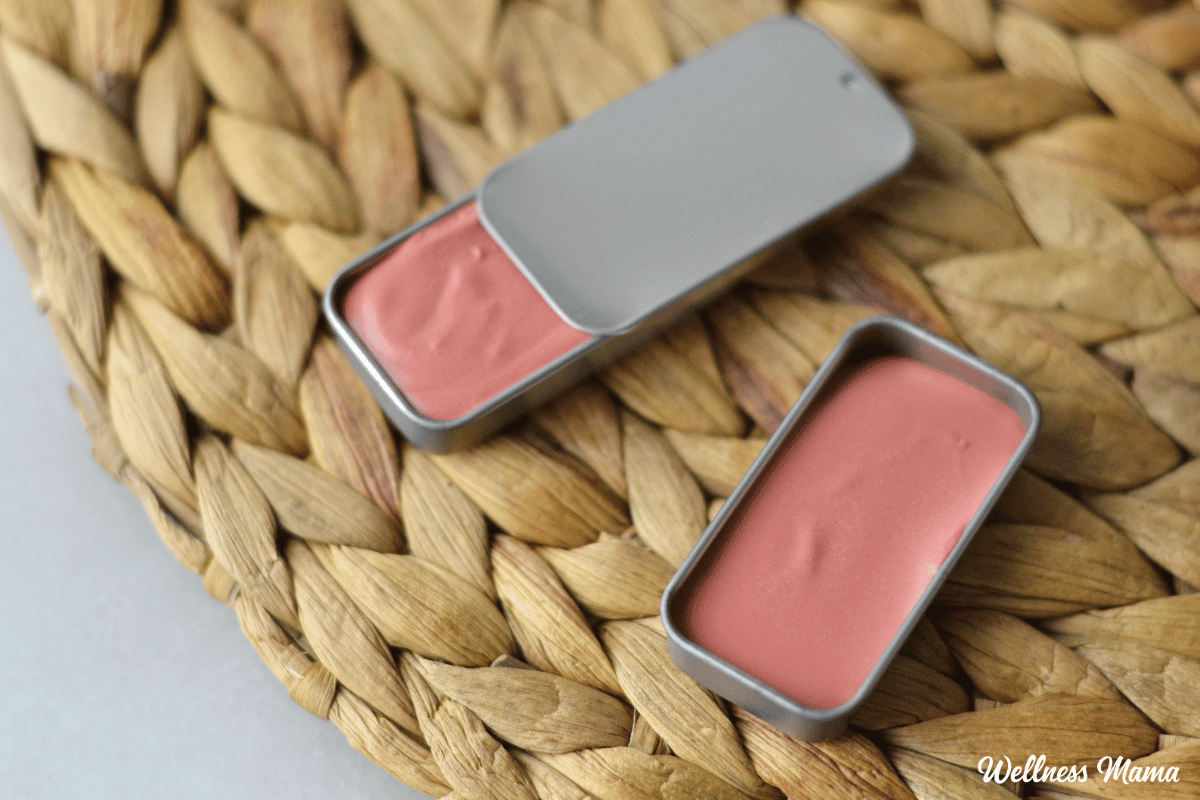
My original sunscreen recipe is white due to the zinc oxide. Some people are ok with a white cast on their lips, but there’s an easy fix. You can add iron oxide and/or mica to give it a bit of color. Mica reflects light so it will give it a little sparkle.

Iron oxides are nature-identical pigments that lend a rich, burgundy red color. Oxides that naturally come straight from the soil also come with lead and other heavy metal contaminants. Things I don’t want in a lip balm! That’s why iron oxides are now made in a lab to be nature-identical. 

If you don’t have iron oxide on hand, rose kaolin clay offers a similar effect.

DIY Natural Lip Sunscreen

This smooth and creamy lip sunscreen helps protect lips from UV damage.

Prep Time5 minutes

Active Time12 minutes

Cooling Time2 hours

Total Time2 hours 17 minutes

Yield: 1.7 ounces

Author: Katie Wells

  • Add the beeswax, shea butter, and avocado oil to the top of the double boiler or glass bowl. Stir occasionally until melted.

  • Turn off the heat and add the raspberry seed oil and essential oils.

  • Whisk in the powders: zinc oxide, iron oxide, and mica.

  • Remove from heat and stir occasionally as it cools. The powders will want to sink to the bottom so they’ll need to stay mixed in.

  • Once the lip sunscreen is mostly cooled, but still soft enough to pour, pour the mixture into your containers.

The iron oxide adds a pink color and the mica adds a little sparkle. You can use both or neither, but it will have a white cast without any iron oxide. 

Important Note on Photoxic Essential Oils

Certain essential oils can increase the risk of sunburn and skin damage. Needless to say, they should not be used in lip balms! Photoxic essential oils include bergamot, lime, lemon, and grapefruit. Learn more about this topic here.

More Sun Protection

Here are some more DIY sunscreen recipes, plus info on sunscreen pros and cons.

What’s your approach to sun exposure? Leave a comment and let us know!
Tags: , , , ,
Can antioxidants really slow skin aging?

Can antioxidants really slow skin aging?

Follow this guide

What’s the story

Antioxidants are often touted as the holy grail of skincare, promising to fight aging and give you a radiant glow. But, how effective are they really?
This article delves into the science behind antioxidants in skincare, separating fact from myth.
By understanding how antioxidants work, you can make informed decisions about your skincare routine.
Let us explore the role of antioxidants and their real impact on skin health.

Tags: , , ,
Why Your Routine Shouldn’t Stop There

Why Your Routine Shouldn’t Stop There

For years, skincare advice stopped at the jawline.

We cleansed, treated, moisturised and protected the face, then left the neck and chest to fend for themselves against sun, perfume, hot showers, posture, sleep creases and whatever active ingredients happened to migrate down.

Now, the neck is having its own skincare moment.

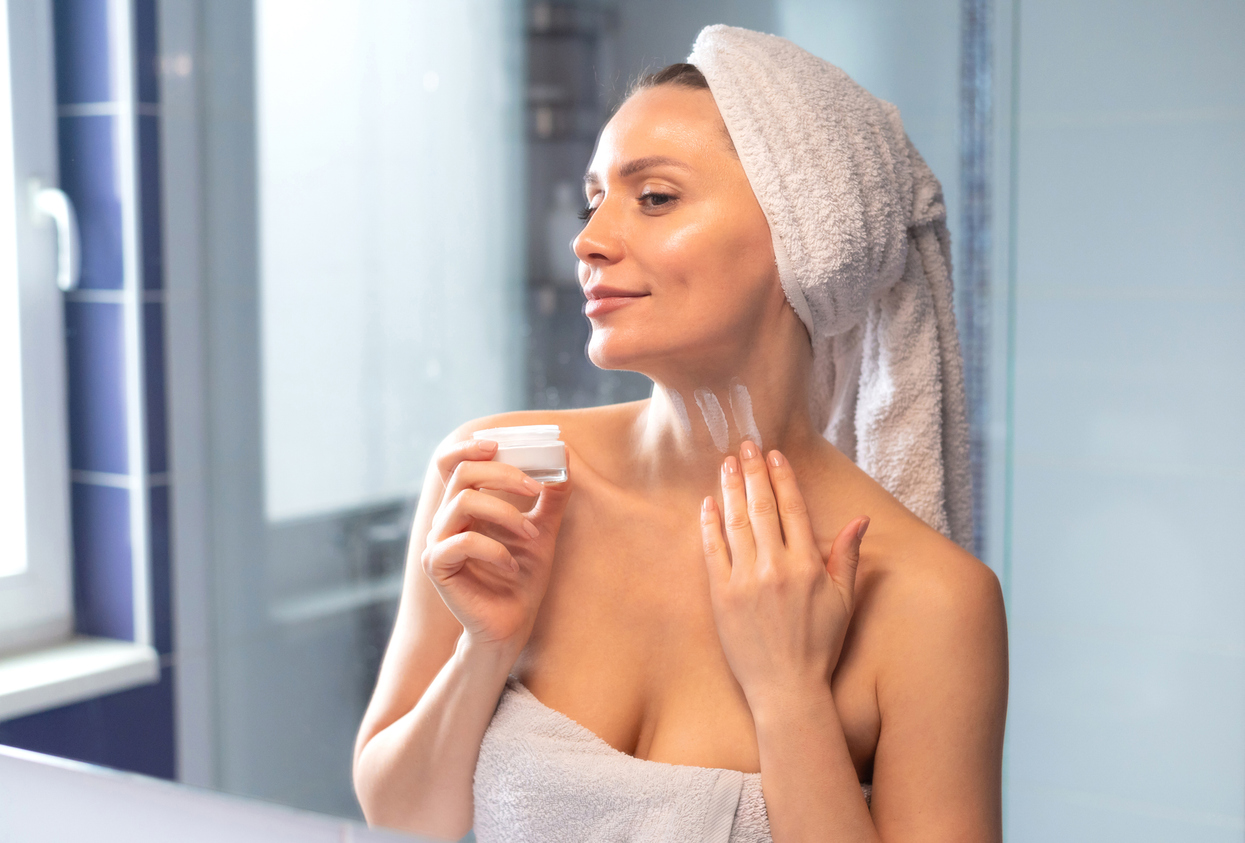
It makes sense. The skin on the neck and décolletage is often exposed to the same UV, pollution and environmental stress as the face, but it tends to get far less attention. It can also be thinner, more delicate and more prone to showing crepiness, lines, redness and uneven tone.

The new neck routine is not about panic-buying a dozen “firming” products. It is about treating the skin below your chin with the same basic respect you give your face: sunscreen in the morning, smart actives at night and enough moisturiser to keep the barrier calm.

In other words, your skincare routine may need to travel south.

Why the neck shows ageing early

Neck skin has a few disadvantages.

It moves constantly. You bend, tilt and turn it all day. You look down at your phone. You sleep on your side. You pull jumpers over it, spray fragrance near it and forget sunscreen on it.

It also has fewer oil glands than some parts of the face, which means it can feel dry or crepey sooner. Add years of sun exposure, natural collagen loss and hormonal changes in midlife, and the neck can start to show lines, laxity and texture changes before you expect it.

This does not mean your neck needs to look “young”. It means it may need different care.

Neck and décolletage age in similar ways to the face because they are chronically exposed to the sun. The same source recommends using many of the same protective and treatment ingredients on the neck and chest, with some caution because the area can be sensitive.

The real first step: sunscreen

If you do only one thing for your neck, make it sunscreen.

UV exposure is one of the biggest drivers of premature skin ageing, including wrinkles, pigmentation, rough texture and loss of elasticity. The neck and chest often get incidental sun during driving, walking, gardening, outdoor exercise and everyday errands.

The expert recommends broad-spectrum, water-resistant sunscreen with SPF 30 or higher.  Use it every day, apply enough, reapply when outdoors and do not stop at the chin.

Bring it down the neck, over the sides of the neck, onto the ears and across the upper chest if exposed.

This is especially important if you use retinoids, exfoliating acids, or clinic treatments, because the skin may become more sun-sensitive or vulnerable to irritation.

Should you use retinol on your neck?

Retinoids are among the most researched skincare ingredients for photoageing. They can support collagen production, improve skin texture and help soften the look of fine lines over time. But the neck is not always as tolerant as the face.

That is why the neck rule is: slower, gentler, less often.

If your face already tolerates retinol or retinal, you may be able to bring a small amount down to the neck one or two nights a week. Follow with moisturiser, and increase only if your skin stays calm. Avoid using strong prescription retinoids on the neck unless your dermatologist or GP has advised it.

If you notice stinging, peeling, itchiness, redness, or a tight burning feeling, pull back. The goal is not to force your neck to “get used to it”. It is to get benefits without wrecking the barrier.

A practical approach is the sandwich method: moisturiser first, a small amount of retinoid, then moisturiser again. This can make the active easier to tolerate.

Where peptides fit

Peptides are having a quiet comeback because they sit in a useful middle ground. They are generally gentler than retinoids and are often used in formulas designed for firmness, hydration and barrier support.

Peptides are short chains of amino acids, the building blocks of proteins such as collagen and elastin. In skincare, they are often included to support the look of smoother, firmer, more resilient skin.

They are not a facelift in a bottle. But for a neck routine, they can be useful because the area often needs consistency more than aggression. A peptide serum or moisturiser may suit people who cannot tolerate retinoids well, or who want a daily product that layers comfortably under sunscreen.

Do you need a separate neck cream?

Not always.

If your face moisturiser is rich enough and does not irritate your neck, you can use the same one below the jawline. If your neck is drier, more sensitive, or more crepey than your face, a dedicated neck cream may feel better because these formulas are often richer and designed to cushion the area.

What matters more than the label is the formula.

Look for ingredients that support hydration and barrier repair, such as glycerin, hyaluronic acid, ceramides, niacinamide and squalane. If you want an active formula, look for retinoids, peptides, antioxidants, or gentle exfoliating ingredients.

Avoid overloading the area with too many actives at once. The neck is one place where more is very often too much.

What about the chest?

The décolletage deserves the same routine.

The chest is exposed to sun, sleep compression and friction from clothing. It can develop pigmentation, redness, creases and crepey texture, especially if it has had years of UV exposure.

Bring your morning sunscreen down across the chest whenever that skin is exposed. At night, extend your moisturiser and gentle actives to the area too.

If you are using retinoids, go slowly here as well. The chest can react with irritation, especially if you are also using exfoliating acids, fragrance-heavy body products, or hot showers.

The bodycare trend is part of the same shift

The neck routine is not happening in isolation. Beauty is moving beyond face-only skincare.

Recent beauty trend coverage has pointed to bodycare becoming more skincare-like, with more interest in retinol body serums, active body washes, exfoliating sprays, lightweight body milks and targeted care for texture, pigmentation and body breakouts.

That shift makes sense. People have become more ingredient-literate. They understand sunscreen, retinoids, peptides and barrier repair on the face, so they are starting to ask why the rest of the skin gets ignored.

The trick is to avoid turning full-body care into another exhausting routine. Your neck and chest do not need 10 steps. They need consistency.

What clinic treatments can do

Skincare can help with prevention, texture, hydration and mild signs of ageing. But it has limits.

If your main concern is significant laxity, deeper horizontal neck lines, crepey skin, sun damage, redness, or pigmentation, clinic treatments may come into the conversation.

Depending on your skin, a dermatologist or qualified cosmetic practitioner may discuss options such as laser, radiofrequency, ultrasound tightening, microneedling, skin boosters, biostimulatory injectables, or prescription skincare.

Technologies such as ultrasound tightening, radiofrequency and laser treatments may be used for sagging skin, depending on the person and concern.

The important word is realistic. No cream or device will make neck skin behave like surgical lifting. If there is significant loose skin, surgery may be the only option that creates a dramatic change. If the concern is mild laxity, texture, or crepiness, non-surgical options may help, but results vary.

A simple neck routine to start

You do not need to overhaul everything. Start here.

Morning:
Cleanse gently, or rinse with water if your skin is dry. Apply a hydrating serum or moisturiser if needed. Finish with broad-spectrum sunscreen, bringing it down the neck and chest.

Evening:
Cleanse away sunscreen. Apply a moisturiser. If your skin tolerates actives, add a gentle retinoid one or two nights a week, or use a peptide serum on non-retinoid nights.

Once or twice a week:
If your neck is rough or dull, you may use a very gentle exfoliant, but do not combine it with retinoids on the same night. If you are prone to irritation, skip exfoliation and focus on moisturising instead.

Every day:
Look up from your phone more often, reapply sunscreen when outdoors and stop treating the neck as an afterthought.

Mistakes that can irritate the neck

The neck often reacts faster than the face, so be careful with these common mistakes:

  • using a strong face retinoid on the neck too often
  • layering retinoids, exfoliating acids and vitamin C too aggressively
  • applying fragrance or essential oils to sensitive skin
  • forgetting sunscreen after using actives
  • scrubbing crepey skin
  • starting multiple new products at once
  • treating redness, itching, or burning as “normal purging”

If your neck becomes inflamed, stop the actives and simplify. Use a gentle cleanser, bland moisturiser and sunscreen until the skin settles. If irritation persists, see your GP or dermatologist.

When to get a skin check

Any new, changing, bleeding, crusting, or non-healing spot on the neck or chest should be checked. These areas get plenty of sun exposure, and cosmetic concerns should never distract from skin cancer awareness.

Australia has one of the highest rates of skin cancer in the world, so a neck and chest routine should not only be about smoothness. It should also be about protection and early detection.

If you are unsure about a spot, book a skin check.

The bottom line

Your neck does not need a complicated routine. It needs the basics you may already be giving your face.

Sunscreen matters most. Retinoids can help if used carefully. Peptides and barrier-supporting ingredients can be useful for firmness, hydration and comfort. Clinic treatments may have a role if skincare is not enough, but they should match the problem you actually have.

The new neck routine is not about chasing perfection. It is about realising that the skin below your chin has been doing the same work as your face, often with far less support.

Tags: , ,
Where Beauty Meets Science: Why MyColla C's "My Brightest Chapter" Event Resonated with Me | Dear Kitty Kittie Kath

Where Beauty Meets Science: Why MyColla C’s “My Brightest Chapter” Event Resonated with Me | Dear Kitty Kittie Kath

     As we enter our 30s and 40s, the way we look at beauty starts to change. It’s no longer just about finding the next skincare product or beauty trend. Instead, it’s about creating daily habits that help us feel confident, healthy, and supported from within. As a mom in my 40s balancing work, parenting, content creation, and an active lifestyle, I’ve realized that self-care isn’t about chasing perfection. It’s about making intentional choices that help me keep up with the life I love.

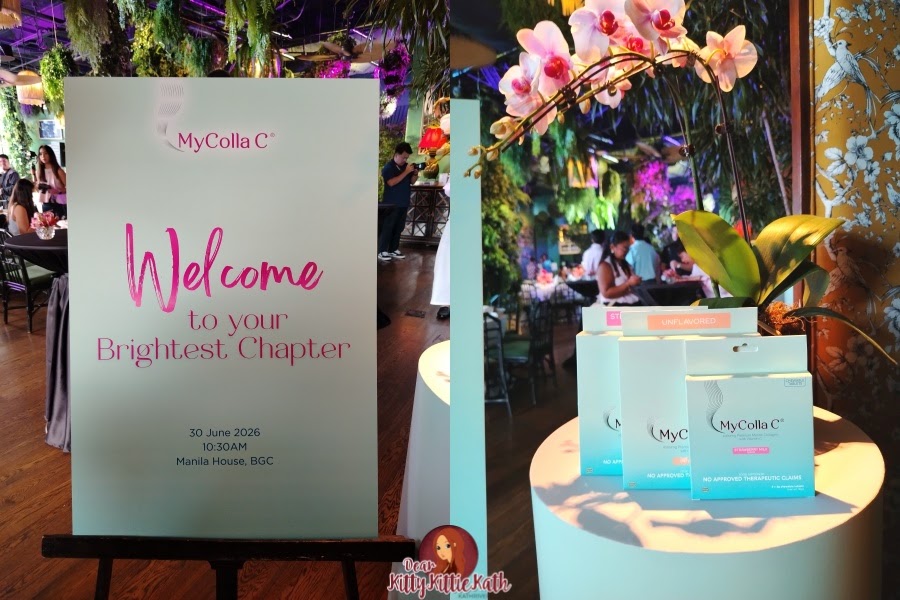
     That’s exactly the message I took home from My Brightest Chapter, the latest launch event of MyColla C. More than introducing a collagen supplement, the event opened meaningful conversations about beauty, wellness, and aging gracefully through science-backed insights and inspiring personal stories. More about the event after the jump, click continue to read more.

Where Beauty Meets Science: Why MyColla C’s “My Brightest Chapter” Event Resonated with Me

Beauty Meets Science

     One of the highlights of the event was the informative talk by Dr. Maika S. Slatensek, who explained collagen in a way that was both practical and easy to understand. She shared that collagen is an important structural protein that helps keep our skin firm, hydrated, and resilient. As we age, our natural collagen production gradually declines, which can lead to visible signs of aging such as dullness, dryness, and reduced skin elasticity. Rather than viewing collagen as a quick beauty fix, Dr. Slatensek encouraged everyone to see it as part of a long-term wellness routine supported by healthy habits and proper nutrition.

Where Beauty Meets Science: Why MyColla C’s “My Brightest Chapter” Event Resonated with Me     She also discussed Marine Collagen, the key ingredient in MyColla C, explaining that it is sourced from fish, rich in Type I Collagen, and hydrolyzed into smaller peptides for easier daily intake. Another key takeaway was the importance of Vitamin C, which plays an essential role in collagen synthesis. Together, these ingredients highlight why supporting collagen production isn’t just about taking collagen alone, it’s also about providing the body with the nutrients it needs to help the process work effectively.Where Beauty Meets Science: Why MyColla C’s “My Brightest Chapter” Event Resonated with Me

Real Conversations About Confidence

     Lifestyle personalities Jackie Go and Apple Mendoza shared their own experiences about navigating different stages of womanhood, balancing multiple roles, and learning to prioritize themselves without guilt. As someone who wears many hats every day, I found their stories relatable. Whether you’re managing a career, raising kids, building a business, or simply trying to stay active, confidence often comes from taking small but consistent steps to care for yourself.

Where Beauty Meets Science: Why MyColla C’s “My Brightest Chapter” Event Resonated with Me

An Interactive Wellness Experience

     Beyond the talks, My Brightest Chapter created several interactive experiences that encouraged guests to reflect on their own wellness journey. Guests explored My Brightest Pages, where they wrote affirmations and intentions, posed for professional photos at My Brightest Portraits, discovered their wellness personality through the My Brightest Era Quiz, and even mixed their own collagen drinks during the My Colla Mix activity. The event felt less like a product launch and more like a celebration of choosing yourself every day.

Where Beauty Meets Science: Why MyColla C’s “My Brightest Chapter” Event Resonated with Me

MyColla C Product Features

     If you’re looking for an easy way to include collagen in your daily wellness routine, here are the key features of MyColla C:

  • 3000mg Premium Hydrolyzed Marine Collagen to support skin rebuild and collagen renewal.
  • With Vitamin C, an essential nutrient that supports collagen synthesis.
  • Features Hydrolyzed Marine Collagen, which is broken down into smaller peptides for easy daily intake.
  • Available in drink powders and chewable tablets to suit different lifestyles.
  • Comes in Strawberry Milk Powder, Unflavored Powder, and Strawberry Milk Tablet variants.
  • Best paired with a balanced diet, regular exercise, and consistent self-care habits.
  • Available at leading drugstores nationwide, including Watsons, Mercury Drug, Southstar Drug, Rose Pharmacy, and St. Joseph Drugstore.

Where Beauty Meets Science: Why MyColla C’s “My Brightest Chapter” Event Resonated with Me

My Final Thoughts

     One thing I appreciated most about My Brightest Chapter is that it shifted the conversation about aging. Instead of focusing on looking younger, it encouraged women to feel stronger, more confident, and more intentional about taking care of themselves.

     As someone constantly juggling motherhood, work, workouts, and everyday responsibilities, that message truly resonated with me. Beauty isn’t about turning back the clock, it’s about supporting yourself through every chapter of life. Sometimes, your brightest chapter doesn’t begin when everything is perfect. It begins the moment you decide to show up for yourself, one healthy habit at a time.

For more information on MyColla C

Follow them on Instagram: @mycollac

Good Times!~

Tags: , , , , , , , , , , ,
Hindustan Times News

Monsoon Skincare Essentials for Oily, Acne-Prone Skin

Monsoon humidity is uniquely challenging for oily and acne-prone skin. The combination of sweat, excess sebum, and slower-drying products creates the perfect environment for breakouts, making this the season when a solid routine matters most. Here are the essentials that actually make a difference, and why each one earns its place in a monsoon routine specifically.

Monsoon Skincare Essentials for Oily, Acne-Prone Skin

Start with your cleanser. An acne face wash with salicylic acid clears out the oil and bacteria that build up faster in humid weather, reaching inside the pores rather than just cleaning the surface. Follow it with a niacinamide serum to regulate oil production throughout the day, since niacinamide also calms the inflammation that tends to flare up more during monsoon breakouts.

Hydration and sun protection round out the essentials. A cica moisturizer keeps the skin barrier calm without adding heaviness, which matters since stripped, dehydrated skin tends to produce even more oil to compensate. Finish every morning with a vitamin c sunscreen, since UV rays pass through clouds, and skipping sunscreen on rainy days undoes the rest of the routine’s progress.

Why Monsoon Is Harder on Oily, Acne-Prone Skin

Higher humidity increases sebum production, since sebaceous glands respond to moisture in the air by producing more oil. That oil mixes with sweat, pollution, and leftover product residue, sitting on the skin longer than it would in drier weather. Damp skin also creates a more hospitable environment for acne-causing bacteria, which is why breakouts often intensify specifically during the rainy months rather than staying consistent year-round.

The Monsoon Skincare Essentials Checklist

1. Salicylic acid face wash, morning and night

An acne face wash built around salicylic acid dissolves trapped sebum and dead skin inside the pore, which a regular cleanser can’t reach. Salicylic acid is a beta hydroxy acid (BHA) that is oil-soluble, allowing it to penetrate deep into pores where it loosens excess sebum, dead skin cells, and debris.

Regular use helps reduce blackheads, whiteheads, and future congestion without aggressively scrubbing the skin. This is the single most important swap for oily, acne-prone skin during monsoon, and the one step that most directly prevents new breakouts from forming.

2. Niacinamide serum to regulate oil

A niacinamide serum applied after cleansing keeps oil production in check through humid afternoons and helps calm the redness that often comes with monsoon breakouts. Applying it to slightly damp skin helps it absorb more effectively before your moisturizer goes on.

3. Lightweight cica moisturizer, never skipped

A cica moisturizer hydrates without adding grease, and the cica itself soothes any irritation caused by humidity, sweat, or active ingredients elsewhere in the routine. Skipping moisturizer because skin feels oily is one of the most common monsoon mistakes, and it typically backfires by triggering even more oil production.

4. Vitamin C sunscreen, reapplied throughout the day

A vitamin C sunscreen protects against UV damage that continues even on overcast, rainy days, while also helping fade any pigmentation left over from summer sun exposure. Reapplication every 3 hours matters more in monsoon than people assume, since humidity and sweat can wear sunscreen off faster than usual.

5. Weekly clay mask for deeper cleansing

Once or twice a week, a clay-based mask draws out the sweat, oil, and impurities that a daily face wash alone can’t fully clear, keeping pores genuinely clean rather than surface-clean. This step becomes especially useful in the monsoon, when product and sweat buildup accumulate faster than usual.

Common Monsoon Mistakes to Avoid

● Skipping moisturizer because skin feels oily. This backfires and triggers more oil production, not less.

● Over-washing your face. Stripping the skin barrier more than twice a day worsens breakouts over time.

● Assuming cloudy days don’t need sunscreen. UV exposure continues regardless of visible sunlight.

● Using heavy, oil-based creams. These can settle within oily skin making pores clogged and breakouts worse rather than better.

Your Monsoon Routine, Morning and Night

Morning: cleanse with your acne face wash, apply niacinamide serum to slightly damp skin, follow with your cica moisturizer, and finish with vitamin C sunscreen before stepping outside, rain or shine. Night: double cleanse if you’ve worn sunscreen or makeup during the day, apply niacinamide serum again, and seal it in with your cica moisturizer. Two to three times a week, swap your evening moisturizer step for a clay mask session to deep clean pores that have accumulated sweat and oil throughout the humid day.

Do You Need to Change Your Skincare Routine Every Monsoon?

Not entirely, but a few swaps make a real difference. If your regular cleanser isn’t oil-focused, switching to a salicylic acid-based acne face wash for the season helps manage the extra sebum humidity causes. Similarly, if you use a richer moisturizer in winter, switching to a lighter cica moisturizer during monsoon prevents the clogged pores that heavier formulas can cause once humidity rises. Sunscreen and a targeted serum, on the other hand, are worth keeping consistent year-round rather than treating as seasonal additions.

Conclusion

Monsoon humidity creates the perfect environment for excess oil, sweat, and debris to accumulate inside pores, increasing the risk of blackheads and breakouts. A consistent routine that combines gentle cleansing, oil-regulating ingredients like niacinamide, pore-clearing actives such as salicylic acid, lightweight hydration, and daily sunscreen is more effective than over-cleansing or harsh scrubbing.

With regular care throughout the season, you can keep pores clear, maintain a healthy skin barrier and reduce recurring congestion. Cleanse with an acne face wash, treat with a niacinamide serum, moisturize with a cica moisturizer, and protect with a vitamin C sunscreen every single day. Stick to these essentials consistently through the season, and breakouts and excess oil become far easier to manage, rain or shine.

Note to readers: This article is part of HT’s paid consumer connect initiative and is independently created by the brand. HT assumes no editorial responsibility for the content, including its accuracy, completeness, or any errors or omissions. Readers are advised to verify all information independently.

Want to get your story featured as above? click here!

Tags: , , , , ,
How to Use Nature's Retinol: Bakuchiol In Your Beauty Routine

How to Use Nature’s Retinol: Bakuchiol In Your Beauty Routine

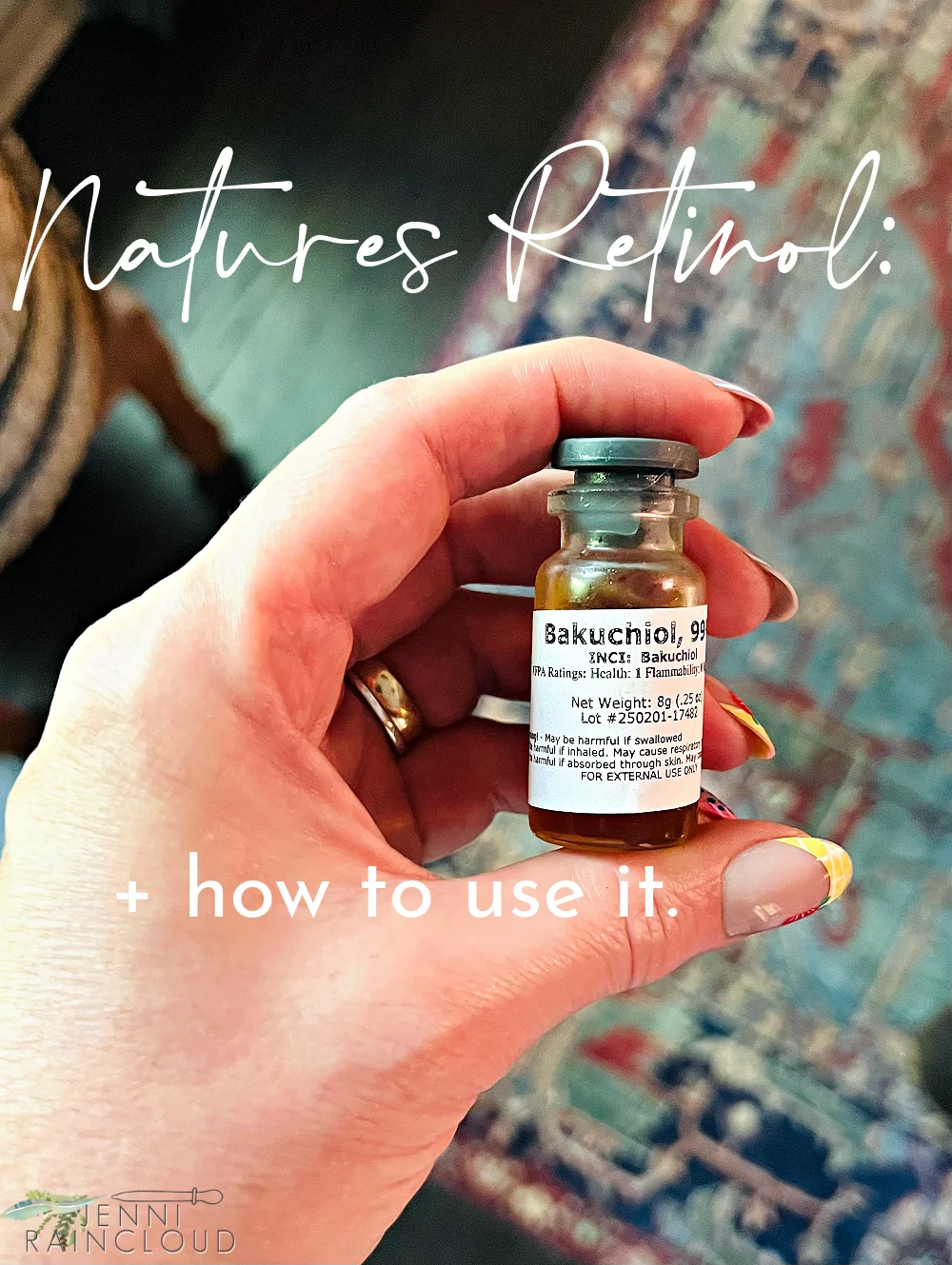
Bakuchiol is a natural retinol alternative. Its effects on the skin are similar to retinol just minus the negative skin reactions retinol often causes. Bakuchiol can be used to reduce sun spots, increase collagen production and protect against collagen breakdown. It can also improve fine lines and wrinkles and has even shown to be helpful with improving acne prone skin. It accelerates cell turnover which is vital as this process slows way down as we age leaving dull, wrinkled dry skin that should’ve been sluffed off. 

What is really cool about Bakuchiol is that it reinforces your skin’s natural structure from within, boosting the strength of building blocks like collagen and elastin.  It also is a strong antioxidant. The appearance of skin aging is influenced by oxidative stress on the skin, especially from environmental factors like pollution and UV rays. But bakuchiol can help strengthen your skin’s resistance to these stressors.

What is Bakuchiol?

Bakuchiol (buh-koo-chee-all) extract is an oil naturally derived from the seeds of the Psoralea corylifolia, more commonly known as the babchi plant. It became a skincare tool in early Indian and Chinese medicine. 

Bakuchiol vs. Retinol:

Retinol is a vitamin A derivative, and is known for its ability to stimulate collagen production, diminish the appearance of fine lines and wrinkles, and improve the overall look of skin.

Retinol is widely acknowledged as an anti-aging ingredient because of its ability to connect to almost any skin cell receptor site, prompting it to simulate the behavior of a healthy, younger skin cell. Retinol is also a powerful antioxidant that is known to interrupt the free-radical damage associated with wrinkles, fine lines, and other signs of aging.

Retinol has become common and can be found in over the counter anti aging products. However, higher doses must be prescribed by a doctor. 

Retinol is commonly known to irritate the skin. It must be used with great caution because its side effects can outweigh its benefits. In fact, pregnant women are warned not to use retinol during pregnancy and users are advised to stay out of the sun while using the treatment. This is where Bakuchiol shines. Bakuchiol has the benefits of retinol with none of the side effects.

Bakuchiol is also a vegan product where retinol is typically not. 

Related Post: DIY Anti Aging Retinol Face Mask

How to Incorporate Bakuchiol in a Natural Beauty Routine? 

As usual, Lotion Crafter to the rescue! They offer Bakuchiol and it can simply be added to oil based recipes at a specific percentage. Find it HERE.

.25 ounces is $15.95. However, you are only adding .5-2% in each recipe. 

Let’s formulate a face oil and eye roll on, shall we? I’m going to use one of my favorite anti aging carrier oils, rosehip seed oil. I typically like to buy it from Mountain Rose Herbs but I often end up grabbing THIS bottle from Amazon because I use it so often. I’m also going to add castor oil, Vitamin E and I love to add carrot seed oil to eye products since it also has cell regenerative properties. Castor oil is so cool-not only does it have some impressive anti aging properties, it also acts as a vehicle to drive other ingredients deeper into the skin tissue.

If you’d like to keep this simple, you could just add 12 drops of bakuchiol to 1 oz. of rosehip and call it good. I’m in the mood to get creative and make two really great products so I’ll share what I did but either way works! 

1 oz. Bakuchiol Face Oil Recipe:

Use a 1 oz treatment pump or dropper bottle Because this face oil is 100% oil based, the shelf life will be around 6 months with no preservative needed. 

10 ml Bakuchiol Eye Serum Recipe:

Use a 10ml glass roll on bottle. No preservative needed here either. With eye roll ons it is nice to store these in a beauty fridge since the cold roller ball can further help reduce inflammation around the eyes. 

Both of these recipes are as simple as adding ingredients into a bottle. I use a small funnel and then once it’s all in, replace the lid and give it a gentle shake. 

You can use both of these products day and/or night since unlike retinol, bakuchiol does not make you UV sensitive. I always like to use a water based product on my skin right before I apply and oil based product. The water helps the skin drink up the oil. An example of a water based product would be a toner or an hyaluronic acid serum. You could also splash a little water on your skin if you don’t have a water based product in your regime.

Where to Get Ingredients:

I always prefer to get my ingredients at Mountain Rose Herbs. They are simply the best quality. They have fair pricing as well. However, I get wanting to use Amazon so I’ve linked all Amazon in the recipe and made a post on my Amazon storefront for really easy shopping.  Most of everything I’ve linked, I’ve personally used. The bakuchiol, CO2llageneer and Q-MAX are Lotion Crafter. They too are affordable and ship very fast. I can not vouch for any of these ingredients on Amazon. 

Bakuchiol promotes collagen, one of the most vital components of radiant, youthful looking skin. Bakuchiol also triggers skin cell repair for a brightening result. These two functions are absolutely vital in skin that is over 30. I love that bakuchiol is gentle. I always opt for a gentle approach to anti aging rather than harsh products, lasers and injectables. 

xx, Jenni

Jennifer Phillips

Jennifer Phillips worked as a licensed aesthetician for over 8 years before creating the DIY skincare blog, Jenni Raincloud and her natural skin care line, J. Raincloud Organics. Jennifer has been blogging full time for 16 years and loves to gain and share knowledge on how to achieve beautiful skin the natural way.

Find me on: Instagram | Facebook

Tags: , , , ,
Homestead Blog Hop - Homestead tips, ideas, animal care, and recipes every Wednesday

Homestead Blog Hop 607 – Air Fryer Recipes and Crafts

Welcome to Homestead Blog Hop, a weekly gathering for homesteaders and simple living enthusiasts to share DIY projects, from-scratch recipes, and creative inspiration. This week’s hop features cozy homesteading tips, along with practical ideas that celebrate handmade living and self-sufficiency.

Whether you’re looking for seasonal crafts, homemade treats, or encouragement on your homesteading journey, you’ll find plenty of inspiration to carry into the new year. Grab a cup of tea, explore the featured posts, and join us in sharing your own homestead creations.

Meet Your Homesteading Hosts

We’re Kelly from Simple Life Mom, Liz from The Cape Coop, Natasha from Houseful of Nicholes, and Laurie from Ridgehaven Homestead. Together, we’re passionate about from-scratch living, simple ingredients, frugal habits, and intentional homesteading. We’re delighted to host the Homestead Blog Hop, where you can find fresh inspiration each week for DIY projects, homemade recipes, and practical simple living ideas.

Follow Us for More Homestead Inspiration

Natasha – Houseful of Nicholes
Facebook | Pinterest | X | Instagram

Laurie – Ridge Haven Homestead
Facebook | Pinterest | Instagram

Liz – The Cape Coop
Facebook | Pinterest | X | Instagram

Kelly – Simple Life Mom
Facebook | Pinterest | X | Instagram

FEATURED POSTS from the Last Homestead Blog Hop

Each week, we take turns selecting three featured posts from the Homestead Blog Hop. These features are shared across all of our social media platforms, helping spotlight the creativity and hard work of our fellow homesteaders. Here are the featured posts from last week’s hop:

1. 40+ Best Air Fryer Summer Recipes from Air Fryer Fanatics

2. How To Make a Seashell Wreath from Petticoat Junktion

3. Red, White, and Blue Caprese Salad Recipe from Ann’s Entitled Life

Congrats! Feel free to grab the featured on button for your post.

Just right click and ‘save image as…‘

Guidelines for the Homestead Blog Hop

  1. Click the “Add Your Link” button below and upload a clear, eye-catching image from your project or recipe. Please link directly to the family-friendly post itself, not your blog’s homepage.
  2. You may link up up to three posts each week.
  3. Take time to visit a few other blogs in the hop and leave a thoughtful comment to let them know you stopped by. Community support makes this hop special!
  4. Please include a link back to the Homestead Blog Hop in your post. Posts without a backlink are not eligible to be featured. All featured posts are shared across all hosts’ social media channels.
  5. Share posts that haven’t been linked to the hop before. Older posts are welcome as long as they are new to the hop.
  6. By joining the Homestead Blog Hop, you grant the hosts permission to use one image from your post, with a link back to your site, if your post is selected as a feature next week.
  7. This is a family-friendly link-up designed to encourage, inspire, and support the homesteader in all of us.

Let the Party Begin!

Which project are you excited to try this week? Leave a comment below.

Join Our Homestead Blog Hop Pinterest Board

Follow all of your hosts on Pinterest and send a message if you’d like to be added to our Homestead Blog Hop group board. This board is a great place to share your DIY projects, crafts, and from-scratch recipes with the homesteading community.

Guideline: Only pin posts that you’ve linked up to the Homestead Blog Hop.

Tags: , , , , , ,
egg bake

Broccoli Cheddar Egg Bake (Easy High-Protein)

I love having simple breakfast recipes I can make ahead for busy mornings. While smoothies and overnight oats have their place, I also try to prioritize protein in the mornings. This broccoli  cheddar egg bake is a great way to do that. It’s one of those recipes that’s almost effortless to throw together but everyone in my family is a fan. 

The best part is that it only takes a few minutes to mix everything together before the oven does the rest of the work. I can prep it while I’m making coffee, then let it bake while I dive into my morning routine. It also reheats beautifully. I’ll often make dishes like this on the weekend and enjoy leftovers for breakfast or lunch throughout the week.

Why I Love This Broccoli Cheddar Egg Bake

Egg casseroles have always been one of my favorite ways to meal prep because they’re incredibly versatile. This version combines eggs with cottage cheese for an extra boost of protein and a creamy texture without needing heavy cream. The shredded cheddar adds plenty of flavor, while the broccoli brings color, fiber, and nutrients.

I also appreciate that this recipe uses simple ingredients I almost always have on hand. Frozen broccoli works just as well if that’s what you have, making it easy to pull together without a special grocery trip. The seasonings are simple too, allowing the cheese and broccoli to really shine.

This breakfast casserole is naturally gluten-free and works well for everything from weekday breakfasts to weekend brunches. I also like serving it with fresh fruit, sliced avocado, or roasted potatoes for a more complete meal. Since it makes several servings, it’s an easy option when I’m feeding a crowd (like my kids!) or simply trying to get ahead on meal prep.

Tips for the Best Egg Casserole

Thankfully, this recipe is pretty forgiving. Whisking the cottage cheese into the eggs helps create a smooth, fluffy texture, and the broccoli cooks perfectly right in the casserole without getting mushy. Letting the bake rest for a few minutes before slicing also helps everything set, making it easier to serve neat portions.

Leftovers store well in the refrigerator for several days, making this one of my favorite make-ahead breakfasts. I simply warm up a slice in the oven, toaster oven, or air fryer for a quick meal that tastes almost as good as when it was freshly baked.

Whether you’re meal prepping for the week, hosting brunch, or just looking for a nourishing breakfast that doesn’t require standing over the stove, this broccoli cheddar egg bake is a recipe worth keeping on repeat. It’s simple, filling, and made with wholesome ingredients that help make busy mornings a little easier.

Broccoli Cheddar Egg Bake

This delicious egg bake is fully of cheesy broccoli flavor. An easy breakfast that’s dump and go!

  • Preheat the oven to 350°F and grease a 9×13-inch baking dish.

  • In a large bowl, whisk together the eggs, cottage cheese, salt, pepper, garlic powder, and onion powder until smooth.

  • Stir in the broccoli and cheddar cheese.

  • Pour the mixture into the prepared baking dish and spread evenly.

  • Bake for 40–45 minutes, or until the center is set and a knife inserted in the middle comes out clean.

Nutrition Facts

Broccoli Cheddar Egg Bake

Amount Per Serving (1 serving)

Calories 383
Calories from Fat 234

% Daily Value*

Fat 26g40%

Saturated Fat 12g75%

Trans Fat 0.04g

Polyunsaturated Fat 3g

Monounsaturated Fat 7g

Cholesterol 420mg140%

Sodium 889mg39%

Potassium 372mg11%

Carbohydrates 7g2%

Fiber 1g4%

Sugar 3g3%

Protein 30g60%

Vitamin A 1308IU26%

Vitamin C 39mg47%

Calcium 421mg42%

Iron 2mg11%

* Percent Daily Values are based on a 2000 calorie diet.

  • Let rest for 5 minutes before slicing and serving.
  • Refrigerate leftovers in an airtight container for up to 4 days.

Are you an egg casserole fan? What are some of your favorite ingredients to include? Share below!

Tags: , , , , ,
Prevention over correction transformed my approach to beauty and wellness

Prevention over correction transformed my approach to beauty and wellness

I’ll be honest, when it comes to beauty and wellness, I’ve been a reactive person for most of my life. Something would appear — a spot, a patch of dry skin, some pigmentation, a stress-induced stomach ache — and I’d scramble to address it with a quick fix. That was until a conversation with a functional medicine doctor recalibrated everything. “You’re spending a fortune trying to undo things in the moment, when you should be thinking more preventatively,” she said.

It’s a simple notion, but it made me rethink everything: ‘Prevention over correction’ is a motto I now try to live by. And clearly I’m not alone, what with the meteoric interest in maintaining a healthy gut biome, and beauty giant Lancôme launching a brand-new product range that claims to prevent the rate at which skin ages, as opposed to reverse the signs of it — and that’s just for starters.

With this new philosophy, these are the rituals I’ve woven into my life that are all, I believe, keeping future-me in front of mind.

Mindfulness routines could help to lower stress-related cortisol levels, which can have a negative impact on your skin

Getty Images

Stress-relieving breathwork

Despite growing up in Indian culture, a culture based in meditation and yoga, I’ve always avoided both of them.

I have ADHD, and I struggle to sit still or do one thing at a time. I’d be multitasking even while watching TV. But that was before chronic stress struck, which affected my entire body. I noticed changes in my skin, nails and hair before anything else. I felt like my skin was dry and rough, my hair and nails felt brittle. Why? Because elevated cortisol can break down collagen, disrupt the skin barrier and trigger systemic inflammation.

It’s been a journey, and continues to be so, but I aim for 20 minutes of meditation a day (particularly the kind that can activate the parasympathetic nervous system — think ‘box breathing’ or ‘4-7-8 breathing’), but if I skip a day I don’t beat myself up. Meditation and mindfulness is what I go back to when I feel the pressure start to ramp up again.

I also do five minutes of yoga nidra before bed to try and lower my resting cortisol levels, which I think has helped my skin’s reactivity too.

Retreats that nourish the body and the mind

Where did I first hone the breathing skills I talk of above? Well, there’s a version of a wellness retreat that’s all green juices and early nights and then there’s the kind that quietly recalibrates everything.

Whether it’s a meditation-focused week in India or a more structured programme at somewhere like SHA Wellness Clinic in Spain, what a good retreat gives you is something almost impossible to manufacture at home: sustained, uninterrupted time to actually listen to your body and reset your routines.

I’ve come back from these trips with things that have genuinely stuck: a supplement protocol I still follow; a revised approach to sleep; a clearer understanding of how to properly regulate your stress response through meditation.

I wish that I could do just one retreat and come away wholly, magically changed forever, but real life has to resume, and deadlines, responsibilities and anxieties creep back in. Having regular resets helps get me back on track.

Eating organic and going dairy-free are two ways to be kinder to your skin and maintain a healthy glow

Lancome / Getty Images

Gua sha, the ancient tool for modern times

The internet has turned gua sha into a beauty trend, but there’s solid reasoning behind the hype. When practised correctly (technique matters enormously — I’d recommend a session with a trained practitioner first like Ada Ooi, or following tutorials by Sandra Lanshin Chiu online), gua sha is said to stimulate lymphatic drainage, improve blood flow and, over time, promote facial tissue health.

I do it every morning with a jade tool and a facial serum and it has completely replaced my former dependency on depuffing eye patches. The ritual itself — five focused minutes before the madness begins — has also become an unexpectedly grounding way to start the day.

This morning ritual also puts me in touch with my own body: if I’ve eaten something that doesn’t agree with me, my skin shows it the next day. If I’ve not had enough water, I can see my skin is dull. Gua sha has helped rejuvenate my skin, and improved my connection to my own body too.

On the subject of skin, it’s easy to get distracted by something new and shiny online, but I’ve found following a science-backed skincare routine has improved mine.

Bamboozled by all the different options? Lancôme’s Absolue Longevity MD product collection is a good place to start. At the heart of the range is Mitopure — a highly pure form of Urolithin A, proven to support mitophagy: the process by which your body clears and renews damaged mitochondria. It matters because mitochondrial decline is a cause of biological skin ageing; healthier mitochondria mean cells that function, regenerate and resist damage more effectively.

The range comprises products targeted at three life stages — Anticipate (for those aged 35 and under), Intercept (35–55) and Reset (55+) — and these are specially formulated to target the cellular needs of skin at that age. This isn’t a one-size-fits-all approach — it’s scientifically-considered and is tailored to where your skin is biologically, which I really appreciate.

For anyone who, like me, wants their skincare to work at a biological level (and not just hydrate the surface while looking beautiful in the bathroom), this is a game-changing product.

Start thinking about massages as regular maintenance for your body, rather than a luxury indulgence

Getty Images

Reaping the benefits of massage

There’s something almost radical about booking a massage and framing it, unashamedly, as a non-negotiable. But the health benefits are more than enough to justify it.

Human touch has a profound and measurable effect on the nervous system. Specifically, it activates the parasympathetic response, lowering cortisol, reducing heart rate and triggering the release of oxytocin. Given that chronic stress is one of the most direct routes to accelerated aging and illness, anything that meaningfully and regularly brings your stress response down is doing something good.

When I book in for my monthly full-body massage, I think of it less as a treat and more as maintenance, in the same way I think about getting a good night’s sleep or hitting the gym.

Eating clean and filling up on fermented foods

The gut–skin axis is no longer fringe science. Research increasingly shows that a diverse, well-functioning gut microbiome directly influences skin inflammation, hydration and barrier function.

Chronic gut imbalance from stress and diet can manifest in so many ways that we don’t see until it’s an issue. During the promotion for my book Ugly: Why the world became beauty obsessed and how to break free, I started to experience symptoms of burnout, and my gut was where it showed up first. Foods I was once fine with started to cause me issues, and when I was very stressed I experienced bloating that was painful and uncomfortable.

Because of this, I had to go back to basics, doing elimination diets to work out what was causing me issues. I also began cooking from scratch, eating organic as much as possible, and removing things like dairy and gluten from my diet, which has reduced my skin irritation and eczema flare-ups.

I’m now also a huge fan of fermented foods, which are said to increase gut microbiome diversity and reduce inflammation among lots of other things. It took me a little while to get used to them, but now I’m obsessed with things like kimchi and pickled daikon!

For me, prevention is the most intentional thing you can do for your health. Invest your energy in maintaining as opposed to rescuing. Trust me, I learned that the hard way.

Tags: , , , , ,
Apple App Store

9 Needle-Free Ways to Temporarily Smooth Wrinkles

“Hearst Magazines and AOL may earn commission or revenue on some items through these links.”

Every fine line and wrinkle has a story to tell. But when you’re not feeling as nostalgic, there are ways to smooth fine lines—without the need for injections. Enter wrinkle fillers and blurring products.

Wrinkle fillers are “products designed to fill in wrinkles, plumping the skin to reduce the appearance of fine lines and wrinkles,” says Marisa Garshick, M.D., a board-certified dermatologist in New York City. She explains that they typically contain hyaluronic acid to help hydrate or peptides to help boost collagen production and smooth the appearance of wrinkles.

Blurring products, on the other hand, “are intended to provide more of a temporary effect by visibly improving the appearance of lines without addressing or treating the underlying cause,” Dr. Garshick explains. She says they work by filling in lines with silicone-based ingredients or polymers to smooth, or they use light-reflecting particles that diffuse light so it makes the lines appear less noticeable.

Our top picks:

Which is right for you? “Blurring products may be better for superficial fine lines while wrinkle filling skincare products may also be considered for deeper lines and folds,” Dr. Garshick says. Whichever approach you use, GH Beauty Lab Reviews Analyst Chiara Butler reminds us to have realistic expectations. “Some products do contain ingredients like retinoids and anti-aging peptides that can improve the appearance of fine lines with consistent use,” she says. However, “from what I saw in my small test, the improvement in the appearance of fines lines and wrinkles is not dramatic. I felt that the blurring products gave results that were more visible in photos.”

Hearst Owned

Hearst Owned

Hearst Owned

Hearst Owned

Hearst Owned

How we test wrinkle fillers

To decide what to test, we tapped our beauty editor and searched online retailers to put together a list of 17 of the most popular wrinkle-filling products. We narrowed that list down to six products with a range of prices that we hadn’t evaluated in the Beauty Lab before.

Of the six wrinkle filler products chosen for in-person testing, three of the products were skincare-focused products that have both instant wrinkle plumping and long-term anti-aging claims, while the other three were blurring products with only instant wrinkle filling claims. The other three products included in the story were previously tested.

Good Housekeeping Institute Beauty Lab – Hearst Owned

In the Beauty Lab, we blinded the products and assigned them codes to prevent brand bias. We invited 18 testers who are 35 and older to participate and indicate the areas of their face where they felt they had wrinkles: under the eyes, crow’s feet, around the mouth, or the forehead.

We asked them to remove makeup from the areas where they would be applying the wrinkle filler product. We then took digital “before” photos of the testers’ faces zoomed in to 3X followed by pictures in the Visia Skin analysis system. Afterwards, we gave testers a mirror and allowed them to apply as much product as they wanted to the areas they indicated. We set a timer for 10 minutes to allow the product to set in.

After 10 minutes, we took “after” digital photos and used the Visia system. The testers then responded to a survey about how they felt the product performed. A total of 54 Visia pictures were taken.

Hearst Owned

What to look for when shopping for a wrinkle filler

Keep these factors in mind:

✔️ Product claims: “Look at the products claims to see whether it claims just instant smoothing and hydrating, instant blurring, or instant and long-term anti-aging benefits,” Butler says. “Consider whether you want a moisturizing/anti-aging product that will moisturize in the short-term and provide anti-aging benefits over time, or a blurring product with an immediate skin-perfecting effect that may not have skincare benefits.”

✔️ Usage: Think about where you will be using the product on your face, which can help determine whether a blurring or filling product is better. “Since blurring products tend to be thicker on the skin, they can be trickier in high-movement areas like the crow’s feet where product can settle in the lines, so I think plumping products are better for the crow’s feet while blurring products are great for flatter areas like the forehead,” Butler advises.

✔️ Ingredients: “When looking for a wrinkle filling product, it is important to look for ingredients like hyaluronic acid, which helps to draw moisture in and work to plump the skin,” Dr. Garshick says. “Some products may contain different molecular weights of hyaluronic acid, which may allow for different levels of penetration for best results.

Additionally, other ingredients to consider include peptides, which help to boost collagen production and retinol which helps to regulate skin cell turnover and works to boost collagen production, improving the appearance of fine lines and wrinkles. In the case of neuropeptides, the peptides block the release of chemicals that are responsible for muscle movement that leads to fine lines and wrinkles.”

Good Housekeeping Institute Beauty Lab – Hearst Owned

What is the best way to apply wrinkle fillers and blurring products to maximize their effects?

Dr. Garshick says that wrinkle filling products should be used daily and consistently for maximum benefits. “The specific ingredients will determine if it’s better for morning or evening use,” she says.

As for application, Butler says: “For plumping or tightening products, apply them to clean dry skin, then wait for them to set and dry. Follow the directions on your product for the best results. For blurring products, tap, don’t rub, into fine lines, and gently smooth out the product as needed. Some of these products can be used as makeup primers or even on top of makeup.”

Good Housekeeping Institute Beauty Lab – Hearst Owned

How long do the effects of wrinkle fillers last?

“The effects of these products typically last only a few hours, or until you wash them off,” Butler says. However, for skincare products that can bring benefits with continued use over time, the perks last longer.

“With consistent use and depending on the specific ingredients, the effects may continue to improve over the course of three to six months,” Dr. Garshick says.

Good Housekeeping Institute Beauty Lab – Hearst Owned

How do wrinkle filling skincare and blurring products compare to in-office treatments?

“In general, wrinkle filling skincare and blurring products are not going to yield the same results as in-office treatments and the results may be more temporary,” Dr. Garshick says. “That said, some of the at-home products can complement in-office treatments with some products being used to help prolong the benefits of in-office treatments like filler, neuromodulators, and lasers.

More specifically, in-office dermal fillers can be a good way to truly fill in wrinkles and are an injectable form of hyaluronic acid, the same ingredient that may be found in topical at-home wrinkle fillers as well.”

Good Housekeeping Institute Beauty Lab – Hearst Owned

Why trust Good Housekeeping?

Celia Shatzman wrote this story. She has two decades of experience researching, writing, and editing skincare journalism. She also consulted Marisa Garshick, M.D., a board-certified dermatologist in New York City.

GH Beauty Lab Reviews Analyst Chiara Butler has years of experience as a cosmetic chemist, formulating skincare products for a variety of brands. She conducts skincare category tests and provided an expert review of this article.

Hearst Owned

You Might Also Like

Tags: , , , ,
Best oLive
Privacy Overview

This website uses cookies so that we can provide you with the best user experience possible. Cookie information is stored in your browser and performs functions such as recognising you when you return to our website and helping our team to understand which sections of the website you find most interesting and useful.