Global Cosmetics Market to Reach USD 704.17 Billion by 2032, Reveals New Maximize Market Research Analysis

Global Cosmetics Market to Reach USD 704.17 Billion by 2032, Reveals New Maximize Market Research Analysis

Maximize Market Research’s Cosmetics Market Global Outlook (2025–2032) has been updated with the latest developments from the first nine months of 2025.

“Maximize Market Research reveals AI skincare, clean beauty, and K-beauty trends are reshaping global cosmetics growth.”

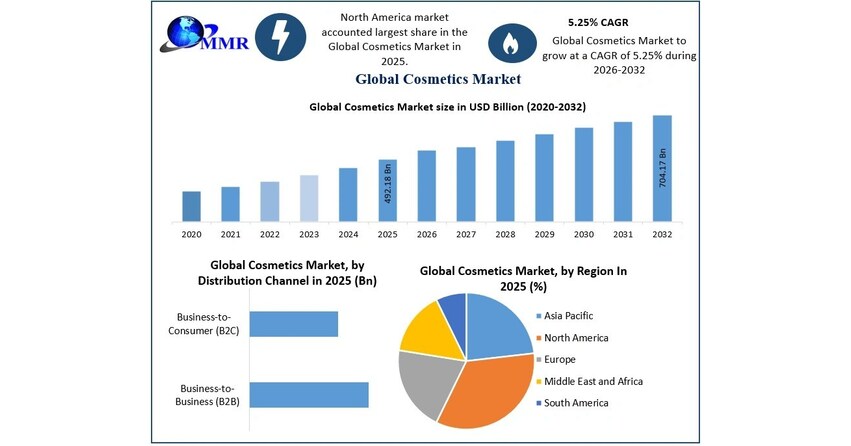
PUNE, India, Feb. 27, 2026 /PRNewswire/ — Global Cosmetics Market was valued at USD 492.18 billion in 2025 and is expected to grow at a CAGR of 5.25% from 2025 to 2032, reaching nearly USD 704.17 billion by 2032. This growth is fueled by rising beauty consciousness, expanding demand for premium skincare, organic and natural cosmetics, inclusive beauty products, and the ongoing digital transformation in the beauty and personal care industry.

Get Full PDF Sample Copy of Report: (Including Full TOC, List of Tables & Figures, Chart) @ https://www.maximizemarketresearch.com/request-sample/72541/ 

Global Cosmetics Market

Key Market Trends & Insights from the Cosmetics Market Report

Skincare Segment Dominates Global Cosmetics Revenues

The skincare product segment accounted for the largest share of 48% in 2025, driven by rising consumer preference for dermatologist-recommended products, anti-aging solutions, and clean beauty formulations. High adoption of serums, moisturizers, sunscreens, and acne-care products underscores the growing trend of science-backed skincare. Consumers are increasingly searching for “microbiome-friendly cosmetics for sensitive skin” and “organic anti-aging skincare solutions”, highlighting the influence of long-tail search intent in shaping product strategies.

Rise of AI-Powered Personalized Beauty Solutions

AI-powered beauty solutions and virtual try-on technologies are transforming consumer engagement. Companies like L’Oréal, AmorePacific, and Perfect Corp are integrating AI skin diagnostics and personalized product recommendations to enhance customer loyalty and drive premium adoption. Long-tail searches like “AI-powered skincare routine for combination skin” and “virtual makeup try-on apps” are gaining traction globally, reflecting heightened consumer demand for precision beauty solutions.

Sustainable and Eco-Friendly Beauty Drives Market Growth

Demand for sustainable cosmetics, refillable packaging, and plant-based skincare formulations continues to grow. Consumers are actively searching for “cruelty-free beauty brands”, “eco-friendly cosmetic packaging solutions”, and “vegan organic skincare products”. This trend is particularly pronounced in Europe, North America, and APAC, where regulatory frameworks encourage ethical sourcing and transparency in beauty product ingredients.

Digital Transformation and Influencer-Driven Beauty Trends

The digital commerce revolution and social media influencer marketing are accelerating the adoption of innovative cosmetic products. Micro-influencers and beauty content creators are introducing hybrid skincare-cosmetic solutions, such as tinted SPF moisturizers and serum foundations, driving searches like “best hybrid beauty products for anti-aging” and “top eco-friendly makeup brands”.

Inclusive Beauty Products and Male Grooming Expansion

Consumers increasingly demand inclusive beauty products catering to all skin tones and genders. The male grooming segment is expanding rapidly, with rising adoption of skincare and anti-aging products for men. Searches such as “best natural cosmetics for dark skin tones” and “men’s cruelty-free skincare products” highlight opportunities for niche innovation and long-tail keyword optimization.

Cosmetics Market Composition by Product & Innovation:

  • Color Cosmetics: Focus on long-lasting, skin-friendly formulations and multifunctional makeup.
  • Skincare: Includes anti-aging creams, serums, and microbiome-friendly solutions.
  • Perfumes / Body Mists: Premium fragrances leveraging natural, sustainable ingredients.
  • Advanced Cosmetics: Cosmeceuticals blending bioengineered ingredients and antioxidant-rich formulations.
  • Beauty Devices: At-home aesthetic treatments, including hair-removal devices and AI-powered skin analyzers.

Notable Innovations:

Bioengineered ingredients: Plant-based peptides and probiotics for sensitive skin.

Personalization apps: AI-based solutions recommending custom foundations and skincare regimens.

Sustainable packaging solutions: Refillable containers, compostable packaging, and zero-waste initiatives.

Global Cosmetics Market Segmentation: Skincare, AI-Powered Serums & Clean Beauty Trends Driving Consumer Engagement

Global Cosmetics Market is evolving with skincare face care products leading in daily consumption, from hydrating moisturizers to microbiome-friendly serums. Color cosmetics, body care, and perfumes follow, yet AI-powered personalized skincare and clean beauty solutions are redefining trends. With online retail and B2C channels driving rapid adoption, consumers are exploring anti-aging creams, organic face oils, and inclusive beauty formulations, creating unprecedented opportunities for innovation and engagement.

Get Insightful Data on Regions, Market Segments, Customer Landscape, and Top Companies (Charts, Tables, Figures and More) – https://www.maximizemarketresearch.com/request-sample/72541/ 

By Product    

Skincare

Face Care

Moisturizers & Creams

      Serums & Essence

      Face Wash & Cleansers

      Face Mask

      Face Oil

      Under-eye Creams

      Others

Body Care

 Lotions & Creams

     Body Oil

     Hand Creams

     Foot Creams

      Others

Bath Products

Shower Gel

     Bath Soap

     Others

Intimate Care

  Intimate Washes

    Wipes

    Whitening Products

    Others

Others

Color Cosmetics

Eye Products

 Eye Shadow

       Eye Liner

       Kohl Pencil

        Others

Facial Products

 Primer

       Foundation

       Concealer

Face Powder

       Others

Lip Products

Lipstick

       Lip Glosses

       Lip Liners

       Lip Mask

       Others

Others

Perfumes/Deodorants/Body Mists

By End User   

Men

Women

By Distribution Channel      

Business-to-Business (B2B)

Business-to-Consumer (B2C)

Online Retail Stores

  Hypermarket/Supermarket

  Brand Stores

  Multi-brand Stores

  Departmental Stores

  Other Retail Stores

Competitive Analysis: Global Beauty Leaders

  • L’Oreal: Advanced AI cloud diagnostics, virtual try-ons, and sustainable ingredient sourcing.
  • AmorePacific: Generative AI beauty assistants for custom makeup recommendations.
  • Shiseido: Non-invasive Skin Visualizer AI tools for real-time skin health assessment.
  • Estee Lauder: Partnership with research centers for longevity and anti-aging beauty solutions.

Leading brands are investing heavily in AI-powered personalization, microbiome-friendly cosmeceuticals, sustainable formulations, and inclusive product lines, creating competitive differentiation.

Cosmetics Market Breakthroughs 2025–2026: AR Virtual Try-Ons, 3D-Printed Makeup & Science-Driven Skincare Innovations

In January 2025, L’Oréal’s BOLD venture fund invested in Timeline, a longevity-focused skincare platform, accelerating next-generation anti-aging and wellness cosmetics.

In December 2024, Estée Lauder partnered with Stanford’s Aesthetics & Culture Program to fund longevity and consumer behavior research, enhancing its science-driven skincare pipeline.

2025–2026: Rise of AR-powered virtual try-ons and custom 3D-printed makeup formulations, supporting bespoke beauty product launches globally.

Immediate Delivery Available | Buy this Research Report (Insights, Charts, Tables, Figures and More) –

Global Cosmetics Market Regional Insights: AI Skincare, K-Beauty Trends & Clean Beauty Driving Growth

North America leads the global Cosmetics Market, driven by AI-powered personalized skincare, anti-aging serums, and microbiome-friendly creams. Rapid adoption of online B2C channels, clean beauty products, and AR virtual try-ons fuels growth. Meanwhile, Europe and Asia-Pacific showcase innovation in sustainable formulations, K-beauty trends, and inclusive cosmetics, creating a competitive landscape that keeps beauty enthusiasts globally engaged.

Asia-Pacific ranks as the second-largest cosmetics market, fueled by K-beauty innovations, Japan’s science-driven skincare, and China’s influencer-led e-commerce. Rising demand for anti-aging creams, microbiome-friendly serums, and herbal skincare in India and Australia drives rapid growth. Digital-first beauty trends, clean and inclusive formulations, and premiumization are reshaping consumer engagement, making the region a global hotspot for innovative cosmetic solutions.

Cosmetics Market, Key Players:

  1. Proctor and Gamble Company
  2. Revlon, Inc
  3. The Estee Lauder Company Inc
  4. Amway Corp
  5. L’Oréal International
  6. Proctor and Gamble Company
  7. Bayer AG
  8. Henkel AG
  9. Clarins
  10. Beiersdorf AG
  11. Kiko Milano
  12. kao corporation
  13. Shiseido Company Limited
  14. Nykaa E-Offline Pvt. Ltd
  15. Sugar Cosmetics
  16. Chicmax
  17. Proya Cosmetics
  18. Shenzhen Beauty Star Company
  19. C’Bon Cosmetics
  20. Paramount Cosmetics
  21. Huda Beauty
  22. The Foschini Group
  23. Gulf Pharmaceutical Industries
  24. Givaudan
  25. Galderma Group
  26. ULTA Beauty
  27. Puig Brfands

Read Full Cosmetics Market Research Report – https://www.maximizemarketresearch.com/market-report/global-cosmetics-market/72541/ 

FAQs:

  1. Why is the skincare segment dominating the global cosmetics market?

    Ans: Skincare leads with 48% share, driven by demand for anti-aging creams, serums, and microbiome-friendly skincare. Rising adoption of AI-powered personalized routines and clean, organic formulations fuels daily usage, making face care the most lucrative segment globally.

  2. How are AI and AR technologies reshaping the cosmetics industry?

    Ans: AI and AR enable personalized skincare, virtual try-ons, and 3D-printed makeup, enhancing consumer engagement. Brands like L’Oréal and Shiseido leverage these tools for bespoke anti-aging solutions and inclusive products, bridging digital and in-store experiences.

  3. Which regions are leading growth in the global cosmetics market and why?

    Ans: North America dominates due to AI skincare, clean beauty, and B2C adoption, while Asia-Pacific excels with K-beauty trends, science-driven skincare, and influencer-led e-commerce. Both benefit from premium skincare demand, inclusive formulations, and digital-first beauty trends.

Analyst Perspective:

From an analyst perspective, the global cosmetics sector is rapidly evolving with AI-powered personalized skincare, microbiome-friendly formulations, and clean beauty innovations driving growth. Leading players like L’Oréal, AmorePacific, and Estée Lauder are investing in AR try-ons, longevity-focused platforms, and sustainable solutions, while North America and Asia-Pacific adoption accelerates. Strategic innovation, digital engagement, and inclusive products position the industry for long-term competitive differentiation and expansion.

Related Reports:

Anti-Ageing Cosmetics Market: https://www.maximizemarketresearch.com/market-report/anti-ageing-cosmetics-market/200288/

Functional Cosmetics Market: https://www.maximizemarketresearch.com/market-report/functional-cosmetics-market/126140/

Global Anti-acne Cosmetics Market: https://www.maximizemarketresearch.com/market-report/global-anti-acne-cosmetics-market/119557/

Global Cosmetics and Perfumery Glass Bottles Market: https://www.maximizemarketresearch.com/market-report/cosmetics-and-perfumery-glass-bottles-market/105115/

Premium Cosmetics Market: https://www.maximizemarketresearch.com/market-report/global-premium-cosmetics-market/90273/

global halal cosmetics market: https://www.maximizemarketresearch.com/market-report/global-halal-cosmetics-market/69023/

Vegan Cosmetics Market: https://www.maximizemarketresearch.com/market-report/global-vegan-cosmetics-market/20003/

About Maximize Market Research: Cosmetics Market (Consumer Goods & Services)

Maximize Market Research is a leading market research and consulting firm specializing in the Consumer Goods & Services domain, with a strong focus on the cosmetics and beauty industry. Our insights and analytics support global clients in understanding trends, innovations, and consumer behavior in skincare, color cosmetics, perfumes, and personal care segments.

We partner with major players in the global cosmetics market, delivering growth-driven research, competitive benchmarking, and strategic guidance. By analyzing AI-powered skincare, clean beauty, microbiome-friendly formulations, and digital adoption trends, we help brands navigate evolving consumer demands, regional dynamics, and investment opportunities to strengthen market positioning and drive sustainable business growth.

Contact:

Lumawant Godage

MAXIMIZE MARKET RESEARCH PVT. LTD.

+91 96073 65656

Email: sales@maximizemarketresearch.com    

Content Source: https://www.maximizemarketresearch.com/market-report/global-cosmetics-market/72541/ 

Visit Our Web Site: https://www.maximizemarketresearch.com/    

LinkedIn.com: https://www.linkedin.com/company/maxmize-market-research-pvt-ltd/

Instagram: https://www.instagram.com/maximizemarketresearch/

Facebook: https://www.facebook.com/maximizemarketresearch/    

X (Twitter): https://x.com/MMRAnalytics

Photo – https://mma.prnewswire.com/media/2922149/Maximize_Market_Research_Photo.jpg
Tags: , , , , , , , , ,
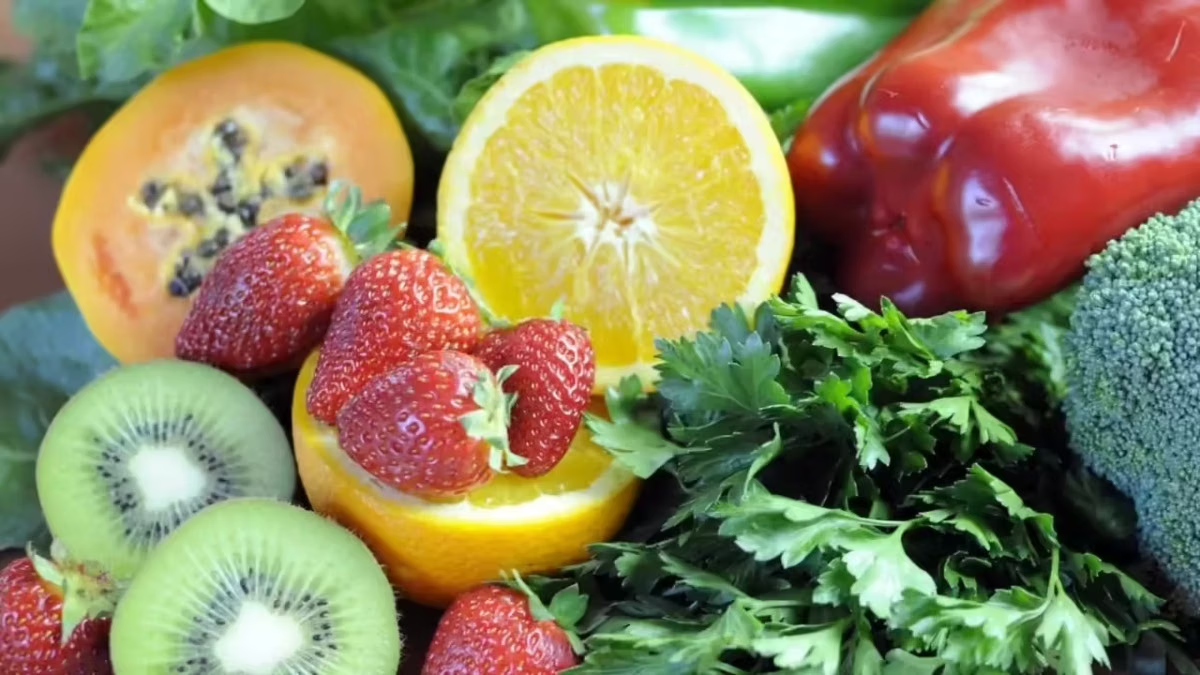
Citrus fruits are known to contain more Vitamin C

Can Eating More Vitamin C Physically Change Your Skin? Study Reveals

Citrus fruits are known to contain more Vitamin C | Image:
Freepik

Scientists discovered that vitamin C from food travels through the bloodstream into every layer of the skin, boosting collagen and skin renewal. People who ate two vitamin C-packed kiwifruit daily showed thicker, healthier skin. The findings suggest glowing skin really does start from within. Scientists at the University of Otago, Faculty of Medicine Christchurch Otautahi, have identified a direct connection between how much vitamin C people eat and how well their skin produces collagen and renews itself. The findings show that skin health responds measurably to dietary vitamin C, not just topical treatments. Published in the Journal of Investigative Dermatology, the research found that vitamin C levels in the skin closely mirror levels in the blood (plasma). Increasing intake through vitamin C rich foods was shown to raise both blood and skin concentrations.

Also read: Why Is Antimicrobial Resistance A Growing Health Threat?

Eating Vitamin C Raises Skin Levels and Thickness

The study followed 24 healthy adults in Aotearoa New Zealand and Germany. Participants who raised their plasma vitamin C levels by eating two vitamin C rich SunGoldTM kiwifruit each day showed a clear increase in vitamin C within their skin. This increase was associated with thicker skin (collagen production) and greater renewal of the outer skin layer. Lead author Professor Margreet Vissers from Matai Haora — Centre for Redox Biology and Medicine within the Department of Pathology and Molecular Medicine described the results as striking. The strength of the association between skin thickness and vitamin C intake is “compelling,” she explained.

Vitamin C Moves From Blood to Skin

According to Professor Vissers, the relationship between blood vitamin C and skin vitamin C stood out compared to other organs. “We were surprised by the tight correlation between plasma vitamin C levels and those in the skin this was much more marked than in any other organ we have investigated,” she says. The research team also found that vitamin C circulating in the bloodstream reaches every layer of the skin and supports healthier skin function. “We are the first to demonstrate that vitamin C in the blood circulation penetrates all layers of the skin and is associated with improved skin function. I am very proud of my team and excited about what the data is telling us.”

Why Diet Matters More Than Creams

Professor Vissers says the findings reinforce the idea that skin health begins internally, with nutrients delivered naturally through the bloodstream. Vitamin C is essential for collagen production, which is why it is commonly added to skincare products. However, vitamin C dissolves easily in water and does not absorb well through the outer skin barrier. The study showed that skin cells are highly efficient at absorbing vitamin C from the blood, with uptake into the outer epidermal layer appearing to be a priority.

How the Study Was Conducted

The research was funded by New Zealand company Zespri International, along with a University of Otago Research Grant, and included two phases. The first phase examined the relationship between plasma and skin vitamin C levels using healthy skin tissue from patients undergoing elective surgical procedures at Te Whatu Ora Canterbury (with support from the Otago campus’s He Taonga Tapu Canterbury Cancer Society Tissue Bank). The second phase involved a controlled dietary intervention carried out in Christchurch and Germany. Each location included 12 healthy participants.

Eight Weeks of Dietary Change

Participants were asked to eat two Kiwi Gold kiwifruit daily for eight weeks. This provided the equivalent of 250 micrograms of vitamin C. “All were instructed to consume two Kiwi Gold kiwifruit daily — the equivalent of 250 micrograms of vitamin C — for eight weeks. We then collected skin samples before and after the intervention, with separate analyses allowing us to look at the skin basal layers in Christchurch and the outer dermal skin layer and skin function tests in Germany,” Professor Vissers explains. German participants were recruited and tested by the SGS Institute Fresenius in Hamburg, which has the technical capability to collect samples from the outer dermal skin layer (the blister “roof”). The institute evaluated skin regeneration using ultrasound measurements of skin thickness, elasticity UV protection and epidermal cell renewal to assess overall skin function.

Clear Gains in Collagen and Skin Renewal

One of the most significant findings was a measurable rise in skin thickness among participants, indicating increased collagen production along with faster regeneration of epidermal cells. “The other really substantial finding showed a significant increase in the participants’ skin thickness levels, reflecting collagen production and an upsurge in the regeneration of their epidermal cells, in other words skin renewal,” Professor Vissers says.

Other Vitamin C Foods Likely Offer Similar Benefits

SunGold kiwifruit was selected for the study because of its consistently high vitamin C content. However, the researchers expect similar benefits from other vitamin C-rich foods, especially fresh fruits and vegetables such as citrus, berries, capsicums and broccoli. “We suggest that increasing your dietary vitamin C intake will result in effective vitamin C uptake into all compartments of the skin,” Professor Vissers says.

Daily Intake Is Key

Maintaining steady vitamin C levels in the blood is essential, since the body does not store the vitamin long term. Professor Vissers notes that healthy individuals can reach optimal plasma levels with about 250mg of vitamin C per day. “The important thing is to keep your plasma levels optimal, which we know can be easily achieved in a healthy person with a vitamin C intake of around 250mg per day. The body however does not store the vitamin, so we recommend 5+ a day, every day, with one of those five being a high vitamin C food, as a good habit to cultivate.” 

Tags: , , , , , ,
Daily Mirror

Expert reveals dangers of young kids copying adult anti-aging skincare on TikTok

TikTok isn’t just influencing adult beauty trends. Tweens and teens are plunging into complex skincare regimens, creating both intrigue and worry amongst professionals

Tweens and teens are plunging into complex skincare regimens(Image: Catherine Falls Commercial via Getty Images)

From anti-ageing serums to homemade facial tricks, social media platforms like TikTok are swaying a fresh generation of beauty fans, sometimes before they’ve even reached their teenage years.

Labelled “Sephora Kids,” these youthful users are copying grown-up skincare practices, generating viral content under hashtags like #teenageskincare and #tweenskincare, which have accumulated tens of millions of views.

While interest in personal care is normal, skin specialists warn that early use of adult-targeted products can be pointless or even damaging.

Infinity Laser Spa observes that overcomplicating young skin with powerful active components or invasive procedures may trigger irritation, disruption of natural defences, and lasting skin sensitivity.

READ MORE: Best early Black Friday beauty deals you can already shop picked by our beauty editorREAD MORE: Amanda Holden’s daughter Lexi Hughes on the one skincare tip she’s learnt from her mumDrunk Elephant is a favourite among Sephora tweens(Image: Boots)

Grasping what youthful skin actually requires, and what to steer clear of, is vital for both teenagers and their parents, especially in an age where TikTok trends can make adult-level beauty routines seem normal.

What “Sephora Kids” are getting wrong

Numerous teens and preteens are using strong anti-ageing creams, acids, and scrubs created for mature skin. Skin experts caution that this can trigger irritation, sensitivity, and even worsen spots or dryness.

Basic routines, mild cleansing, moisturising, and sun protection, are frequently more than adequate at this stage of life.

TikTok’s algorithm favours relatable, visually captivating content, which prompts young viewers to copy routines without grasping the potential dangers. Viral tutorials, product reviews, and “glow-up” transformations make complex regimens appear crucial, even for skin that doesn’t require them.

“TikTok has turned skincare into a cultural phenomenon for all ages, but not all trends are safe for young skin. Tweens and teens often copy adult routines without grasping their skin’s genuine requirements,” says Certified Laser Technician and Skincare Expert Sam Rock.

The social pressure to achieve “perfect” skin can also have psychological implications, creating stress or anxiety around appearance at an early age. By educating young users and parents, Rock emphasises the importance of safe, age-appropriate skincare, alongside digital literacy about social media influence.

Quick tips for safe tween skincare

  • Stick to a gentle cleanser and lightweight moisturiser.

Gentle cleansing, hydration, and sun protection remain the foundations of healthy adolescent skin. It’s appealing for teens to pursue viral routines, but simplicity triumphs.

  • Avoid harsh chemical exfoliants or adult anti-ageing products.

Overusing acids, retinols, or intensive treatments can damage the skin barrier, causing dryness, sensitivity, and breakouts that could have been prevented. Youthful skin is naturally robust, needing basic care rather than harsh regimens.

  • Parents should supervise and guide purchases, encouraging age-appropriate routines.

Parents and teens should focus on building foundational habits rather than chasing the latest viral product. Safe, gentle routines instil lifelong healthy habits while avoiding unnecessary risks.

“Social media can inspire curiosity, but guidance from trained professionals ensures that enthusiasm doesn’t come at the expense of skin health,” says Rock.

Tags: , , , , , , , , ,
Secret to Silky Smooth Skin Post Shaving: Dermatologist Reveals 4 Game-Changing Tips | Fashion News

Secret to Silky Smooth Skin Post Shaving: Dermatologist Reveals 4 Game-Changing Tips | Fashion News

Last Updated:November 16, 2025, 13:40 IST

If you want legs that are silky smooth but get ingrown hairs, dermatologist Dr Neera Nathan shares 4 hacks that are easy to follow.

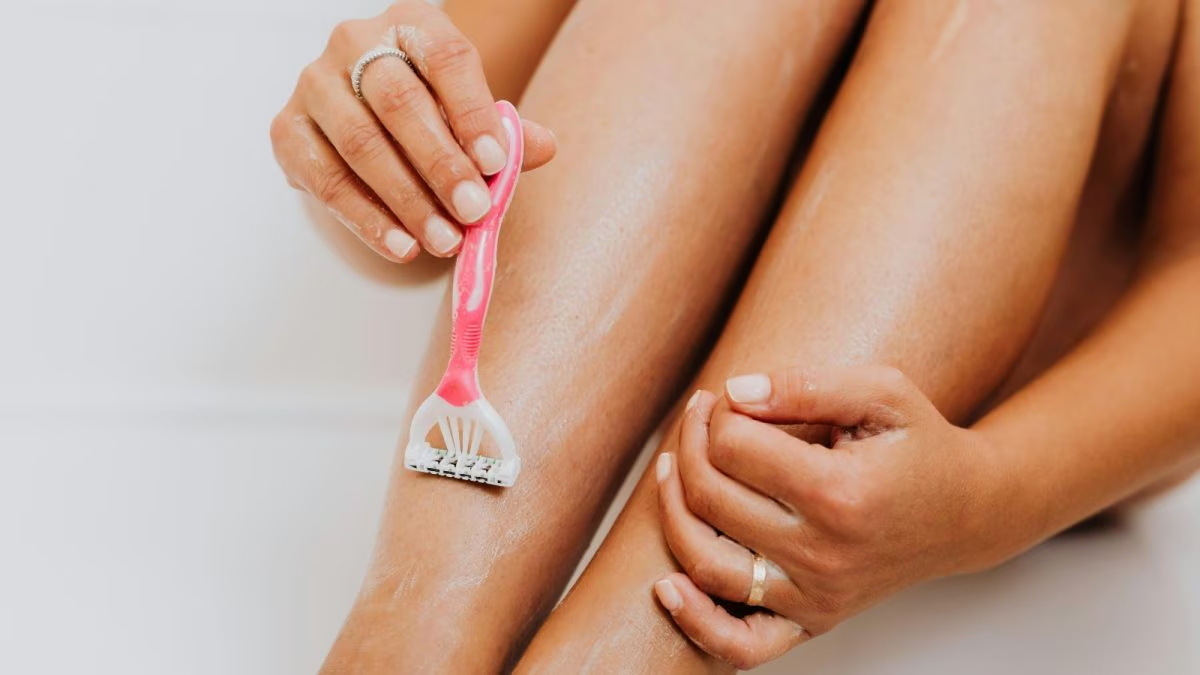
Dermatologist recommend single-blade razors for bump-free shave

Razor bumps and ingrown hairs can turn one’s grooming routine into a frustrating ordeal while also leaving your skin irritated and inflamed and you feeling uncomfortable. This might be a shaving complication that affects women all around the world, regardless of skin type. However, achieving a smooth, professional-quality shave is entirely possible with a few swaps and the right approach.

Dermatologist Dr Neera Nathan took to Instagram to share four essential tips that can transform your shaving experience from painful to pretty. Instead of hoping or praying for good results, these hacks focus on proper preparation, technique refinement, and post-shave care to ensure your skin remains healthy, smooth, and free from irritation every single time.

Dr Neera shared a detailed video on Instagram for women who are looking for that blemish-free, perfect-looking skin that is free of bumps and ingrown hair. She says, “If you want legs that are silky smooth but get ingrown hair, you need to understand that women’s lasers are a complete scam. Not only is it the pink tax at its finest, but women’s razors have many blades that can actually push the hair under the skin, causing ingrown hairs.”

So skip the pretty pink or blue razors that are marketed to women and are more expensive; instead, she adds that “dermatologists love single-blade razors”. These razors are generally marketed for men, as they cause less irritation and fewer bumps.

The American dermatologist-turned-influencer also says, “Do not sleep on the power of exfoliation. I don’t mean those ratchet exfoliating gloves. Instead, try a gentle chemical exfoliating cleanser in the shower before shaving to help soften and loosen trapped hair. You can also put a spray cap on your Glycolic acid and spritz it on your legs a few times per week to help the hairs grow out instead of in.”

Glycolic acid is known to be great for exfoliation and can improve the skin’s texture and radiance while reducing the appearance of fine lines and wrinkles through collagen stimulation. It can also improve one’s skin tone by fading hyperpigmentation and dark spots. Using Glycolic acid daily can help prevent bumps and body acne by unclogging pores and hydrating the skin, making it appear smoother and plumper.

She goes on to remind women not to skip shaving cream and to use a urea moisturiser. “It creates a nice, slippery surface between your skin and the razor for less irritation and a closer shave.”

“I highly recommend a urea moisturiser. It will soften the hair, get rid of dead skin and hydrate your skin,” she explains. Now, don’t freak out at the use of urea, as the body itself naturally; however, the stuff made in the laboratory is referred to as synthetic urea. It is present in a range of skincare and cosmetic products.

It has several benefits, including acting as a humectant, as urea draws water into the skin and helps it retain moisture for long-lasting hydration. It can break down and exfoliate dead skin to improve skin texture and reduce dullness, while also softening rough skin. Using it after a bath and shaving can be great, as urea can increase the penetration of other topical medications, making them more effective.

First Published:

November 16, 2025, 13:37 IST

News lifestyle fashion Secret to Silky Smooth Skin Post Shaving: Dermatologist Reveals 4 Game-Changing TipsDisclaimer: Comments reflect users’ views, not News18’s. Please keep discussions respectful and constructive. Abusive, defamatory, or illegal comments will be removed. News18 may disable any comment at its discretion. By posting, you agree to our Terms of Use and Privacy Policy.

Tags: , , , , , , , , , , ,
Best oLive
Privacy Overview

This website uses cookies so that we can provide you with the best user experience possible. Cookie information is stored in your browser and performs functions such as recognising you when you return to our website and helping our team to understand which sections of the website you find most interesting and useful.