Does your routine need a longevity skincare upgrade?

Does your routine need a longevity skincare upgrade?

Skin longevity is 2026’s big trend – does it deliver anything genuinely new? Or is it simply anti-ageing reinvented?

Any products in this article have been selected editorially however if you buy something we mention, we may earn commission.

Jump To

You might have been hearing a lot of talk about ‘skin longevity’ in recent months. Because ‘longevity’, for a while a buzzword bandied about by biohacking bros, has entered the beauty lexicon, with longevity skincare taking over the shelves in Boots and SpaceNK.

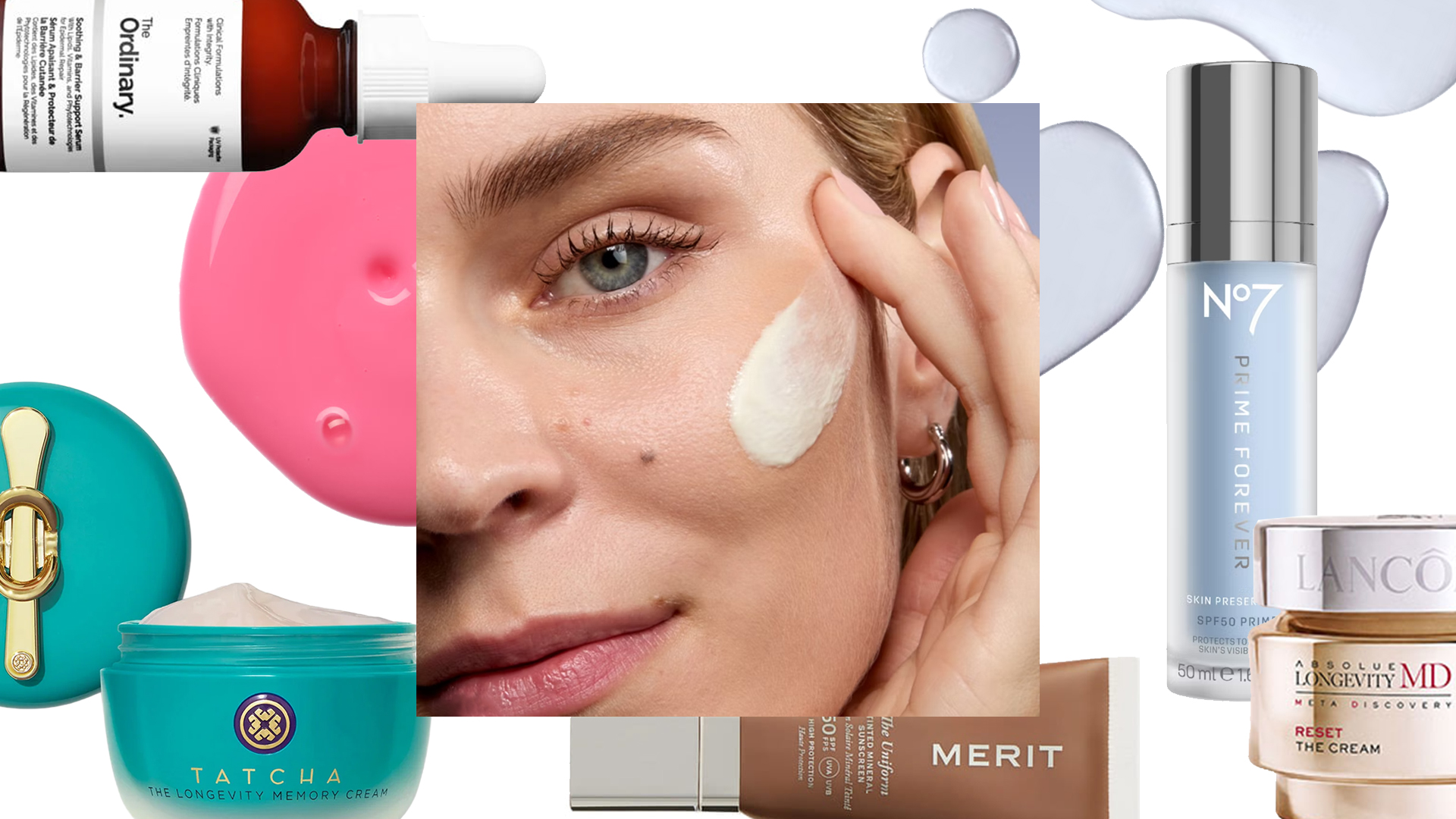
Major brands have brought out ranges that name-drop the L word: Lancome Absolue Longevity MD, fronted by 63-year-old actress Demi Moore, promises to target ‘cellular senescence’ (when old cells stop dividing), while Tatcha’s The Longevity Serum suggests that its Blue Zone-inspired ‘Okinawa Cellescence Complex’ of botanicals will do likewise. Meanwhile, on social media, influencers are sharing ‘skin longevity’ guides. But what exactly does it all mean? 

Actress Demi Moore is the face of LancomevLongevity MD skincare

From a wellness point of view, longevity science is all about not just extending our lifespan (the number of years we live) but extending our healthspan, the number of healthy years we live. The idea is that we can be proactive, focusing on prevention and preservation, rather than correcting or curing. Translate that into skin, and it’s ostensibly about keeping our skin healthy for longer. Yes, ‘skinspan’ is now a thing.

But is longevity skincare simply ‘anti-ageing’ by another name? Does it really demand specific longevity serums with new ingredients? To find out, I consulted some of the UK’s top dermatologists.

What is skin longevity?

I’ll be honest, my first instinct was to dismiss ‘skin longevity’ as a politically correct reinvention of the term ‘anti-ageing’, which has been demonised in the last decade, with many asking why we should be ‘anti’ a natural process, criticising the negative connotations associated with it, and the fact that it’s mainly aimed at women. However, many of the dermatologists I spoke to pointed out that it actually represents a shift in our thinking about skin.

“While there is certainly marketing attached to it, skin longevity reflects a genuine change in dermatology and skin science in the last five years,” says Dr Caitriona Ryan, clinical professor at University College Dublin, consultant dermatologist and co-founder of ID Formulas longevity supplements.

“It’s about a deeper scientific understanding of why skin ages and how we may be able to preserve its function over time.”

She points out that while traditionally, anti-ageing has focused on treating the visible consequences of ageing, such as wrinkles, pigmentation, laxity and uneven texture, skin longevity isn’t about how we make skin look younger, but about how we keep skin functioning like younger skin for as long as possible, in the same way that we want all our other organs to support us for the long haul.

“Healthy skin is remarkably resilient,” she adds. ”It repairs DNA damage efficiently, maintains a strong barrier, produces collagen effectively, controls inflammation and protects itself against oxidative stress. With age, those systems gradually become less efficient.

“Skin longevity is about supporting those biological processes before significant decline occurs,” she says. She and other dermatologists now look at skin through the lens of the hallmarks of ageing, the 12 biological processes that drive ageing throughout the whole body.

Applied to skin, these are concepts such as ‘inflammageing’ (the idea that ageing is actually a disease of inflammation),  mitochondrial health (the skin cells’ energy banks), cellular senescence (what happens when cells get old), preserving the extracellular matrix (keeping the structure of the skin intact) and DNA repair.

It’s all very different to the ‘anti-ageing’ tropes of blasting our wrinkles and lifting our jowls; these ideas were “simply not part of mainstream skincare conversations a decade ago,” she says.

All this does make perfect sense — after all, skin is the body’s largest organ and its first line of defence. The science is credible, but why is it that most of the new longevity skincare products target just the face – which makes up less than five per cent of skin  – not the whole body? There are only a handful of body longevity creams, such as Joonbyrd, Longevity Body Glaze, £62, which is aimed at improving skin resilience and Neova Body Repair, which has DNA repair enzymes, more on which below. 

This is where marketing muddies the waters. While ostensibly the focus of skin longevity is improving skin function, it’s also true that if you stop skin from declining, chances are you’re also preserving a more youthful face.

Who is skin longevity for?

When we’re talking about prevention rather than cure, it makes sense that you’d start a skin longevity regime earlier in your 20s or 30s, before you start to see an age-related decline in levels of collagen (wrinkles, sagging) and measurable decline in cellular energy (your mitochondria, your cell ‘batteries’.)

But you don’t necessarily need a longevity cream at this stage, as simple skin preservation habits can have the biggest effect, says consultant dermatologist, Dr Sidra Khan. “For most people in their 20s, ‘skin longevity’ is overwhelmingly delivered by daily broad-spectrum sunscreen, not smoking, [sufficient] sleep, and a sane barrier-supportive routine – not a shelf of endless serums!”

And, in fact, that’s exactly the demographic that No7 is targeting with the Prime Forever launch earlier this year. The range, targeted squarely at 30-somethings, leverages the concept of ‘prejuvenation’ — or keeping skin at its optimum for as long as possible — using a combination of peptides, antioxidants and sun protection.

But while a skin longevity approach can benefit everyone, there are some for whom it can be particularly helpful.

”We know that chronic inflammation drives ageing — ‘inflammageing’ is a real and well-described concept,” says Dr Khan. “So a regime built around calming inflammation, supporting the barrier and avoiding the irritation-repair-irritation cycle is both a longevity strategy and exactly what reactive skin, such as rosacea-prone or sensitised skin, needs.”

She adds that if you’re someone who doesn’t do well with “a traditional ‘anti-ageing’ routine stacked with strong actives that the skin can’t tolerate, a longevity-led, anti-inflammatory approach is often more appropriate.”

What to look for: key skin longevity skincare ingredients

There’s a lot of chat about exciting new longevity ingredients. But according to Prof Ryan, “many of our best evidence-based anti-ageing ingredients also happen to be our best longevity ingredients. The difference lies less in the ingredient itself and more in the biological pathways we are trying to support.”

  • Daily broad spectrum sunscreen

“Ultraviolet exposure remains the single biggest external driver of DNA damage, collagen breakdown and premature skin ageing, so daily broad spectrum sun protection does more to preserve long term skin function than anything else you can apply,” says Prof Ryan. “Any serious longevity conversation that does not begin there is incomplete.”

Like many dermatologists, she’s a fan of physical sun filters (such as zinc) because she believes they are less likely to cause irritation, and favours a tint, which shows the product contains iron oxide, which has been shown to offer extra protection to skin prone to pigmentation.

NAD+ is touted as a longevity ingredient, especially in the supplements landscape and is a coenzyme essential for cellular energy production, DNA repair, and metabolic signalling. But the consensus is that simply putting NAD+ into a cream or serum probably isn’t the answer, as it’s a large, unstable molecule and has limited skin penetration. However, topical ingredients, such as niacinamide, or sunflower sprout extract (see below) can help boost NAD+ levels within the body, might help, as might some oral NAD+ booster supplements. But, says Prof Ryan, “applying NAD+ directly is far more persuasive on a label than it is in the biology.”

UV from the sun damages our DNA, but there are some enzymes — found in bacteria, algae, other plants and many animals — that can help repair this damage. While humans may have evolved to no longer produce these enzymes ourselves, there is a way that we can benefit from them.

“Enzymes like this can be delivered in liposomes [fatty bubbles] so they penetrate skin and help to reverse any DNA damage caused by UV,” explains Dr Khan. “They boost our own repair machinery, clearing UV-induced lesions before they drive pre-cancers or mutations.” Still not widely used, they can be found in The Skin Diary Age Defence Moisturising Day Cream, SPF 50 and Neova’s Correction range and SPF.

The hottest new skin longevity ingredient is sunflower sprout extract. There’s a trademarked version of it called RejuveNAD, found in Swissline 360 Collagen Night Concentrate, and now also in Beauty Pie Youth Bomb Intense, £59 for members, which has been shown to boost NAD+ in vitro. However, it gets a lukewarm reception from the derms I spoke to. “Laboratory studies suggest it may activate antioxidant defence pathways and support mitochondrial resilience, but robust human data isn’t there yet,” says Prof Ryan. She’s similarly hesitant about other antioxidant ingredients such as CoenzymeQ10, which some claim can improve mitochondrial energy — “the topical evidence remains modest.”

“Certain botanical extracts [such as astragalus, centella asiatica, and rhodiola rosea] have been shown to slow telomere shortening,” says

But, explains consultant dermatologist Dr Malvina Cunningham of Skin & Me skincare.

Telomeres are protective caps on chromosome ends that shorten with each cell division. These extracts also modulate telomerase, the enzyme that maintains telomeres in vitro, she adds. “When telomeres become critically short, cells enter a state of ‘growth arrest’ that contributes to tissue ageing. “Human clinical data are still limited, though,” she adds.

Longevity skincare: the verdict

While the promise of longevity skincare is seductive, it feels like the marketing is still outpacing the science. If you want to preserve your ‘skinspan’, start with the basics. They might not be as flashy, but a consistent routine that helps to keep your skin barrier healthy and intact, includes broad-spectrum SPF to protect your skin from DNA damage, and adds in antioxidants and enzymes to help mop up free radicals and repair any damage is essential. Once those basics are in place, then — and only then — you might want to look at products that can preserve your telomeres or boost NAD+ levels as well.

7 skin longevity skincare buys I rate

The prejuvenation powerhouse

No7 Prime Forever SPF50 Primer, £24.95

There’s no arguing with the combination of antioxidants and broad-spectrum UVA/UVB protection both found in this lightweight primer as our most powerful weapon against the destruction (and therefore accelerated ageing) of skin cells of any colour and of any age. To complete the triple threat, they’ve added No7’s potent peptide that’s the hero ingredient of the blockbuster No7 Future Renew damage repair range. It uses chemical rather than the mineral sun filters recommended by the derms I spoke to, but is nevertheless am affordable all-rounder if you aren’t prone to redness.

SHOP  

The mineral SPF in 20 shades

Merit The Uniform, £34

As Prof Ryan says, broad spectrum sun protection, ideally tinted zinc oxide, is the starting point for any longevity regime. And this is particularly important for anyone who suffers from melasma, or any other form of hyperpigmentation, which can be considered a form of inflammation. I’ve tried many tinted SPFs and this, available in 20 shades, is one of the best.

SHOP  

The soothing must-have 

The Ordinary Soothing & Barrier Support Serum, £17.30

Maintaining the skin barrier and dampening down any irritation is at the heart of longevity skincare so this serum, packed with soothing ingredients, such as bisabolol and centella asiatica, barrier repair heroes, such as ceramides, and that all-rounder, niacinamide, which might just help boots NAD+, is a winner.

SHOP  

The dry skin saviour

Dr Sam’s Flawless Moisturiser Intense, £36

While the jury might be out on whether the sunflower seed extract that this contains can really boost NAD+ levels, this moisturiser is packed with skin-soothing and barrier-boosting ingredients, including panthenol, ectoin, squalane, ceramides, and centella asiatica. It’s perfect for dry, thirsty skin, as well as for any flares after you’ve been heavy-handed with an active. The new lighter version Dr Sam’s Flawless Moisturiser Balance, is a great everyday moisturiser for all skin types.

SHOP  

The SPF that repairs sun damage

The Skin Diary Age Defence, £92

Yes it’s pricey, but not only is it packed with those DNA repair enzymes that target the damage form UV, but it’s been through some seriously rigorous tests to prove that it can reduce damage and inflammation and has been formulated by the UK’s top-tier derms, led by professor Chis Griffith, OBE. While any skin would benefit from this complex powerhouse, if you find yours normally reacts to UV filters, these are encapsulated, so you should have fewer issues.

SHOP  

The doctor’s choice

Revision Skincare D.E.J. Daily Boosting Serum, £265

Oft-cited by aesthetic doctors such as Dr Sophie Shotter as their skin longevity serum of choice, this lightweight product, containing sunflower sprout extract and powerful peptides scooped Gold in the ‘Ageing Well’ category at the Get The Gloss Beauty Awards 2025. Judge Dr Ash Soni, a plastic surgeon says: ‘The science and the research behind Revision as a brand are excellent. The ingredients in this serum are innovative, with sunflower sprout extract to negate the visible effects of glycation and boost the energy of the cells. The clinicals are good – you can’t beat it.

SHOP  

For body skin longevity

Neova Body Repair, £69

Bucking the trend of longevity skincare focusing only on the face, this body lotion combines those all-important DNA repair enzymes with a copper peptide complex to boost collagen and elastin production, allantoin which soothes skin as well as moisturising ingredients to help hydrate the skin.

SHOP  
Tags: , , ,
Il Sole 24 Ore

Beauty combines skincare, aesthetics and longevity

The beauty market is expanding and moving beyond traditional practices. More and more consumers are complementing their skincare and make-up routines with beauty treatments and solutions focused on performance and longevity (tools and treatments related to health, bodily function and the prevention of ageing), in a process that is redefining the boundaries of the sector.

Driving this change is what the second edition of the Boston Consulting Group (BCG) study, in collaboration with WWD, “Consumers Are Shaping a New Age of Optimisation in Beauty”, defines as the “optimizer” consumer: a profile that integrates aesthetic procedures and treatments aimed at performance and longevity into their traditional beauty routine, and which today accounts for 6 per cent of American adults – approximately 15 million people. Over the past twelve months, this segment has spent an average of $3,000 across the three categories.

According to the survey, carried out in April in the US amongst 5,000 consumers of beauty products, around 70 per cent of respondents said they were open to non-traditional solutions, whilst 80 per cent considered beauty to be a matter of physical and mental wellbeing, not just outward appearance. Should the ‘optimisers’ segment double in size, the report estimates a potential of over 30 billion dollars in added value for the entire beauty ecosystem, of which over 10 billion is linked to aesthetic procedures and more than 20 billion to the performance and longevity categories.

“Traditional beauty – understood as skincare, make-up and hair care – remains the cornerstone of the category, as it is upon this that consumers build their routines, but its definition is broadening,” comments Guia Ricci, managing director and partner at BCG. “Rather than relying solely on a few flagship products, today’s consumers combine solutions that address aesthetics, physical performance and longevity to achieve their desired results. This is a shift that brands must take note of: these consumers are pointing the way forward for the sector.”

70 per cent of beauty enthusiasts now regard cosmetic procedures as a regular part of their routine, a habit that is also reflected in their purchasing behaviour within the traditional beauty sector: 70 per cent have increased their spending on premium or medical-grade skincare products, whilst 50 per cent have introduced new steps or ingredients into their routine. A similar trend is evident with GLP-1 drugs, which are creating new beauty needs: they have been used by 30 per cent of optimisers in the last twelve months and, amongst those who have noticed physical changes or changes in skin quality, around half have turned to luxury or medical-grade skincare products, whilst amongst those who have experienced a loss of skin firmness, almost 80 per cent have increased their use of fillers, injectables, skin-tightening treatments or laser treatments. ‘Optimisers’ are also four times more likely than the average consumer to take supplements for longevity and to combat ageing, and twice as likely to use beauty supplements.

Tags: , , , ,
Homestead Blog Hop - Homestead tips, ideas, animal care, and recipes every Wednesday

Homestead Blog Hop 614 Fall Decor and Pickles

Welcome to the Homestead Blog Hop. A weekly gathering for homesteaders and simple living enthusiasts. We all share DIY projects, from-scratch recipes, and creative inspiration from our homes to yours.

This week’s hop features yummy foods. It also offers practical ideas that celebrate handmade living and self-sufficiency. Explore ideas that fit a thoughtful, sustainable lifestyle.

Whether you’re looking for seasonal crafts, homemade treats, or encouragement on your homesteading journey, you’ll find plenty of inspiration to carry into the upcoming seasons.

Grab a cup of tea, explore the featured posts, and join us in sharing your own homestead creations.

Meet Your Homesteading Hosts

We’re Kelly from Simple Life Mom, Liz from The Cape Coop, Natasha from Houseful of Nicholes, and Laurie from Ridgehaven Homestead. We’re about from-scratch living, simple ingredients, frugal habits, and intentional, sustainable living. We share recipes, tips, and ideas to support home cooks and makers.

We’re delighted to host the Homestead Blog Hop. You can find fresh inspiration each week for DIY projects, homemade recipes, and practical living ideas. Join us for new ideas and a growing community. Together, we celebrate everyday craftsmanship and thoughtful living.

Follow Us for More Homestead Inspiration

Natasha – Houseful of Nicholes
Facebook | Pinterest | X | Instagram

Laurie – Ridge Haven Homestead
Facebook | Pinterest | Instagram

Liz – The Cape Coop
Facebook | Pinterest | X | Instagram

Kelly – Simple Life Mom
Facebook | Pinterest | X | Instagram

FEATURED POSTS from the Last Homestead Blog Hop

Each week, we take turns selecting three featured posts from the Homestead Blog Hop. These features are shared across all of our social media platforms. They spotlight the creativity and hard work of our fellow homesteaders.

Here are the featured posts from last week’s hop:

1. Fall Pumpkin Pillow Cover from the Apple Street Cottage

2. Our Refrigerator Pickles from Our Grand Lives

3. 3 Ways To Decorate Wood Pumpkins from Steph Creates Things

Congrats! Feel free to grab the featured on button for your post.

Just right click and ‘save image as…‘

Guidelines for the Homestead Blog Hop

  1. Click the “Add Your Link” button below and upload a clear, eye-catching image from your project or recipe. Please link directly to the family-friendly post itself, not your blog’s homepage.
  2. You may link up up to three posts each week.
  3. Take time to visit a few other blogs in the hop and leave a thoughtful comment to let them know you stopped by. Community support makes this hop special!
  4. Please include a link back to the Homestead Blog Hop in your post. Posts without a backlink are not eligible to be featured. All featured posts are shared across all hosts’ social media channels.
  5. Share posts that haven’t been linked to the hop before. Older posts are welcome as long as they are new to the hop.
  6. By joining the Homestead Blog Hop, you grant the hosts permission to use one image from your post, with a link back to your site, if your post is selected as a feature next week.
  7. This is a family-friendly link-up designed to encourage, inspire, and support the homesteader in all of us.

Let the Party Begin!

Which project are you excited to try this week? Leave a comment below.

Join Our Homestead Blog Hop Pinterest Board

Follow all of your hosts on Pinterest and send a message if you’d like to be added to our Homestead Blog Hop group board. This board is a great place to share your DIY projects, crafts, and from-scratch recipes with the homesteading community.

Guideline: Only pin posts that you’ve linked up to the Homestead Blog Hop.

Tags: , , , , ,
Move Over French Girl Skincare

Move Over French Girl Skincare: Experts Say Australia’s “No Worries” Beauty Philosophy Is Taking Over the World

Move Over French Girl Skincare: Experts Say Australia’s “No
Worries” Beauty Philosophy Is Taking Over the World

You have probably, at some point, found yourself
layering snail mucin under camel milk, following a ten-step Korean
skincare routine that promised poreless perfection. Or maybe you
invested in French micellar water and the perfect rouge, chasing
that effortlessly chic Parisian glow that somehow always felt out
of reach. We have collectively spent years hopping from one
international beauty philosophy to another, always convinced the
next one would finally crack the code. But what if the real secret
was not about adding more steps – it was about stripping them away
entirely?

How we ended up with overflowing bathroom shelves

Think about the beauty rituals we
have adopted from around the world. K-beauty arrived from Korea
with elaborate multi-step regimens and exotic ingredients like
snail mucus and camel milk, all in pursuit of flawless skin.
Japanese beauty introduced streamlined yet luxurious products
rooted in refined skin rituals. And French girl beauty captivated
us for years, from pharmacy staples to that coveted undone look
that remained, for most of us, impossible to truly replicate – even
for the most devoted Francophiles.

Each of these traditions brought
something culturally rich and genuinely valuable to our

routines
. They still deserve a place in our hearts and
our cabinets. But here is the thing: have you noticed how
exhausting it has become to keep up? The sheer number of products,
the layering sequences, the rules – it all started to feel like a
second job rather than self-care.

That collective fatigue opened
the door to something refreshingly different. A movement rooted not
in complexity but in simplicity, nature, and a laid-back mindset.
It is called A-Beauty, short for Australian Beauty, and it is
quickly reshaping what we expect from our skincare.

Why the land down under is rewriting the beauty
playbook

At the heart of A-Beauty is a
philosophy that mirrors the Australian way of life itself. The
beach, the sun, the great outdoors – these are not just lifestyle
perks but beauty’s unsung heroes. Irene Falcone, a clean lifestyle
expert and the founder of Nourished Life, has described A-Beauty as
centered on simple, pared-back regimens built around naturally
derived products packed with powerful ingredients that actually
deliver on their promises.

Australians are known worldwide
for their relaxed, stress-free outlook, and Falcone notes that this
very approach to life is thought to have a positive impact on how
skin looks and feels. Unlike the pharmaceutical-heavy formulas
associated with French skincare or the intricate layering protocols
of Korean routines, A-Beauty is deliberately unfussy, hardworking,
and natural.

What makes it even more
distinctive is where the ingredients come from. Australia’s
geography is rare and precious – spanning sand, sea, forest, and
desert in ways found nowhere else on the planet. That diverse,
flourishing landscape yields highly innovative botanical
ingredients that skin genuinely responds to. Australian beauty
brands tend to be made not just in Australia but quite literally
from Australia, harnessing native flora and terrain-specific
elements that set them apart from anything else on the global
market.

A post-pandemic shift toward less-is-more skincare

The timing of A-Beauty’s rise is
no coincidence. The last few years pushed us to increase our
self-care efforts dramatically, yet they simultaneously forced us
to simplify. Hair regained its natural texture and color –
sometimes by choice, sometimes not. Nails went bare. Skin got a
well-earned break from layers of product. We collectively turned
our backs on overcomplicated, fussy routines and began craving
something more streamlined.

That craving dovetailed perfectly
with a broader cultural shift toward sustainability and
transparency. Falcone has called the move toward A-Beauty an
evolution that ties into current trends of minimalism, ingredient
transparency, and the expectation that products should do exactly
what they claim. With nature and the environment at its core, this
philosophy reflects our growing investment in understanding what we
put on our skin – and consuming beauty in a way that is sensitive
to issues like
climate change
and sustainability.

Global research by McKinsey
reinforces the momentum. According to the firm’s findings, the
pandemic increased demand for natural, sustainable beauty, with 57%
of consumers stating they had made significant changes to their
lifestyles to lessen their environmental impact. A-Beauty, with its
emphasis on efficacy, natural ingredients, and eco-conscious
processes, sits squarely at the intersection of everything modern
consumers say they want.

What this means for your routine going forward

The takeaway here is genuinely
liberating. You do not need a ten-step regimen or a cabinet full of
imported serums to take excellent care of your skin. A-Beauty
suggests the opposite: fewer products, potent natural ingredients
sourced from one of the most biodiverse landscapes on earth, and a
mindset that treats stress reduction as a legitimate skincare
strategy. It is an approach that is kind to you and kind to the
planet. And honestly, in a world that keeps getting more
complicated, a beauty philosophy built on simplicity might be
exactly what we all need next.

Tags: , , , , , , , , ,
Oriflame SkinFest 2026: Celebrating Integrative Beauty From The Inside Out

Oriflame SkinFest 2026: Celebrating Integrative Beauty From The Inside Out

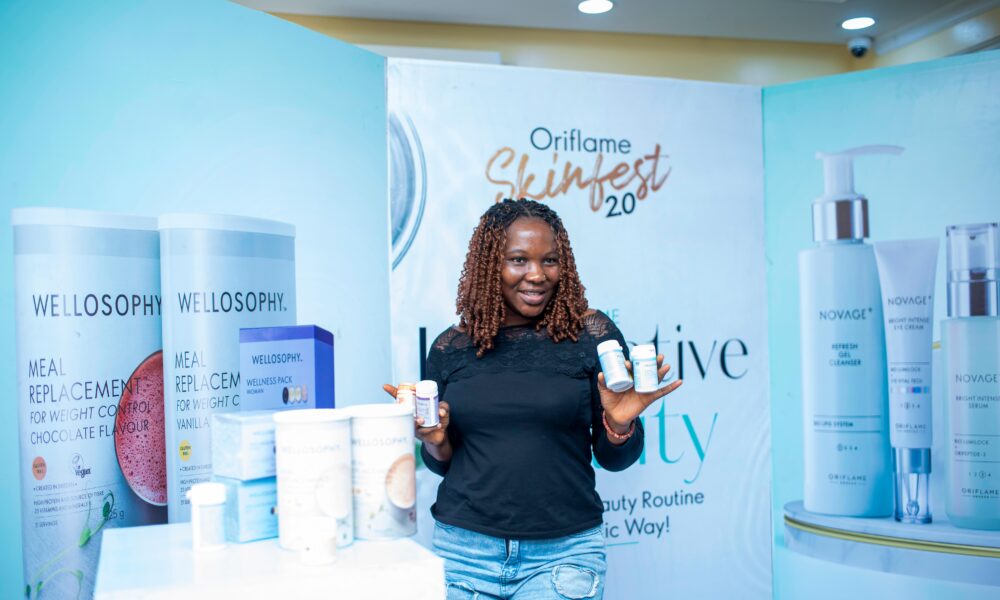
On Saturday, 18th July 2026, Oriflame Nigeria welcomed over 800 guests to Marcelina’s Place, Lagos, for the second edition of Oriflame SkinFest, a vibrant celebration of beauty, wellness, education, and community.

Centered around the theme “Integrative Beauty,” SkinFest 2026 went beyond traditional skincare conversations to explore how healthy skin is influenced by the choices we make every day from the products we use and the food we eat to the lifestyle habits we cultivate.

Bringing together skincare enthusiasts, wellness advocates, healthcare professionals, beauty experts, Brand Partners, and guests from across Nigeria, the event showcased Oriflame’s philosophy of helping people carve their unique path to wellbeing.

A Beauty Experience from the Moment Guests Arrived

Guests were welcomed into an immersive beauty experience where they explored interactive product stations featuring Oriflame‘s latest innovations and best-selling collections.

From elegant fragrances like Divine Dark Velvet and the newly launched Mister Giordani Gold Eau de Parfum and Miss Giordani Gold Eau de Parfum, to personal care favourites such as Feminelle, wellness solutions from Wellosophy, and Oriflame‘s advanced Novage+ skincare range, attendees had the opportunity to touch, test and experience the products firsthand.

One of the biggest attractions throughout the day was the Novage+ Digital Skin Diagnostic Tool, where guests received personalised skin analyses and recommendations tailored specifically to their skin concerns. Instead of relying on guesswork or social media trends, attendees left with a clearer understanding of what their skin truly needed.

The event was also attended by the management team of Oriflame Nigeria, including Nikola Baroli, Oriflame Nigeria’s Managing Director; Adesewa Okeyinka, Marketing and Sales Support Manager; Oluseyi Abiri, Operations Manager; and Oyindamola Tella, Operations Manager, who joined guests and Brand Partners in experiencing the celebration of beauty, wellness and self-care.

Setting the Tone for the Day

The official programme commenced with a welcome address from Oriflame Nigeria‘s Marketing and Sales Support Manager, Adesewa Okeyinka, who warmly welcomed guests to SkinFest 2026.

She spoke about Oriflame‘s commitment to empowering people through beauty, wellness, education, and entrepreneurship, while encouraging everyone to embrace beauty as a lifestyle rooted in healthy habits rather than unrealistic beauty standards.
Her address perfectly introduced the day’s theme Integrative Beauty where beauty is viewed as the connection between skincare, wellness, confidence, nutrition, self-care, and healthy living.

Learning the Science Behind Great Skin

The first educational sessions were led by Oriflame Top Brand Partners, who guided guests through practical skincare education while simplifying the science behind achieving healthy-looking skin.

Rather than focusing on complicated routines, they encouraged attendees to first understand their skin before choosing products.

The sessions explored the advanced skincare science behind Novage+, introducing guests to innovative technologies including Bio Lumilock, Aspatrolift, Bio Sebum Control, and Bio Collagen Pro, each designed to target different skincare concerns such as uneven skin tone, dullness, excess oil, fine lines, and loss of firmness.

Guests were also introduced to the newly launched Novage+ Proceuticals 10% Niacinamide Power Drops, learning how its powerful formulation helps improve skin texture, visibly brighten the complexion, support the skin barrier, and reduce the appearance of pores, making it a versatile addition to many skincare routines.

Throughout the sessions, one message remained clear: skincare is not about changing who you are it’s about understanding your skin and giving it the care it deserves.

Healthy Smiles Complete Healthy Living

Continuing the morning’s conversations around holistic wellness, Dr. Chidera Nyingifa, a certified dentist, took the stage to speak about an area of beauty that is often overlooked oral health.

Dr. Chidera Nyingifa delivered an insightful session on oral health, sharing practical tips for maintaining healthy teeth and gums while emphasizing the connection between oral hygiene, overall wellbeing, and confidence. She also spotlighted the Oriflame Optifresh range including the Pro White Toothpaste, Maximum Fresh Toothpaste, and Sensitive Toothpaste reinforcing the message that beauty and wellness go beyond skincare.

Discovering Oriflame’s Latest Innovations

Guests were then taken on an exciting journey through Oriflame‘s newest beauty innovations by Oriflame Product Specialist, Awa Irene.

She introduced the science, inspiration and benefits behind the latest launches, including the Novage+ Proceuticals 10% Niacinamide Power Drops, the sophisticated Mister Giordani Gold and Miss Giordani Gold Eau de Parfum, the nourishing Milk & Honey Gold Shampoo and Conditioner, the glossy The ONE Hydrating Shine Lip Gloss, the volume-enhancing The ONE WonderLash XXL Mascara, and the Optifresh oral care range.

Guests gained a deeper appreciation of the research and innovation behind each product and how they fit into a complete beauty and wellness routine.

Real Stories. Real Transformations.

One of the most inspiring moments of the day came from Rachael Udenkwo, Oriflame Face of Nigeria 2026, who shared her “Glow Up with Oriflame” journey.

She spoke candidly about embracing healthier habits and how incorporating Wellosophy Meal Replacement into her lifestyle supported her weight management journey, boosted her confidence, and encouraged her to make healthier choices every day.
Her testimony reminded guests that true transformation happens through consistency and self-care not shortcuts.

Panel Session One: Understanding Your Skin at Every Stage

The first panel discussion was moderated by Oriflame Product Specialist, Awa Irene, and featured an esteemed lineup of speakers, including Kunle Remi—award-winning actor, one of Nigeria’s most recognizable screen talents, and Oriflame Brand Ambassador; Dr. Adefunke Arowolo, a medical doctor and Health Educator; Dr. Peter Odunuyi, a Chemical Pathologist in Metabolic Medicine  and lifestyle enthusiast; and Loretta Kama, an Oriflame Top Leader.

The conversation focused on understanding the skin through different stages of life and explored how age, hormones, lifestyle, nutrition, stress, and environmental factors influence skin health. Panelists also challenged common skincare myths while encouraging attendees to choose products based on their individual skin needs rather than social media trends.

Speaking during the session, Dr. Adefunke Arowolo emphasized the importance of adapting skincare routines as the skin changes over time. She noted that “as you grow older, your skincare should grow with you,” highlighting the need for skincare to evolve with age and recommending anti-ageing solutions such as the Novage+ range to help address changing skin concerns.

Dr. Peter Odunuyi also shed light on the dangers of using harmful and unregulated skincare products, explaining how certain ingredients and practices can damage the skin barrier, trigger long-term skin concerns and compromise overall skin health. He encouraged attendees to prioritize safe, quality skincare products and make informed choices when building their skincare routines.

Kunle Remi highlighted the growing importance of skincare for men, encouraging more men to take an active interest in caring for their skin. He noted that skincare is not exclusive to women but an essential part of overall grooming, wellness and self-care for everyone.

It was an insightful conversation that helped guests better understand that great skincare starts with knowledge.

Panel Session Two: Beauty Starts from Within

The second panel session was moderated by Oriflame Commercial Planner Buhari Memunat, who was joined by Dr. Adefunke Arowolo, Dr. Peter Odunuyi, Kunle Remi, and Oriflame Top Brand Partner Iniye Emelife.

This session focused on the power of holistic wellness and the impact that everyday lifestyle choices can have on overall health, confidence, and wellbeing.

A standout moment was hearing Iniye Emelife’s inspiring wellness journey. Through consistency, healthier habits, and the support of the Oriflame Wellosophy Meal Replacement, Iniye achieved a remarkable weight-loss transformation that has positively impacted her overall health, energy levels, and quality of life. Her story served as a powerful reminder that wellness is a journey, and that caring for the body from within can lead to lasting, visible results.

The session beautifully reinforced the principle of Integrative Beauty that true confidence and radiant skin begin with a healthy body and balanced lifestyle.

A Journey of Transformation

Following the second panel discussion, Oriflame Top Leader Damilola Adeniji took to the stage to share her own “Glow Up with Oriflame” story.

She opened up about her struggles with weight management and how embracing healthier habits, alongside the support of Wellosophy Meal Replacement, helped her achieve her desired weight and build greater confidence.
Her story resonated deeply with the audience, serving as a powerful reminder that lasting transformation comes through consistency, patience, and choosing a healthier lifestyle.

Ending on a High Note

To round off the event, another exciting round of games brought smiles, laughter, and plenty of excitement to the audience.
Guests enthusiastically participated, with winners receiving Oriflame goodie bags, ending the day on a joyful and memorable note.

Thank You for Making SkinFest 2026 Unforgettable

SkinFest 2026 was far more than a skincare event.

It was a celebration of Integrative Beauty, bringing together skincare science, wellness, nutrition, oral care, fragrance, personal care, expert knowledge, technology, and inspiring real-life stories under one roof.

To our over 800 guests, distinguished speakers, healthcare professionals, Brand Partners, volunteers, beauty experts, and every member of the Oriflame community who made SkinFest 2026 possible thank you.

Your enthusiasm, curiosity, and passion transformed this year’s event into an unforgettable celebration of beauty and wellness.
As we reflect on another successful edition, one thing is certain, SkinFest has become more than an event. It has become a movement that inspires people to embrace beauty from the inside out.

Keep glowing. Keep growing. Keep reaching your happy place with Oriflame.

Follow Oriflame Nigeria on Instagram, Facebook, TikTok and WhatsApp Channel for live updates on Oriflame SkinFest 2026.

Sponsored Content

Tags: , , , ,
Samsung Newsroom

Parasol Culture Spreads to U.S. as K-Beauty Fuels Sun-Avoidance Habit

Foreign tourists walk while holding parasols at Gwanghwamun Square in Jongno-gu, Seoul. Newsis

The parasol culture long familiar across Asia, including South Korea and Japan, is spreading to the United States. Analysts say record heat has driven demand to avoid ultraviolet exposure, while the K-beauty boom is expanding skincare habits from applying sunscreen to avoiding sunlight altogether.

Umbrellas Even Without Rain

According to industry sources on the 21st, The New York Times recently reported that a growing number of U.S. consumers are using parasols to shield themselves from strong sunlight and ultraviolet rays even on days without rain.

While the sight of parasols in summer is familiar across Asia in countries such as South Korea, China and Japan, it was a relatively unfamiliar practice in the United States and Europe. The mood is shifting, however, as record heat waves recur and awareness of ultraviolet exposure grows.

Social media has also driven the spread. On platforms such as TikTok and Instagram, users are sharing content that treats parasols not simply as tools to block sunlight but as fashion items to match an outfit. Dermatologists’ emphasis on ultraviolet protection is also cited as a factor boosting demand.

Citizens hold parasols in front of Yongsan Station in Seoul. Yonhap News

Sales figures are climbing as well. Sales of ultraviolet-blocking umbrellas by New Zealand umbrella brand Blunt rose 60% from a year earlier. U.S. umbrella maker Davek, which launched its first parasol last year, said sales this year doubled from the previous year.

Blunt’s founder told the NYT that one factor behind rising parasol demand was Korean-style skincare culture, which has spread through social media and content creators. The founder explained that under the influence of K-beauty, the habit of not just applying sunscreen but avoiding sunlight itself is spreading alongside it.

Market research firm Market Intelo projected that the global ultraviolet-blocking umbrella market would grow from $1.8 billion last year to $2.9 billion (about 4.03 trillion won) by 2034. While the Asia-Pacific region accounted for most of the market last year, North America’s share already reached 18.5%.

Beyond Sunscreen: A Habit K-Beauty Changed

Analysts point to K-beauty, whose global influence has grown, as one axis of the parasol boom. As the Korean skincare approach of meticulously using sunscreen to prevent skin aging becomes known, interest is also spreading to methods of reducing sun exposure itself using hats, clothing and parasols.

K-beauty’s growth is also evident in exports. A comparison of Korea Customs Service and French customs data for the same product category (HS code 3304) on the 21st showed that Korea’s exports of skincare and color cosmetics in the first half of this year totaled $5.72453 billion (about 7.99 trillion won). France still leads at 5.69401 billion euros (about 9.28 trillion won), but the gap is narrowing.

In the United States, the world’s largest cosmetics market, the rankings have already flipped. Korea’s cosmetics exports to the U.S. stood at $1.02304 billion in 2023, falling short of France’s $1.17167 billion, but rose to $1.54759 billion in 2024, overtaking France. Last year, Korea recorded $1.74881 billion, while France came in at $1.06228 billion.

French daily Le Monde reported that France’s exports of cosmetics such as perfume and skincare fell last year for the first time in 20 years. Competition from K-beauty, which has rapidly expanded its influence in the U.S. skincare market, was cited as one cause alongside U.S. tariff policy.

Record Heat, Then Record Rain: Korean Searches for Sun-and-Rain Umbrellas Surge 27-Fold

At home, recent extreme weather swings have been driving demand for sun-and-rain umbrellas. Their practicality has come to the fore, as they can be carried to block hot sunlight and also used in sudden downpours.

The daytime high in Yangsan, South Gyeongsang Province, topped 40 degrees Celsius on the 29th of last month, then soared to 42.5 degrees on the 2nd of this month. Extreme weather followed, with record rainfall pouring on southern regions from the 15th to the 17th.

According to fashion platform 29CM, searches for “UV-blocking parasols” in June and July this year surged 27-fold from the same period a year earlier. Over the same period, searches for “ultra-light sun-and-rain umbrellas” rose 188% and “blackout sun-and-rain umbrellas” rose 135%.

The industry expects related demand to continue as climate change combines with heightened interest in ultraviolet protection driven by K-beauty. Analysts say that as skincare expands beyond applying sunscreen to blocking sunlight itself with parasols, hats and clothing, new consumption is being created in the umbrella market.

Tags: , , , , , , ,
TowerBrook invests in women’s wellness brand Rael

TowerBrook invests in women’s wellness brand Rael

Published

August 25, 2026

TowerBrook Capital Partners has announced a strategic partnership with women’s wellness brand Rael, as the investment firm looks to help expand the business across channels and international markets.

TowerBrook invests in women’s wellness brand Rael. – Rael

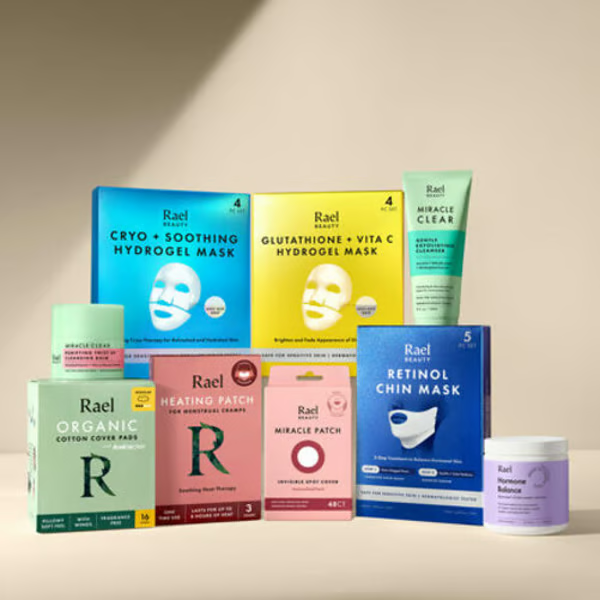
Founded in 2017 by three Korean American women, Rael offers feminine care, skincare and hormonal wellness products designed to support women through different stages of life.

As part of the partnership, Rael will work with TowerBrook to expand its distribution, continue developing its product portfolio and reach more consumers globally. The companies also plan to advance education around holistic cycle care.

“We started Rael because we believed women deserved better choices in period care, and that belief led us to pioneer holistic cycle care,” said Yanghee Paik, CEO and co-founder of Rael. 

“From our first conversation, TowerBrook understood the impact of our mission and believed in it as deeply as we do. Their track record of scaling founder-led brands while preserving their uniqueness makes them the ideal partner as we aim to serve more women around the world.”

Rael will continue to be led by Paik. John Replogle has also been appointed chair of the board, bringing experience from leadership roles at natural personal care and consumer brands including Burt’s Bees and Seventh Generation, as well as Unilever’s North American skincare business.

“Rael extends TowerBrook’s track record of investing behind products and services that help consumers live healthier lives and builds on the firm’s experience scaling emerging brands through periods of transformational growth,” said Michael Recht, managing director at TowerBrook. 

“Rael’s products have distinct positioning in women’s wellness, and we are excited to build upon the unique trust the brand has developed with consumers.”

Rael is headquartered in Los Angeles with an office in Seoul and has built an omnichannel presence across the U.S. and South Korea. It is available in more than 40,000 retail doors across the U.S. and Korea, including Target, Walmart, Ulta Beauty, CVS and Walgreens.

Prior to this investment, Rael raised $59 million in funding since launch. 

Copyright © 2026 FashionNetwork.com All rights reserved.

Tags: , , , , ,
Hormones, Fluid Balance & Your Lymphatic System

Hormones, Fluid Balance & Your Lymphatic System

Sometimes perimenopausal changes are obvious. Others are harder to put your finger on. You wake up looking puffier than usual. Clothes that fit comfortably one day feel snug the next. Sliding an Oura ring (or any ring) on and off your finger starts requiring a little more negotiation. Maybe you’ve even noticed that cellulite dimples look more noticeable.

Nothing dramatic happened – your body just seems to be handling fluid differently.

If this sounds familiar, there’s an overlooked part of perimenopause physiology worth talking about: how hormonal changes can influence your lymphatic system.

Estrogen and progesterone both influence how your body manages fluid, and it turns out that estrogen also directly interacts with the lymphatic system in some pretty interesting ways. (1) (2) Researchers are still working out exactly how all of those pieces come together during perimenopause, but we know enough to see that the systems are far more interconnected than previously understood.

Understanding that relationship can make some of these seemingly random changes feel a lot less random – and give us a clearer idea of how to support the body through them.

So let’s take a closer look at what your lymphatic system does, what we know about its relationship with perimenopause, and holistic ways to support healthy lymph flow through hormonal shifts.

As always, this is not medical advice and is not intended to diagnose or treat any condition. None of these statements have been evaluated by the FDA. Now let’s dive in.

Meet Your Other Circulatory System

When we think about circulation, blood usually gets most (if not all) the attention. But running alongside the cardiovascular system is another sprawling network with an equally important job: managing the fluid around your cells.

Your lymphatic system reaches throughout the body through a network of vessels, lymph nodes, tissues, and organs that include the thymus, spleen, and tonsils.

Here’s where the two circulatory systems meet. As blood travels through tiny capillaries, some fluid moves into the surrounding tissues, carrying oxygen, nutrients, hormones, and other substances to your cells. Much of that fluid eventually returns directly to the bloodstream – but not all of it.

The lymphatic system picks up what’s left behind, including excess fluid, proteins, and other material that need to be carried away from the tissues. (3)

Once that fluid enters a lymphatic vessel, it becomes lymph. From there, it travels through an extensive network of vessels and lymph nodes before eventually being returned to the bloodstream.

Even your brain has its own version of a rinse cycle that works closely with the lymphatic system. Called the glymphatic system, it uses cerebrospinal fluid to help carry metabolic waste and other byproducts away from the brain, especially during sleep.

So in a sense, the cardiovascular and lymphatic systems are partners: one delivers, while the other collects, recirculates, and helps keep the fluid environment around your cells in balance.

But fluid balance is only part of the lymphatic system’s job.

More Than a Drainage System

The lymphatic system is also an important part of your immune defenses. Lymph nodes act as gathering places where immune cells can encounter pathogens and other potential threats, helping the body decide when and how to respond.

As lymph moves through the body, it also carries proteins, cellular debris, and inflammatory signaling molecules away from tissues. (4) And in the digestive tract, specialized lymphatic vessels called lacteals absorb much of the dietary fat and fat-soluble nutrients we eat.

Also, although our two circulatory systems work together, they have some pretty unique differences. For example, your cardiovascular system has one central pump – the heart – but your lymphatic system doesn’t.

That doesn’t mean it just sits around waiting for us to move. Walking, muscle contractions, breathing, and changes in pressure throughout the body do all help move lymph along, but larger collecting lymphatic vessels contain smooth muscle of their own and rhythmically contract to help propel lymph forward.

So the lymphatic system is doing a lot more than draining excess fluid. It’s helping regulate the environment around your cells, supporting immune activity, transporting nutrients, and keeping lymph moving through the body.

And that brings us back to perimenopause. Because the lymphatic system is so involved in fluid regulation, changes in the hormones that influence both fluid balance and lymphatic biology may help explain why things can start to feel different during midlife.

What Do Hormones Have to Do With Lymph?

So what does all of this have to do with perimenopause – and why might our bodies suddenly seem to handle fluid differently?

There probably isn’t just one simple answer. Instead, research is uncovering several ways that reproductive hormones, fluid regulation, and lymphatic function connect.

  • Estrogen and progesterone influence fluid regulation. Both hormones affect the systems that regulate water and sodium, although they don’t necessarily do so in the same way. Estradiol can change when the body signals thirst and releases vasopressin, while also influencing blood volume and how fluid is distributed between tissues. Progesterone modifies some of those responses as well. (1)
  • Estrogen directly influences lymphatic biology. Experimental research shows that estrogen signaling – especially through ERα receptors – affects lymphatic endothelial cells (the cells that line lymphatic vessels), encourages new lymphatic vessel growth, helps maintain vessel stability, and supports repair after lymphatic injury. (5)
  • Progesterone interacts with lymphatic cells, too. Human lymphatic endothelial cells can metabolize progesterone and contain receptors that allow them to respond to steroid hormones. We don’t yet know exactly how that plays out during perimenopause, but it’s another indication that the hormonal and lymphatic systems are interacting at a cellular level. (6)
  • Lymphatic function appears to change with age and sex. In a study of 399 healthy adults, leg lymphatic pumping pressure declined with age, with a bigger drop seen in women of postmenopausal age. The study didn’t isolate the role of hormones, but the finding suggests that the menopause/aging transition may influence lymphatic function in women. (7)

There’s one more connection worth mentioning here: inflammation. Changing estrogen levels are associated with shifts toward more pro-inflammatory signaling during the menopausal transition. At the same time, the lymphatic system helps carry inflammatory signaling molecules, immune cells, and excess fluid away from tissues – an important part of resolving a local inflammatory response.

In other words, healthy lymphatic function becomes especially important during midlife – a time when the body may already be navigating a higher inflammatory load.

What This Means During Perimenopause

Taken together, the research suggests that perimenopausal fluid shifts are part of a bigger physiological picture. Our sex hormones influence systems far beyond reproduction, and fluid balance sits at an interesting intersection between fluctuating hormones and lymphatic function.

So while we can’t control every hormonal up and down in midlife, we can support the everyday processes that help the lymphatic system do its job.

Movement, muscle contractions, breathing, and other mechanical forces all help lymph move through the body, and there are other supportive approaches we can layer in as well.

From here, I’ll be sharing several ways to support healthy lymph flow, including herbs traditionally used for lymphatic support, a nourishing lymph-support tea, and simple everyday habits that help keep things moving.

✋ Before You Go, Grab This Free Midlife Guide

If you’ve ever found yourself thinking, “Why doesn’t my body respond the way it used to?” . . . this guide was written for you.

Midlife can change the rules for everything from sleep and energy to workouts, recovery, body composition, and more. Knowing what’s changing can help you let go of strategies that no longer fit – and start focusing on what supports your body now.

Inside, I’ll walk you through 10 things I wish I’d known sooner, so you can make more sense of what you’re experiencing and get clearer about where to go from here.

Enter your email below and I’ll send it right over. You’ll also receive my weekly newsletter with practical wellness tips, recipes, and new guides like this one.

Sources

  1. Stachenfeld, N. S. (2008). Sex Hormone Effects on Body Fluid Regulation. Exercise and Sport Sciences Reviews.
  2. Giersch, G. E. W., Charkoudian, N., Morrissey, M. C., Butler, C. R., Colburn, A. T., Caldwell, A. R., Kavouras, S. A., & Casa, D. J. (2021). Estrogen to Progesterone Ratio and Fluid Regulatory Responses to Varying Degrees and Methods of Dehydration. Frontiers in Sports and Active Living.
  3. Moore, J. E., Jr., & Bertram, C. D. (2018). Lymphatic System Flows. Annual Review of Fluid Mechanics.
  4. Schwager, S., & Detmar, M. (2019). Inflammation and Lymphatic Function. Frontiers in Immunology.
  5. Morfoisse, F., Tatin, F., Chaput, B., et al. (2018). Lymphatic Vasculature Requires Estrogen Receptor-α Signaling to Protect From Lymphedema. Arteriosclerosis, Thrombosis, and Vascular Biology.
  6. Klossner, R., Groessl, M., Schumacher, N., et al. (2021). Steroid Hormone Bioavailability Is Controlled by the Lymphatic System. Scientific Reports.
  7. Unno, N., Nishiyama, M., Suzuki, M., et al. (2012). A Novel Method of Measuring Human Lymphatic Pumping Using Indocyanine Green Fluorescence Lymphography. Journal of Vascular Surgery.

Share with a friend! 👇

Tags: , , , ,
Must-have skincare ingredients for every age group • PhilSTAR Life

Must-have skincare ingredients for every age group • PhilSTAR Life

Every now and then, a new beauty trend dominates our feeds—from must-have launches to formulas promising everything from glass skin to age-defying magic. It’s easy to get swept up when favorite creators swear by a product, but before adding that viral serum to your cart, ask yourself: Is it actually right for your skin—and your age?

Choosing skincare goes beyond picking a popular brand, believing bold marketing claims, or falling for pretty packaging and pleasant fragrances. The key to building an effective routine is paying attention and understanding a product’s ingredients.

If you’re wondering where to start, experts break down the science-backed ingredients your skin craves at every stage of life.

Embracing the journey of aging

Gone are the days when aging was treated like a crisis that needed constant fixing. Dr. Jarische Lao-Ang points out a cultural pivot, noting that people are finally ditching the fear of growing older and instead leaning into self-care that celebrates natural longevity. 

“I think with the advent of an emphasis on the importance of proper skincare or taking good care of yourself, people are now more leaning towards embracing what aging really is,” she told PhilSTAR L!fe.

Board-certified dermatologist Dr. Mai Diño-Yanga shared a similar view, saying, “Instead of treating wrinkles, laugh lines, or volume changes as problems to be erased, the pro-aging mindset treats them as normal, expected evidence of a life being lived, and it puts the focus back on skin health rather than skin ‘perfection.’ Skincare supports that by prioritizing function over correction,” she said.

She added that the focus is more on building healthy, resilient skin through proper care than aggressively treating wrinkles, emphasizing graceful aging over looking ageless.

Essential skincare ingredients for different ages

While you can build healthy habits at any age, early prevention creates the ultimate foundation for skin resilience. During the teenage years, puberty often brings oiliness and breakouts, making a minimalist approach best: a cleanser and sunscreen by day, paired with a cleanser and moisturizer at night. Salicylic acid or mild retinoids can be introduced to keep pores clear, but daily sun protection remains the absolute need.

In your 20s

Entering your 20s is the ideal window to establish habits that safeguard your skin long-term, Diño-Yanga, owner of Pacific Skin Bel-Air and MDY Skincare, said.

Both dermatologists emphasize that daily broad-spectrum SPF 30 or higher is a strict, “non-negotiable” step to prevent premature photoaging.

As natural collagen production quietly begins to slow down, this decade focuses on early defense. Niacinamide helps balance oil and strengthen the barrier, Vitamin C delivers essential morning antioxidant defense, and gentle alpha-hydroxy acids (AHAs) like lactic or glycolic acid keep cell turnover smooth.

In your 30s

By the time you reach your 30s, skincare becomes more targeted toward maintaining barrier strength and smoothing early fine lines, Lao-ang noted. This is often the decade to transition from gentle retinol to stronger retinoids, including prescription tretinoin, based on your skin’s tolerance.

To complement these powerful actives, hydration powerhouses like peptides, polynucleotides, and ceramide-rich moisturizers take priority to keep the skin firm, plump, and deeply nourished.

Meanwhile, Diño-Yanga explained that as collagen production gradually declines, ingredients like retinoids can help support collagen and improve skin texture. She added that vitamin C and peptides can help protect and support the skin, while a ceramide-rich moisturizer and daily SPF 30 to 50 remain important to maintain the skin barrier and prevent further damage.

In your 40s, 50s

In your 40s and 50s, natural collagen loss accelerates, cell turnover slows, and dryness becomes far more common due to hormonal shifts like perimenopause. Barrier repair and deep hydration become the main defense, Lao-ang said.

Look for rich formulas packed with hyaluronic acid, glycerin, and barrier-replenishing lipids like ceramides, cholesterol, and fatty acids. Antioxidants like vitamin C and exfoliating acids provide additional support.

Higher-strength retinoids and exfoliating acids still play a key role in boosting cell turnover, Diño-Yanga said, while tinted sunscreens offer necessary added protection against visible light that triggers stubborn pigmentation. Many individuals may also explore clinic-based treatments such as injectables and lasers, emphasizing that skincare should always be personalized based on each person’s needs and concerns.

Ingredients to use separately and those that work together

When building your daily routine, chemical compatibility is just as crucial as ingredient selection. Both dermatologists advised caution when using multiple strong actives together, as over-layering can lead to irritation and weaken the skin barrier.

Lao-Ang said beginners and those with sensitive skin should avoid combining retinol with hydroxy acids, vitamin C, or hydroquinone in the same routine since they can destabilize one another and irritate sensitive skin. Instead, these ingredients can be separated by time of day, such as using vitamin C in the morning and retinoids at night.

Similarly, ingredients like retinoids should also not be used together with AHAs, BHAs, or benzoyl peroxide, as it can reduce the former’s effectiveness while increasing dryness and irritation.

When paired correctly, certain ingredients can complement each other and improve results. Antioxidants like Vitamin C work synergistically with morning sunscreen to build an enhanced shield against environmental damage.

For improving texture and preventing signs of aging, she also recommended balancing retinoids with gentler ingredients such as niacinamide, cica, centella asiatica, ceramides, and hydrating ingredients like hyaluronic acid and glycerin.

Hyaluronic acid and exfoliating acids also complement barrier repair creams, allowing you to shed dead skin cells without stripping away vital moisture.

To keep things simple, Dr. Diño-Yanga advises separating strong actives by the time of day rather than layering everything into a single step.

“My general rule for patients: separate your strong actives by time of day rather than trying to layer everything into one routine. Antioxidants and SPF belong in the morning; retinoids and acids belong at night,” she said.

Both dermatologists emphasized that skincare is not a one-size-fits-all approach. Overall formulation also matters just as much as key ingredients—fragrances, preservatives, and conflicting active blends can still irritate skin even if a single component seems gentle.

Ultimately, effective skincare requires realistic expectations and a healthy dose of patience. Diño-Yanga dispels the widespread myth that skin becomes “addicted” to retinol, clarifying that stopping its use won’t cause sudden, accelerated aging; your skin simply returns to its natural aging rate.

“I think this myth genuinely keeps people away from ingredients that are well-studied, well-understood, and effective, out of a fear that isn’t backed by any real evidence. That’s the real cost of the myth, not that people age faster, but that they age without the tools that could have helped them,” she told L!fe.

Lao-Ang noted that the right ingredients, procedures when needed, and healthy lifestyle habits all play a role in maintaining skin health.

“Aging is really inevitable. Everyone ages, everyone matures. It’s just a matter of knowing how to take good care of yourself,” she said.

Tags: , , , , , ,
Hailey Bieber’s favourite skin barrier cream is now 43 per cent off

Hailey Bieber’s favourite skin barrier cream is now 43 per cent off

A humble-looking tube of French pharmacy skincare that has earned a cult following for its ability to comfort skin when it is feeling dry, irritated or generally unhappy.

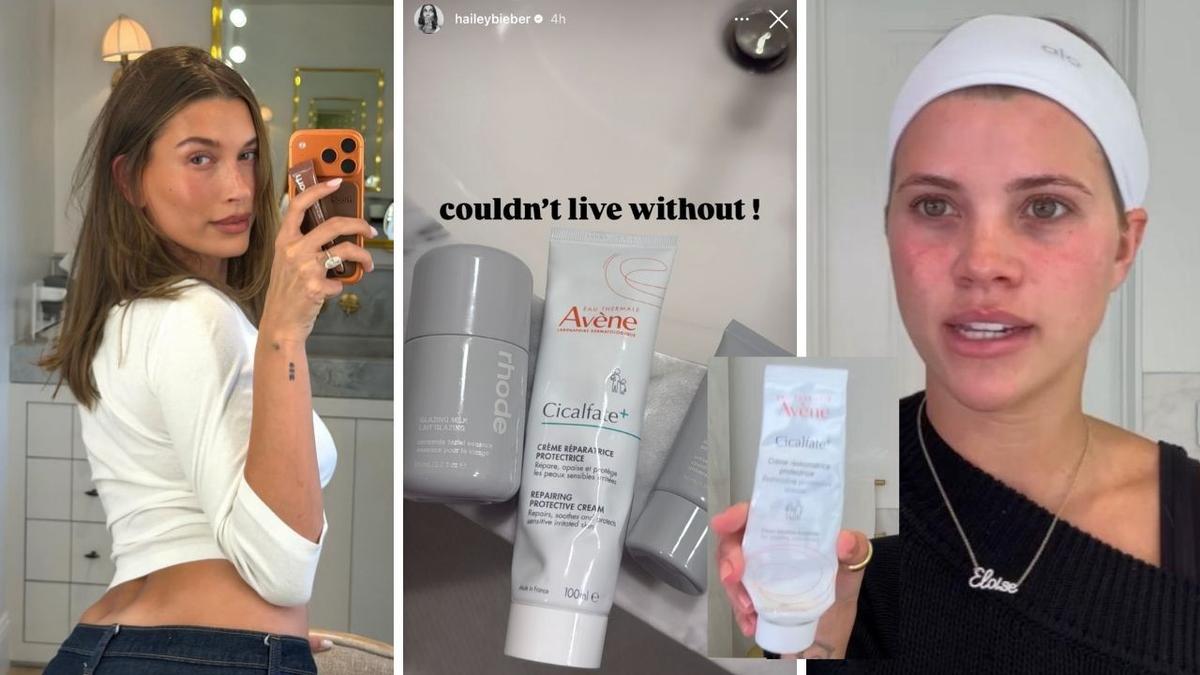
Avene Cicalfate+ Restorative Protective Skin Barrier Repair Cream is currently available for $23.99, down from $41.99, giving shoppers a 43 per cent saving.

And it is already proving popular, with more than 1,000 units bought in the past month.

Know the news with the 7NEWS app: Download today Arrow

The rich repair cream has also attracted plenty of celebrity attention, with Hailey Bieber and Sofia Richie among the names of celebrities who use the cult-favourite formula.

For anyone whose bathroom cabinet is filled with products promising brighter, smoother and more radiant skin, Cicalfate+ takes a different approach. Its job is to help skin recover.

This calming cream creates a protective barrier to lock in moisture. Credit: Instagram

That makes it particularly appealing when your complexion has been pushed a little too far by weather, shaving, beauty treatments or an overenthusiastic skincare routine.

Why everyone keeps reaching for Cicalfate+

The formula is designed to soothe uncomfortable, damaged and compromised skin while helping replenish the skin barrier.

According to Avene, the cream is clinically proven to repair the skin barrier four times faster, with visible improvement reported in as little as two days.

It is also designed to provide immediate hydration after the first application, while its rich, creamy texture spreads across the skin and leaves behind a protective layer.

Sofia Richie Grainge calls the barrier-supporting cream her “holy grail” product for glowing skin. Credit: YouTube/Avene

In other words, this is the sort of product that earns its place in the bathroom cabinet because it can be pulled out whenever skin starts behaving badly.

It can be used on both the face and body, and the brand positions it as a multi-purpose cream for everything from heat-affected skin and razor irritation to the nappy area, after tattoos and following superficial dermatological procedures.

For skincare minimalists, that versatility is a big part of the appeal.

The $24 deal is the part to know about

Right now, the Amazon deal brings the price down to $23.99 from $41.99.

That means shoppers are saving $18, or 43 per cent, on a product that is already attracting serious attention online.

One shopper summed up their experience simply, writing: “Best moisturiser!”

The combination of celebrity approval, strong shopper interest and a substantial discount makes this one of those skincare deals that is easy to understand. You do not need to completely overhaul your routine.

The cream works to support the skin through dryness, irritation and visible damage caused by everyday stressors. Credit: Avene

You simply add a hardworking barrier cream to the shelf for the days when your skin needs a little extra help.

And with more than 1,000 bought in the past month, it seems plenty of shoppers have already made their decision.

The beauty cupboard essential for irritated skin

No elaborate application ritual, no lengthy list of steps and no need to reserve it for one particular skincare concern.

It is a rich protective cream designed for dry, irritated or compromised skin, making it particularly useful for anyone who wants a dependable product to reach for when their complexion needs comfort rather than another active ingredient.

Celebs including Hailey Bieber are said to be fans of the Cicalfate+ Restorative Protective Cream. Credit: Avene

At $23.99, it is also considerably easier to justify than many of the prestige skincare products currently fighting for space on beauty shelves.

Celebrity endorsements and individual skincare experiences are not guarantees that a product will suit every complexion.

If your skin is persistently irritated or damaged, it is worth seeking advice from a qualified healthcare professional.

For everyone else, this could be the skincare bargain worth adding to the next Amazon order, particularly while the 43 per cent discount is still available.

Tags: , , , , , ,
Best oLive
Privacy Overview

This website uses cookies so that we can provide you with the best user experience possible. Cookie information is stored in your browser and performs functions such as recognising you when you return to our website and helping our team to understand which sections of the website you find most interesting and useful.