peppermint mocha creamer

Homemade Peppermint Mocha Creamer (Dairy-Free)

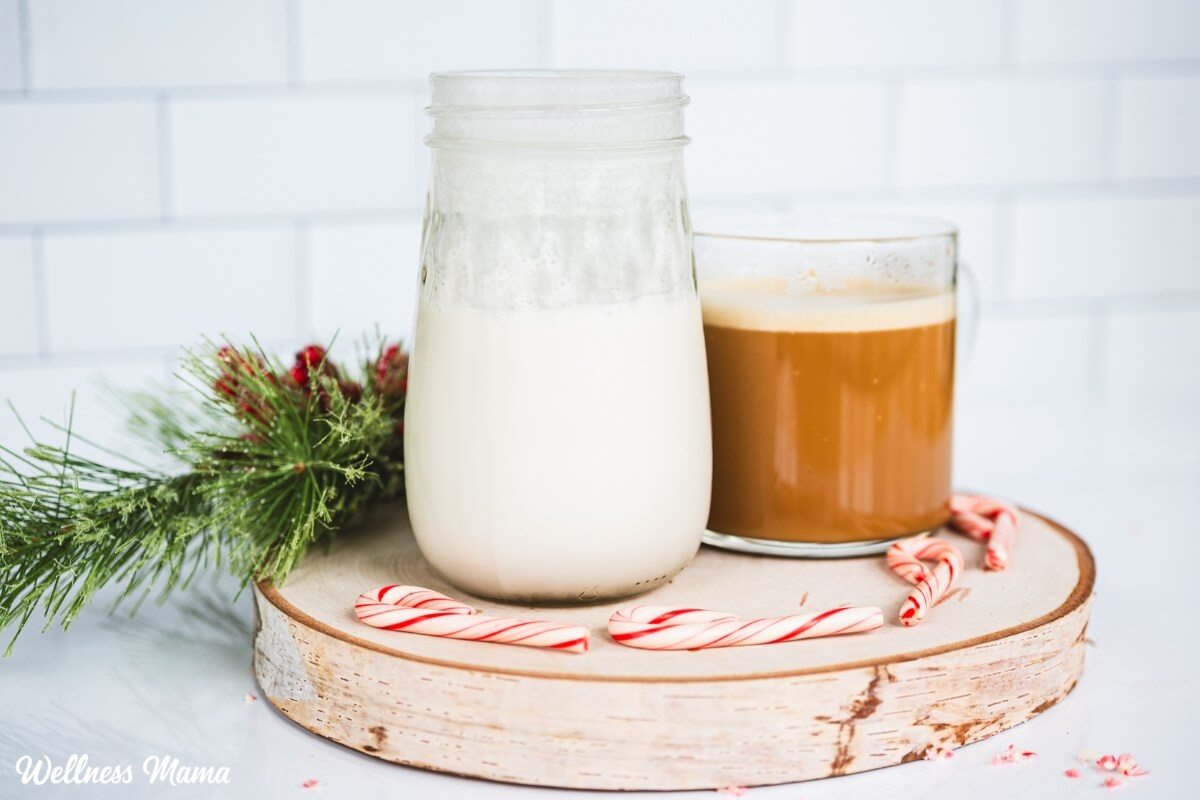
It’s no secret that I’m an avid coffee drinker, even if I don’t drink it everyday. I’ve written many posts on the health benefits and controversies of coffee and have a podcast episode on my favorite mushroom coffee. And I have lots (and I do mean LOTS!) of recipes for my favorite coffee shop style drinks. So when I realized I could easily make my own festive peppermint mocha creamer, I was thrilled!

Peppermint Mocha Creamer

Store-bought coffee creamer comes in so many fun flavors. There’s the Chobani peppermint mocha creamer and even Starbucks has their own line of creamers. It’s kind of a bummer they’re so full of ingredients I try to avoid. Ingredients like carrageenan, high-fructose corn syrup, and hydrogenated oils.

And while many stores now have simpler coffee creamer with cleaner ingredients, they still have some downsides. This healthier peppermint mocha creamer is simple, easy, and tastes even better!

Dairy-Free Creamer Options

This coffee creamer is paleo and dairy-free thanks to its coconut milk base. I prefer using coconut milk for my peppermint mocha creamer since it’s naturally so thick and creamy. I like to add healthy fats to my coffee anyway. If you’d rather use a different milk, feel free. Oat milk and cashew milk are especially creamy options. 

I add a little peppermint extract for flavor and maple syrup for natural sweetness. If you’re looking for a sugar free peppermint mocha creamer, try liquid stevia instead. Both the sweetener and flavor can be adjusted to suit your tastes. Want to try a different flavor? Simply swap out the peppermint for another extract, like vanilla, almond, or orange. 

Peppermint Mocha Creamer Recipe

Dairy-free coffee creamer made with coconut milk, peppermint extract, and a touch of maple syrup.

  • Warm the can of coconut milk in a bowl of hot water for about 5 minutes to make it easier to pour.

  • In a pint-size mason jar, combine the coconut milk, peppermint extract, and maple syrup.

  • Put a lid on the mason jar and shake vigorously to mix.

  • Stir into coffee or milk for a festive treat.

  • Store leftovers in the refrigerator and use within 7-10 days.

Nutrition Facts

Peppermint Mocha Creamer Recipe

Amount Per Serving (2 TBSP)

Calories 76
Calories from Fat 63

% Daily Value*

Fat 7g11%

Saturated Fat 6g38%

Polyunsaturated Fat 0.1g

Monounsaturated Fat 0.3g

Sodium 5mg0%

Potassium 97mg3%

Carbohydrates 4g1%

Fiber 0.5g2%

Sugar 2g2%

Protein 1g2%

Vitamin C 0.3mg0%

Calcium 11mg1%

Iron 1mg6%

* Percent Daily Values are based on a 2000 calorie diet.

  • Feel free to adjust the peppermint and syrup up or down to suit your tastes.
  • Omit the cocoa powder if you just want a peppermint creamer.

How to Use Homemade Coffee Creamer (of Any Flavor!)

The most obvious is, of course, to stir it into a fresh cup of coffee. However, there are a lot of other tasty options as well. I like to use it in leftover chilled coffee or cold brew coffee. It’s also great in tea without the cocoa powder if you’re more of a tea drinker.

My kids love it added to hot chocolate or just cold milk for a festive treat. You can also add it to homemade vanilla ice cream to make a shake.

Try a batch of this healthy creamer with vanilla extract instead of mint over steel cut oats for breakfast. I bet this recipe for gingerbread creamer would be delicious that way too!

More Homemade Hot Beverages to Try

When you’re longing for a hot and tasty beverage (that doesn’t cost $7 or more!) try these:

Side note: Don’t throw out your used coffee grounds — they have lots of uses!

Do you make your own coffee creamer? What’s your favorite flavor?
Tags: , , , ,
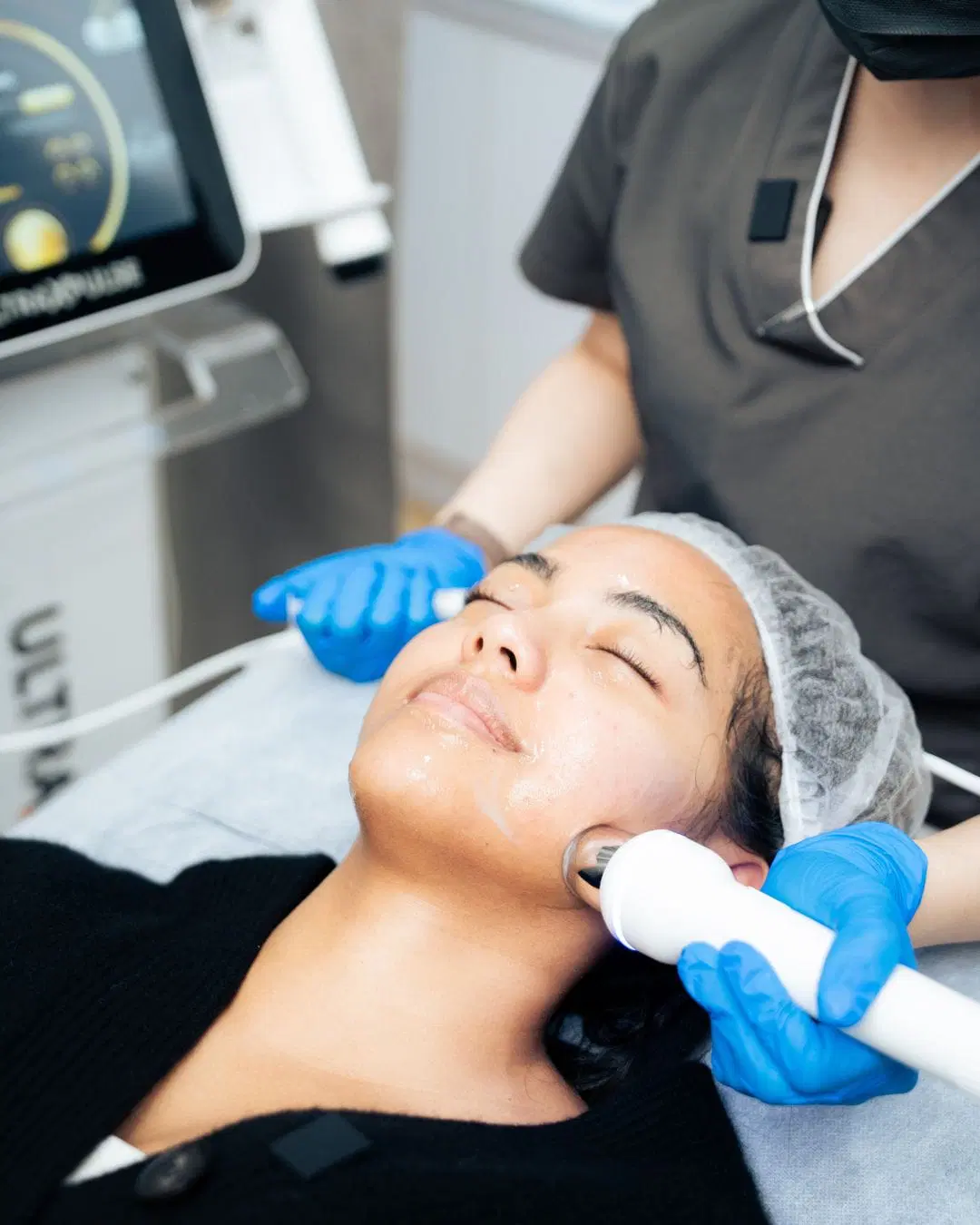
Wellness Awards 2025: Best PICOPULSE™ Treatment

Wellness Awards 2025: Best PICOPULSE™ Treatment

The Beauty Director at Harper’s BAZAAR Malaysia, Alisha first set her sights on a career in sports journalism before pivoting to beauty during her university years—and she’s stayed in that lane ever since. While her love for sports remains strong (these days, purely from the stands), she’s found her true calling in the beauty and wellness space. Equal parts storyteller and trend spotter, she believes that a good lip combo and a great skincare routine can change more than just your mood.

Tags: , , ,
Menstrual facial TikTok trend decoded: CDC and WHO raise red flags and explain what period blood skincare gets wrong

Menstrual facial TikTok trend decoded: CDC and WHO raise red flags and explain what period blood skincare gets wrong

Menstrual facial skincare trend on TikTok: What is really going on

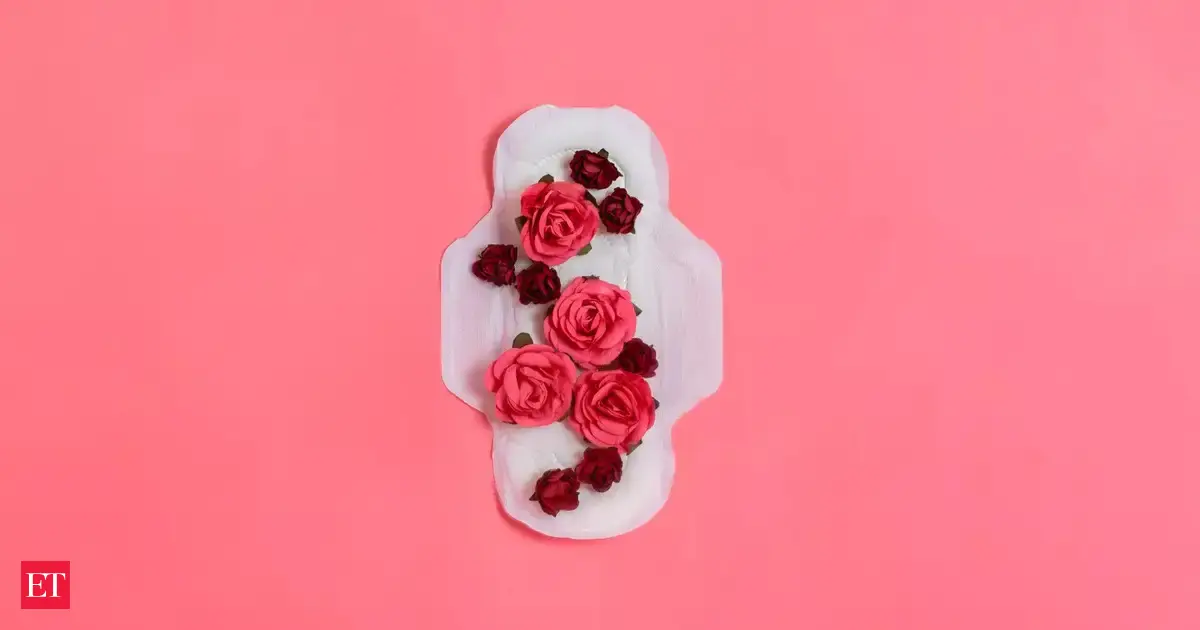
The beauty ecosystem is no stranger to bizarre experiments that go viral overnight, but the menstrual facial trend has pushed the boundary of shock content yet again. TikTok creators are applying their own period blood on their faces as a perceived glow-inducing mask. Influencers are positioning it as natural, potent, and regenerative. The truth is far more complicated. As the hype escalates, consumers need grounded information to cut through the noise and protect their skin health.

Why the menstrual facial trend gained traction

TikTok thrives on novelty-driven virality, and the menstrual facial checks every box. It is raw, visually arresting, and positioned as a secret wellness ritual. For young viewers navigating a crowded skincare landscape, anything marketed as natural often carries instant appeal.
There is also a cultural shift where more creators are dismantling stigma around periods. While this conversation is important, blending it with unverified skincare experiments is a slippery slope. Many users adopt the trend without understanding the biological composition of menstrual blood or the risks of applying it to the skin. The result is a perfect storm where empowerment messaging merges with misinformation.

What menstrual blood contains

Contrary to viral claims, menstrual blood is not simply blood. It is a mixture of blood, vaginal secretions, uterine tissue, bacteria, and cellular debris. It is not sterile. Dermatologists emphasise that anything containing bacteria or pathogens should never be introduced to the skin barrier.

Supporters argue that menstrual blood contains stem cells and growth factors. However, the presence of these elements does not translate into topical skincare benefits. There is no evidence that applying menstrual fluid externally supports collagen regeneration, reduces acne, or accelerates healing. These claims are speculative, not clinically validated.

Live Events

Why dermatologists are sounding the alarm

The US Centers for Disease Control and Prevention (CDC), in its Bloodborne Infectious Diseases-Occupational Safety and Health Topics (NOISH) page, states that” Blood and certain body fluids can contain bloodborne pathogens, including hepatitis B virus (HBV), hepatitis C virus (HCV), and human immunodeficiency virus (HIV). Exposure to these fluids can pose a transmission risk”.In other words, human blood is not a beauty ingredient; it is a biohazard unless handled with medical-grade precautions. The World Health Organisation (WHO), in its Blood Safety guidance, reinforces the same standard: ‘Safe handling of blood and body fluids is central to infection prevention and control. Policies and practices are required to reduce the risk of transmission of bloodborne pathogensThere is also a strong biohazard element. Bodily fluids can transmit harmful microbes. Even one’s own menstrual fluid can become contaminated once outside the body. This is why dermatology protocols use sterile environments for any procedure involving biological materials. Using menstrual blood at home does not meet any safety standards and introduces unnecessary risk.

The psychology behind shock value skincare

The rise of shock skincare reflects how the digital attention economy is evolving. Outlandish rituals outperform traditional beauty content because they provoke reactions. This pushes creators to escalate extremes to stay relevant. Consumers, especially younger ones, often confuse virality with legitimacy. A trend that garners millions of views appears credible by volume alone, even when it is scientifically unsound.

This behaviour mirrors previous online fads such as toothpaste acne masks, sunscreen contouring, and lemon juice brightening. All these trended for their visual impact rather than efficacy. The menstrual facial is simply the latest entrant in this cycle of spectacle over science.

What the trend reveals about misinformation in beauty

The menstrual facial wave highlights a broader industry issue. Skincare consumers are drowning in DIY advice, home remedies, and pseudo-science disguised as empowerment. Social media accelerates this misinformation at scale. Users rarely cross-check claims with qualified experts. When creators use charged language like natural, organic, or holistic, they easily bypass scrutiny.

Platforms are now facing pressure to regulate unverified health and beauty content. Dermatologists, meanwhile, are calling for stronger public literacy around ingredients, hygiene, and safety protocols.

Science-backed alternatives to achieve real skin benefits

Instead of chasing shock trends, consumers can invest in proven and safe methods to support skin health. These include:

  • Professional-grade exfoliation through AHAs or BHAs for glowing skin
  • Clinically validated ingredients like retinol, niacinamide, and vitamin C for rejuvenation
  • Hyaluronic acid serums for hydration
  • Peptide based formulations for anti-ageing support
  • Regular SPF use for protection

These methods are evidence-driven and aligned with dermatology standards. They deliver real results without compromising safety.

The menstrual facial trend may be visually sensational, but it does not translate into real beauty benefits. Skincare should be built on scientific credibility, not shock factor. As consumers become more discerning, they must adopt a critical mindset when engaging with wellness trends online. Viral does not equal valid.

What the beauty community needs today is transparency, accuracy, and responsible experimentation. The menstrual facial offers none of these. Instead of glorifying unverified hacks, the future of skincare lies in informed choices backed by research and guided by experts.

Add as a Reliable and Trusted News Source

Tags: , , , , , , , , , , , , ,
Avoid these skincare mistakes: Tips for a balanced routine

Winter skincare routine: 5 tips to keep your skin healthy

Prepare skin for winter with skincare tips: learn how to adjust your daily routine to stay hydrated and avoid dryness and irritation.

Does your skin feel more dry and sensitive when the season changes from summer to winter? Just like we change our clothes for warmer ones and enjoy heavier meals, we also need to adjust our winter skincare routine for the season. Our skin needs special care, and this change is important for keeping it healthy and preventing the dryness and irritation winter can bring.

Many of us hold on to our favourite summer skincare products even when we no longer need them in our winter skincare routine. “Foaming cleansers and lightweight moisturisers that worked well in warm weather can harm your skin as the weather gets colder,” Dr Harkanwal Sekhu, Dermatologist, tells Health Shots. These products can strip the skin of its natural oils, leading to dryness, tightness, and irritation.

Why does skin change in winter?

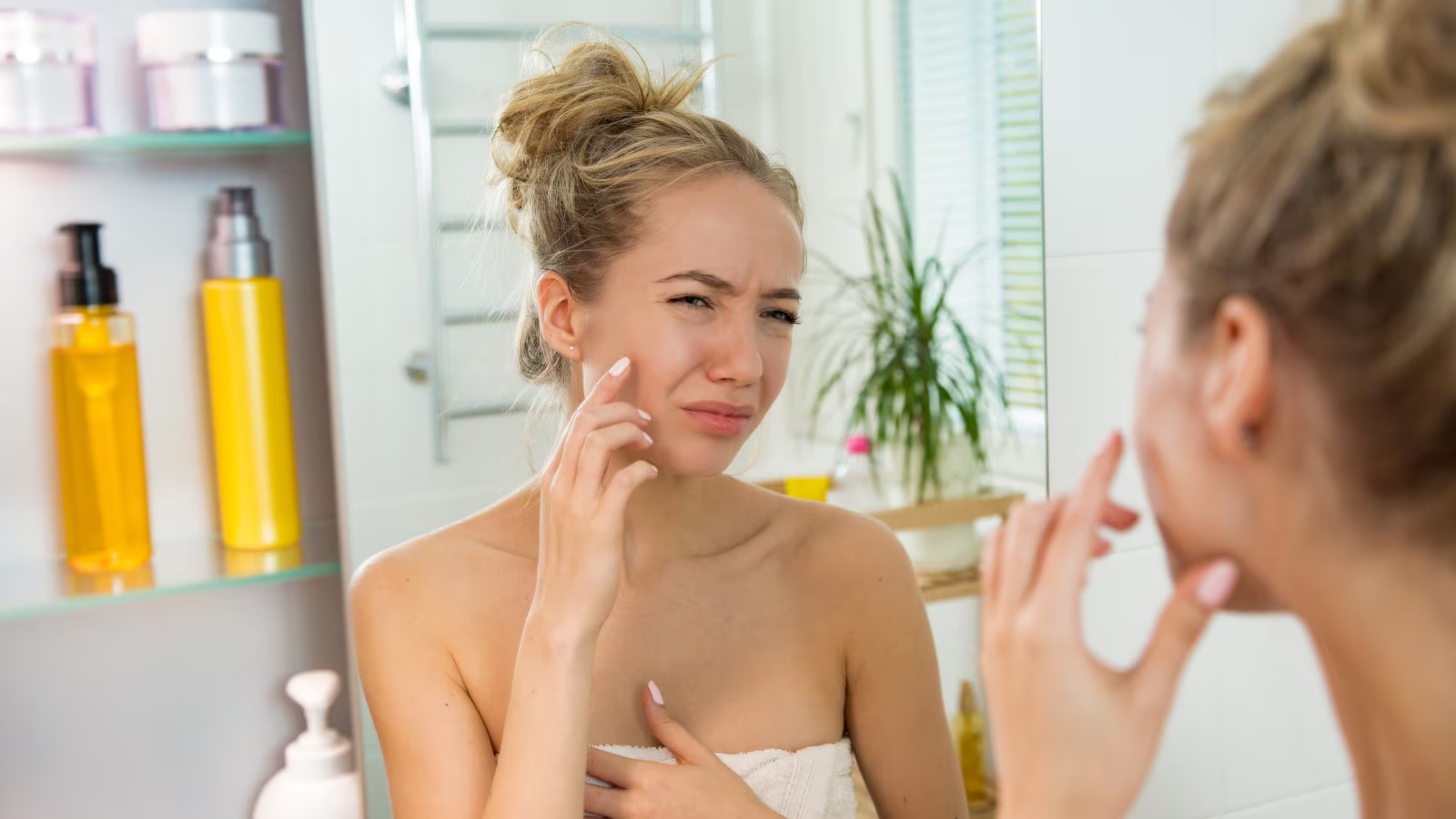
In summer, heat and humidity increase oil production. So, lighter, oil-free products work well. But in winter, cold air and indoor heating can cause problems. These conditions deplete your skin’s moisture and weaken its natural barrier, which helps protect against dryness and irritation. “When the barrier is compromised, your skin becomes more susceptible to problems like redness, sensitivity, and roughness”, warns Dr Sekhu. You might even notice fine lines and breakouts, due to increased dryness and inflammation.

How to change your skincare routine for winter?

Switching your skincare products with the seasons is important for maintaining healthy skin.

  1. Face wash

To get your skin ready for winter, start with your face wash. Those foaming cleansers that felt great in summer can dry out your skin in winter. “Instead, choose hydrating, sulfate-free cleansers with ingredients like glycerin, ceramides, and aloe vera. These options clean your skin well without removing its natural moisture,” says the dermatologist. It’s important to avoid products that have alcohol or strong scents. These ingredients can worsen dryness and irritation, which you want to avoid during the cold winter months.

Moisturise after applying the face scrub. Image courtesy: Adobe Stock

2. Moisturiser

When winter comes, your skin needs more hydration. It’s a good time to change your moisturiser. Dr Sekhu recommends “moving from light gel moisturisers to thicker cream-based ones. Look for ingredients like shea butter, squalane, and hyaluronic acid.” These ingredients provide deep hydration, retain moisture, and help soothe inflammation.

Dr Sekhu says, “Your skin needs more support and nourishment in winter.” Cream-based moisturisers help by adding hydration and forming a protective layer against cold weather and dry indoor air. If you have very dry or sensitive skin, try adding a hydrating serum under your moisturiser for extra moisture.

3. Sunscreen

Many people think they don’t need sunscreen when the sun isn’t shining brightly. However, ultraviolet rays can harm us year-round, making it essential to include sunscreen in your winter skincare routine. In fact, UV exposure can increase in winter because the rays bounce off snow and clouds. Dr Sekhu advises, “Always use a broad-spectrum sunscreen with SPF 30 or higher, even in winter.” Choose a sunscreen that also provides moisture to protect your skin from the sun and dry winds.

4. Exfoliate

Exfoliation is important for keeping your skin smooth by removing dead skin cells, especially in your winter skincare routine. However, during winter, be careful about overexfoliation. “Over-exfoliating can damage your skin barrier, so limit your exfoliating treatments to once or twice a week. Use gentle exfoliants, such as lactic acid or enzyme-based scrubs,” says the doctor. These will help you achieve glowing skin without the risks posed by harsher scrubs.

5. Don’t forget your lips and hands

Lips and hands often get neglected in a winter skincare routine. Their delicate skin can dry out easily, causing chapping and cracking. “Keep a hydrating lip balm handy to keep lips moisturised. Apply a nourishing hand cream often, especially after washing your hands,” shares the expert. These simple steps can help protect your skin from winter dryness.

You may also like

Dr Sekhu offers a helpful comparison: “Think of skincare like seasonal eating. Just as our diets change with the seasons, choosing warm soups and healthy nuts in winter, our skincare routines should also change.”

Tags: , , , , ,
Your Guide to Seasonal Beauty Trends & the Best Makeup Products

Your Guide to Seasonal Beauty Trends & the Best Makeup Products

It’s 2025, and a lot of beauty trends are there, so you have different fun new looks to try. So if you are eager to know about what’s popular this year, you can choose a makeup look of your choice from below and enhance your whole look.

Let’s explore the top beauty trends of 2025 and see how you can create them using the best makeup products for every style.

Let’s get started

1. Natural Makeup look

Who doesn’t want a natural, dewy skin? This year, natural glowing skin is ruling the makeup trends and is here to stay. Just-out-of-the-shower glow is something everyone wants. For a good, radiant skin, start by applying a good moisturizer and a good hyaluronic acid serum. This will plump your skin and make it soft and hydrated. Next, use an illuminating primer.

It adds a subtle sheen that makes your makeup sit beautifully and gives your face that healthy, lit-from-within look.

When it comes to coverage, keep things light. A tinted moisturizer or a breathable foundation is perfect for letting your real skin shine through. And of course, no dewy look is complete without a touch of cream blush. Just tap it onto your cheeks for that natural, fresh-faced flush.

With this simple combo, you’ll have a glowing, youthful look that turns heads without even trying. It’s easy, effortless, and absolutely gorgeous.

2. Bold & Bright Eye Makeup

Nude eye shadows were a lot in trend, but guess what, now Bold eyeshades are back! Beautiful neon liners, shimmer pigments, and extra long wings are trending in 2025. This trend is fun, fearless, and perfect for making a statement.

The best eye makeup products for this trend are pretty vibrant eyeshadow palettes, smudge-proof colored liners, and mascaras that lift and define. Don’t overthink before applying bold eyeshades – the bolder, the better.

3. Eco-friendly makeup

Beauty lovers have become aware about what they use, and brands are responding. Sustainable, eco-friendly, and cruelty-free. Not only does it focus on following the trend, but it also focuses on using things responsibly.

Hence, Consumers now prefer makeup with recyclable packaging, natural ingredients, and clean formulations. Products like bamboo makeup brushes, vegan lipsticks are good to the skin as well as the planet.

4. Monochromatic look

The monochromatic look means using the same color on your eyes, cheeks, and lips, giving a more beautiful look. It’s everywhere right now. It’s simple, stylish, and always looks put together.

For this look, you can choose colors like rosy pinks, bronzy tones, peaches, or mauves. These pretty and subtle colors work well for both everyday makeup and special events. One best things about this look is that you can use one product in three different ways.

5. Makeup with skincare benefits

Now people have become more responsible, and hence they choose makeup that has ingredients like hyaluronic acid, niacinamide, vitamin C, peptides, and SPF. These keep your skin healthy while you look beautiful. Makeup products like skin tints, hydrating concealers, SPF-filled lip oils, and foundations. Choosing the best skincare products with benefits makes your skin healthy. Choosing this type of makeup won’t cause any allergies or rashes as well.

6. Nail Art

Who doesn’t want beautiful nails? They have become a fashion statement today. Especially Graphic nail art that has geometric patterns, swirls, and chrome finishes. Celebrities are wearing it on the red carpet and showing off beautifully. Even though nails aren’t makeup, matching your nails with the right makeup keeps you put-together.

7. Natural Brows Are Back

Now is the trend of natural brows and not sculpted brows. Your brows should be fluffy and well brushed up, which gives them a natural shape. To get this look, first brush your eyebrows and then apply brow gels and fine-tip brow pencils. The best makeup products for natural brows are the ones that add texture, not heaviness.

8. Flushed Cheeks

This year, Rosy, flushed, has been a lot in trend. Blush cheeks give you a radiant and pretty skin, making your face more youthful. You can try blushes from soft pinks to reds, which gives you a more natural finish. You can also check out cream and liquid blushes as they blend perfectly with your skin. This gives you a more subtle look.

9. Statement Lips

Natural makeup with bold lips is back in trend after a while. Applying bold colors like bold, eye-catching cherry red, plum, berry, chocolate brown, and even orange will make you look good. Whether you apply a matte finish or a gloss, statement lips instantly lift any look.

The best makeup products for this look are matte lipsticks, lip stains, and lip glosses, which are rich in pigment. Pair bold lips with minimal eye makeup for a polished, modern vibe.

10. Minimalist Skincare Routines

Minimalistic makeup look has been the most used makeup look of the year. People do not want to go with complicated routines and keep their makeup simple yet classy. For this look, you just need a gentle cleanser, moisturizer, SPF, and maybe one active ingredient. If your skin is balanced and healthy, the makeup looks more put-together. Minimalist skincare means no fuss – just fresh, healthy skin.

Final Thoughts

In 2025, various trends emerged. You’ve got to see it all, from minimalist makeup to all glam. Everybody experimented with bright eyes, bold lips, and radiant skin. Choosing the best makeup products helped to achieve flawless makeup.

Beauty is personal – so explore, play, and find what makes you feel effortlessly confident.

Tags: , , , , ,

Bengaluru dermatologist reacts to women smearing period blood on face for glow: Is this bizarre beauty trend safe?

Menstrual masking is a DIY skincare trend that has been seen on social media, where in women apply their menstrual blood to their face as a face mask, claiming it gives them glowing, healthy-looking skin. Also read | Beauty influencers are using lube as primer for glowing skin: Here’s what experts say about this bizarre skincare trend

Have you heard of the DIY skincare trend that involves applying menstrual blood to your face? What is ‘menstrual masking’ and is it safe? Find out. (Representative picture: Freepik)

The idea behind this trend is that menstrual blood contains stem cells, proteins, and cytokines that can help repair skin, reduce inflammation, and boost collagen production. However, dermatologists and experts are warning against this trend, citing several risks.

Menstrual masking trend: what’s the hype?

In an interview with HT Lifestyle, Dr Shireen Furtado, senior consultant in medical and cosmetic dermatology at Aster CMI Hospital, Bengaluru, strongly advised against blindly following this beauty trend.

She said, “Menstrual masking is a trend where people use their own period blood as a face mask, but as doctors we strongly warn against this practice because it is not safe, not clean, and not backed by scientific proof, since menstrual blood is not sterile and can contain bacteria, fungi, and other germs that may cause skin infections, breakouts, irritation, or even more serious complications when applied on the face, especially on pimples, open pores, small cuts, or sensitive areas.”

Dr Furtado explained: “In reality, raw menstrual blood also contains dead tissue, inflammatory cells, and waste products that can actually cause more irritation and worsen skin problems instead of improving them, and unlike medically approved treatments like PRP, where a person’s blood is drawn, processed, and applied safely using sterile tools, menstrual masking has no clear method, no clinical research, and no safety guidelines for how much blood to apply, how long to leave it on, or how often to use it, which makes the trend unpredictable and potentially harmful.”

Why it’s not worth the risk

According to Dr Furtado, it’s essential to prioritise skin safety and hygiene over viral trends. Instead, consider using science-backed skincare products and consulting with a dermatologist for personalised advice, she added.

“The risks are much higher than any expected benefit, and there is no strong evidence to show that this practice can brighten the skin, reduce acne, or slow aging in any meaningful way, so from a medical point of view, menstrual masking is simply not worth trying because the chances of infection, irritation, and long-term skin damage are too high, and people who want healthy, glowing skin should rely on proven skincare treatments, good hygiene, and guidance from qualified dermatologists instead of unsafe DIY trends that can put their skin and overall health at risk,” she shared.

Note to readers: This article is for informational purposes only and not a substitute for professional medical advice. Always seek the advice of your doctor with any questions about a medical condition.

Tags: , , , , , , , , , , , ,
Best oLive
Privacy Overview

This website uses cookies so that we can provide you with the best user experience possible. Cookie information is stored in your browser and performs functions such as recognising you when you return to our website and helping our team to understand which sections of the website you find most interesting and useful.