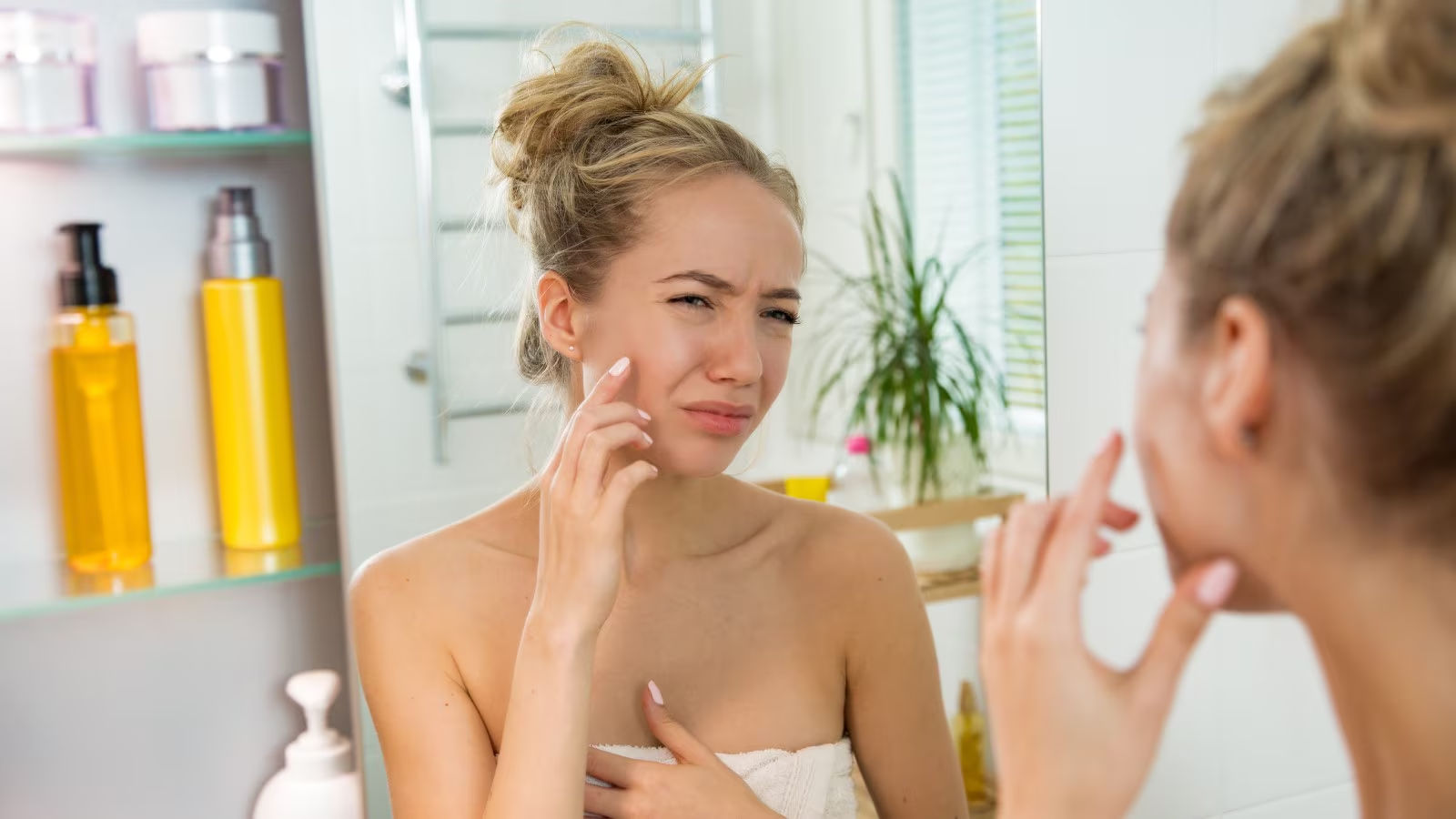
Dr Natalie’s Top Ten Anti-Aging Tips to Stay Radiant and Youthful 

Dr Natalie’s Top Ten Anti-Aging Tips to Stay Radiant and Youthful 

Ageing isn’t something you can stop – but you can absolutely manage how you age. While some signs of ageing are natural, many others can be delayed with smart choices. According to Dr Natalie Geary, one of the UK’s most respected aesthetic doctors, small daily habits can have a lasting impact on how you age. 

Dr. Geary is the Founder and Medical Director of Light Touch Clinic Surrey, a well-known doctor-led clinic in the South West of London. She has been at the forefront of non-surgical aesthetic care for over 17 years, having treated more than 20,000 patients and performed hundreds of thousands of procedures. 

Her advice draws from years of clinical practice and patient outcomes – offering practical ways to maintain a youthful appearance through every stage of life. 

Below are Dr. Natalie’s ten tips for staying radiant and well-supported in how you age. 

1. Prioritise restorative sleep 

Poor sleep shows on your face faster than anything else. Data from Oxford Academic research shows that people who do not sleep well tend to age faster and have weaker skin protection.  

Dr Natalie recommends 7 to 9 hours of quality sleep every night. While you sleep, your body goes into repair mode. Skin cells regenerate. Collagen production increases. And your natural glow is restored. 

She personally uses a sleep tracker to monitor her rest patterns. Tools like this can help you build better habits and wake up refreshed. 

2. Manage your stress before it ages you 

Long-term stress increases cortisol. It is a steroid hormone which breaks down collagen. This causes fine lines and dull skin. Dr Natalie recommends meditation, light exercise, and herbs like Ashwagandha to help balance your stress levels naturally. 

Even a short daily walk or 10 minutes of deep breathing can make a difference. Smile more, worry less – it is the cheapest anti-wrinkle solution out there. 

3. Focus on colourful, home-cooked food 

Your skin reflects what you eat. A diet high in fresh vegetables, fruits, nuts, and whole grains helps fight oxidative stress. These foods contain antioxidants, which slow down the cellular ageing process. 

Instead of sticking to the usual greens, Dr Natalie includes a variety – like peppers, berries, and leafy herbs – to get a full range of nutrients. So, make sure you cook fresh, eat colourful, and avoid ultra-processed foods. 

4. Don’t skip strength training 

As you age, you lose muscle. This lowers your metabolism and can lead to unwanted weight gain. Strength training helps maintain muscle mass. More muscle means better posture, fewer injuries, and tighter-looking skin. 

Harvard research suggests that regular strength training may help slow biological ageing compared to a sedentary lifestyle. 

Dr Natalie recommends lifting light weights twice a week. You don’t have to spend hours in the gym, but it is important to be consistent.  

5. Hydrate, hydrate, hydrate 

Dehydration is one of the fastest ways to dull your skin. Drink at least 6 to 8 glasses of water a day. You will notice your skin looks plumper, softer, and brighter. 

For a hydration boost, Dr Natalie also suggests products with hyaluronic acid – often found in high-quality fillers and cosmetic injectables. 

6. Wear sunscreen – Even in the UK 

Yes, even on cloudy days. 

Sun exposure is the biggest external factor in premature ageing. SPF 30 or higher is non-negotiable, says Dr. Natalie. She applies it every morning after moisturising. 

However, she also advises getting 20 minutes of morning sun without sunscreen for natural vitamin D. After that – it protects your skin. 

7. Stick to a reliable skincare routine 

Dr Natalie’s personal skincare formula is quite simple – 

  • A gentle cleanser (ZO cleanser) 
  • ZO exfoliating polish twice a week 
  • Skinceuticals CE Ferulic and Skinceuticals HA Intensifier 
  • Vitamin C serum in the morning 
  • Hyaluronic acid serum at night 

She prefers evidence-based products from medical skincare brands. If you are unsure what suits your skin, visit Dr Natalie’s aesthetic clinic for expert consultation.  

8. Don’t neglect vitamin D 

Most people in the UK are deficient, especially during winter. 

Vitamin D affects more than just your bones – it also influences your mood and skin health. A supplement may help if you are not getting enough sun. 

Dr Natalie takes a small daily dose and recommends regular blood tests to monitor your levels. 

9. Surround yourself with positivity 

The people you spend time with affect how you feel – and how you look. 

Being around uplifting, positive people reduces stress, helps you sleep better, and even makes your face look softer and more relaxed. 

Join a local group, reconnect with friends, or try something new. Mental well-being shows up in your physical appearance. 

10. Keep learning and moving forward 

Trying new things keeps your brain young and your spirit alive. 

Dr Natalie recently took up surfing and travelled to Costa Rica to try new things and keep her adventurous spirit alive. New experiences keep you mentally and emotionally energised. 

So take a class, start painting, or book that trip you have been dreaming about. 

How Light Touch Clinic can help? 

If you are looking for expert advice on slowing down ageing, Light Touch Clinic in Weybridge is one of the South West’s most trusted names. 

This award-winning doctor-led clinic offers advanced aesthetic treatments in a calm, luxury setting. From anti-wrinkle solutions to lip fillers and non-surgical facelifts – everything is handled by medical professionals. 

What sets this aesthetic clinic apart?  

  • Every treatment is overseen by a qualified doctor 
  • The focus is on natural-looking results 
  • They only use FDA-approved products 
  • You get a personalised plan as per your skin goals 

The clinic has built its reputation on safe, evidence-based treatments – from cosmetic injectables to collagen-boosting skin therapies. Their fillers are expertly administered to lift, contour, and soften facial features – without overdoing it. 

If you are in Surrey or nearby areas like Richmond, Kingston, or Wimbledon, it is worth visiting this local gem. 

Final thoughts 

Dr Natalie’s tips are simple but incredibly effective. Sleep well, eat better, move often, protect your skin, and consider support from professionals when needed.  

You can also try anti-ageing treatments offered by aesthetic clinics to look young. Nowadays, there are many advanced treatments available like, derma fillers, laser therapy, injectables, facials and more. But when it comes to trusting someone with your face, choose a doctor-led clinic like Light Touch Clinic Surrey. 

Your best years aren’t behind you – they are ahead. 

Photo by National Cancer Institute on Unsplash

Tags: , , , , , , ,
Why we shouldn’t forget the powerful story of hair, make-up and fashion

Why we shouldn’t forget the powerful story of hair, make-up and fashion

Nov 19, 2025 – 5.00am

Gift this article

Subscribe to gift this article

Gift 5 articles to anyone you choose each month when you subscribe.

Subscribe now

Already a subscriber? Login

Recently, my 12-year-old asked me where I shopped for beauty products when I was her age. The answer was brief and will no doubt resonate with anyone Millennial or older – I didn’t.

Beauty has changed in ways that I never could have predicted. When I was a curly-haired pre-teen, the only way to tackle my frizz was to use a supermarket brand that slicked it down to my scalp. I owned exactly one eyeshadow. It was purple, and I stole it from my mum (who, in my defence, would never have worn that colour, with good reason).

Loading…

Tags: , , , , , ,
10 habits to adopt if you want to stay good-looking in your 60s and beyond

10 habits to adopt if you want to stay good-looking in your 60s and beyond

My grandmother is 76 and still turns heads at the farmers market. Not because she’s had work done or follows some expensive skincare regimen, but because she radiates this energy that makes you want to know her story.

She moves with purpose. She laughs easily. Her skin has lines, sure, but they’re the kind that tell you she’s lived fully.

Watching her navigate life has taught me something important: looking good as you age has less to do with fighting the clock and more to do with how you treat yourself along the way.

The choices we make in our 40s shape how we show up in our 60s and beyond. And I’m not talking about drastic measures. I’m talking about daily habits that compound over time.

Here are ten habits worth adopting now.

1) Move your body consistently

Here’s what I’ve noticed on my morning hikes in Runyon Canyon: the people who look vibrant at 60-plus aren’t the ones doing extreme workouts. They’re the ones who simply move regularly.

My grandmother walks to the food bank every Saturday. Has for years. That consistency matters more than intensity.

Research in behavioral science backs this up. Regular movement maintains muscle mass, keeps skin elastic through improved circulation, and literally changes how we carry ourselves. Posture alone can make someone look a decade younger or older.

The key is finding movement you’ll actually do. Not what Instagram says you should do. What feels sustainable for you.

2) Prioritize sleep like it’s your job

I used to think sleep was negotiable. Stay up late writing, editing photos at 2am, convincing myself I’d catch up later.

Then I read the research on what sleep deprivation does to your face. Turns out, “beauty sleep” isn’t just a saying. During deep sleep, your body produces growth hormone, which repairs tissue damage. Skip that, and you’re literally aging faster.

Poor sleep shows up as dark circles, dull skin, and that worn-down look that no amount of coffee can mask.

Now I protect my sleep schedule. Seven to eight hours, non-negotiable. The difference is visible.

3) Treat sun protection as daily armor

Living in Venice Beach means year-round sunshine. Beautiful, yes. But also the fastest way to age your skin if you’re not careful.

Dermatologists will tell you that sun damage accounts for up to 90% of visible aging. Those spots, wrinkles, and leathery texture? That’s decades of UV exposure.

I wear SPF every single day now. Even when it’s overcast. Even when I’m just walking to the coffee shop.

It’s not about avoiding the sun entirely. It’s about being smart. Early morning hikes before UV peaks. Hats during afternoon photography sessions. Reapplying sunscreen like it matters, because it does.

4) Hydrate more than you think you need to

This one sounds too simple to matter. Drink water. Everyone knows this.

But here’s what changed for me: I stopped waiting until I felt thirsty. By then, you’re already dehydrated.

Proper hydration keeps skin plump and elastic. It helps flush toxins. It gives you that glow that no highlighter can replicate.

I keep a water bottle with me constantly. Drink a full glass before my morning coffee. Another before each meal. It’s become automatic.

The difference shows up in ways you don’t expect. More energy. Clearer thinking. And yes, better skin.

5) Fill your plate with plants

I’ve been vegan for eight years now, and the impact on how I look and feel has been undeniable.

Plant-based foods are loaded with antioxidants that fight the free radicals responsible for aging. The fiber keeps your system running clean. The nutrients feed your skin from the inside out.

I’m not saying everyone needs to go fully plant-based. But increasing your intake of colorful vegetables, fruits, nuts, and whole grains? That’s a move that pays dividends.

My partner eats pepperoni pizza with ranch, but even he’s noticed that the more plants he eats, the better he feels. And that feeling translates to how you carry yourself.

6) Find ways to manage stress that actually work

Chronic stress is brutal on your appearance. It triggers cortisol release, which breaks down collagen. It causes inflammation. It literally etches itself into your face.

For me, cooking became my stress management tool. Coming home after a frustrating day and making Thai curry from scratch forces me to focus on something tangible. The chopping, the stirring, the smells. It’s meditation disguised as dinner.

Photography works the same way. When I’m framing a shot, nothing else exists.

The specific activity matters less than having something that genuinely calms your nervous system. Not scrolling social media. Not another glass of wine. Something real.

7) Maintain meaningful connections

There’s research showing that loneliness accelerates aging at the cellular level. Social isolation literally shortens your telomeres, the protective caps on your chromosomes.

But beyond the science, you can see it. People with strong relationships have a lightness about them. They laugh more. Their faces are more expressive in good ways.

I’ve watched my social circle shift over the years. The friendships that survived my evangelical vegan phase, the ones I rebuilt by learning to listen, these connections ground me.

My grandmother’s friend group has stayed tight for decades. They show up for each other. And they all have this quality of being fully present that makes them magnetic.

8) Keep your mind engaged with new challenges

My transition from music blogging to lifestyle writing forced me to learn constantly. New topics. Different writing styles. Understanding fermentation science for a kombucha piece. Diving into K-pop choreography analysis.

That cognitive engagement shows up in your face. People who stay curious maintain more animated expressions. Their eyes stay bright because they’re actually interested in the world.

Boredom ages you. Not learning new things ages you. Doing the same routine for decades without variation ages you.

Find something that makes you think differently. Learn a language. Take up a craft. Read research papers on topics outside your comfort zone.

9) Develop a simple skincare routine you’ll maintain

I’m not talking about 12-step Korean skincare routines. I’m talking about basics you’ll actually do every single day.

Cleanser. Moisturizer with SPF. Night cream with retinol. That’s it for me.

Consistency beats complexity every time. The person using three products daily will see better results than someone with 20 products they use sporadically.

And here’s something I learned late: skincare isn’t just your face. Neck, hands, forearms. These areas show age fast if you ignore them.

10) Skip the shortcuts that damage long-term

Smoking, excessive drinking, crash dieting, these habits promise short-term relief but cost you decades of looking and feeling good.

I watched friends in the music scene age rapidly from lifestyle choices. The late nights, the substances, the burnout. It catches up faster than you think.

This isn’t about being perfect. My partner and I share wine sometimes. I stay up too late occasionally. But the difference between occasional indulgence and daily habit is massive.

Your body is remarkably resilient if you give it what it needs most of the time.

Final thoughts

Looking good in your 60s and beyond isn’t about fighting aging. It’s about aging well.

The habits that keep you attractive are the same ones that keep you healthy, energized, and genuinely happy. They’re not secrets. They’re not expensive. They’re just consistent choices that compound over time.

My grandmother doesn’t think about “anti-aging.” She thinks about living fully. And somehow, that approach works better than any cream or procedure ever could.

Start now. Not because you’re running out of time, but because these habits make today better too.


If You Were a Healing Herb, Which Would You Be?

Each herb holds a unique kind of magic — soothing, awakening, grounding, or clarifying.
This 9-question quiz reveals the healing plant that mirrors your energy right now and what it says about your natural rhythm.

✨ Instant results. Deeply insightful.


Tags: , , , ,
What is menstrual masking? The potentially risky new beauty trend

What is menstrual masking? The potentially risky new beauty trend

Sign up to our free Living Well email for advice on living a happier, healthier and longer life

Live your life healthier and happier with our free weekly Living Well newsletter

Live your life healthier and happier with our free weekly Living Well newsletter

In the ever-evolving world of beauty trends, few have sparked as much debate – and discomfort – as “menstrual masking”. This is the practice of applying menstrual blood to the skin, usually the face, as a form of DIY skincare.

Popularised on social media, hashtags such as #periodfacemask have amassed billions of views. In most videos, users apply menstrual blood for a few minutes before rinsing it off. There’s no clear agreement on how much blood to use or how long to leave it on. Some call the practice healing or empowering, describing it as a spiritual ritual that connects them to their bodies and ancestral femininity. But what does the science say?

Advocates of menstrual masking often argue that period blood contains stem cells, cytokines and proteins that could rejuvenate the skin. There is currently no clinical evidence to support using menstrual blood as a topical skincare treatment. However, its biological composition has shown potential in medical research.

A study found that plasma derived from menstrual fluid could significantly enhance wound healing. In laboratory tests, wounds treated with menstrual plasma showed 100% repair within 24 hours compared with 40% using regular blood plasma. This remarkable regeneration is thought to be linked to the unique proteins and bioactive molecules in menstrual fluid: the same substances that allow the uterus to rebuild itself every month.

open image in gallery

‘Menstrual masking’ isn’t your typical beauty trend (Getty/iStock)

Researchers are now exploring whether synthetic menstrual fluid could help treat chronic wounds.

Stem cell research has also turned attention to menstrual blood–derived stem cells, or MenSCs. These cells grow easily and can develop into many different cell types. Studies show that mesenchymal stem cells (MSCs) from various sources can help heal skin by boosting collagen, reducing wrinkles and releasing growth factors that repair damage caused by burns, UV exposure or wounds. Because they are versatile and appear safe, MenSCs are seen as a promising option for developing medical treatments to regenerate skin and slow photoaging: the premature aging caused by long-term sun exposure.

Not the same as a “vampire facial”

Some menstrual masking advocates liken the practice to the so-called “vampire facial”: a cosmetic procedure popularised by celebrities such as Kim Kardashian. Vampire facials use platelet-rich plasma (PRP) extracted from a patient’s own blood and injected into the face.

About the author

Dipa Kamdar is a Senior Lecturer in Pharmacy Practice at Kingston University.

This article is republished from The Conversation under a Creative Commons license. Read the original article.

But experts caution against comparing PRP with menstrual blood. Menstrual fluid is a complex mixture of blood, sloughed-off endometrial tissue (the uterine lining), vaginal secretions, hormones and proteins. As it passes through the vaginal canal, it can pick up bacteria and fungi, including Staphylococcus aureus, a common microbe that normally lives on the skin but can cause infections if it enters cuts or pores. There’s also a risk that sexually transmitted infections (STIs) could be transferred to the skin.

PRP, by contrast, is prepared under sterile conditions. During PRP treatment, a small amount of blood is drawn and spun in a centrifuge to separate out the platelet-rich layer, which is then injected into the skin using fine needles. Some clinicians also add filler for faster cosmetic results. The procedure can cost thousands; unlike menstrual masking, which is free and easily accessible.

“Body-based” beauty

Menstrual masking isn’t the only unconventional beauty practice involving bodily fluids. “Urine therapy,” the application of urine to the skin, has roots in Ayurvedic medicine and was once believed to detoxify the body and cure ailments. Some modern advocates even claim benefits for acne or eczema, although these claims lack scientific support.

While urine does contain urea – a compound used in some moisturisers – the urea found in urine is far less concentrated and not the same as the purified, synthetic form used in skincare products. The idea that raw urine or menstrual blood could safely replace clinical-grade cosmetic ingredients is not supported by dermatological evidence.

Menstrual masking sits at the intersection of body positivity, cultural ritual and pseudoscience. For some, it’s a celebration of the menstrual cycle and a rejection of stigma. For others, it’s an unproven and potentially risky beauty trend.

The biological richness of menstrual blood is undeniable, but its safe and effective use belongs in controlled medical research – not in DIY skincare routines. As with many viral health trends, it’s vital to distinguish between symbolism and science. Menstrual masking may feel empowering, but from a dermatological perspective, it’s a practice best left to personal belief rather than the bathroom mirror.

Tags: , , , , ,
Trinny Woodall’s blunt warning to teens over TikTok skincare trends

Trinny Woodall’s blunt warning to teens over TikTok skincare trends

Trinny Woodall has a clear message for the TikTok skincare generation – and it’s not sugar-coated. ‘It’s challenging educating kids who are getting different advice through social media channels, such as TikTok, where trends supersede looking after skin health,’ she tells WH.

Her biggest concern is teens damaging their skin before it’s even fully formed. ‘If you’re putting aggressive ingredients on your skin in your early teens, it won’t form properly and you’ll always have a broken skin barrier,’ she warns.

Trinny knows what she’s talking about. ‘I started my skincare journey when I was about 13 and I had really bad acne till I was 30, so it made me very inquisitive to understand what skincare worked and what didn’t.’ Her obsession with ingredients has shaped her beauty empire – and her no-nonsense approach to educating younger consumers.

But harsh acids aren’t the only issue worrying her. ‘I find that with 28- to 35-year-olds, they know they should use SPF. They got that message. We taught them that message,’ she says. ‘But somehow that generation below, it’s like they don’t give a sh*t, and it scares me. I have a friend of mine in hospital who will die in the next few days from a skin cancer. And our responsibility is to say: SPF is integral to your skin health and to your health.’

Her advice is simple, but serious: skip the online fads, protect your skin barrier, and never underestimate sunscreen.

Read our full cover interview with Trinny by hitting this link. You can subscribe to Women’s Health here.

Tags: , , , , , , ,
Herzindagi

7-Step Simple Skincare Routine For A Flawless Glow Through Every Wedding Function

The wedding season is all about celebrations, merrymaking and an endless list of functions. But between the celebrations, everyday makeup, late nights and photo clicking, don’t forget about your skin as it may show signs of stress or fatigue. When you keep a simple routine skincare regime that is simple, you can achieve a healthy glow all throughout the wedding season. Let us explore a seven-step skincare plan that helps to keep the skin calm, radiant and photo-ready.

7-Step Simple Skincare Routine For A Flawless Glow Through Every Wedding Function

Double cleansing of the face

A single face wash is never sufficient when we apply makeup regularly and get exposed to high levels of pollution. Begin by using a gentle oil or micellar water for cleansing the face and removing foundation, sunscreen or dirt. The next step is using a mild foam-based cleanser to remove the remaining residue. This keeps the skin pores clear and prevents breakouts. 

Toner or mist

Long days and late nights can dehydrate the skin. A refreshing toner or facial mist balances your skin’s pH and instantly perks up dullness. Look for ingredients like rose water, hyaluronic acid, or green tea to calm and hydrate.

Radiant shine giving serum 

Add a Vitamin C or niacinamide serum in the morning to brighten and even out your complexion. These antioxidants help fight dullness and protect against free radical damage from makeup, lights and long outdoor events.

Generous moisturization 

Whether your skin is oily or dry, moisturiser is non-negotiable. Use a lightweight gel in the daytime and a nourishing cream at night. This helps maintain elasticity and ensures your makeup sits flawlessly.

Sunscreen both indoors and outdoors 

From haldi mornings to cocktail nights, you’ll face harsh lighting, camera flashes, and sun exposure. A broad-spectrum SPF 30+ protects against tanning, pigmentation, and premature ageing. Reapply every few hours during daytime functions.

Don’t Miss: Top 5 Hyaluronic Acid Serums For Dry Skin

Instant glow with sheet masks

The secret to last-minute radiance! Keep a few hydrating sheet masks handy. Use one before your makeup routine; it preps your skin, reduces puffiness, and gives that dewy glow brides (and guests!) love.

Quality sleep, hydration and clean pillow covers

This trio is the ultimate hack for flawless skin – adequate glasses of water, 6-7 hours of sleep and changing pillowcases every 2-3 days. It keeps acne at bay and helps the skin heal naturally overnight. 

Just be mindful of avoiding any new treatments or skin actives just before the wedding day because experimenting can turn out to be bad. Opt for gentle and hydrating products, after doing a patch test, and you get a timeless bridal glow!

Image credits: Freepik

Don’t Miss: 6 Winter Night Creams for Deep Moisturization And Repair

For more such stories, stay tuned to HerZindagi.

Tags: , , , , , , ,
Secret to Silky Smooth Skin Post Shaving: Dermatologist Reveals 4 Game-Changing Tips | Fashion News

Secret to Silky Smooth Skin Post Shaving: Dermatologist Reveals 4 Game-Changing Tips | Fashion News

Last Updated:November 16, 2025, 13:40 IST

If you want legs that are silky smooth but get ingrown hairs, dermatologist Dr Neera Nathan shares 4 hacks that are easy to follow.

Dermatologist recommend single-blade razors for bump-free shave

Razor bumps and ingrown hairs can turn one’s grooming routine into a frustrating ordeal while also leaving your skin irritated and inflamed and you feeling uncomfortable. This might be a shaving complication that affects women all around the world, regardless of skin type. However, achieving a smooth, professional-quality shave is entirely possible with a few swaps and the right approach.

Dermatologist Dr Neera Nathan took to Instagram to share four essential tips that can transform your shaving experience from painful to pretty. Instead of hoping or praying for good results, these hacks focus on proper preparation, technique refinement, and post-shave care to ensure your skin remains healthy, smooth, and free from irritation every single time.

Dr Neera shared a detailed video on Instagram for women who are looking for that blemish-free, perfect-looking skin that is free of bumps and ingrown hair. She says, “If you want legs that are silky smooth but get ingrown hair, you need to understand that women’s lasers are a complete scam. Not only is it the pink tax at its finest, but women’s razors have many blades that can actually push the hair under the skin, causing ingrown hairs.”

So skip the pretty pink or blue razors that are marketed to women and are more expensive; instead, she adds that “dermatologists love single-blade razors”. These razors are generally marketed for men, as they cause less irritation and fewer bumps.

The American dermatologist-turned-influencer also says, “Do not sleep on the power of exfoliation. I don’t mean those ratchet exfoliating gloves. Instead, try a gentle chemical exfoliating cleanser in the shower before shaving to help soften and loosen trapped hair. You can also put a spray cap on your Glycolic acid and spritz it on your legs a few times per week to help the hairs grow out instead of in.”

Glycolic acid is known to be great for exfoliation and can improve the skin’s texture and radiance while reducing the appearance of fine lines and wrinkles through collagen stimulation. It can also improve one’s skin tone by fading hyperpigmentation and dark spots. Using Glycolic acid daily can help prevent bumps and body acne by unclogging pores and hydrating the skin, making it appear smoother and plumper.

She goes on to remind women not to skip shaving cream and to use a urea moisturiser. “It creates a nice, slippery surface between your skin and the razor for less irritation and a closer shave.”

“I highly recommend a urea moisturiser. It will soften the hair, get rid of dead skin and hydrate your skin,” she explains. Now, don’t freak out at the use of urea, as the body itself naturally; however, the stuff made in the laboratory is referred to as synthetic urea. It is present in a range of skincare and cosmetic products.

It has several benefits, including acting as a humectant, as urea draws water into the skin and helps it retain moisture for long-lasting hydration. It can break down and exfoliate dead skin to improve skin texture and reduce dullness, while also softening rough skin. Using it after a bath and shaving can be great, as urea can increase the penetration of other topical medications, making them more effective.

First Published:

November 16, 2025, 13:37 IST

News lifestyle fashion Secret to Silky Smooth Skin Post Shaving: Dermatologist Reveals 4 Game-Changing TipsDisclaimer: Comments reflect users’ views, not News18’s. Please keep discussions respectful and constructive. Abusive, defamatory, or illegal comments will be removed. News18 may disable any comment at its discretion. By posting, you agree to our Terms of Use and Privacy Policy.

Tags: , , , , , , , , , , ,
Retinol decoded: Your dermatologist-backed fix for smoother skin, fewer spots, and a stronger anti-ageing routine

Retinol decoded: Your dermatologist-backed fix for smoother skin, fewer spots, and a stronger anti-ageing routine

You know that feeling when no matter how many creams or serums you try, your skin still looks tired, uneven, or shows early signs of ageing? That’s where Retinol comes in, dermatology’s “gold standard” ingredient. A derivative of vitamin A, Retinol is extensively researched and trusted by skin experts for its ability to repair and rejuvenate deeply. Once applied, it converts into retinoic acid in the dermis, working at the cellular level to smooth texture, fade dark spots, and boost collagen production. We spoke with Dr Ridhima Arora, MBBS, MD (Dermatology & VD), Malik Radix Healthcare Pvt. Ltd, and she shared with HealthShots that what makes Retinol truly special is its versatility; it tackles multiple skin concerns simultaneously, from fine lines and uneven tone to stubborn pigmentation. She also emphasised that the best results are achieved when you introduce it gradually, use it correctly, and always pair it with sunscreen. Following these steps makes Retinol safe, effective, and transformative.

Retinol: Transform your skin with dermatologist-backed daily care.(Adobe )

In this article, we break down everything Dr Arora shared with HealthShots about Retinol, how to use it safely, effectively, and consistently, so you can finally see a fundamental transformation in your skin. Think of it as your dermatologist-backed roadmap to healthier, younger-looking skin without guesswork or trial-and-error. With the proper guidance, Retinol isn’t intimidating; it’s empowering.

Benefits of retinol?

  • Wrinkles and fine lines are minimised: Retinol boosts collagen and elastin production, increasing dermal thickness and reducing lines, as shown in clinical studies. Dr Arora notes that it “builds skin’s structural matrix to firm and smooth over time.”
  • Accelerates skin renewal: By increasing cell turnover and shedding old skin, retinol refreshes the surface and improves radiance, as reported by the Journal of Applied Pharmaceutical Science.
  • Acne-controlling: Retinol clears clogged pores and regulates sebum, helping to combat acne and post-inflammatory marks, as reported by the American Journal of Clinical Dermatology.
  • Lightening of the area with discolouration: Studies show that retinol can reduce pigmentation intensity and even out skin tone over 8–12 weeks. Dr Ridhima Arora says it “targets both the cause and appearance of spots for smoother tone.”

8 top-rated retinol serums for healthier-looking skin:

We selected these retinol serums based on Amazon’s highest ratings, overall customer reviews, and consistent feedback on results.

Targeting blemish-prone skin, this CeraVe Resurfacing Retinol Serum combines Retinol, Niacinamide, and Licorice Root Extract to visibly reduce post-acne marks, refine pores, and restore a smoother, even-toned complexion. Lightweight and non-comedogenic, it works without clogging pores or causing irritation. Ideal for those struggling with breakouts, uneven texture, or dark spots, it can be incorporated into your nightly skincare routine for healthier, rejuvenated skin.

Start your night routine with Minimalist Anti-Ageing Night Serum, featuring 0.3% Retinol and CoQ10 to reduce fine lines and wrinkles. Its water-free formula ensures ingredient stability and deeper nourishment, making it ideal for beginners. Suitable for all skin types, this unisex serum works overnight to smooth texture, boost collagen, and rejuvenate skin. Apply nightly after cleansing for firmer, youthful-looking skin and a refreshed morning glow.

Wake up to smoother, revitalised skin with Olay Regenerist Retinol 24 Night Serum. This fragrance-free formula works overnight to reduce fine lines, resurface the skin’s texture, and restore radiance without irritation, making it suitable for all skin types, including standard, oily, dry, and combination skin. Infused with potent retinol, it supports your skin’s natural renewal process, helping maintain a healthy, youthful glow. It’s a simple addition to your nightly skincare routine for visible results.

Tired of dull, ageing skin? Plum 1% Retinol Advanced Anti-Ageing Night Face Serum combines 1% Retinol with Bakuchiol to enhance collagen production, minimise fine lines, and smooth wrinkles. Lightweight and fast-absorbing, it works overnight to renew skin texture. Suitable for all skin types, this serum is loved by Amazon users for its practical and gentle results, making it a key step in your nightly skincare routine.

Want clearer, healthier skin without complicated routines? The Derma Co 0.3% Retinol Serum can be your daily game-changer. Designed to reduce fine lines, wrinkles, and dark spots, it gently renews your skin while keeping it nourished. Lightweight and fast-absorbing, it seamlessly integrates into your routine, helping you achieve smoother, brighter, and more youthful-looking skin so that you can feel confident every day.

Looking for a premium retinol serum that actually delivers? La Roche-Posay 0.3% Retinol Vitamin B3 Serum combines retinol with soothing Vitamin B3 to reduce fine lines, smooth texture, and brighten skin. Lightweight and gentle, it’s perfect for nightly use, helping you achieve a refreshed, youthful glow. Users love how effective yet non-irritating it feels on all skin types.

If you want something for a gentle anti‑ageing boost? The Deconstruct 0.2% Retinol Face Serum combines mild retinol with 1% peptides to smooth fine lines and support skin renewal. Its beginner‑friendly formula is ideal for both men and women starting retinol. Apply a few drops to cleansed skin at night, avoiding the eye area, and follow with a moisturiser. Perfect for sensitive or starter routines, helping you age confidently.

Want a gentle yet effective start with retinol? Foxtale 0.15% Beginner-Friendly Retinol Night Serum minimises fine lines and wrinkles without causing purging. Its mild, low-concentration formula makes it perfect for all skin types, including sensitive skin. Apply a few drops at night to a cleansed face and follow with moisturiser. A gentle starter serum that promotes smoother, younger-looking skin safely.

How to Use Retinol Safely: Tips from Dr Ridhima Arora

  • Start slow: Dr Arora advises beginning with a lower concentration (0.1–0.3%) and applying it only 2–3 nights a week. Gradually increase as your skin builds tolerance.
  • Right timing: Apply on a clean, dry face. A pea-sized amount is enough for the entire face.
  • Moisturise & protect: Follow with a light moisturiser and don’t skip sunscreen (SPF 30+) every morning.
  • Be patient: Your skin might feel dry or slightly flaky initially. Visible results typically appear after 12 to 16 weeks of consistent use.
  • Avoid mixing strong actives: Retinol shouldn’t be combined with potent acids (AHAs/BHAs) or vitamin C, as Dr Arora emphasises to prevent irritation.

This approach ensures maximum benefit while keeping your skin safe and healthy.

Similar stories:

Shop 8 top-selling anti dandruff shampoos for clear and healthy scalp

Looking for a hydrating face wash for dry skin? 8 top-rated winter must-haves you can try

Disclaimer: The products listed are not suggested, endorsed, or promoted by any dermatologist. They have been selected solely based on Amazon ratings, user reviews, and overall feedback to help you make an informed choice. Always consult a qualified skincare professional before incorporating new products into your routine to ensure they suit your skin type and needs.

FAQ’s: Retinol for healthier skin

  • What is Retinol, and why should I use it?

    Retinol is a Vitamin A derivative that boosts collagen, smooths fine lines, evens skin tone, and improves texture.

  • How often should beginners apply Retinol?

    Start 2–3 nights a week with a low concentration (0.1–0.3%) and gradually increase based on tolerance.

  • Can Retinol be used with other skincare ingredients?

    Avoid strong acids (AHAs/BHAs) and Vitamin C when using Retinol to prevent irritation.

  • When can I expect to see results from Retinol?

    Consistent use for 12–16 weeks is typically required to notice smoother, brighter, and healthier-looking skin.

Disclaimer: At Hindustan Times, we help you stay up-to-date with the latest trends and products. Hindustan Times has an affiliate partnership, so we may get a part of the revenue when you make a purchase. We shall not be liable for any claim under applicable laws, including but not limited to the Consumer Protection Act, 2019, concerning the products. The products listed in this article are in no particular order of priority.

Tags: , , , , , , , , ,
Best oLive
Privacy Overview

This website uses cookies so that we can provide you with the best user experience possible. Cookie information is stored in your browser and performs functions such as recognising you when you return to our website and helping our team to understand which sections of the website you find most interesting and useful.